
Last updated November 17, 2026
 AC repair
 Furnace & heating
 Heat pumps
 Ductless mini splits
 Carrier
 Trane
 Goodman
Seasonal tune-up and full diagnostic on your Carrier, Trane, or Goodman system - readings shown to you before any repair is proposed
Diagnosis first, numbers second - you approve the repair price before a single part goes in.
Get your free estimateDIY vs Professional HVAC: The North Las Vegas Homeowner’s Decision Guide
Changing your own filter: good. Hosing off your condenser coil: good. Topping off your own refrigerant because you watched a video on your phone: a federal crime, with an EPA fine that can run up to $44,539 per violation, and a homeowner’s insurance claim that can get denied if something goes wrong afterward. The line between those two categories is what this guide is actually about. It isn’t a lecture on whether you’re handy enough. Most people who call us in North Las Vegas are plenty handy. The question is where a Saturday project stops saving you money and starts costing you a warranty, a legal problem, or a very bad week in July. We’ll draw that line clearly, then show you the three jobs you should absolutely keep doing yourself.
Quick Answer
In North Las Vegas, homeowners can legally and safely handle filters, condenser coil rinses, thermostat swaps, and drain line flushes on their own. Anything involving refrigerant, electrical work inside the unit, compressor or capacitor replacement, or gas connections requires an EPA 608 certification or a Nevada HVAC license, and doing it yourself can void your manufacturer warranty and put your insurance claim at risk. When in doubt, call a licensed professional.
Styles & brands we work with
- AC repair
- Furnace & heating
- Heat pumps
- Ductless mini splits
- Carrier
- Trane
- Goodman
Table of Contents
- Where the legal line actually sits in Nevada
- What “unauthorized service” really means for your warranty
- Why the same mistake costs $40 in March and $3,000 in July
- What you can and should do yourself (with real how-to)
- Three service calls you probably don’t need to pay for
- The refrigerant rule nobody reads until it’s too late
- How to verify a Nevada HVAC contractor in five minutes
- When to stop and call someone
Where the Legal Line Actually Sits in Nevada
Two different sets of rules apply to your home’s HVAC system, and they come from two different governments. The federal one is about refrigerant. The state one is about who’s allowed to charge you money to work on equipment.
The federal rule is Section 608 of the Clean Air Act. It’s enforced by the EPA, and it applies to anyone who buys, handles, or disposes of regulated refrigerants. You cannot legally open a refrigerant circuit, add refrigerant, or evacuate a system unless you hold an EPA 608 certification. That’s not a rule aimed at homeowners being careless; it’s a rule aimed at the fact that R-410A and R-32 are greenhouse gases, and mishandling them is a hazard to the person doing it and everyone nearby. Add a small refrigerant can from an online seller to a system that already has a leak, and you’ve created a situation where a certified tech is now legally required to recover what you added. You’ve also spent money that did nothing.
The Nevada rule is licensing. Nevada requires anyone performing HVAC work for compensation to hold a state contractor’s license through the Nevada State Contractors Board. That’s why you can find a handyman who will “take a look” at your condenser for cash, and why that same handyman has no recourse if the repair fails or the equipment gets damaged. It’s also why our position here is simple: we don’t tell people they need a license to change a filter. We do tell them that anything beyond a filter change or a coil rinse should come with a license number you can look up.
- Filter changes: no license, no certification, no problem.
- Condenser coil rinse: no license needed, but mind the disconnect.
- Thermostat swap: no license for a straight swap on low-voltage wiring; a licensed tech if you’re adding new wires or a communicating system.
- Drain line flush: no license.
- Refrigerant anything: EPA 608, full stop.
- Capacitor, contactor, compressor, control board: licensed professional.
- Gas furnace connections and flue work: licensed professional.
If you’d rather have a licensed pro look at your system generally, our North Las Vegas home page lays out what we cover. If you’ve got a specific symptom already, the AC repair and installation page walks through the common failure patterns we see in this valley.
What “Unauthorized Service” Really Means for Your Warranty
Most homeowners discover their warranty terms the day they need them, which is the worst possible day to find out. Manufacturer warranties on Carrier, Trane, Lennox, and American Standard equipment almost universally contain language about “unauthorized service,” “improper installation,” or “work performed by unlicensed personnel.” Read the fine print on a parts warranty and you’ll find a sentence that roughly says: this warranty is void if the equipment is serviced by anyone other than a licensed contractor.
What that looks like in practice is worse than the sentence suggests. Say your compressor fails at year four under a ten-year parts warranty. The manufacturer asks for the service history. You mention your neighbor’s cousin added refrigerant two summers ago. The claim gets denied. And here’s the part that surprises people: the technician who would have to sign off on the warranty claim can’t sign off on work he knows wasn’t done to spec, because doing so puts his own license and his own relationship with the manufacturer at risk. Nobody’s being difficult. That’s just how the paper trail works.
The second layer is the manufacturer’s registration requirement. Many brands (Lennox and American Standard among them) require the equipment to be registered within a certain window after installation to get the full warranty term rather than the base term. If you installed your own equipment, or a handyman installed it, you may have lost ten years of coverage without ever seeing a bill for it. A licensed installer handles that registration as part of the job.
If you’re staring at a system that’s out of warranty or was installed by someone else and you’re not sure what coverage you have left, ask for a free second opinion on any written estimate we give you. We’ll tell you what’s still covered and what isn’t, even when the answer is “you should call the original installer.”
Why the Same Mistake Costs $40 in March and $3,000 in July
In a mild climate, HVAC mistakes are forgiving. In North Las Vegas, they aren’t. March here is 78 degrees and pleasant, which means a homeowner can get a system running again with a guess, a capacitor, and a little luck and never know they got it wrong. July is 115 degrees. It’s 118 some afternoons, and the interior of an attic where the air handler lives can hit 150.
A failed run capacitor on your condenser fan at 8 a.m. in March means the fan spins weak and the unit runs a little hot for a week and nothing bad happens. That same capacitor, installed backwards or undersized in July, runs the fan motor at the wrong current until it cooks. Then you’re not replacing a $30 capacitor. You’re replacing a condenser fan motor, which means a service call, evacuation, recharge, and a motor that costs hundreds more than the part you were originally trying to avoid buying.
We’ve seen this pattern play out across North Las Vegas neighborhoods for a lot of summers. The Kali Vista and Rancho del Sol subdivisions have a lot of systems from the 2005-2012 build years, which means there are a lot of original capacitors, contactors, and fan motors still in service. Those components are already near the end of their useful life. They don’t tolerate a guess in the dead of summer. A unit that fails on a Thursday afternoon in July with a healthy capacitor might have been fine with nothing more than a rinse and a fresh capacitor. The one that fails because someone installed a 35/5 in place of a 45/5 has a bigger, more expensive problem, and it’s got it at the exact moment every HVAC tech in Clark County is already booked to the ceiling.
In our experience, the real cost of a DIY mistake in North Las Vegas isn’t the part. It’s the timing. A summer emergency call costs more, happens later, and can end with a system that didn’t survive the week. If you want to know what a symptom is likely to be before you decide, our heating and furnace page and the AC page both walk through the patterns on both sides of the year.
What You Can and Should Do Yourself (With Real How-To)
Here’s where we make the case for DIY, because we mean it. Four jobs are genuinely yours to own, and doing them well keeps your system healthy and saves you service calls. None of them involve opening a refrigerant circuit or reaching inside an energized cabinet.
- Change the filter. Every 30-60 days in a North Las Vegas home, more often in a house with pets or if you live near the wind corridors in the northern part of the valley. Pull it out, note the arrow on the frame (it points in the direction of airflow toward the blower), slide the new one in the same orientation, and write the date on the frame with a marker. That one habit prevents more compressor strain than any other thing you can do.
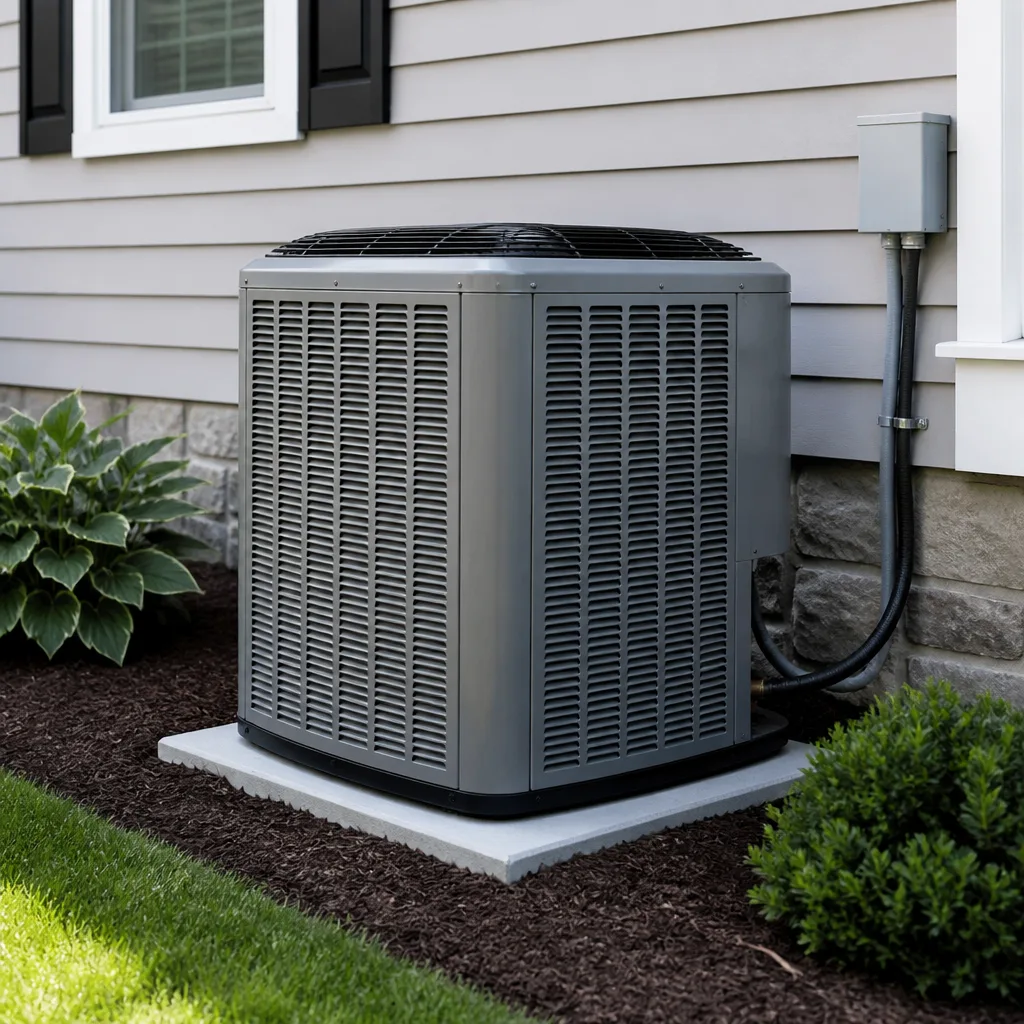
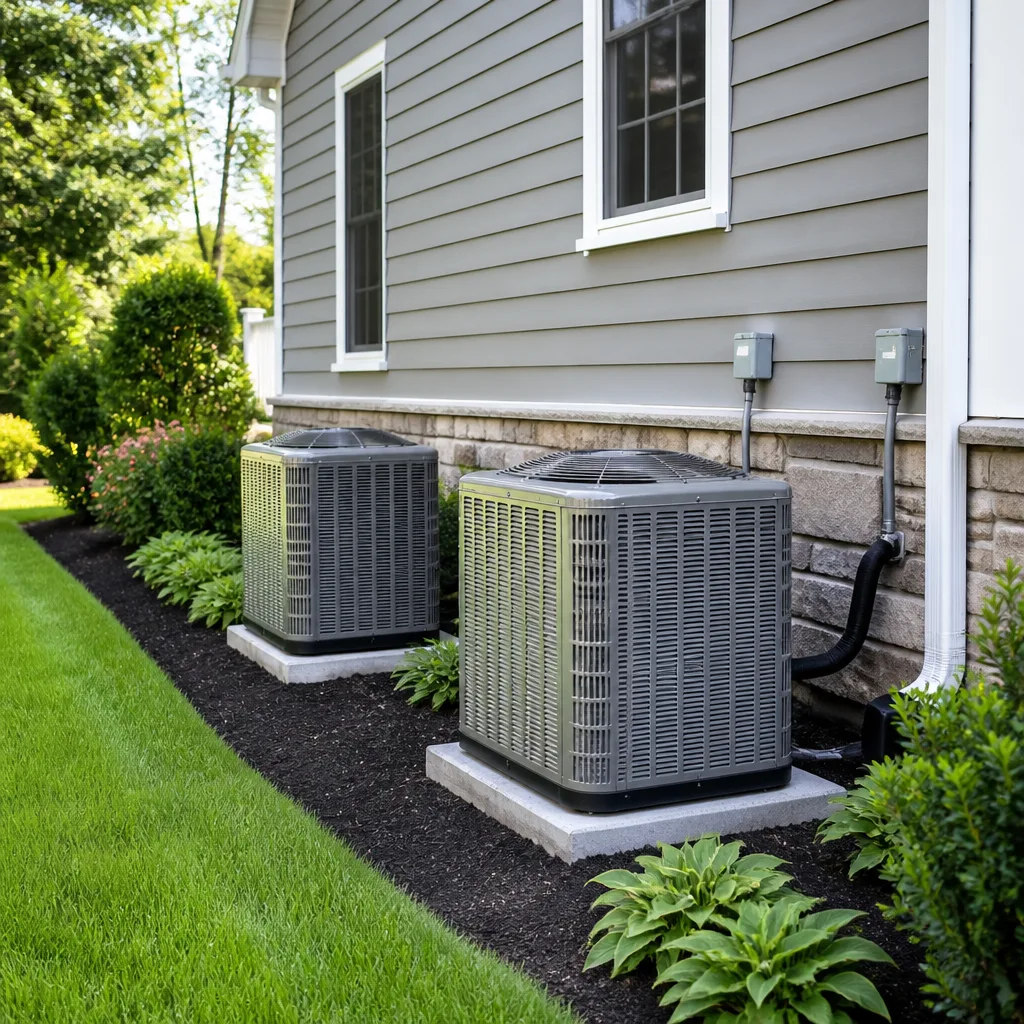
- Rinse the condenser coil. Twice a season, spring and midsummer. Kill the disconnect at the box on the wall, not the thermostat. Spray the outdoor coil with a garden hose, top to bottom, until the water runs clear. Don’t use a pressure washer; the fins are soft and you’ll bend them flat. Reconnect the disconnect, run the system, and check that the top fan is spinning the right direction.
- Flush the condensate drain. Once a month in summer. Find the PVC line exiting the indoor unit, usually with a trap near the air handler. Pour a cup of plain white vinegar into the cleanout port or the drain pan, wait thirty minutes, then flush with a cup of water. This prevents the number one cause of mid-July ceiling stains in North Las Vegas homes: a clogged drain that backs up into the drywall.
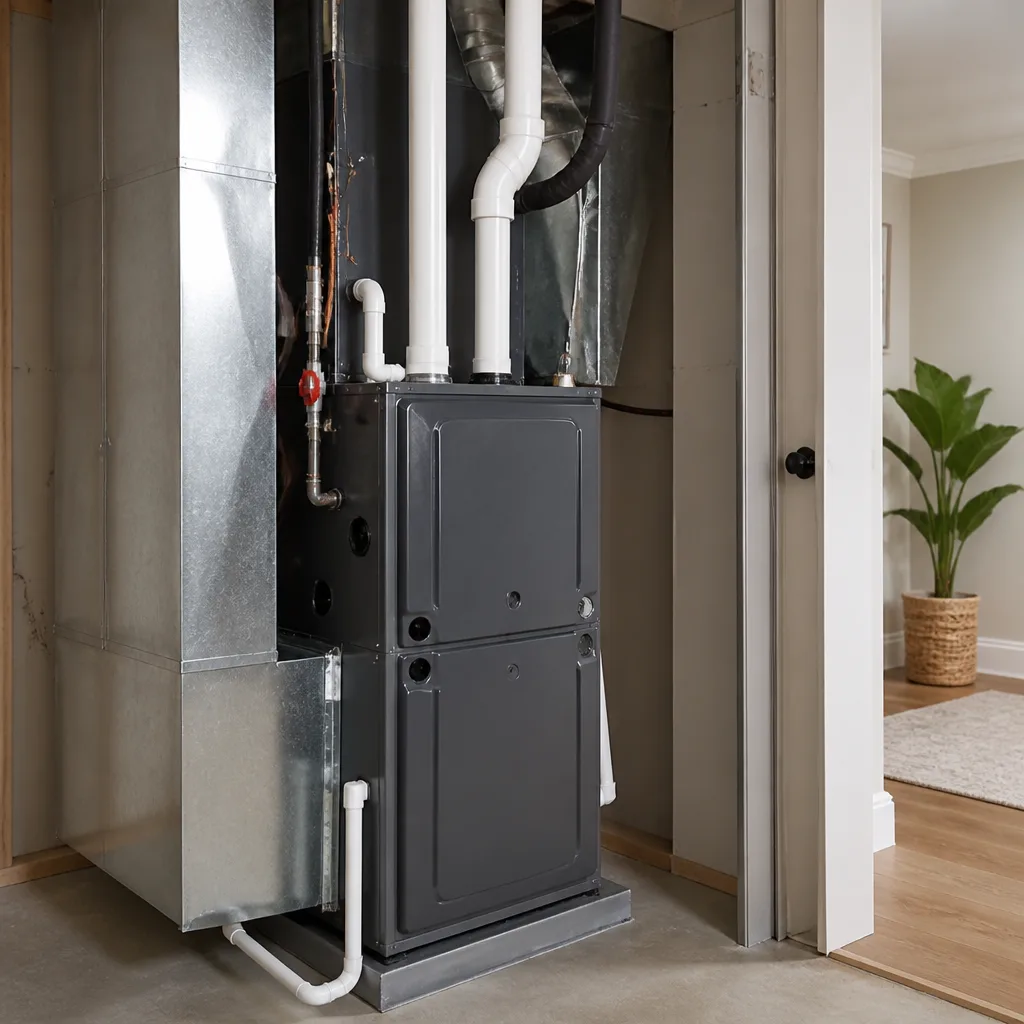
- Swap a basic thermostat. A straightforward replacement of a 4-wire or 5-wire thermostat with the same unit type is fine for a careful homeowner. Photograph the wire placement first. Turn off the furnace breaker before you start. If your new thermostat is a communicating system or a heat pump model with a defrost board, call us; those aren’t a swap.
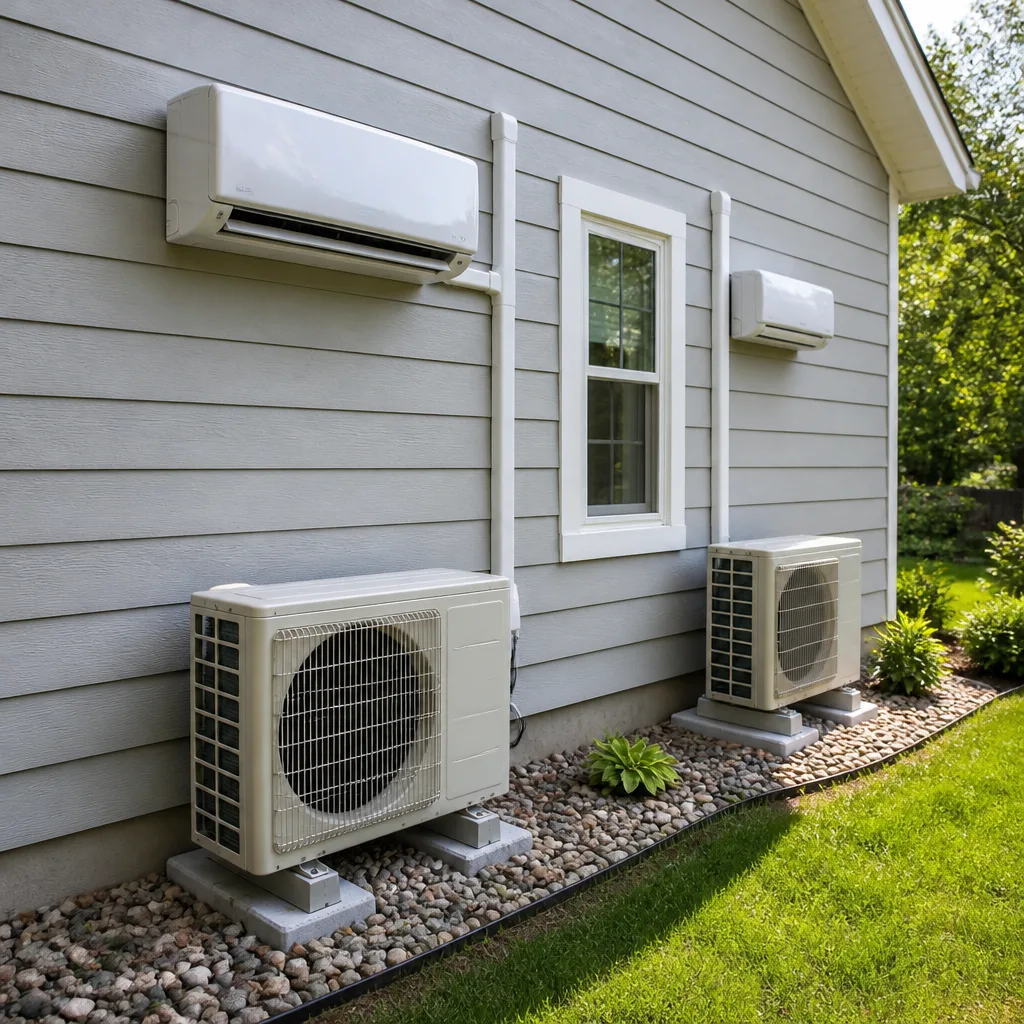
That’s the whole list. Everything past it has a reason it belongs to a licensed tech, and the reason is usually either a federal rule, a warranty, or a genuine safety hazard. If you have a heat pump or mini-split and you’re wondering which of these jobs apply to your equipment, our heat pump and mini split page covers it.
Three Service Calls You Probably Don’t Need to Pay For
We get calls all the time that a homeowner could have handled in five minutes with no charge. Here are the three we see most, and no judgment attached: knowing this saves you money and saves us a trip.
- The thermostat isn’t dead, the batteries are. If your system doesn’t respond at all and the screen is blank, check the batteries in the thermostat before you call anyone. Most modern thermostats use AA or AAA batteries, and when they die, the thermostat goes dark and the system does nothing. We can’t tell you how many service calls we’ve run that ended with a fresh set of batteries and a handshake.
- The breaker tripped. A dead system in the middle of July after a storm or a power blip is often just a tripped breaker at the panel or the disconnect box outside. Go look. If it’s flipped, reset it once. If it trips again, put the phone down and call us; a breaker that trips twice is a real symptom, not a nuisance.
- The filter is completely clogged. A system that runs and won’t cool, but the thermostat is reading correctly, and the house feels warm but not hot, is often just a filter so loaded with dust that airflow is choked. Pull it. Hold it up to a light. If you can’t see through it, that’s your problem. Replace it and let the system run a half hour to catch up before deciding anything else.
We tell people this because it’s how a real relationship works. If we can help you solve it on the phone, that’s a good call. If it’s something we need to see, we’ll tell you that too, and the trip won’t be a surprise when the numbers come out. Readings first, numbers second. You’ll see both.
The Refrigerant Rule Nobody Reads Until It’s Too Late
This is the one that gets people in trouble. Refrigerant is regulated under Section 608, and the EPA enforces it directly. You cannot legally buy refrigerant for a system that isn’t certified, handle it without a 608 certification, or dispose of it. The maximum fine per violation is $44,539, and that’s not a number we’re throwing around for effect; it’s the published statutory maximum.
The practical problem is what the added refrigerant does to the system afterward. When a homeowner tops off a system with a can from an online seller, one of two things happens. Either the system had a leak that’s still there, so the “fix” lasts a few weeks and then the system is low again, or the system has a restriction and the added refrigerant causes the compressor to run at a pressure it wasn’t designed for, which shortens its life and can void the compressor warranty on the exact grounds we covered above. Either way, the next licensed tech has to recover the whole charge before doing anything diagnostic, because the system has an unknown mix in it. That recovery and recharge alone costs more than a legitimate diagnostic would have.
There’s also the insurance question. If a homeowner handles refrigerant illegally and the system fails in a way that damages property, or causes injury, the homeowner’s insurance carrier can deny the claim on the grounds that the work was performed outside the policy’s coverage of licensed work. That’s the risk that doesn’t show up on the invoice. It shows up when you file a claim.
Our stance is simple. Don’t buy refrigerant online. Don’t put it in your own system. When a system needs refrigerant, it has a leak, and the leak is the problem to solve. A certified technician can find it, fix it, and recharge the system legally. That’s what the certification is for.
How to Verify a Nevada HVAC Contractor in Five Minutes
One of the most common questions we get is how to tell whether someone is properly licensed. It isn’t hard, and you should do it before you let anyone touch your system, us included.
- Ask for the license number in writing. Any credible contractor gives it without hesitation.
- Look it up on the Nevada State Contractors Board website. The public search takes about two minutes and shows the license status, the classification, and whether there are any disciplinary actions on file.
- Confirm the classification covers HVAC work specifically. Not all contractor licenses cover HVAC; a general contractor’s license doesn’t mean the person is certified on gas appliances or refrigerant.
- Ask for a certificate of insurance and confirm the policy is current. Insured and bonded isn’t a slogan; it’s a piece of paper you can ask to see.
- Ask who’s actually coming to the house. If the answer is “whichever crew is closest,” that’s your answer about continuity.
We mention this because we’re a locally owned, owner-operated shop out of North Las Vegas and we think you should verify us the same way. Ask for our license number, look it up, and then call. The person at your door should be the same person who answers when something isn’t right.
Common Mistakes to Avoid
- Adding refrigerant without finding the leak. The added gas goes into a system that’s already leaking, so it’s a temporary patch at best. It’s also a federal violation and a warranty problem that surfaces later, when the compressor claim gets denied. Find the leak or call someone who will.
- Using a pressure washer on the condenser coil. The fins are thin aluminum and they flatten under high pressure. A flattened coil restricts airflow permanently, and the fix isn’t a rinse; it’s a new coil or a new condenser. Use a garden hose, top to bottom, gentle pressure only.
- Skipping the filter for a whole season. In the desert dust around North Las Vegas, a filter can load up in six weeks during a windy spring. A clogged filter forces the blower to work harder, and over one summer that’s enough to shorten the life of a blower motor. Change it on a schedule, not when you remember.
- Replacing a capacitor with the wrong rating. The label on the capacitor tells you the microfarad rating and voltage; a 35/5 is not the same as a 45/5, and a mismatch runs the fan or compressor at the wrong current. In July, that mismatch is what kills the motor, not the capacitor itself.
- Covering the condenser for the winter and forgetting to uncover it in spring. A covered condenser running through the first warm week of the year can’t reject heat, and it’ll trip on high head pressure within an hour. Pull the cover the first warm weekend of March.
- Letting a handyman touch a gas furnace. Gas connections, flue work, and heat exchanger inspection aren’t a Saturday project. The stakes there are carbon monoxide, not a comfort complaint. Licensed professional, every time.
- Installing equipment yourself and skipping the registration. Many manufacturer warranties require registration within a set window. An unregistered install often gets the base term instead of the full one, and you don’t find out until the parts fail.
See the difference
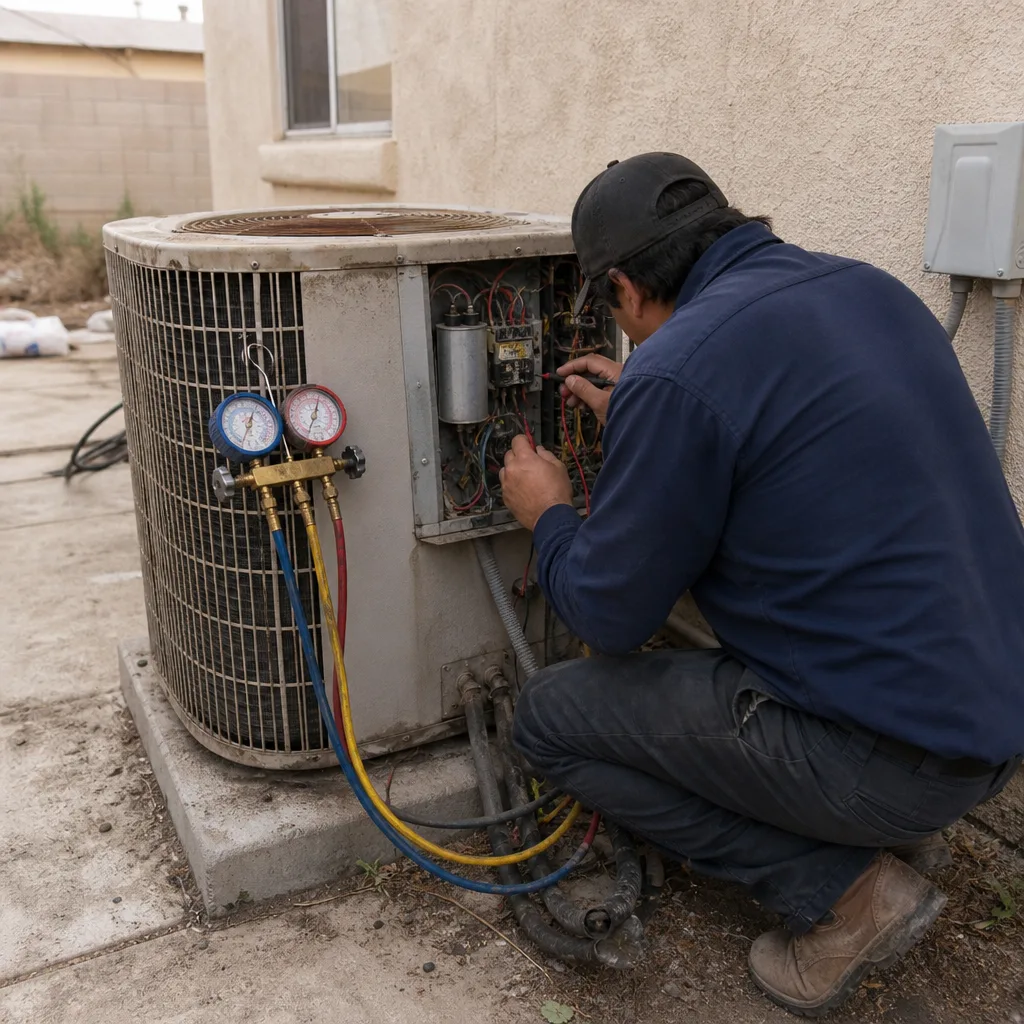 Before
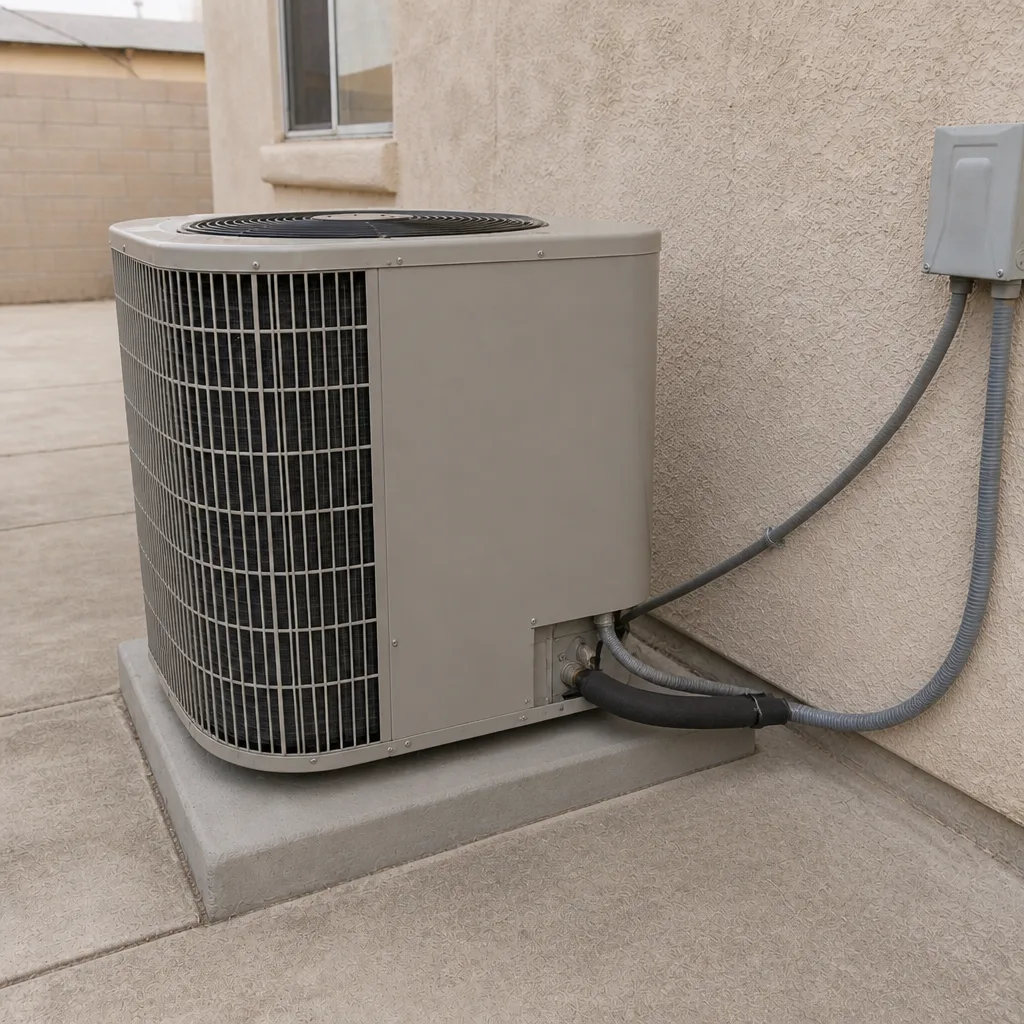 After
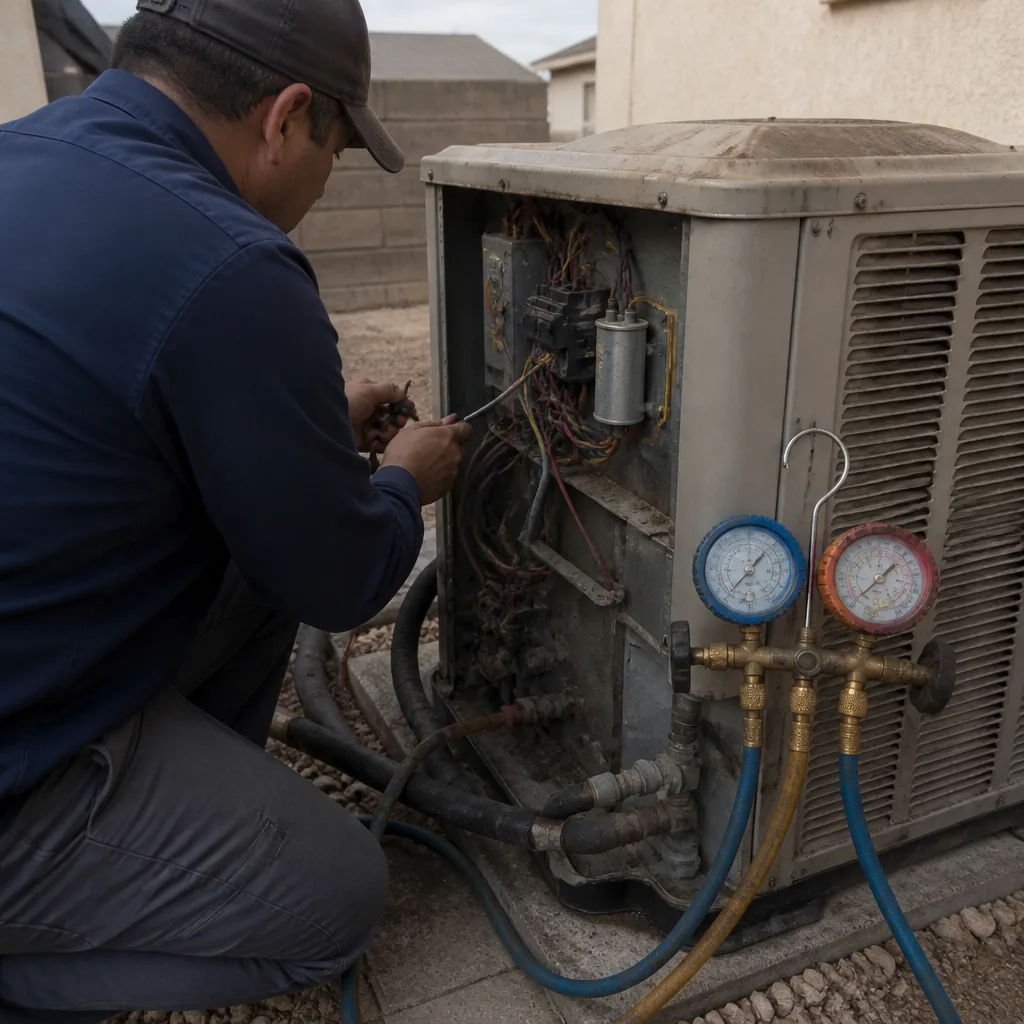 Before
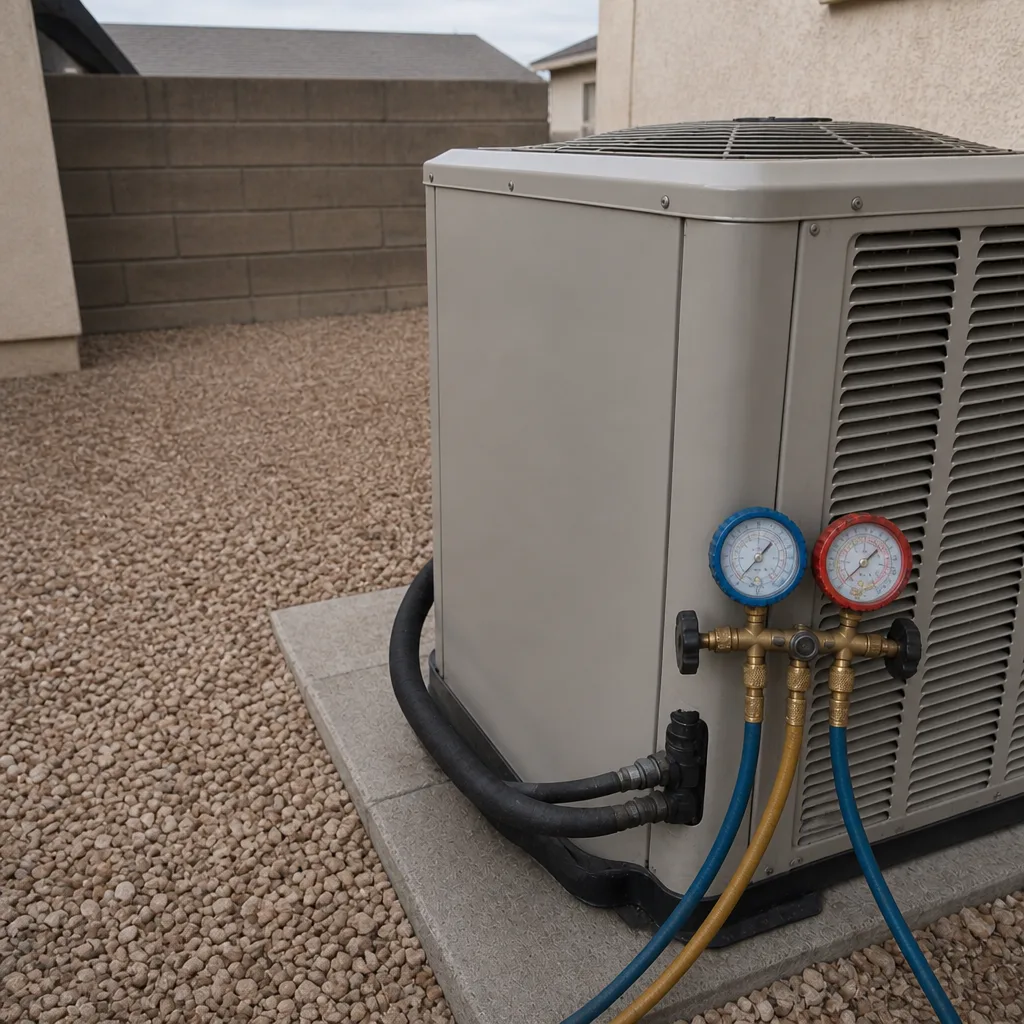 After
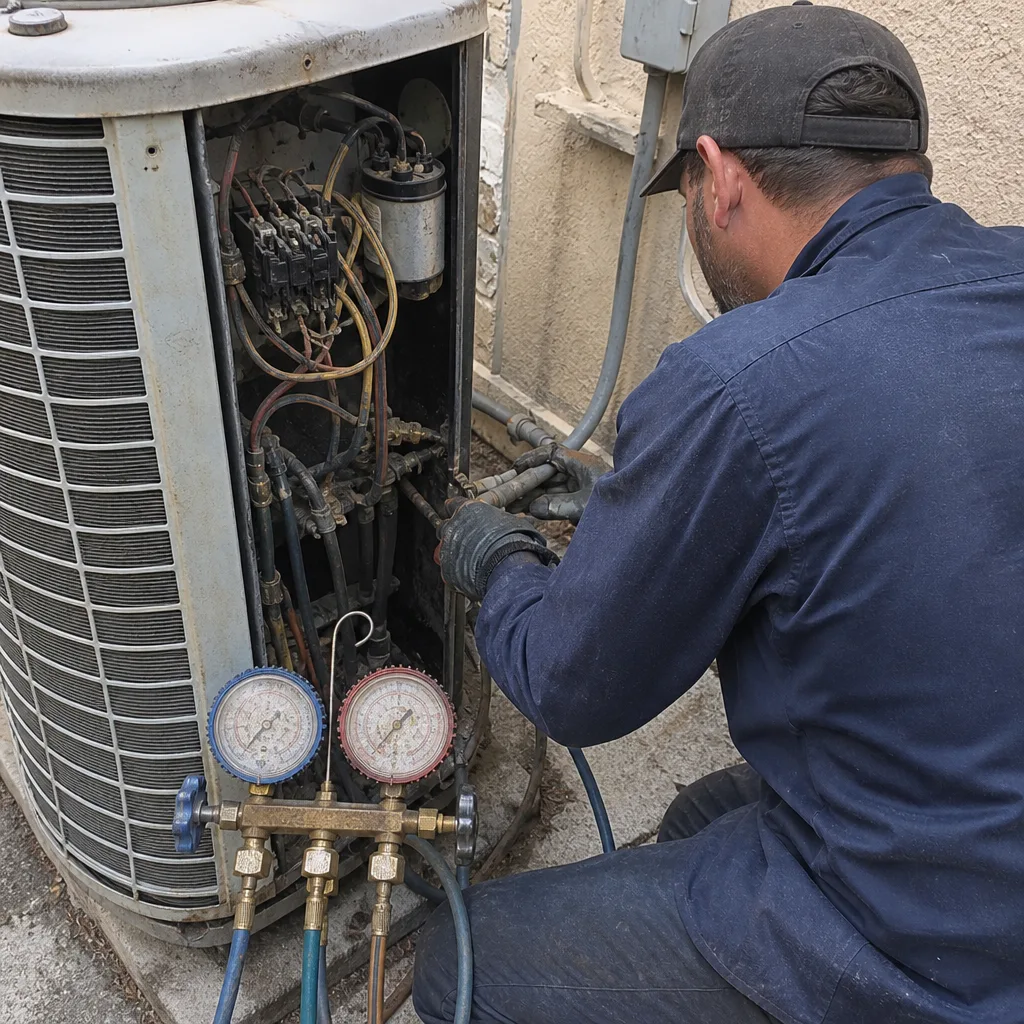 Before
 After
When to Call a Professional
Call us when the symptom involves refrigerant, when the breaker trips twice, when the system is blowing warm air on a cooling call after a filter change and a thermostat battery swap, when you smell gas, when the furnace ignites and shuts off within a minute, when you hear a hard mechanical clank from the outdoor unit, or when the system is under a manufacturer warranty and you need the work documented. Also call when you’re replacing a system, because load calculation, equipment sizing, and registration all need a licensed installer. Ray’s Heating & Air North Las Vegas offers free estimates in North Las Vegas – call (844) 761-6871. Phones are answered by a live person, every call, and the owner himself picks up in the middle of the night. Every job carries our 90-Day Done Right Promise in writing: if it isn’t done right, one call brings us back.
Frequently Asked Questions
No. Refrigerant handling requires an EPA 608 certification under federal law, regardless of whether you own the home. The statutory maximum fine per violation is $44,539, and a homeowner’s insurance carrier can deny a related claim if the work wasn’t done legally by a certified technician.
In most cases, yes. Manufacturer warranties on Trane, Carrier, Lennox, and American Standard equipment typically contain language voiding coverage for service performed by unlicensed personnel. If the warranty claim comes up and the service history shows DIY work, the claim is often denied.
Installing the wrong capacitor rating. We see it most on systems from the 2005-2012 build years, which still have a lot of original capacitors. The label says what the system needs; a mismatched replacement runs the motor at the wrong current and can kill the fan motor within a summer.
Yes, for a straight 4-wire or 5-wire swap with the same unit type. Photograph the wire placement first and turn off the furnace breaker before you start. A communicating system, a heat pump thermostat with a defrost board, or adding new thermostat wire is a licensed job.
Twice a season, once in spring and once around midsummer. The dust load in North Las Vegas is heavy enough that a single spring rinse often isn’t enough by August. Kill the disconnect, use a garden hose, no pressure washer.
It can. A wrong capacitor in July can take out a fan motor, which means a service call plus a motor replacement plus recovery and recharge on top of the original part. A $30 guess can become a $3,000 emergency call, and at that point the whole valley is booked.
The Bottom Line
The DIY question in North Las Vegas isn’t really about whether you’re handy. It’s about which jobs carry a federal rule, a warranty clause, or a real safety hazard, and which don’t. Filters, condenser rinses, drain line flushes, and basic thermostat swaps are yours, and doing them well prevents most of the service calls we run. Refrigerant, capacitors, compressors, gas work, and equipment installs belong to a licensed tech, and the margin for error in a 115-degree July is thin enough that the savings usually aren’t real. The line is clean. Know it, and call when it’s time.
Written by the team at Ray’s Heating & Air North Las Vegas.