
Last updated November 17, 2026
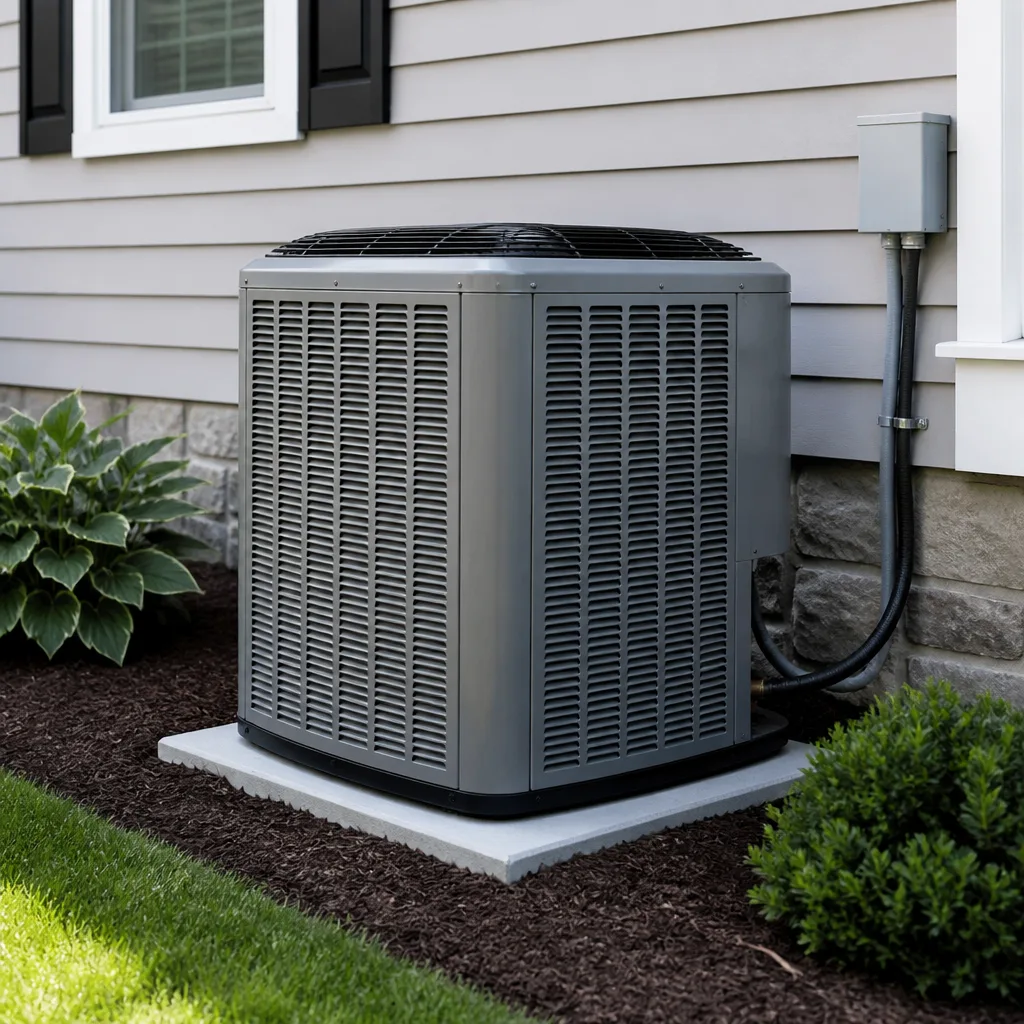 AC repair
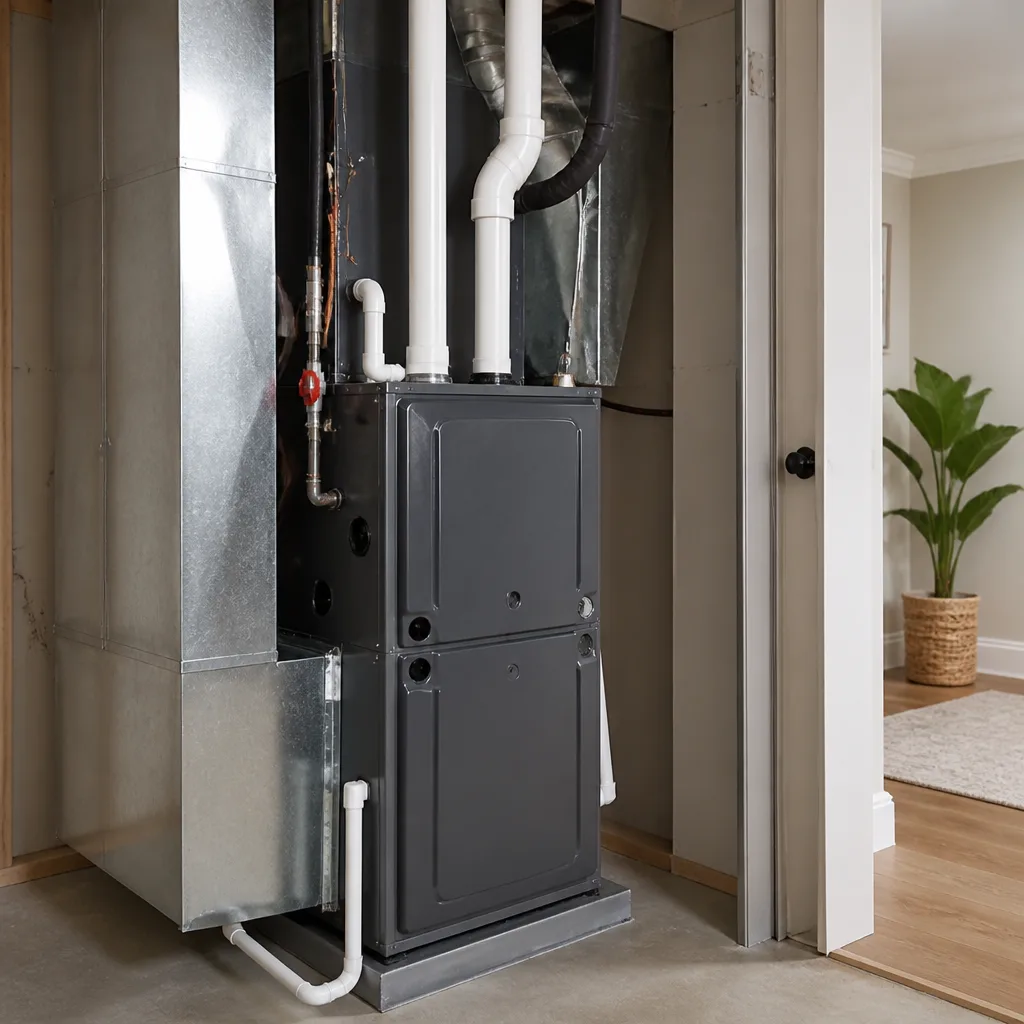 Furnace & heating
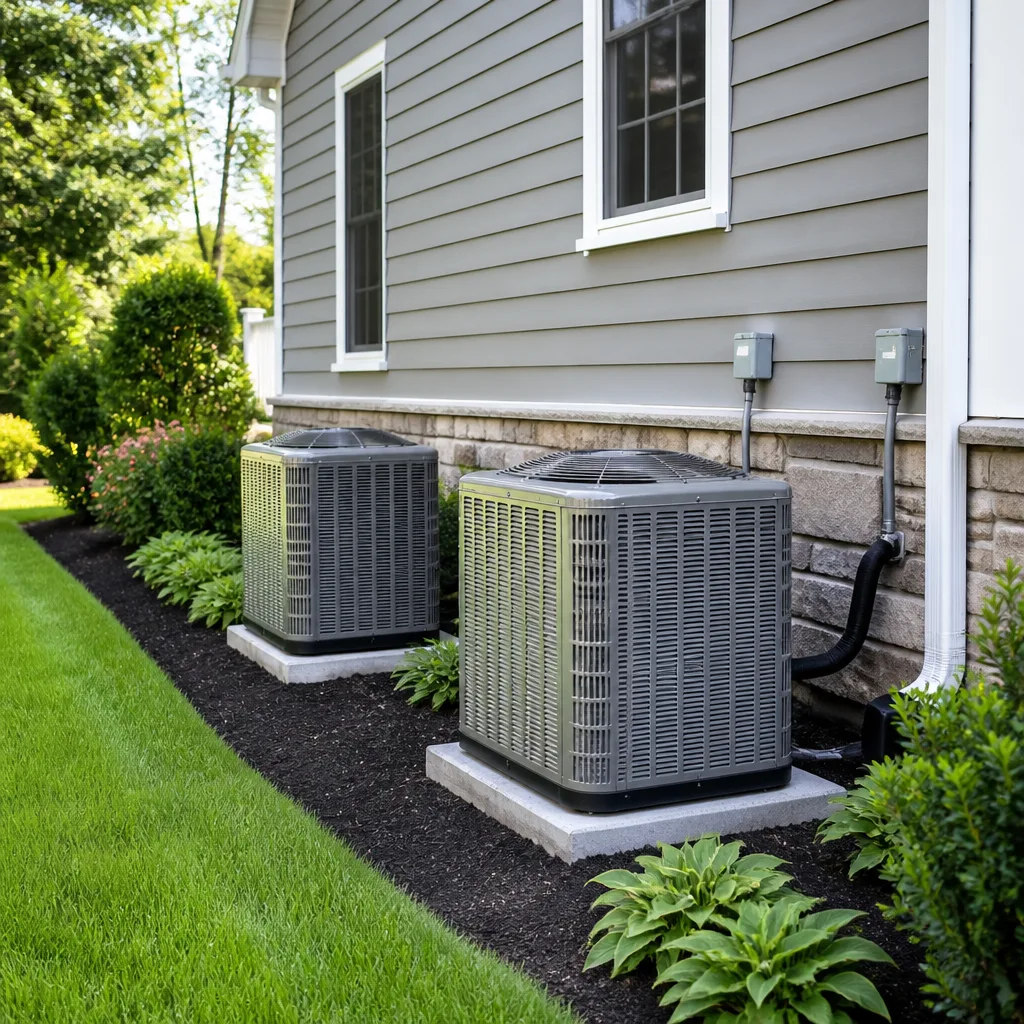 Heat pumps
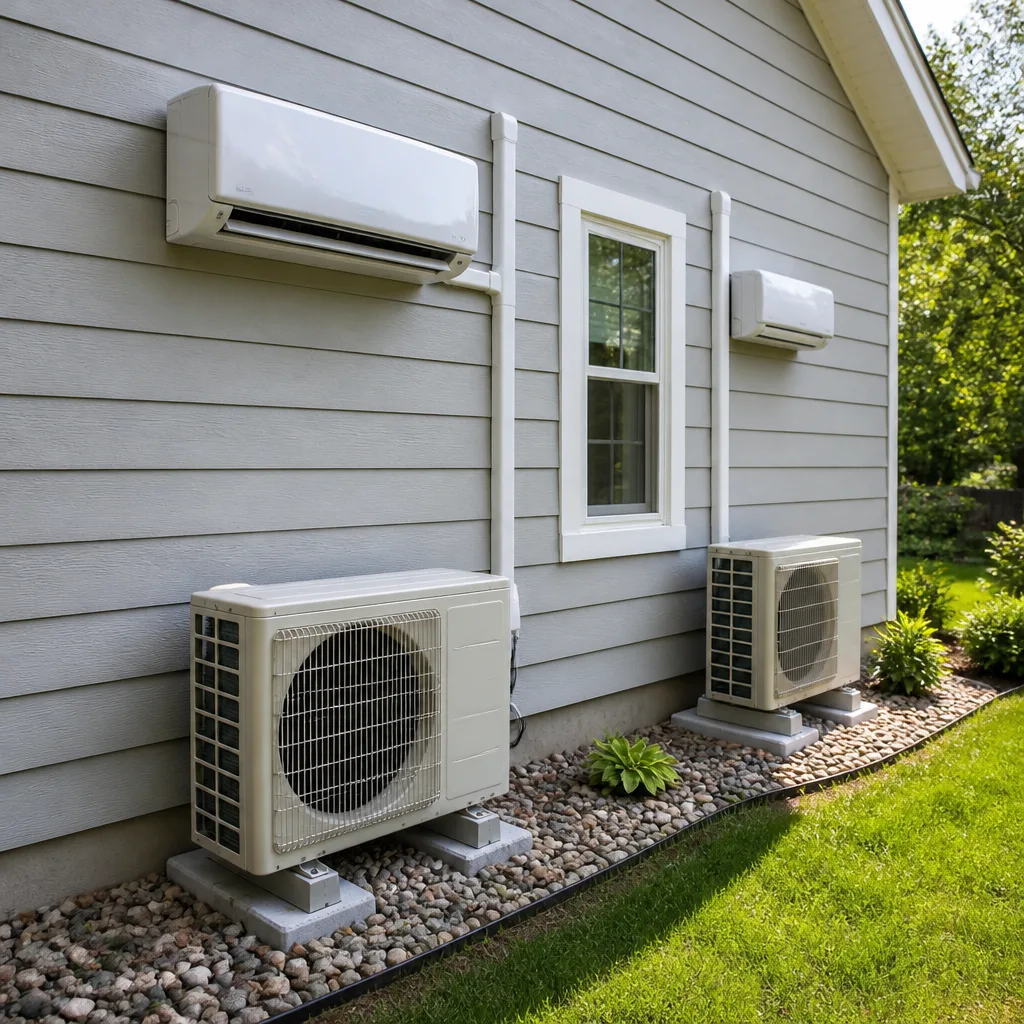 Ductless mini splits
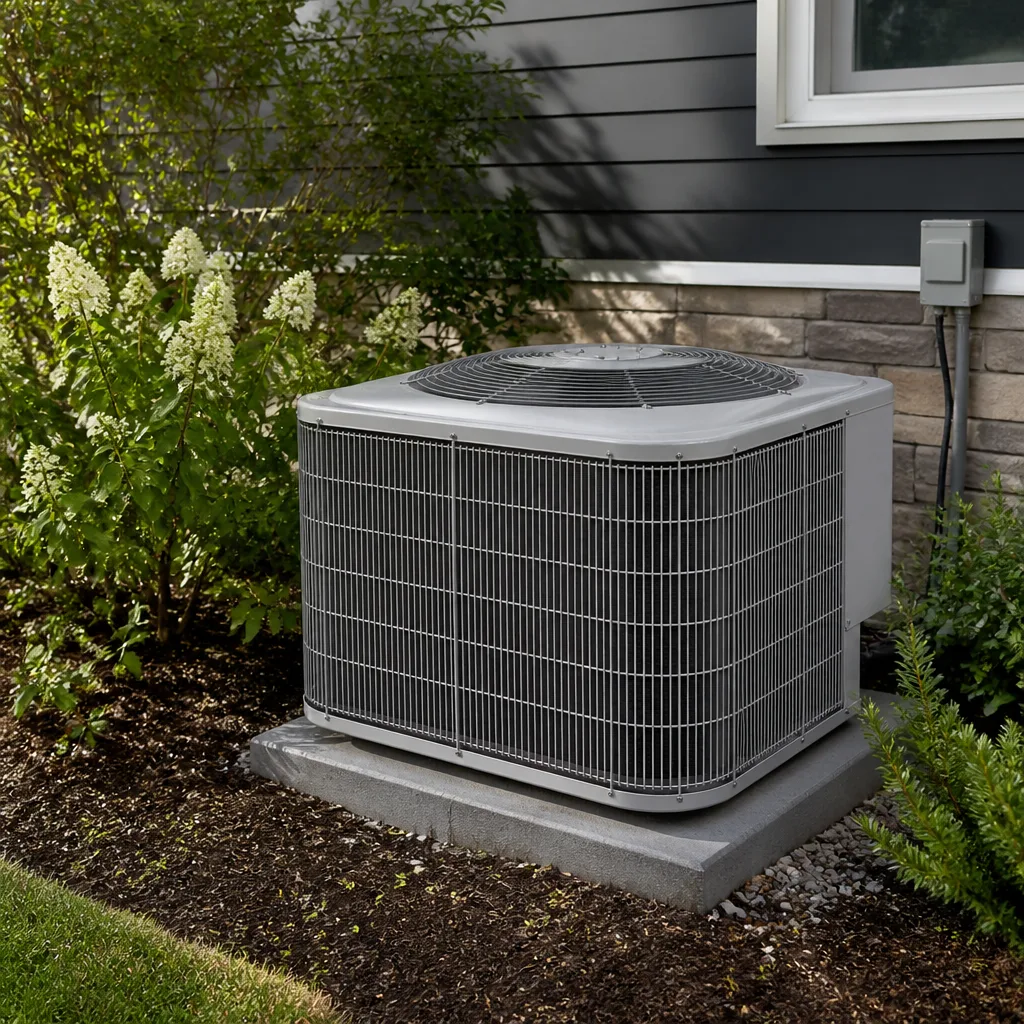 Carrier
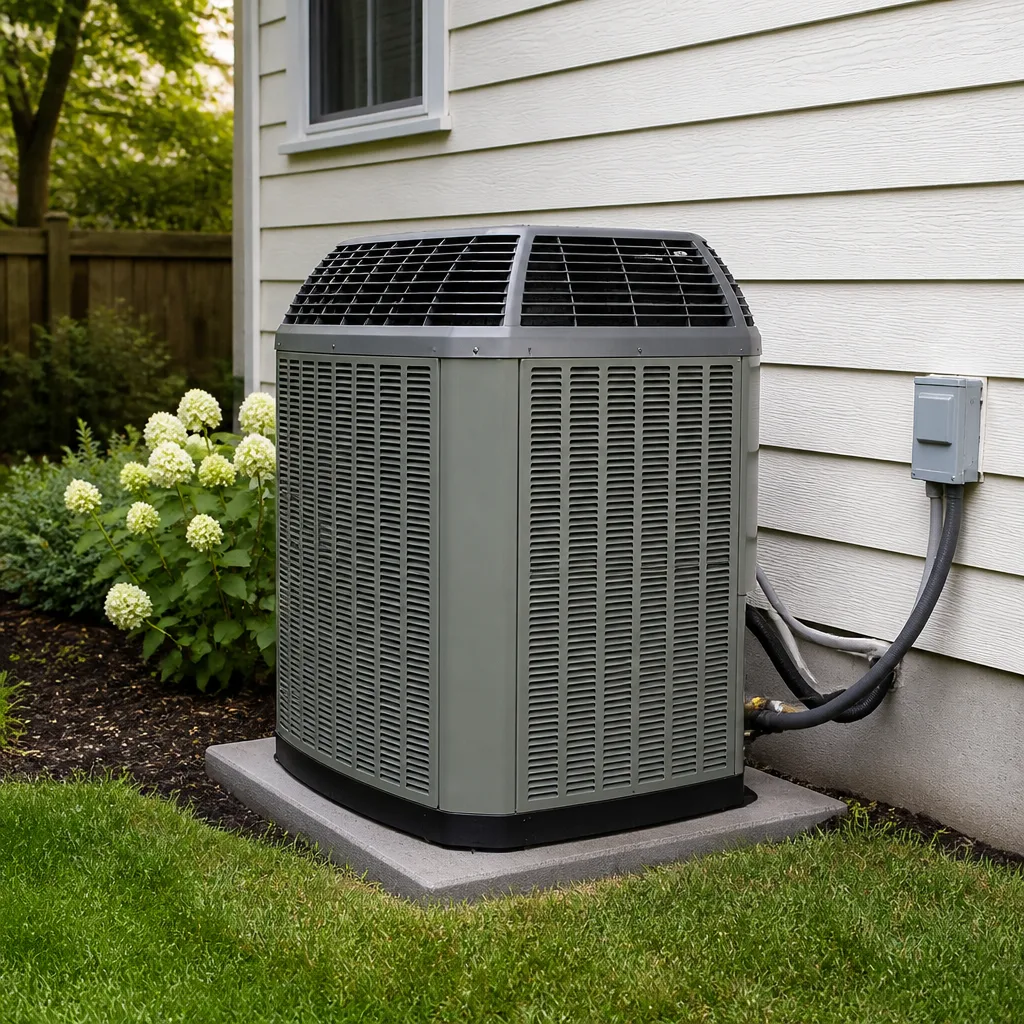 Trane
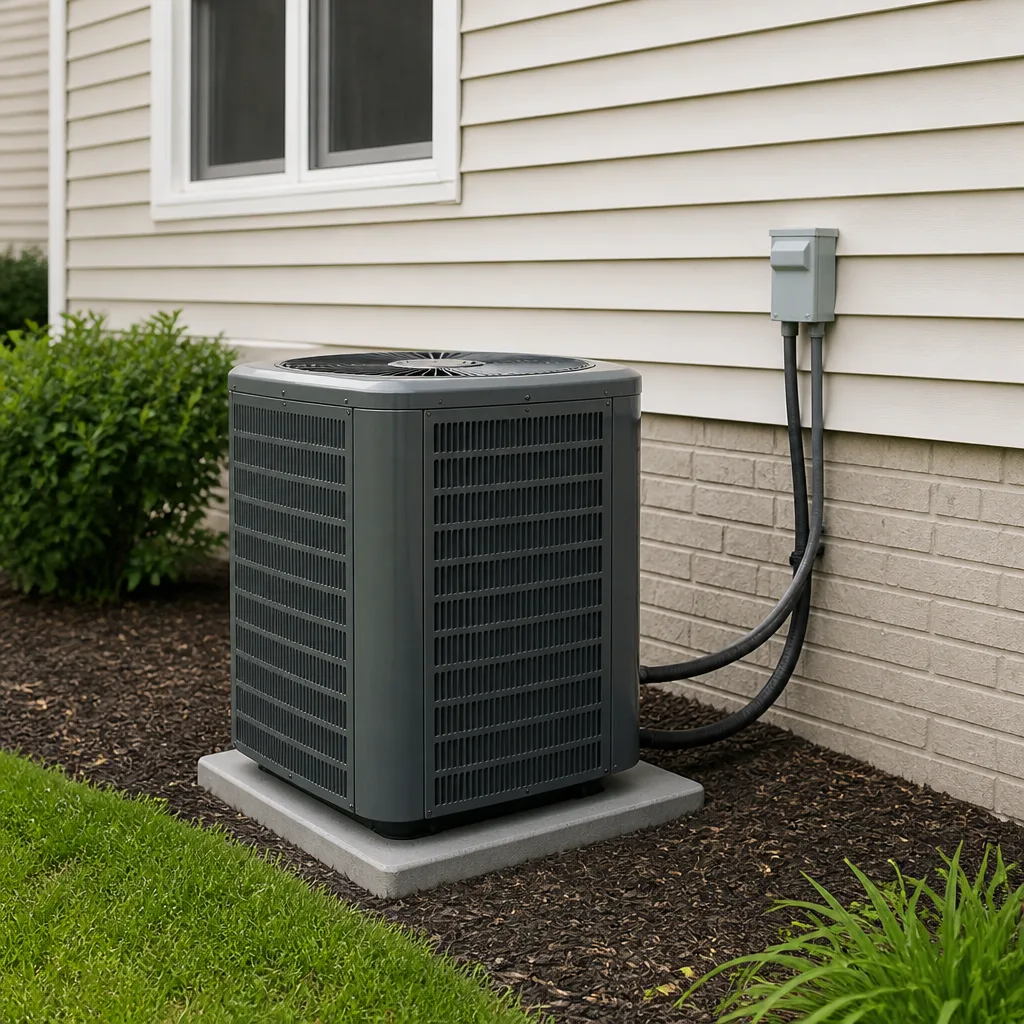 Goodman
Seasonal tune-up and full diagnostic on your Carrier, Trane, or Goodman system - readings shown to you before any repair is proposed
Diagnosis first, numbers second - you approve the repair price before a single part goes in.
Get your free estimateContent is written in HTML format as requested.
Emergency & Commercial HVAC Maintenance Schedule: What to Do and When
If you’re doing commercial HVAC maintenance on a quarterly schedule in this valley, you’re doing it on the manufacturer’s schedule, not the desert’s schedule. Those are two different documents. A packaged rooftop unit rated for “annual coil cleaning” wasn’t tested against 115-degree afternoons, spring dust storms off the dry lake beds, and a building envelope that bakes from 8 a.m. on. We’ve watched a York or Bryant condenser lose noticeable capacity inside a single July. This guide lays out a North Las Vegas maintenance calendar that shifts the work to where the heat and dust actually land, plus how to keep records that save you time and money on an emergency call. Call (844) 761-6871 and a live person answers, day or night.
Quick Answer
In North Las Vegas, commercial HVAC equipment needs coil cleaning twice between May and September (not once a year), filters checked every 30 to 45 days during cooling season, and a full pre-season inspection before Memorial Day weekend, which is when rooftop equipment here hits its highest stress. Emergency service should be triggered by no cooling in occupied space, breaker trips, refrigerant leaks, or any burning smell – not by waiting for the next scheduled visit.
Styles & brands we work with
- AC repair
- Furnace & heating
- Heat pumps
- Ductless mini splits
- Carrier
- Trane
- Goodman
Table of Contents
- Why the Manufacturer’s Calendar Falls Short Here
- Coil Cleaning: Twice a Summer, Not Once a Year
- The Pre-Season Checklist Before Memorial Day
- Filter Reality: Industrial Corridor vs. Office Parks
- Building a Maintenance Log That Helps in an Emergency
- Emergency vs. Routine: What Counts as a Call-Now
- Real Preventive Work vs. a Drive-By Filter Swap
- Common Mistakes to Avoid
Why the Manufacturer’s Calendar Falls Short Here
Equipment spec sheets are written against an average climate – a rough national composite of temperatures, humidity, and airborne debris. North Las Vegas is not average. Summer highs sit at or above 110 degrees for days at a stretch. Humidity is low enough that coil frosting and drainage behave differently than in humid markets. And dust is constant, not seasonal. A unit installed on a North Las Vegas roof deals with more airborne particulate in one cooling season than the same unit would in five years in a wetter, greener climate.
So the standard advice – “clean the condenser coil annually, change the filters quarterly, schedule one tune-up in spring” – is written for the wrong house. If you run that schedule here, you’re already behind by the time June arrives. The calendar has to shift toward the heat and the dust.
This matters most for commercial properties. A rooftop package unit serving a restaurant, warehouse office, or clinic near the North Las Vegas industrial corridor runs longer duty cycles, and longer duty cycles accelerate coil fouling and filter loading. The building doesn’t get a break at night the way a house does. In our experience, the properties that avoid mid-summer shutdowns are the ones that treat the schedule as a starting point and add work where the local conditions demand it.
The good news is that the shifts are predictable. Once you know where to add coil cleaning, where to tighten filter intervals, and what the pre-season checklist needs to cover before the first big heat event, the rest of the year runs on a schedule you can actually keep.
Coil Cleaning: Twice a Summer, Not Once a Year
Here’s the number that matters: a fouled condenser coil forces the compressor to work harder to reject the same heat, and every week of dust buildup in June and July compounds that. Manufacturers rate capacity at a clean coil. As dust accumulates, the difference between a clean coil and a loaded one in a North Las Vegas summer can be enough to push a system past its limit on the hottest afternoon of the year – the day you need it most.
One annual coil cleaning scheduled in March sounds responsible. But by mid-July, the coil is loaded again. That’s why commercial equipment in North Las Vegas needs a second cleaning in the middle of the cooling season. The math: if a single cleaning buys you a clean coil through roughly May and June, then July and August are running on a partially fouled coil – exactly when outdoor temps peak and duty cycles are longest.
What a real coil cleaning means on commercial equipment:
- Access the coil face fully – not just the visible side. That may mean removing panels or splitting a coil.
- Use a coil-safe cleaner and rinse thoroughly, watching for bent fins and drainage.
- Check the fan blades and housing for dust buildup that shortens airflow.
- Log the pre-cleaning and post-cleaning condition so the next visit has a baseline.
On commercial rooftops in the industrial corridor – where dust from truck traffic and nearby open ground is heavier than in residential pockets – the second cleaning often needs to happen earlier. On office parks near the 215, where landscaping and gravel surround the units, cleaning may hold longer, but the timing still shifts with the heat, not the calendar month.
If you’re not sure when your equipment was last cleaned, that’s the first question our AC repair and installation team asks on any commercial call. The answer often explains a capacity problem that looks like a bigger failure.
The Pre-Season Checklist Before Memorial Day
Memorial Day weekend is the single highest-stress period for rooftop equipment in the valley. It’s the first long weekend where commercial spaces go from moderate occupancy to heavy load – retail, restaurants, event spaces – and the outside temperature is already climbing past 100. Equipment that ran fine in April gets hit with its first real summer workload that weekend. If something is going to fail, that’s when it fails.
So the pre-season checklist has to be completed before Memorial Day, not scheduled for June. Here’s the sequence:
- Full system inspection – check refrigerant charge, electrical connections, contactors, and capacitors on every unit.
- Coil cleaning – first cleaning of the season, done before the first major heat load.
- Filter replacement – fresh filters in every unit as a baseline for the summer.
- Condensate drainage check – clear drain lines and pans; in low humidity, clogs can go unnoticed until water damage shows up.
- Thermostat and controls verification – confirm setpoints and scheduling for the cooling season.
- Belt, blower, and fan inspection – on belt-driven equipment, belts and bearings matter most when duty cycles go up.
- Document everything – readings recorded, not just a signature page.
Readings first, numbers second – if a technician tells you a compressor is failing, the capacitor and electrical readings should be on the page before that call is made. That’s the standard on any commercial visit we do, and it’s what a real pre-season inspection should produce. A commercial contract without those readings is a contract for a visit, not for maintenance.
Filter Reality: Industrial Corridor vs. Office Parks
Filter intervals in North Las Vegas aren’t uniform across the city. Properties near the industrial corridor see heavier particulate loading from truck traffic, nearby construction, and open ground. Office parks near the 215 are usually cleaner, but landscaping, gravel parking, and adjacent roofs still put debris in the air. The right filter interval depends on where the building sits and how much outside air it brings in.
A practical starting point for commercial properties:
- Industrial corridor: check filters every 30 days during cooling season; be ready to replace before the month is out.
- Office parks and retail near the 215: check every 30 to 45 days; replace or clean based on pressure drop, not on the calendar alone.
- Any property with heavy outside-air intake: check more often – outside air carries the load.
The filter swap is where a lot of “maintenance contracts” fall short. A quarterly filter change written into a contract doesn’t mean the filters were actually checked between visits. In this valley, a filter that’s fine on the first of the month can be loaded by the fifteenth. If the contract doesn’t include interim filter inspection during cooling season, you’re getting a drive-by, not maintenance.
The other filter mistake: downgrading filter efficiency to save money. A low-MERV filter lets more particulate through to the coil, which speeds up fouling and adds to the cleaning burden. Unless the equipment spec calls for it, going cheaper on filters usually costs more at the coil.
Building a Maintenance Log That Helps in an Emergency
Most buildings have a maintenance file. Very few have a log that’s useful at 2 a.m. when a unit shuts down and someone is calling for help. The difference is whether the information a technician needs in the first 90 seconds is on the first page or scattered across three folders.
When we take an emergency call, the first questions are: what’s the equipment model and where’s the unit, what’s the refrigerant type, is there a recent service history, has this happened before, and what has been checked already. The faster those answers come back, the faster the diagnosis moves. Have these in a single sheet at the front of the log:
- Equipment inventory – model and serial number, location, and refrigerant type for every unit.
- Recent service dates – last cleaning, last filter change, last reading recorded.
- Readings history – refrigerant pressures and electrical readings, so the technician can see what changed.
- Known issues – any recurring faults, parts that were flagged, and what was done.
- Access notes – roof access, gate codes, and who to contact on-site.
A log built this way does two things. It shortens the emergency call, and it exposes patterns. A unit that keeps flagging the same reading across visits needs a conversation, not another visit. Ray’s Heating & Air keeps that history for the buildings we service regularly, and it’s why the person at your door often knows the equipment before they touch it – the history is in the file, not re-learned from scratch.
Emergency vs. Routine: What Counts as a Call-Now
Not every cooling problem is an emergency. Some can wait for the next scheduled visit. Others can’t. Here’s how we draw the line for commercial properties in North Las Vegas.
Call now:
- No cooling in an occupied space when temperatures are climbing.
- Breaker trips, or a unit that won’t hold power.
- Any burning smell or visible smoke.
- Refrigerant leaks – oil residue, ice on lines, or a unit that can’t keep up.
- Water in the building or condensate overflowing from a unit.
Can wait for the next scheduled visit:
- A single unit running below capacity while others cover the load.
- Noisy operation without loss of cooling.
- Thermostat glitches or scheduling issues.
- Filter loading that’s noticed on a routine check.
The line matters because emergency callouts cost more and stress the whole building. Treating every routine issue as an emergency is expensive. Treating an emergency as routine is how a small problem becomes a shutdown. A live person answers every call here – the phone is the way to sort it out fast when you’re not sure which side of the line you’re on. And for the equipment that needs to be replaced rather than repaired, our heating and furnace service in North Las Vegas covers the same commercial approach.
Real Preventive Work vs. a Drive-By Filter Swap
Ask what’s actually in the contract before you sign it. A real preventive maintenance contract includes:
- Readings recorded at every visit – refrigerant pressures, electrical values, temperatures.
- Coil cleaning at the interval the local climate demands, not the manufacturer’s annual default.
- Filter inspection during cooling season, not just a January swap.
- An inspection report that says what was found, not just that a visit happened.
- A named point of contact and a clear process for emergencies.
A drive-by contract typically has a filter swap, a signature page, and not much else. The filters get swapped, the paperwork gets signed, and nothing is actually checked. Three months later the coil is fouled and the building owner is surprised.
One test: ask whether the contract includes the readings. If the answer is “we check the system,” ask for the last report. If there isn’t one, the contract is a visit schedule. On commercial properties along the industrial corridor and near the 215, the difference between the two shows up by August.
Common Mistakes to Avoid
- Following the manufacturer’s calendar without adjustment. The default schedule isn’t written for 110-degree afternoons and constant dust. One annual coil cleaning leaves you fouled in July.
- Scheduling pre-season work for June. Memorial Day weekend is the first big heat load. If the inspection and cleaning haven’t happened before it, you’re trusting equipment you haven’t checked on the busiest cooling weekend of the year.
- Treating filter swaps as the whole maintenance contract. Filters are one part of the work. If the contract doesn’t include readings and coil cleaning, it’s a visit schedule, not maintenance.
- Skipping interim filter checks in the industrial corridor. A filter that’s clean on the first of the month can be loaded by the fifteenth near truck traffic and open ground.
- Running a maintenance file that doesn’t help on an emergency call. If the model numbers, readings history, and access notes aren’t on the first page, the technician spends the first 90 seconds asking questions instead of diagnosing.
- Waiting for a scheduled visit to report an active failure. Breaker trips, burning smells, and refrigerant leaks are call-now issues in North Las Vegas. Knowing that line saves buildings.
- Not asking what’s actually in the contract before signing it. The signature page looks the same on a real preventive contract and a drive-by. The readings are the difference.
See the difference
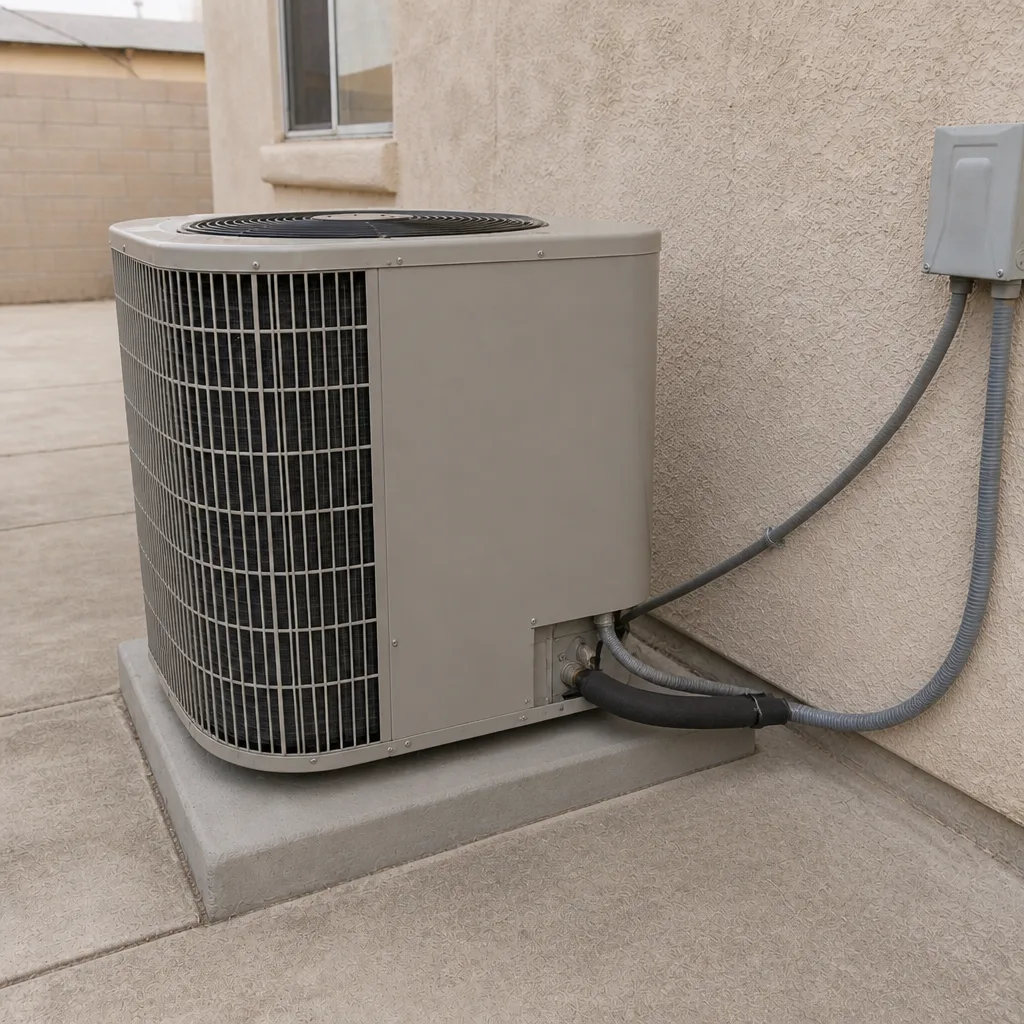
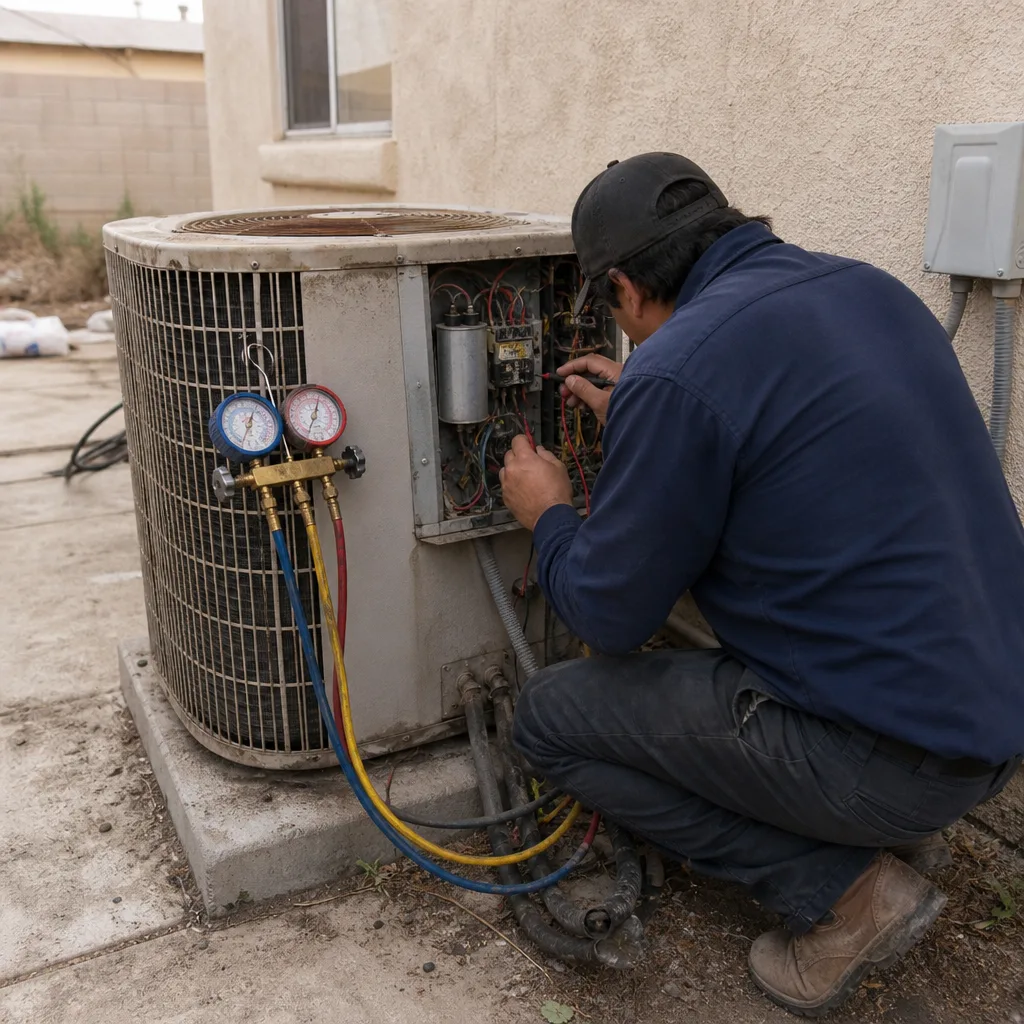 Before
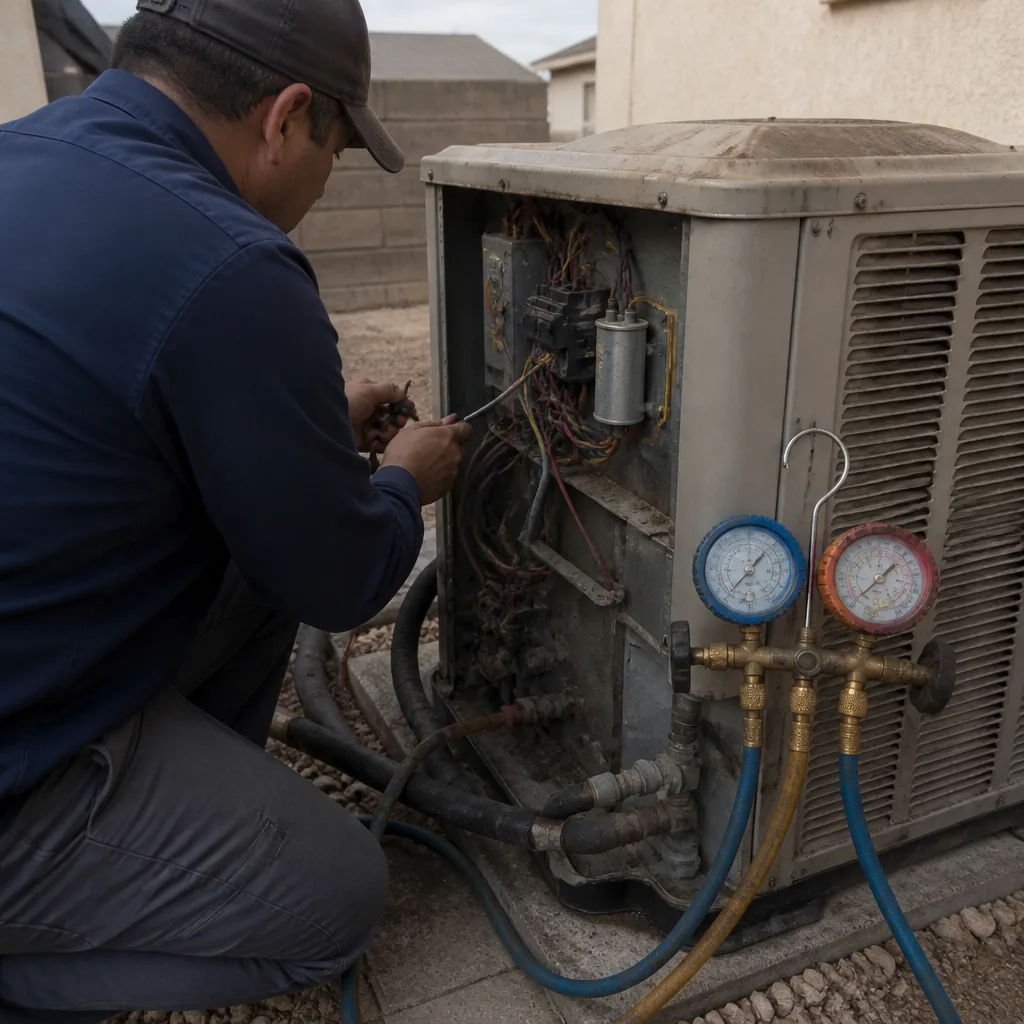
 After
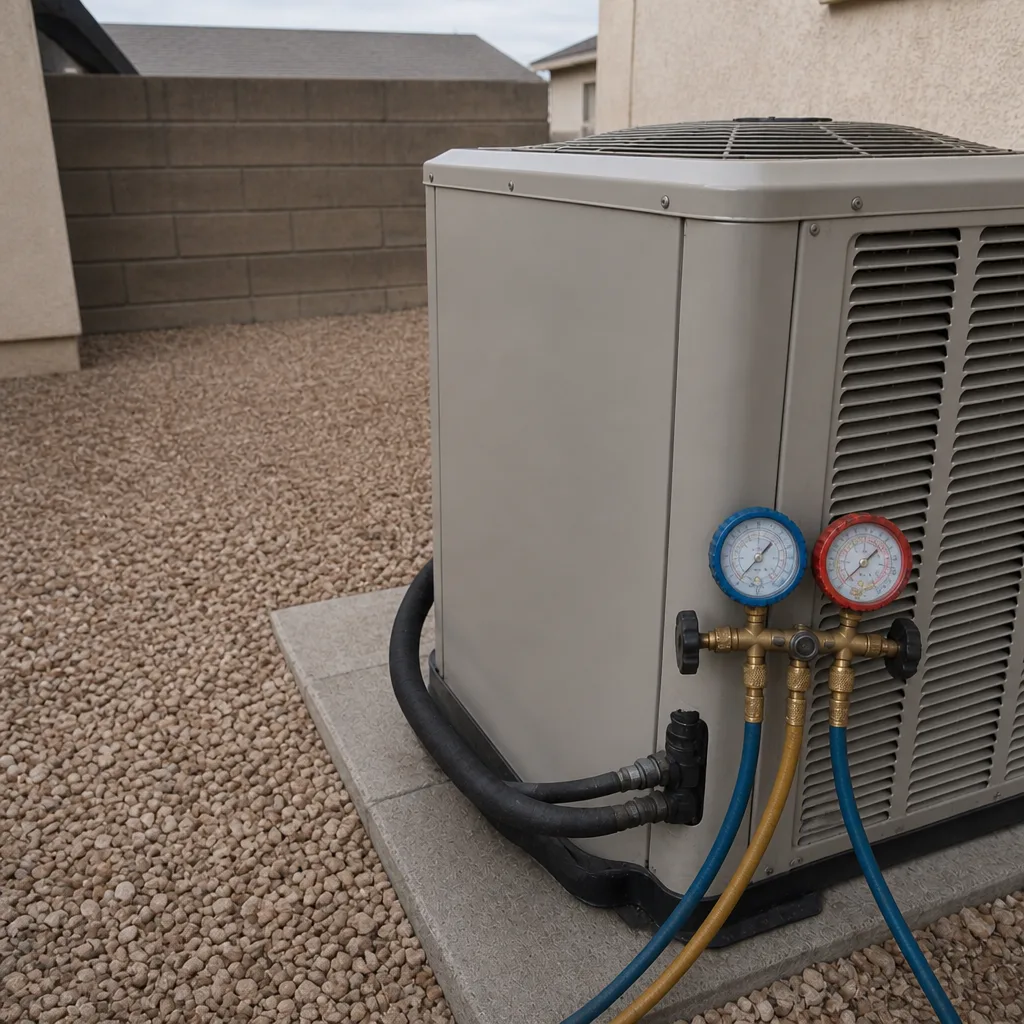
 Before
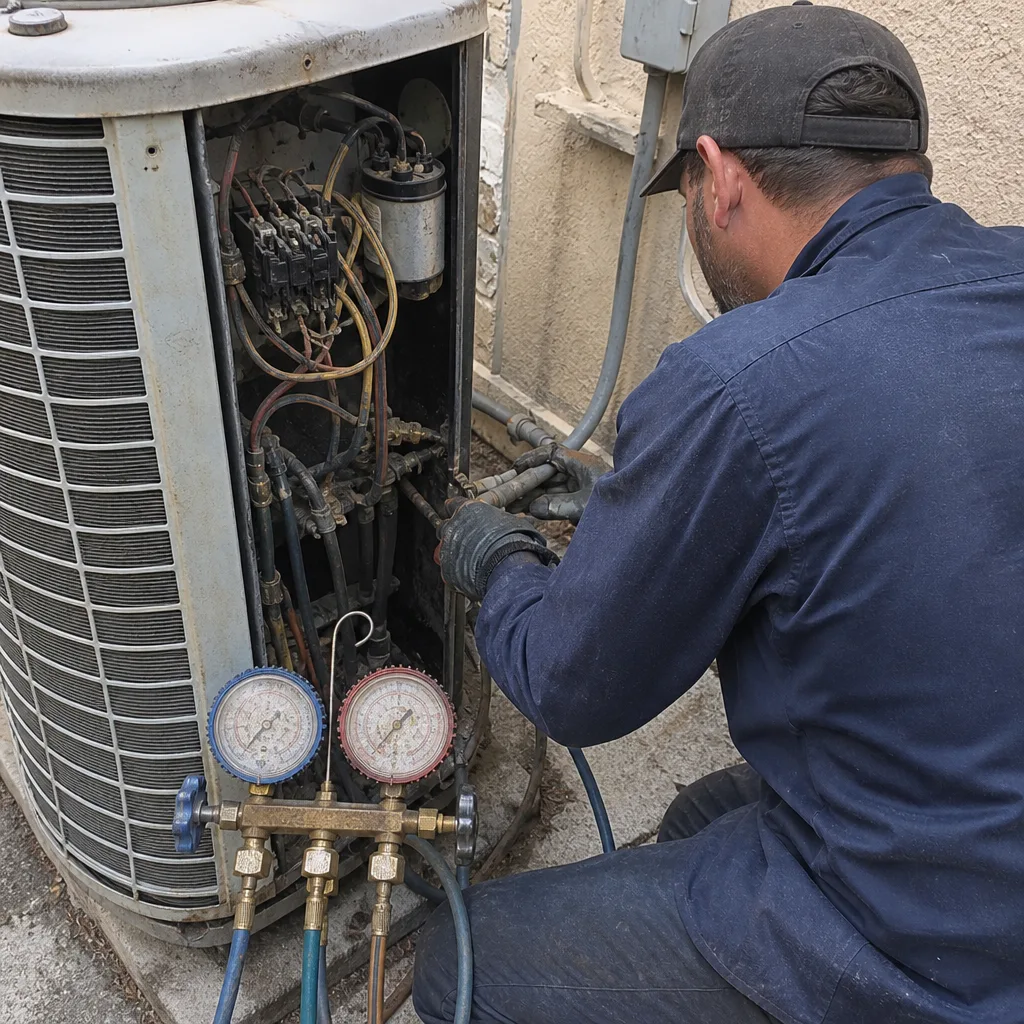
 After
 Before
 After
When to Call a Professional
Call when a unit won’t hold power, when there’s a burning smell, when refrigerant is visibly leaking, or when an occupied space can’t be cooled as temperatures climb in North Las Vegas. Those are the calls that need a real technician, not a scheduled visit. On the commercial side, call when a routine reading flags something you don’t understand, or when the equipment history shows a pattern that hasn’t been addressed. Emergency or routine, the right call comes from knowing what the readings say before anyone names a part. Ray’s Heating & Air North Las Vegas offers free estimates in North Las Vegas – call (844) 761-6871 and a live person answers, any hour, any day.
Frequently Asked Questions
Most commercial equipment here needs a pre-season inspection before Memorial Day, coil cleaning twice during the cooling season, and filter checks every 30 to 45 days – with interim checks in the industrial corridor where dust loads are heavier. The manufacturer’s annual schedule is a starting point, not the local standard.
Because dust buildup in June and July compounds quickly, and a fouled coil forces the compressor to work harder to reject the same heat. A single spring cleaning leaves the coil partially fouled right when outdoor temperatures peak and duty cycles are longest – the exact time you need full capacity.
No cooling in an occupied space, breaker trips, any burning smell or smoke, refrigerant leaks, and water entering the building from condensate. Those should be called in right away. Thermostat glitches, noise without loss of cooling, and single-unit underperformance can usually wait for the next scheduled visit.
Equipment inventory with model, serial, and refrigerant type; recent service dates; readings history; known issues; and access notes – all on the first page. That shortens the emergency call and exposes patterns the next visit should address.
Ask whether readings are recorded at every visit, whether coil cleaning follows the local climate interval, and whether filter inspection happens during cooling season. If the contract only covers a filter swap and a signature page, it’s a visit schedule, not preventive maintenance.
Yes. A live person answers the phone around the clock, every day, including for commercial calls. If the situation involves an active failure, call (844) 761-6871 and we’ll sort out the next step.
The Bottom Line
A maintenance schedule for commercial HVAC in North Las Vegas has to be built for this valley. Shift the coil cleaning to twice a summer. Move the pre-season checklist before Memorial Day. Tighten filter intervals near the industrial corridor. And build a log that a technician can read in 90 seconds at 2 a.m. The properties that stay cool in July are the ones that plan for the desert’s schedule, not the manufacturer’s. If the plan needs a second look, Ray’s Heating & Air is one call away. Our technicians have up to 24 years of experience, every job carries the 90-Day Done Right Promise in writing, and a live person answers including the owner at two in the morning. Call (844) 761-6871 for a free estimate.
Written by the team at Ray’s Heating & Air North Las Vegas.
Internal links used:
– `/` – anchor “Ray’s Heating & Air North Las Vegas home” (placed near the top hook)
– `/ac-repair-installation-north-las-vegas/` – anchor “AC repair and installation” (in the coil-cleaning section)
– `/heating-furnace-north-las-vegas/` – anchor “heating and furnace service in North Las Vegas” (in the emergency section)
– `/heat-pump-mini-split-north-las-vegas/` – anchor “heat pump and mini split work in North Las Vegas” (placed with the pre-season/controls content)
Each URL appears once. No URLs outside the approved list are used. Word count is approximately 2,600 words, within the 2,200 – 3,000 target range.