
Last updated November 17, 2026
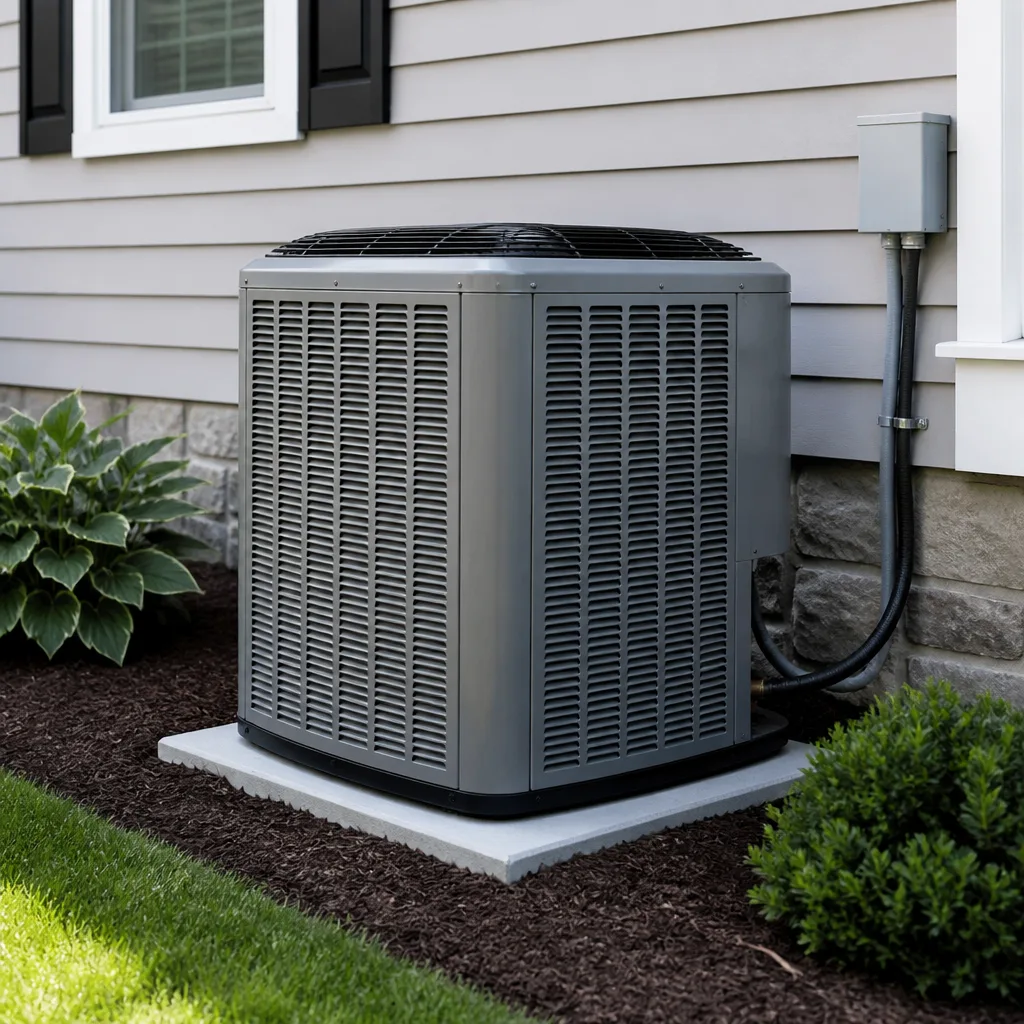
 Heat pumps
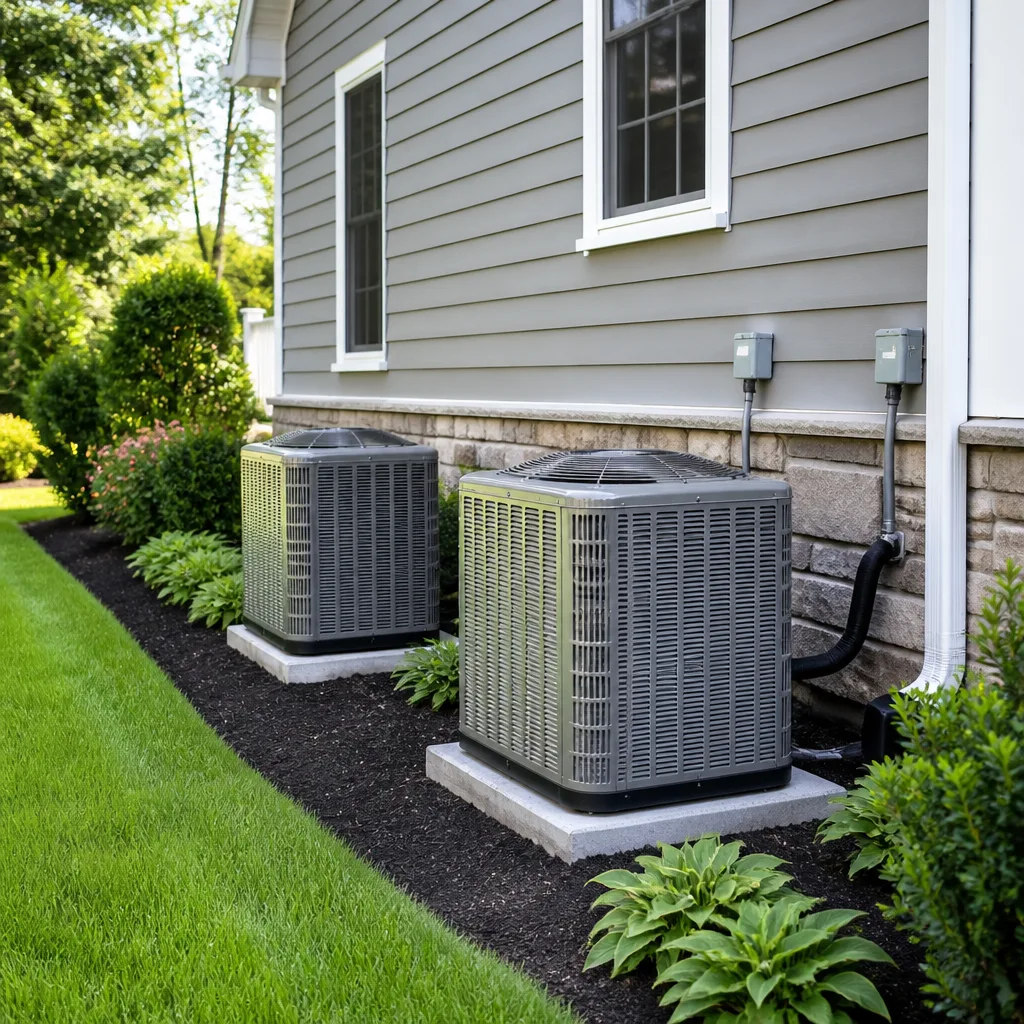
 AC repair
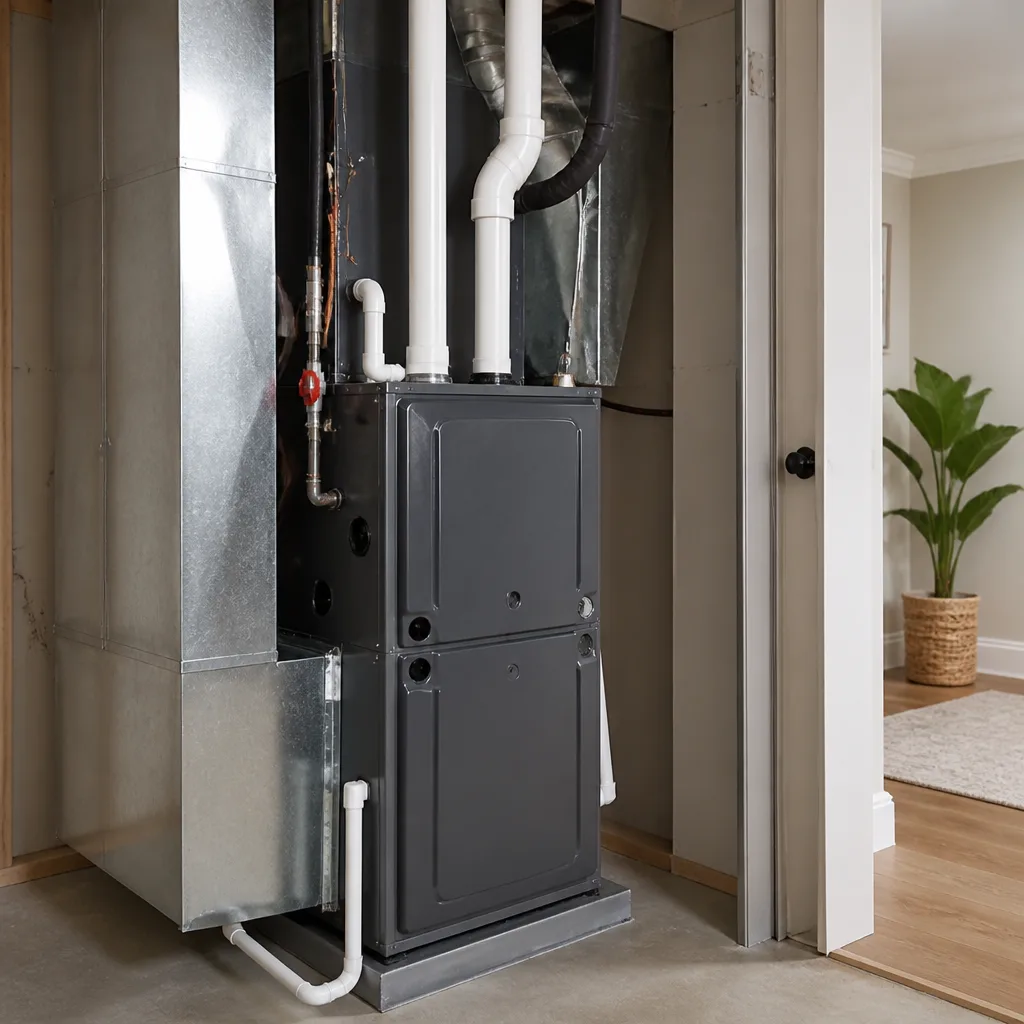 Furnace & heating
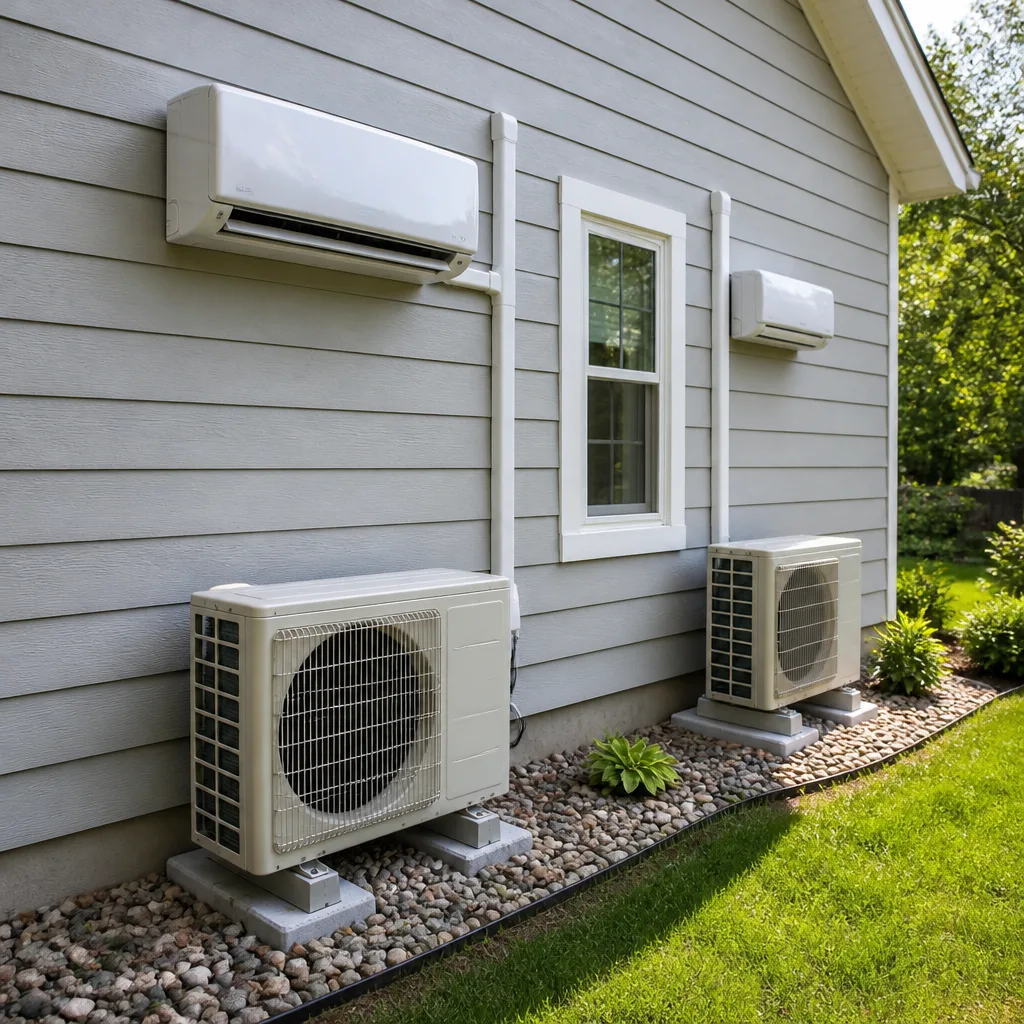 Ductless mini splits
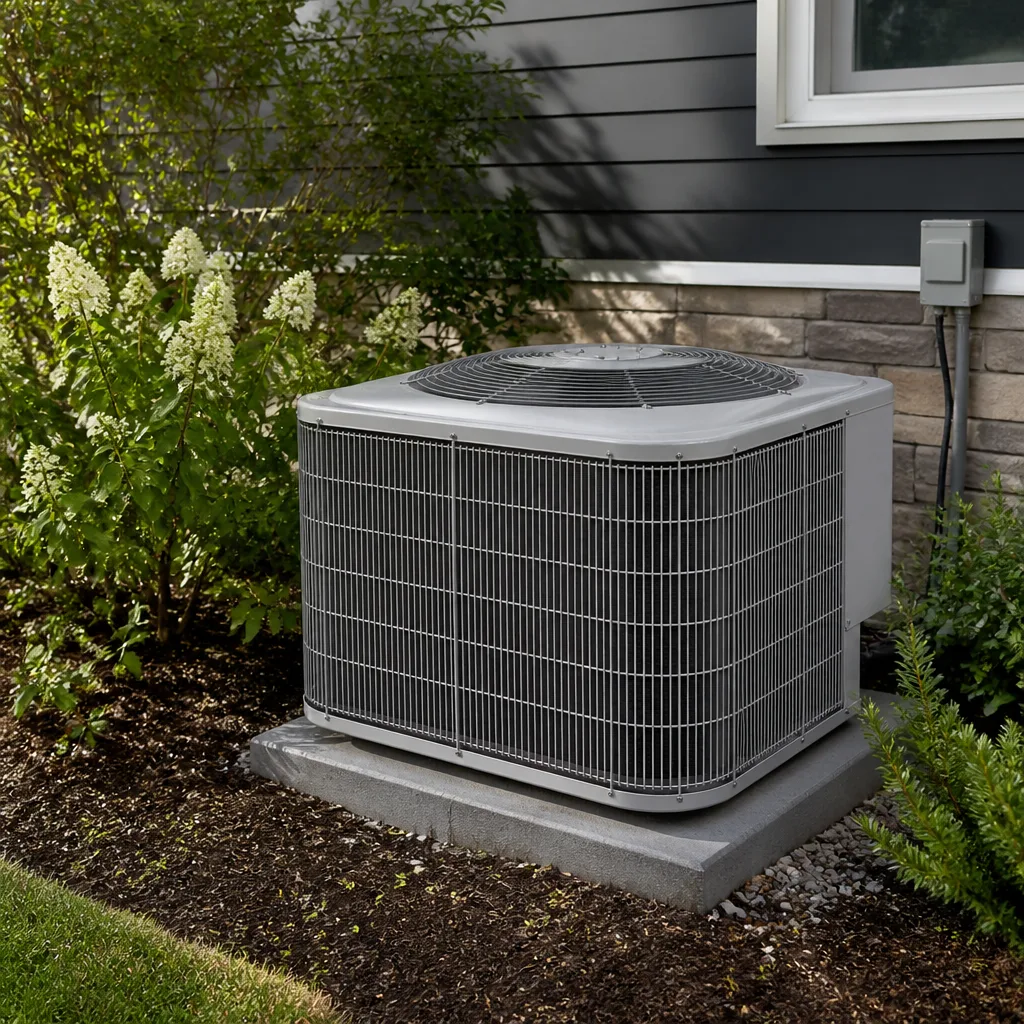 Carrier
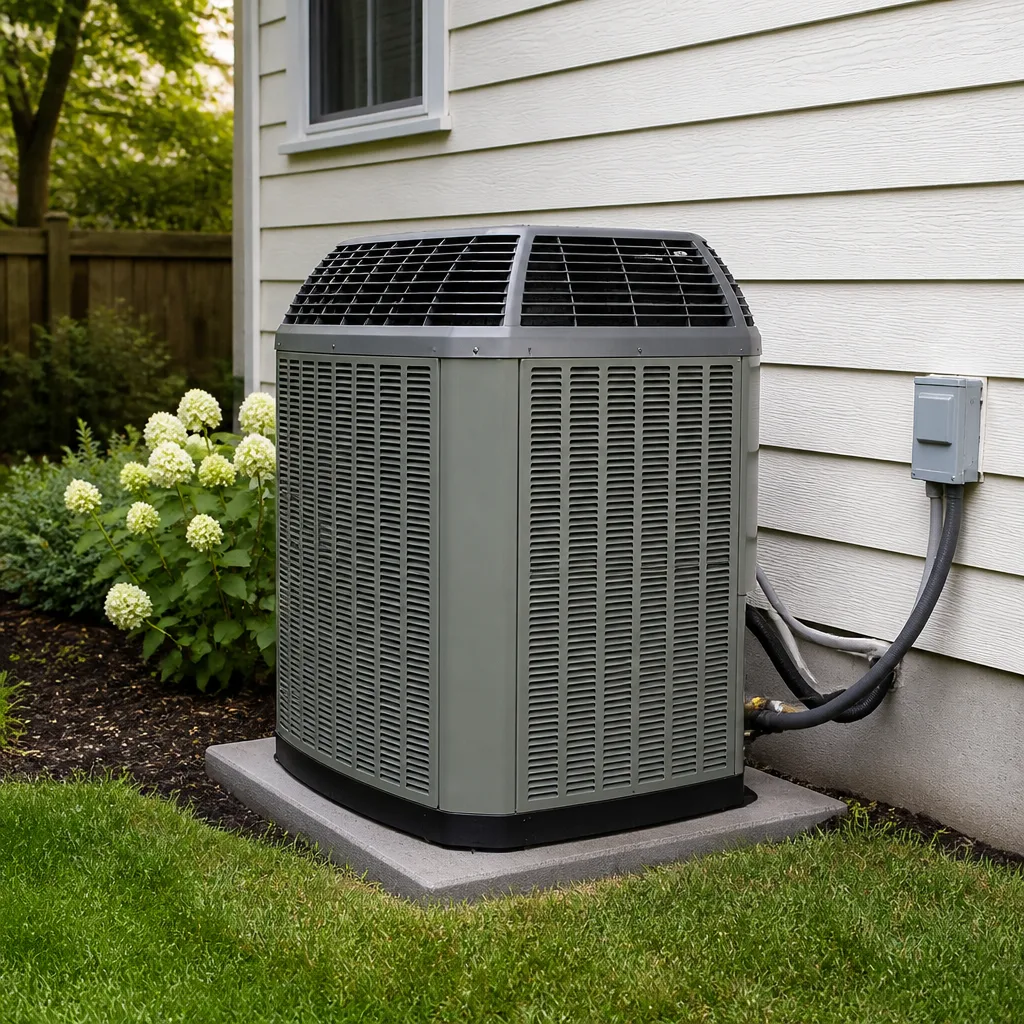 Trane
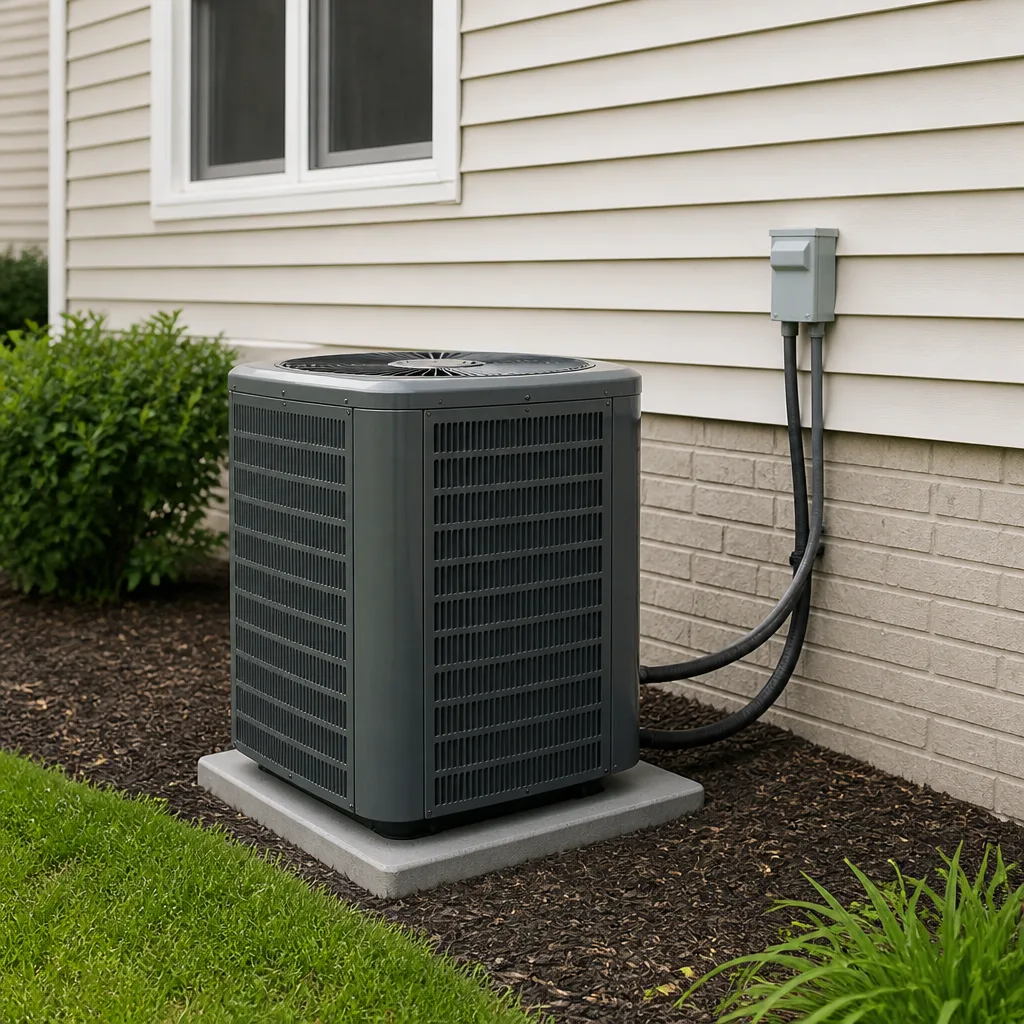 Goodman
Seasonal tune-up and full diagnostic on your Carrier, Trane, or Goodman system - readings shown to you before any repair is proposed
Diagnosis first, numbers second - you approve the repair price before a single part goes in.
Get your free estimateHeat Pump & Mini Split Maintenance Schedule: What to Do and When
If you’re cleaning your mini-split filters on a January-July schedule because that’s what the manual says, you’re cleaning them at the wrong time for North Las Vegas. The cottonwood bloom in April can clog an outdoor coil in three weeks flat, and by the time you notice weak airflow in June, that coil has been choking through the hottest stretch of the year. Most maintenance calendars are written for four-season climates where the system rests half the year. In North Las Vegas it runs nearly every month, pulls desert dust year-round, and takes a beating from monsoon humidity right after it’s worked hardest. What follows is a maintenance calendar built for this valley: what you can safely do yourself, what needs the person at your door, and the honest math on why skipping it costs more than doing it.
Quick Answer
Clean your mini-split filters every 2-4 weeks during heavy-use months and check the outdoor coil after the April cottonwood bloom. Book a professional visit once a year, ideally in May before the sprint to 115°F, to confirm refrigerant charge, electrical connections, and capacitor health. In North Las Vegas, the calendar runs on cottonwood, monsoon, and the pre-summer heat push, not the generic twice-a-year advice written for colder climates.
Styles & brands we work with
- AC repair
- Furnace & heating
- Heat pumps
- Ductless mini splits
- Carrier
- Trane
- Goodman
Table of Contents
- Why the Standard “Twice a Year” Advice Fails in North Las Vegas
- The Month-by-Month North Las Vegas Maintenance Calendar
- Filter Cleaning vs. Coil Cleaning: Homeowner Job vs. Pro Job
- Outdoor Unit Tasks You Can Safely Do Yourself
- What a Professional Visit Actually Checks
- The Cost-of-Neglect Math: Tune-Up vs. Compressor
- How Heat Pump Maintenance Differs From Mini Splits
- When to Call a Professional
Why the Standard “Twice a Year” Advice Fails in North Las Vegas
Most maintenance schedules you’ll find online were written somewhere with a real winter – a place where the AC sleeps from October to April and the furnace sleeps the other half. North Las Vegas doesn’t work that way. A heat pump or mini-split here cycles through cooling season that starts in April and drags into October, and heating season that shows up in short, sharp cold snaps in December and January. There’s no long idle stretch for the equipment to sit clean.
That changes the math on dust. Desert air carries fine grit that settles on coils and filters continuously. In a colder climate, a filter might load up over a full season. Here, it loads up in weeks. The cottonwoods along the washes and older neighborhoods drop a blizzard of seed fluff every April, and that fluff loves an outdoor coil. We’ve seen a clean outdoor unit clog to the point of high-head-pressure shutdown in under a month when the cottonwood was heavy and nobody checked.
Then comes monsoon season in July and August. Humidity spikes, the system works harder to pull moisture out of the air, and the condensate drain pan collects a summer’s worth of dust and biological growth. A pan that drains fine in June can back up and trip a float switch in September. If your maintenance plan doesn’t account for that, it’s not a North Las Vegas plan.
The short version: the “clean it in spring and fall” advice is fine for a climate with a real off-season. Here, the system is always on, so maintenance has to be continuous and timed to what the valley is actually throwing at it. For the bigger picture on how these systems perform locally, see our Heat Pump & Mini Split in North Las Vegas page.
The Month-by-Month North Las Vegas Maintenance Calendar
This isn’t a hand-wave “check it regularly” list. It’s a working calendar. Print it and stick it on the fridge.
- January: Check filters after the cold snaps. Heat pumps running in heating mode pull dust differently than in cooling. Clear any debris from around the outdoor unit after winter winds.
- February: Filter cleaning. Look at the line insulation on the outdoor unit for cracking from UV exposure – desert sun eats that foam.
- March: Pre-season walk-around. Clear leaves and grit from the outdoor coil fins. Book your professional visit now, before the May rush fills the schedule.
- April: Cottonwood season. Check the outdoor coil weekly if your neighborhood has cottonwoods nearby. Rinse gently with a garden hose when fluff builds up. Clean filters every two weeks.
- May: Professional maintenance visit. This is the pre-summer sprint window – refrigerant pressure confirmed, electrical connections tightened, capacitor tested before the 115°F days arrive.
- June: Filter cleaning every two weeks. Keep two feet of clear space around the outdoor unit. Watch for decreased cooling – it’s a sign of a coil or charge issue.
- July: Monsoon begins. Clean filters. After the first big dust storm, rinse the outdoor coil gently.
- August: Peak monsoon. Check the indoor drain pan for standing water (a backed-up pan is a September failure waiting to happen). Filters every two weeks.
- September: Post-monsoon drain pan inspection. Clear the condensate line. Look for standing water, algae, or mineral buildup.
- October: Transition month. Final coil rinse before the heating season. Test the heat pump in heating mode before you need it.
- November: Filter cleaning before the cold snaps. Check outdoor unit for debris from fall winds.
- December: Heating season check. If the heat pump struggles to keep up in a cold snap, that’s a sign of a refrigerant or defrost issue, not a sign to turn up the thermostat.
This is the kind of calendar we hand people in North Las Vegas because the generic version wastes your time in the wrong months and skips the ones that matter. If you’re in an older neighborhood near the wash, cottonwood season hits harder – build in an extra coil check in late April.
Filter Cleaning vs. Coil Cleaning: Homeowner Job vs. Pro Job
Here’s the line most people blur: filters are yours, coils are ours. Cleaning a filter is a five-minute task with a vacuum or a sink. Cleaning a coil properly takes the right tools, the right cleaner, and knowing how not to bend the fins into a mangled mess.
Filters – homeowner job. On a mini-split, pop the front panel, slide out the mesh filters, vacuum or rinse them, let them dry fully, and slide them back. In desert conditions, monthly is the right rhythm during heavy-use months. When the cottonwood is flying or a dust storm moved through, do it every two weeks. Clogged filters are the single most common cause of weak cooling and frozen coils we see on service calls around North Las Vegas.
Coils – pro job, annual minimum. The indoor evaporator coil and outdoor condenser coil need a proper cleaning with coil-safe cleaner and the right rinsing technique. A garden hose rinse on the outdoor coil is fine for surface dust between visits (more on that below). But the deep clean – the one that gets the packed-in desert grit out of the fin stack – needs a pro. In this climate, that’s an annual minimum, not a nice-to-have. Coil cleaning tools, fin combs, and the technique to avoid bending fins are things you don’t want to learn by trial on your own equipment.
- Filter: monthly to bi-weekly, do it yourself, 5 minutes.
- Outdoor coil (surface dust): gentle garden hose rinse after cottonwood or dust storms, do it yourself.
- Indoor coil + deep outdoor coil clean: once a year minimum, professional, because fin damage and chemical mishaps are real.
If you have a Carrier, Trane, Lennox, or American Standard system, the coil cleaning procedure is largely the same. The brand doesn’t change the calendar – the climate does.
Outdoor Unit Tasks You Can Safely Do Yourself
A few outdoor tasks are genuinely safe for a homeowner with a garden hose and ten minutes. Do these, and you’ll stretch the life of the equipment between professional visits.
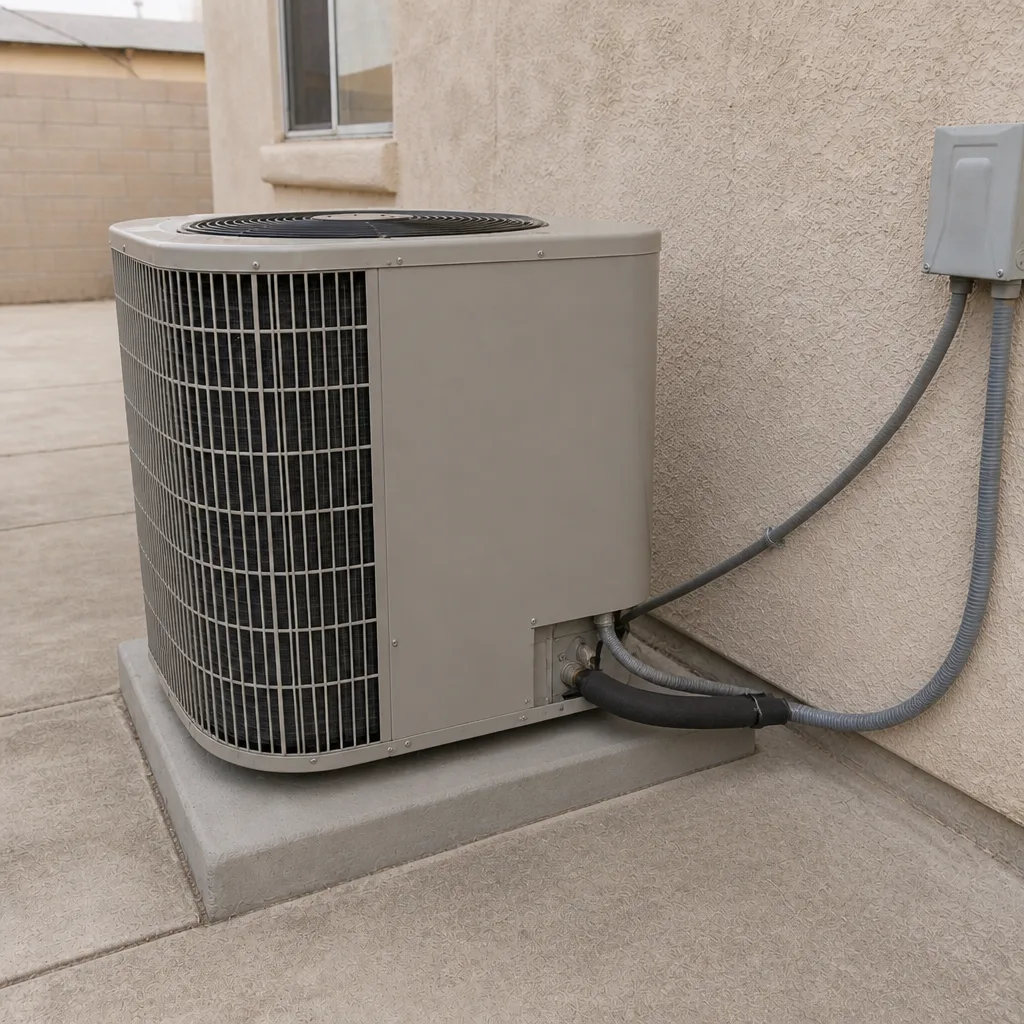
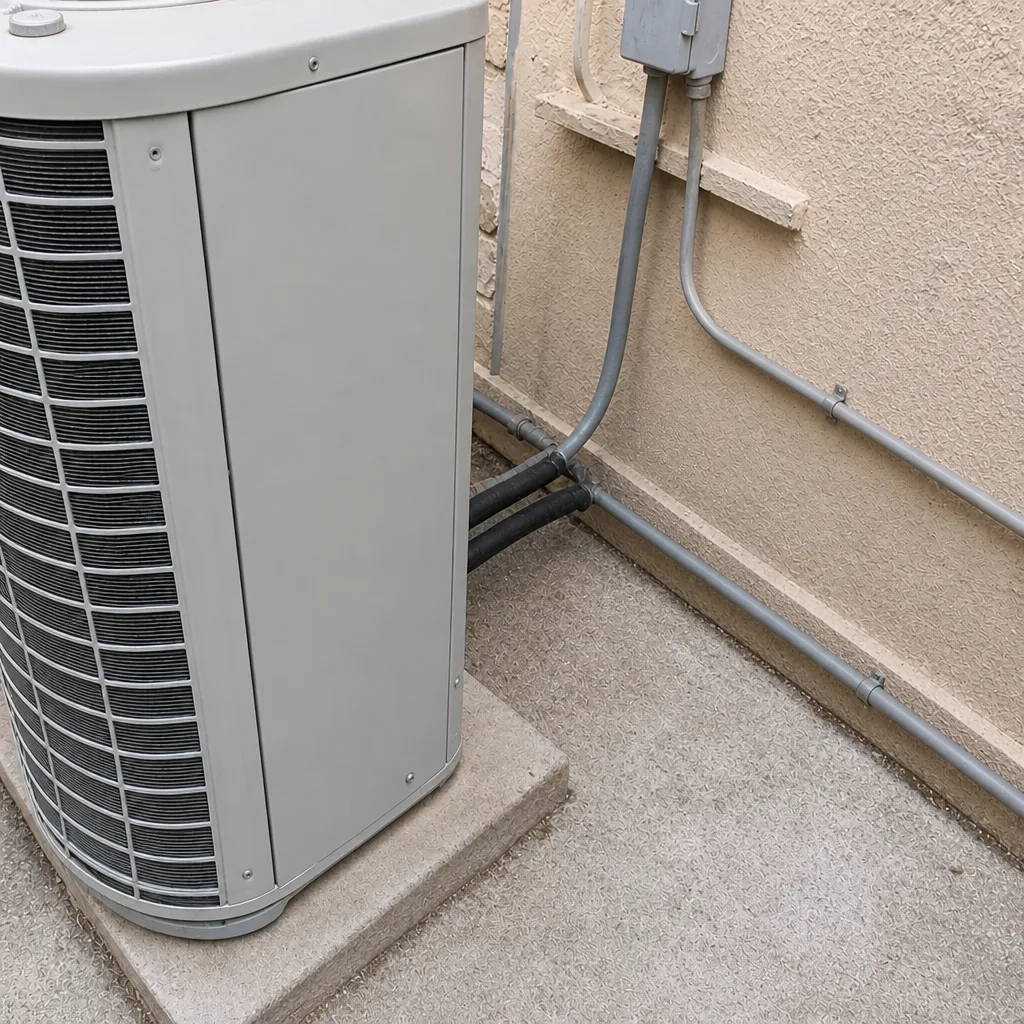
- Clear debris from around the unit. Keep two feet of clear space on all sides. Trim back any shrubs or vines. Pull leaves and tumbleweeds away from the base. A blocked unit runs hot and works harder.
- Rinse the outdoor coil gently with a garden hose. Light spray, top to bottom, no pressure washer, no nozzle set to a jet. You’re washing surface dust and cottonwood fluff off, not blasting the fins. Bend the fins and you’ve hurt airflow more than the dust ever did.
- Check the line insulation for UV damage. The foam insulation wrapped around the refrigerant lines takes a beating from desert sun. Look for cracking, crumbling, or bare copper showing through. If the insulation is shot, that’s a call to get it re-wrapped – it’s not a job to ignore, because exposed lines lose efficiency and can sweat.
- Look for standing water near the unit. A puddle that wasn’t there before usually means a clogged condensate line. That’s worth a call before it becomes a flooded pan.
What you should not do: open the electrical panel, mess with the refrigerant lines, or try to clean the indoor coil yourself. Those are the jobs that turn a maintenance visit into a repair bill. Capacitors and refrigerant are not homeowner territory – and honestly, neither is anything behind a panel cover. For more on the repair side of that line, see AC Repair & Installation in North Las Vegas.
What a Professional Visit Actually Checks
This is the part people skip because they think “I cleaned the filter, I’m good.” You’re not. A filter clean doesn’t touch refrigerant charge, electrical connections, or capacitor health – and in a 115°F climate, those are exactly the things that compress the failure timeline.
Here’s what actually gets checked on a proper maintenance visit:
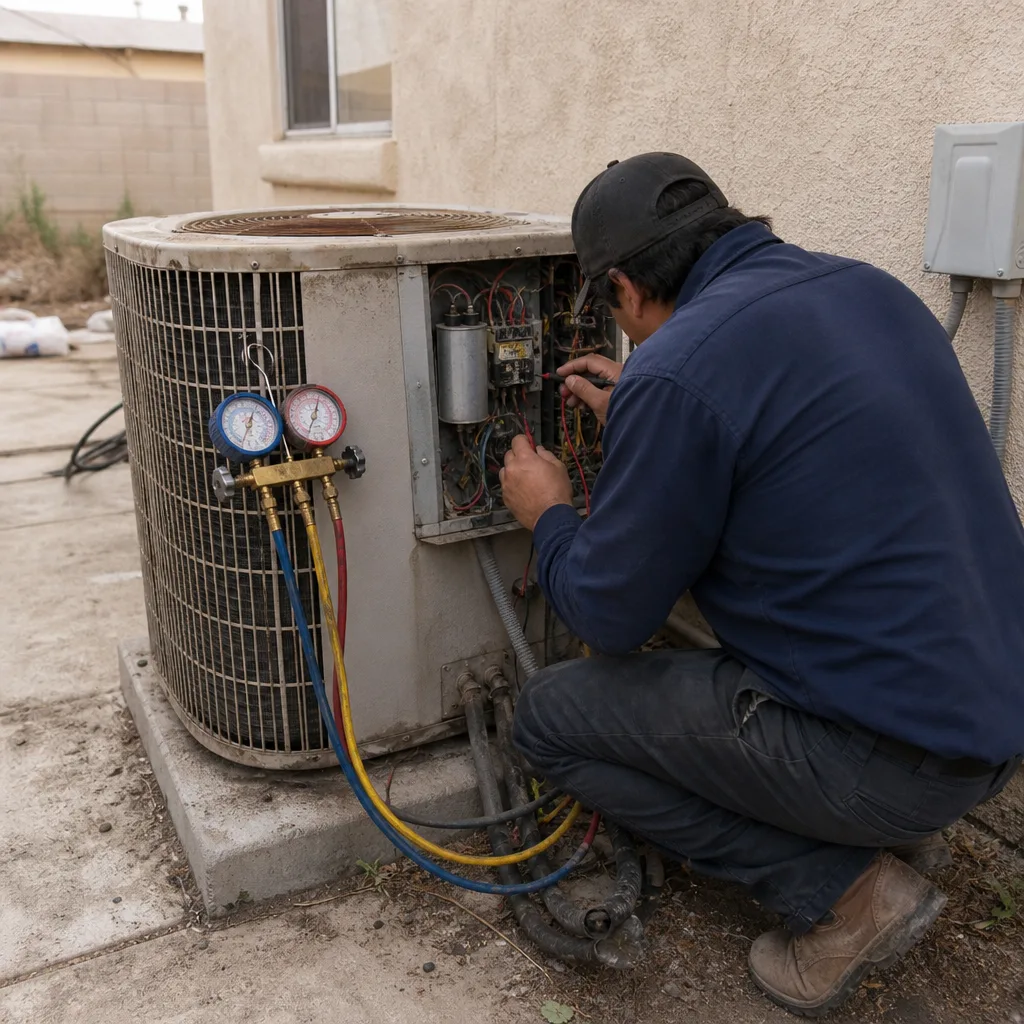
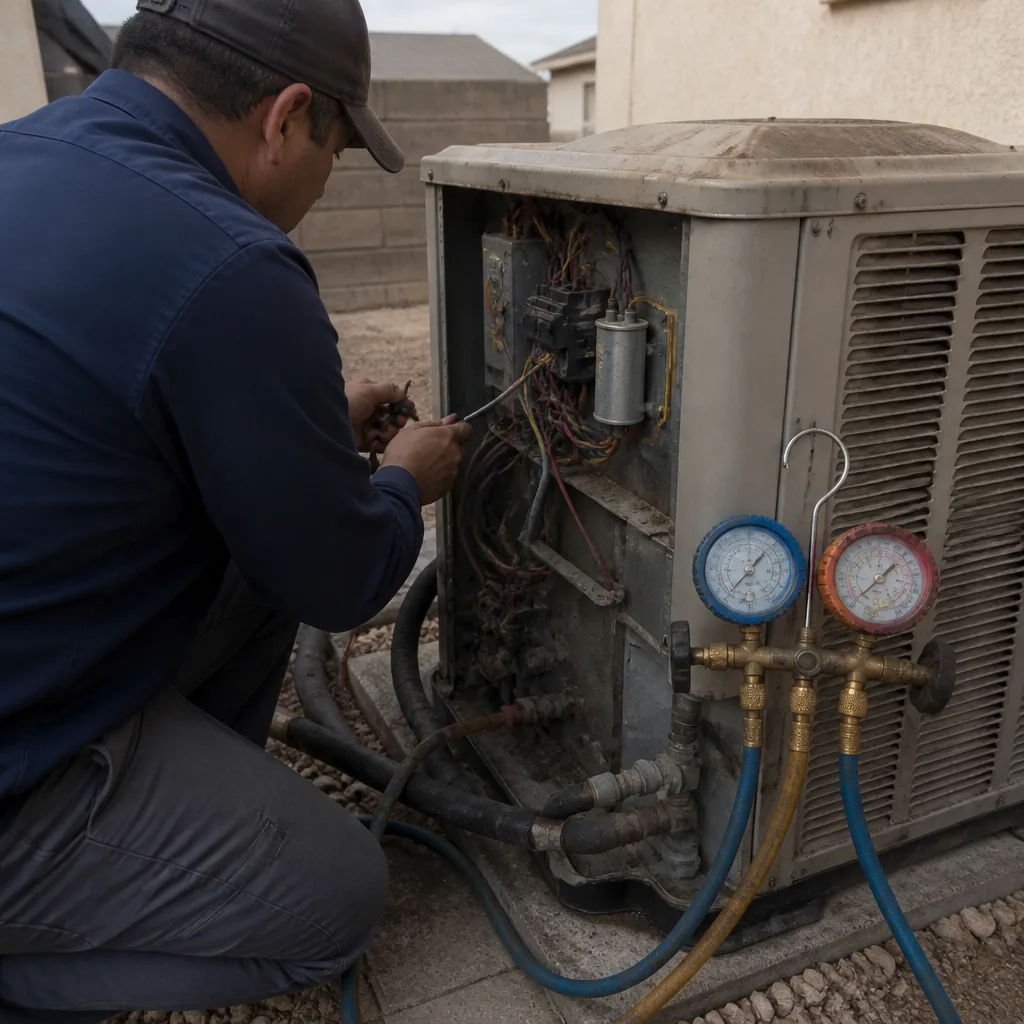
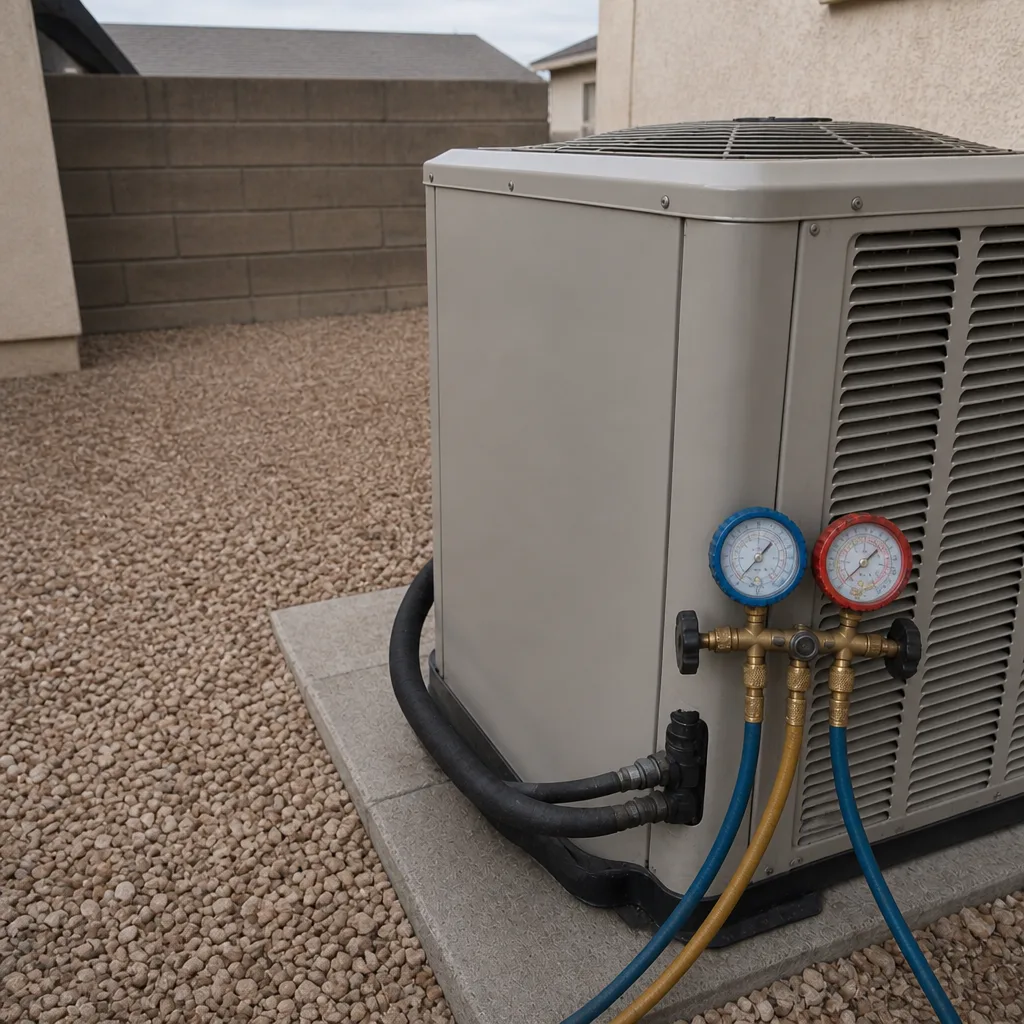
- Refrigerant charge. Low charge means the system runs longer and hotter, which stresses the compressor. In a heat pump, charge is confirmed with gauges and superheat/subcool readings, not guessed. A charge that’s off in May becomes a compressor failure by August.
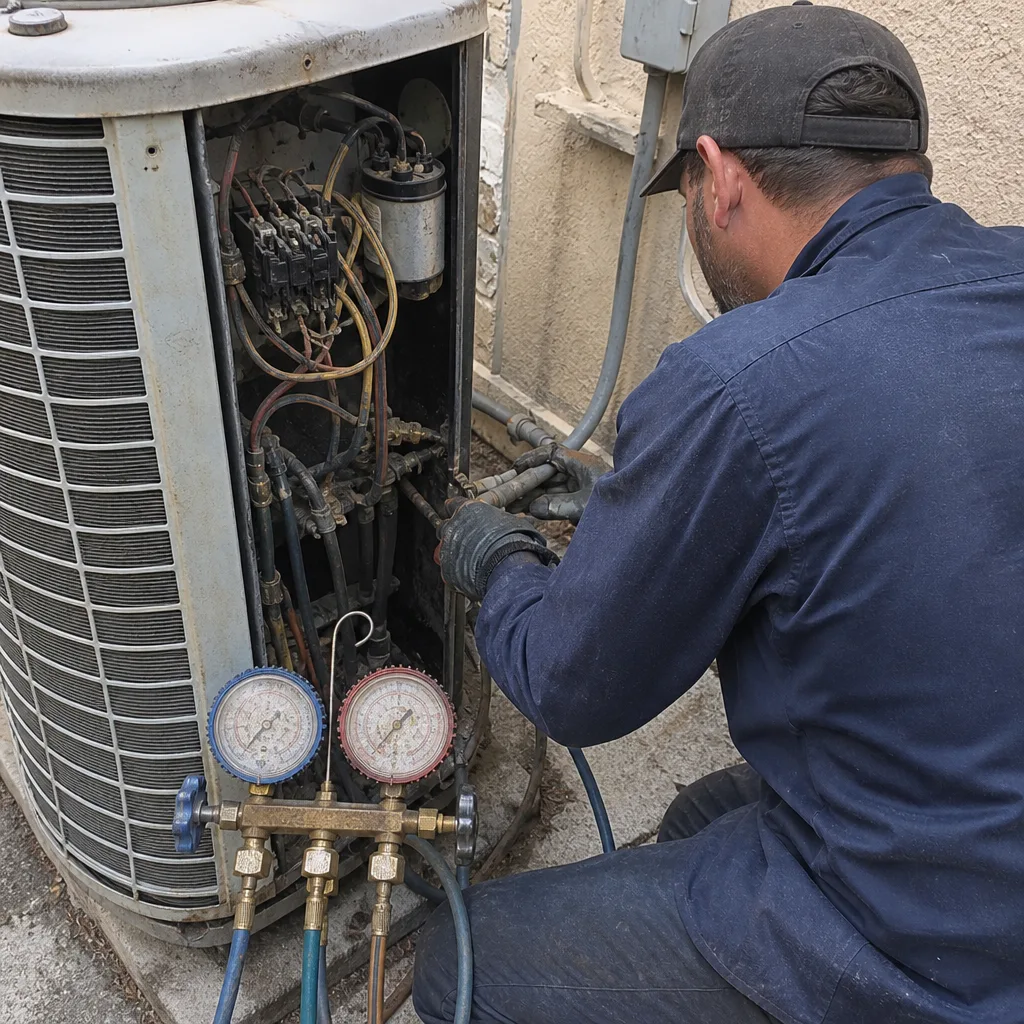
- Electrical connections. Loose connections at the contactor or capacitor terminals arc and overheat. In a valley where the unit runs near-continuously, those connections see more cycles than in a colder climate. Tightening them is a five-minute job that prevents a fire hazard and a no-cool call.
- Capacitor health. We test the capacitor before anyone says the word compressor. A weak capacitor is cheap to replace and mimics a dead compressor’s symptoms. Skipping the test is how a $30 part becomes a $1,200 conversation.
- Coil condition (indoor and outdoor). Deep clean as needed, fin comb for bent fins.
- Drain pan and condensate line. Especially after monsoon. Standing water, algae, and mineral buildup get cleared before they cause a float-switch trip.
- Defrost cycle and reversing valve (heat pumps). Confirming heating mode works before the December cold snap is the whole point of the fall visit.
That’s what a real maintenance visit looks like. Not a guy with a clipboard who nods at the filter and hands you an invoice. The 115°F climate compresses every failure timeline because the equipment never rests. Nothing you can do with a garden hose substitutes for readings on a gauge manifold.
The Cost-of-Neglect Math: Tune-Up vs. Compressor
Here’s the honest math, based on the service calls we actually run around North Las Vegas. A yearly maintenance visit runs roughly $150 on a mini-split, sometimes a bit more for a full heat pump. A compressor replacement, when a dirty coil and a low charge contributed to it, runs $1,200 or more – and that’s before you factor in the days without cooling in July while you wait for a part.
Do the math over ten years:
- With annual maintenance: roughly $1,500 in tune-ups over a decade, and a system that reaches its expected service life with maybe one repair along the way.
- Without maintenance: the same $0 in tune-ups, but a dirty coil and a skipped charge check are a leading contributor to early compressor failure. That’s a $1,200 replacement at year five or six, plus the emergency call premium, plus the discomfort of a failed system in August.
We’ve seen this pattern over and over. The house that gets a visit every spring is the house we don’t see in a panic in July. The house that “just cleans the filter” is the one where the capacitor finally gave up on the hottest day of the year, and the compressor got blamed before anyone tested the $30 part. The tune-up isn’t a luxury line item – it’s the thing that keeps the big bill off the table.
If you’re comparing repair versus replacement on an older system, our Heating & Furnace in North Las Vegas guide walks through the decision, and the same logic applies to the cooling side.
How Heat Pump Maintenance Differs From Mini Splits
Mini-splits and heat pumps share most of the maintenance calendar, but there are a few places they part ways. A ductless mini-split has one or more indoor heads, each with its own filter and its own drain line. That means multiple filters to clean and multiple drain pans to check. If you have three heads in the house, multiply the filter task by three.
A heat pump has a reversing valve, a defrost cycle, and outdoor components that need to work in both heating and cooling modes. The defrost cycle matters most in the cold-snap months – if the outdoor coil ices up and won’t defrost, you’ll notice the heat pump struggling to keep up. That’s a call, not a thermostat problem.
Both get the same core tasks: filter cleaning monthly, coil check after cottonwood, refrigerant charge confirmed pre-summer, electrical and capacitor checks annually, drain pan inspection post-monsoon. The difference is the fall defrost test on the heat pump and the multiplication of indoor tasks on a multi-head mini-split.
Ray has worked on Carrier, Trane, Lennox, and American Standard systems across the valley, and the maintenance rhythm is the same regardless of the badge on the unit. The climate drives the schedule, not the brand.
Common Mistakes to Avoid
- Following a January-July filter schedule. The manual was written for a different climate. In North Las Vegas, the filter loads up faster and the cottonwood season hits in April. Clean it monthly or more.
- Blasting the outdoor coil with a pressure washer. A jet nozzle bends the fins and hurts airflow worse than the dust. Gentle garden hose only.
- Skipping the May professional visit because “it’s working fine.” The whole point of a pre-summer visit is catching the weak capacitor and low charge before you need the system at 115°F.
- Ignoring the drain pan after monsoon. A pan that drains fine in June can back up in September and trip the float switch. Check it, or have it checked.
- Assuming a dirty filter is the only issue. If airflow is still weak after a filter clean, the coil or charge is likely the problem. That’s a diagnostic, not a filter.
- Letting line insulation crumble in the sun. Exposed refrigerant lines lose efficiency and sweat. Re-wrap them before the sun finishes the job.
- Calling for a compressor when nobody tested the capacitor. We test the capacitor first, every time. If someone jumps straight to “you need a compressor,” get a second opinion.
See the difference
 Before
 After
 Before
 After
 Before
 After
When to Call a Professional
Some things are yours to handle. Others aren’t. Call when the system blows warm air in cooling mode or cold air in heating mode, when airflow stays weak after you’ve cleaned the filter, when you see ice on the indoor coil or outdoor unit, or when there’s standing water around the indoor head or outdoor unit. Call if the outdoor unit is louder than usual, if the breaker trips when the system kicks on, or if the heat pump can’t keep up in a cold snap. Those are signs of a refrigerant, electrical, or defrost issue that needs gauges and a trained eye, not a garden hose. Don’t open panels or touch refrigerant lines – that’s how a maintenance visit becomes a hospital trip.
Ray’s Heating & Air North Las Vegas offers free estimates in North Las Vegas – call (844) 761-6871. A live person answers every call, and the 90-Day Done Right Promise is in writing on every job. If it’s not done right, one call brings Ray back.
Frequently Asked Questions
Every 2-4 weeks during heavy-use months, and every two weeks when cottonwood is flying in April or after a dust storm. Desert dust loads filters faster than the manual’s generic schedule suggests. Cleaning filters is the single easiest thing you can do to protect airflow and efficiency. If airflow is still weak after a clean, call (844) 761-6871 – estimates are free.
You can gently rinse surface dust and cottonwood fluff off with a garden hose – light spray, top to bottom, no pressure washer. The deep clean that gets packed-in grit out of the fin stack needs a professional. Call (844) 761-6871 for a maintenance visit that includes a proper coil clean.
Roughly $150 for a yearly maintenance visit on a mini-split, sometimes a bit more for a full heat pump with more components. That’s against a compressor replacement that can run $1,200 or more. The math favors the tune-up every time. Call (844) 761-6871 for exact pricing on your system – estimates are free.
May, before the sprint to 115°F. That’s when the pre-summer visit catches refrigerant charge and capacitor issues before the hottest stretch. Book in March so you’re not standing in line in May. For heat pump owners, add a fall visit to test heating mode before the December cold snaps. Call (844) 761-6871 to get on the schedule.
Weak airflow after a filter clean, warm air in cooling mode, ice on the coil, standing water, or a unit that’s louder than usual. Any of those means it’s time. Don’t wait for a full failure in August – call (844) 761-6871 and we’ll take a look, with free estimates.
Yes. Filter cleaning doesn’t touch refrigerant charge, electrical connections, or capacitor health, and those are the things that fail in a 115°F climate. A yearly visit is the difference between a $150 tune-up and a $1,200 compressor replacement. Call (844) 761-6871 – see the readings and the numbers before any work begins.
The Bottom Line
The standard twice-a-year maintenance advice doesn’t fit North Las Vegas. Build your calendar around cottonwood season in April, monsoon humidity in July and August, and the pre-summer sprint to 115°F in May. Clean filters monthly or more. Rinse the outdoor coil gently after dust and cottonwood. Check the drain pan after monsoon. And book the annual professional visit that confirms refrigerant charge, tightens electrical connections, and tests the capacitor – because that’s the visit that keeps the compressor alive. Do the small stuff, and the big bills stay off the table. For North Las Vegas homeowners who want a name they can verify and a person who answers the phone, that’s what we do.
Ray’s Heating & Air North Las Vegas home is where you’ll find the full picture of what we cover across the valley.
Written by the team at Ray’s Heating & Air North Las Vegas.
Contact
Ready to get your heat pump or mini-split on a North Las Vegas maintenance calendar that actually fits the climate? Call (844) 761-6871 for a free estimate. We’ll walk you through what your system needs, show you the readings before we quote a number, and put the 90-Day Done Right Promise in writing. Live person, every call.