
Last updated November 17, 2026
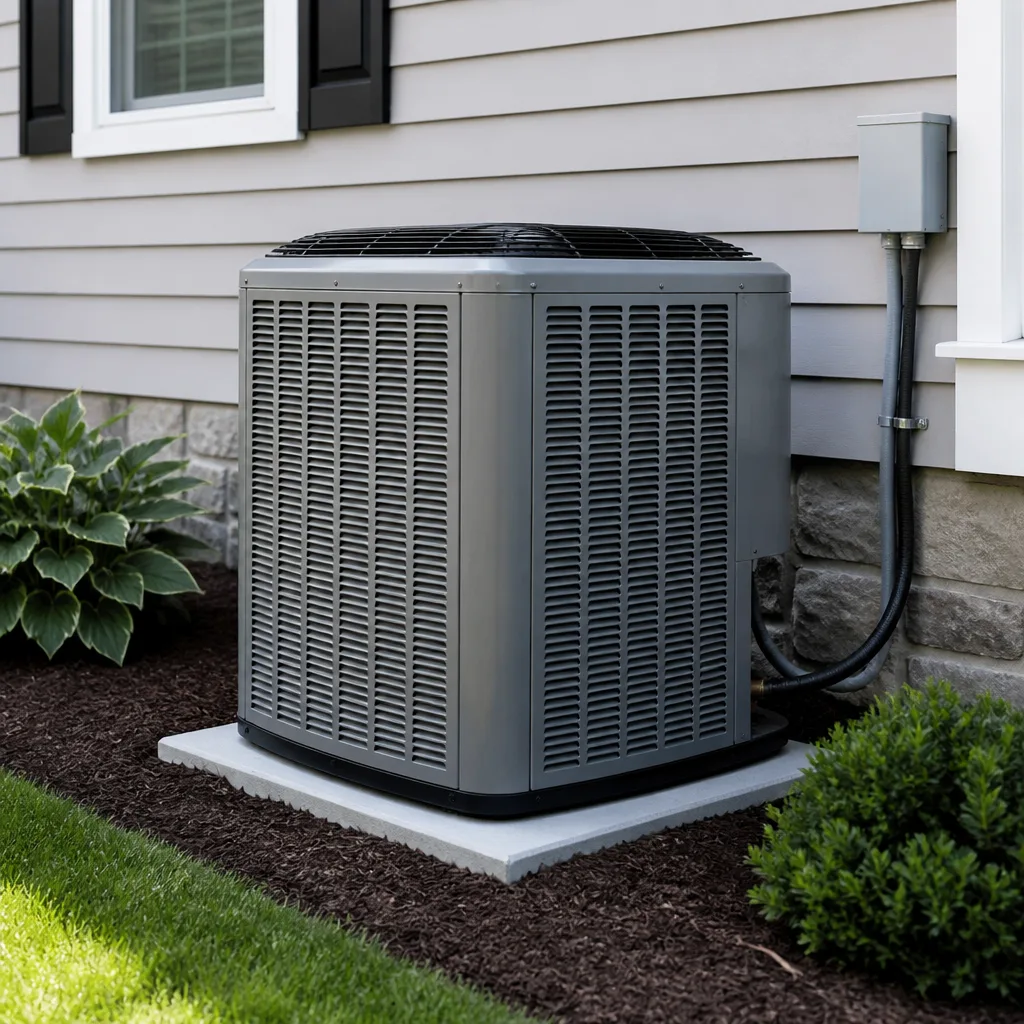 AC repair
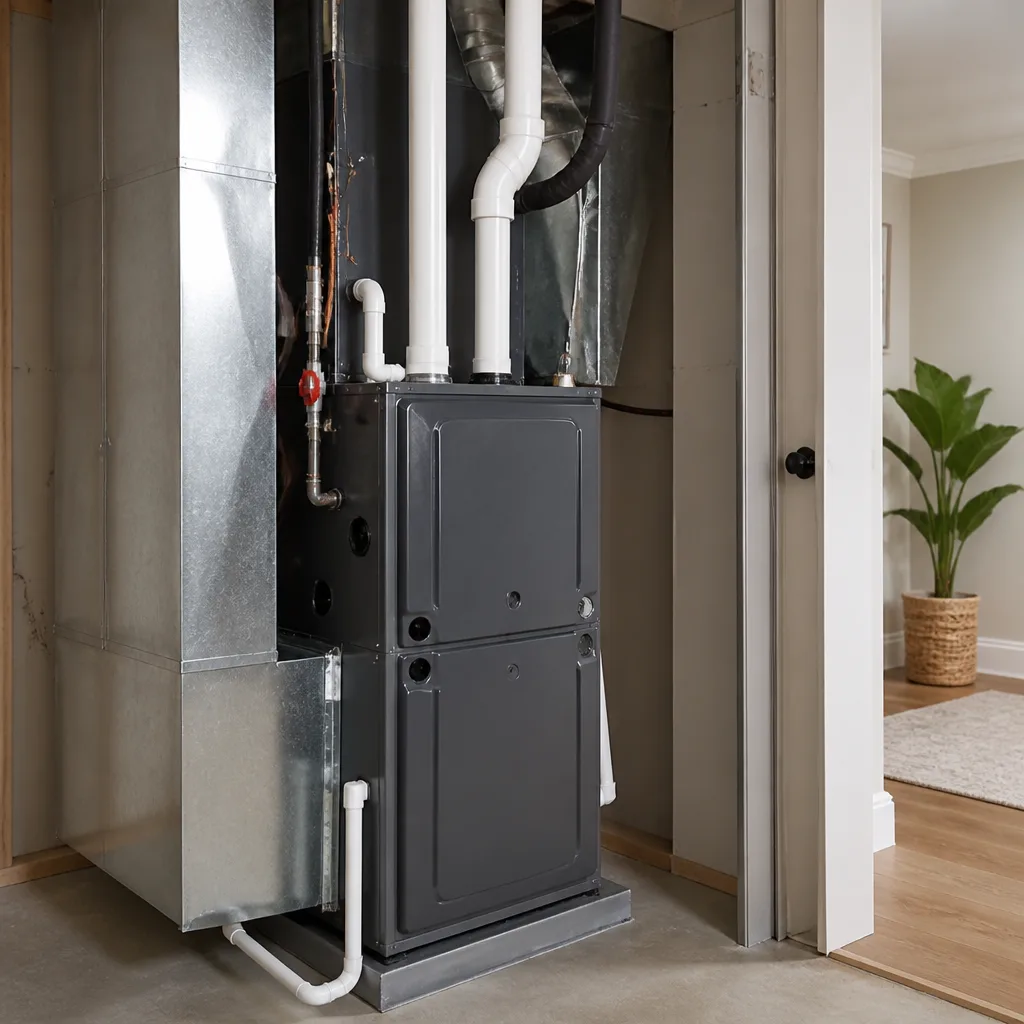 Furnace & heating
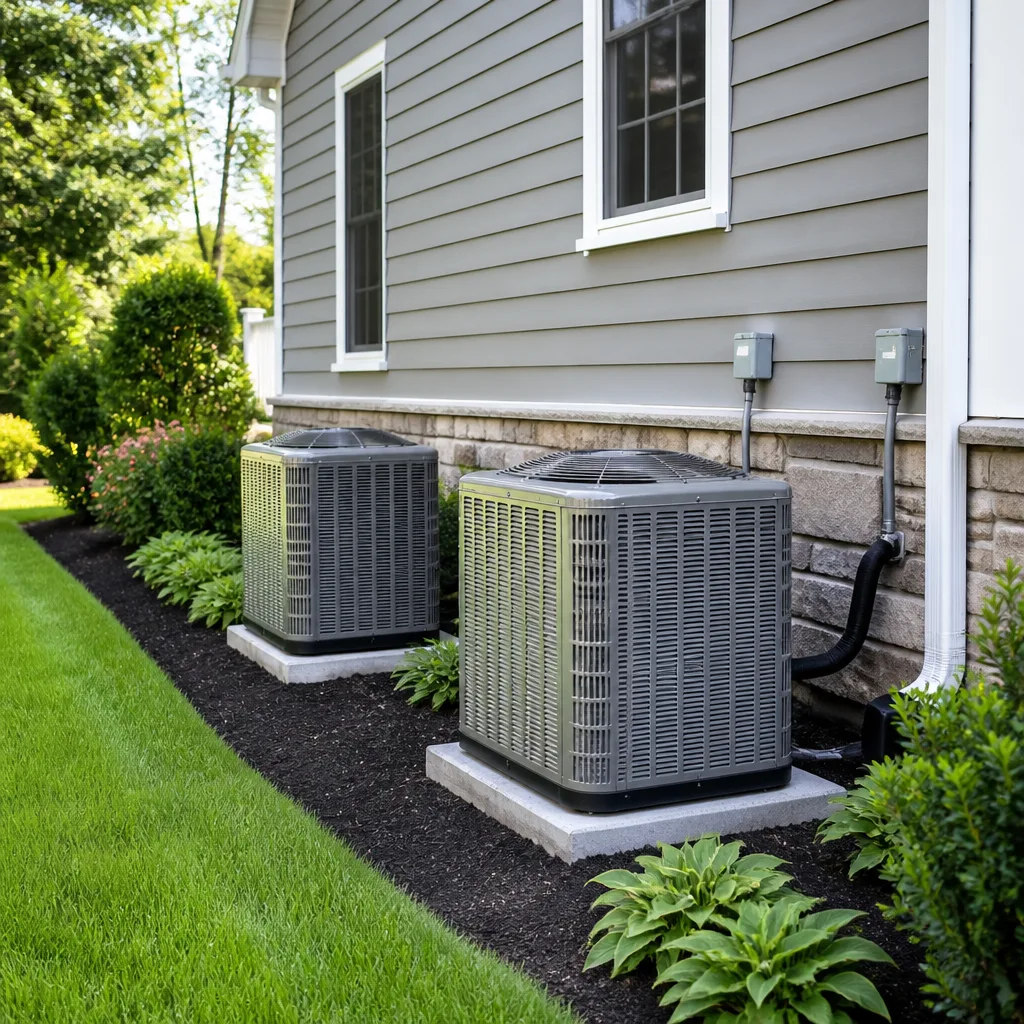 Heat pumps
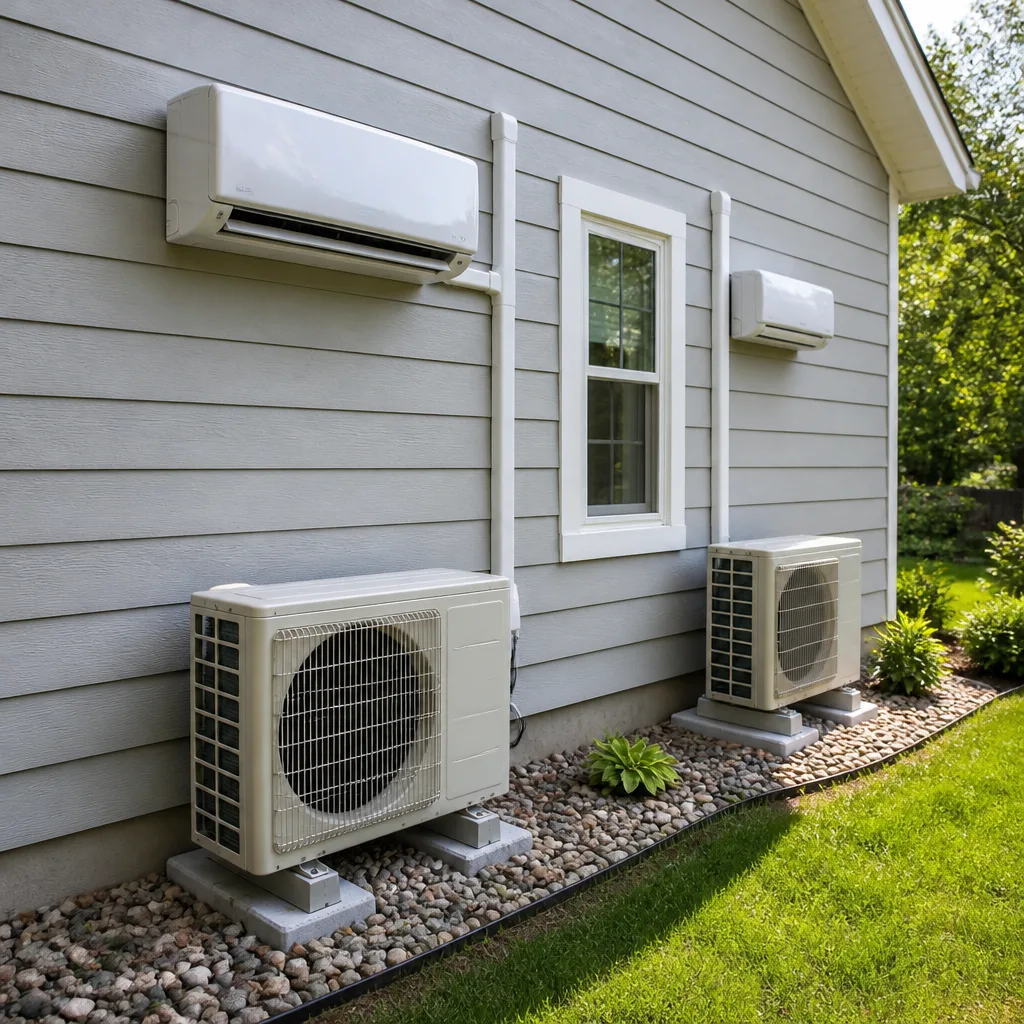 Ductless mini splits
 Carrier
 Trane
 Goodman
Seasonal tune-up and full diagnostic on your Carrier, Trane, or Goodman system - readings shown to you before any repair is proposed
Diagnosis first, numbers second - you approve the repair price before a single part goes in.
Get your free estimateAC Repair & Installation Warning Signs Every Homeowner Should Know
A unit that’s about to lose its compressor gives you warning signs for an average of about eleven days before it quits. That window is real, and it’s usually long enough to save the equipment instead of replacing it. The catch is that almost nobody knows what to listen for until it’s too late. Compressor failure is one of the most expensive repairs in the trade, and in our experience here in North Las Vegas it is often the one that gets missed because the homeowner was told to “watch for rattling” and given nothing more specific. This guide fixes that. You’ll learn the exact sounds, smells, and behavior changes that mean you have one to three weeks before a breakdown, ranked by urgency, so you know when to call today versus when to schedule for next Tuesday.
Quick Answer
AC warning signs that mean “call today” include a burning electrical smell, a tripping breaker, ice on the refrigerant line, or a unit that never shuts off during peak heat. Everything else (slightly slow cooling, a fainter rattle, a bill that crept up 10 to 15 percent) usually means “schedule within 72 hours.” The point of watching is simple: catch a failing capacitor or a slow refrigerant leak in North Las Vegas before it takes the compressor with it. Readings first, numbers second. That’s the order the diagnosis should happen in, and it’s the order most rushed call-outs skip.
Styles & brands we work with
- AC repair
- Furnace & heating
- Heat pumps
- Ductless mini splits
- Carrier
- Trane
- Goodman
Table of Contents
- The Three-Tier Urgency System: Red, Yellow, Watch
- Desert-Specific Warnings Generic Guides Miss
- The Electric Bill Warning Sign Nobody Tracks
- What Each Bad Smell Actually Means
- Sounds Ranked by What They Tell You
- How to Photograph and Document a Warning Sign Before You Call
- Repair or Replace: Reading a Failing System Honestly
- Common Mistakes to Avoid
- Frequently Asked Questions
The Three-Tier Urgency System: Red, Yellow, Watch
Here’s the framework we use when a homeowner reads symptoms to us over the phone. It sorts the noise from the signal, and it starts from one rule: your system tells you what’s wrong, and the job is to listen first.
Red: call today, turn the unit off. These are the signs that point to an active hazard or a component about to fail hard.
- Burning or hot-plastic smell coming from a vent or the outdoor unit. Shut it down at the thermostat, then at the breaker if you can safely reach it.
- A breaker that trips shortly after the AC comes on, and trips again after a reset.
- Ice on the thick insulated line running into the outdoor unit, or frost on the coil.
- The system running continuously during the peak 4-to-8pm heat window and still losing ground on the thermostat.
- Loud metallic grinding or screeching from the outdoor unit.
Yellow: schedule within 72 hours. The system is working, but something is degrading.
- Weak airflow from vents compared to last summer.
- A fainter rattle, hum, or click cycling in and out.
- A bill that’s climbed noticeably with no jump in weather or usage.
- Cooling that starts fine in the morning but falls behind by mid-afternoon.
Watch: note it and mention at your next maintenance visit.
- A slightly musty smell that clears once the system runs.
- A faint rattle on startup that goes away.
- Condensation or water pooling that dries up on its own.
In North Las Vegas, most of the calls we get land in the Yellow tier and explain it away until it drifts into Red. Catching it in Yellow is what keeps a $200 capacitor from becoming a $1,800 compressor job.
Desert-Specific Warnings Generic Guides Miss
Most warning-sign articles are written for a mild four-season climate. North Las Vegas is not that. Our summers push 110 degrees, our monsoon humidity spikes in July and August, and our homes run their systems hard for months without a real break. Three things show up here that the generic lists leave out.
Excessive cycling during the 4-to-8pm peak heat window. Every AC in North Las Vegas cycles more at the hottest part of the day. What matters is whether yours short-cycles: off and on every few minutes, over and over. That pattern points to an overcharged system, a failing capacitor, or a thermostat that’s reading the room wrong. If it’s new this summer, don’t shrug it off.
Ice on the suction line during monsoon humidity days. The thick insulated copper line that runs into the outdoor unit should never frost over. When our humidity climbs and the line ices up, that’s usually low refrigerant or restricted airflow. It might thaw by evening and look fine, which is exactly why people miss it. If you see frost once, note the date and get it checked. Our AC Repair & Installation in North Las Vegas team sees this pattern a lot in older North Las Vegas neighborhoods heading into August.
A condenser fan that runs slow in the morning and seems fine by the afternoon. A fan motor on its way out often drags when it’s cool and loosens up as the day heats. That’s the opposite of what most people assume, and it fools homeowners into thinking the system fixed itself. Watch the fan first thing in the morning. If it takes a nudge or spins lazily, get it on the schedule.
The Electric Bill Warning Sign Nobody Tracks
Here’s the one most homeowners never think to check: your electric bill. Not the total number, the percentage. A spike of 10 to 15 percent above the same month last year, on a genuinely similar weather year, correlates closely with refrigerant loss or the early stages of compressor degradation. The unit is working harder to hit the same temperature, and the meter shows it before the thermostat does.
Two things to do with this:
- Pull this month’s bill and last year’s same-month bill and compare them. Note whether you ran the AC more or less, and whether the weather was comparable. A wild heat wave makes the comparison unfair; a normal year doesn’t.
- Note the date of the jump. If it stepped up in June and stayed, that’s a different story than a one-off billing glitch. A sustained 10 to 15 percent climb with steady usage is worth a call.
I’d rather test a capacitor and a refrigerant charge than sell someone a compressor. That’s the whole reason this signal is worth learning. It’s the cheapest early warning you have, and it costs nothing to read. The team behind our Ray’s Heating & Air North Las Vegas home page keeps a running list of what desert bill spikes usually turn out to be, and it’s short.
What Each Bad Smell Actually Means
Smells are the most-missed warning sign because they don’t always repeat. Here’s what each one points to and how fast to act.
- Burnt electrical or hot plastic. This is the most urgent. It usually points to a failing motor, a burnt wire, or a contactor overheating. Turn the unit off at the thermostat and get someone out today. Don’t run it “one more day” to see if it clears.
- Musty or moldy. Moisture sitting where it shouldn’t: a clogged drain pan, a wet filter, or a duct issue. Not an immediate hazard, but it will get worse and it’s a sign your airflow or drainage is wrong.
- Sulfur or rotten egg. Rare in AC equipment, but when it appears it’s worth a fast check, since it can point to an electrical component failing hot. Treat it like burnt electrical until proven otherwise.
- Chemical or sweetish refrigerant smell. Refrigerant is a sealed system and shouldn’t be leaking. A chemical smell near the indoor coil or the line set is a sign to stop and have it checked for a leak.
The rule: burning and chemical smells mean turn it off now. Musty means schedule it. If you smell something and can’t name it, call and describe it in plain words. That’s often enough to tell the person on the phone whether you’re a Red or a Yellow.
Sounds Ranked by What They Tell You
Sound is the highest-value diagnostic tool you have as a homeowner. You already know your system’s normal hum. Here’s what each change tends to mean.
- Metallic grinding or screeching. Highest priority. Bearings in a fan motor or the compressor itself. Stop the unit and call.
- Loud clicking followed by the unit trying to start and failing. Often a failing capacitor or contactor. Not an emergency if the unit still runs, but schedule it within 72 hours. A weak capacitor left alone is a top cause of compressor failure.
- A new, persistent rattle. A loose panel, a fan blade out of balance, or debris. Usually minor, but worth checking soon before it wears on the motor.
- A hum that’s louder than usual but steady. Normal in higher heat, but if it’s clearly louder than last summer, note it and get it on the schedule.
- A faint hiss or bubbling near the outdoor unit. Often refrigerant escaping from a small leak. Yellow tier.
Test the capacitor before anyone says the word compressor. That single habit prevents more expensive jobs than anything else in a desert climate. If your system is a heat pump or a ductless setup, the sounds are similar but the diagnosis differs; our Heat Pump & Mini Split in North Las Vegas page covers those setups.
How to Photograph and Document a Warning Sign Before You Call
This is the part most homeowners skip, and it’s the part that saves you the most on diagnostic labor. A few good photos and notes before you call tell whoever’s coming out what’s actually wrong, which shortens the visit and, in a lot of cases, gets you a sharper answer on the phone.
- Photograph the outdoor unit nameplate. That sticker with the model and serial numbers tells the tech exactly what equipment you have, and it lets them check parts availability before they arrive.
- Photograph the whole outdoor unit and its surroundings. Clearance from walls, shrubs, and the house matters. Debris around the base can cause the short-cycling and overheating warnings above.
- Photograph the thermostat at the moment it’s misbehaving. The setpoint, the room temperature, and any error code on the screen.
- Photograph ice, frost, or pooling water. If the line set froze, take the picture before it thaws. A photo of what you saw means no guessing later.
- Note the date, time, and the weather. “Ice on the suction line, July 18, 2025, around 98 degrees outside” is more useful than a description with no timing.
- Write down the sound in your own words. “Clicks every 4 minutes and the fan stutters” is exactly what we want to hear. There’s no wrong way to describe it.
Photos go in your phone’s notes app. You’ll have them in hand when you call, and the person on the other end can often tell you in a minute whether you’re Red or Yellow.
Repair or Replace: Reading a Failing System Honestly
Once a warning sign turns into an actual failure, the first real question is whether to repair or replace. The answer depends on three things: the age of the system, the cost of the repair, and whether the failure is a component or the heart of the machine.
- A capacitor, contactor, or fan motor on a system under 10 years old is a straightforward repair. We’d repair it.
- A refrigerant leak is worth a proper leak search and a conversation. Small leaks can be found and sealed. Large ones on older systems often tip toward replacement.
- A failing compressor is the big one. On a system 12 years or older, replacement usually makes more financial sense than swapping the compressor, because other parts are wearing out at the same rate.
- Repeated failures over a short window (three-plus different repairs in two years) usually signal a system that’s on its way out. That’s the point to talk about full replacement.
When it’s replacement time, we recommend Trane, Lennox, and Goodman more than anything else in North Las Vegas, and we’ll walk through the numbers before you have to decide. Upfront pricing means you see the readings and the numbers before any work begins, so there’s no guessing about whether the repair was worth it.
If your system needs a closer look or a full replacement, use the AC Repair & Installation in North Las Vegas page as your next stop, or call us directly. For heat and furnace season prep, the Heating & Furnace in North Las Vegas page is the companion guide.
Common Mistakes to Avoid
- Running a unit with ice on the line to “see if it clears.” Ice means the system is already working too hard. Running it makes the compressor work harder, and in North Las Vegas summer heat that gamble rarely pays off.
- Resetting a tripped breaker over and over. A breaker that keeps tripping is doing its job. Two resets and it trips again means stop and call someone.
- Telling the phone rep “it’s just making a weird noise.” The more specific you are (“clicks and hums, fan doesn’t start, four minutes on three minutes off”), the faster the diagnosis. Vague descriptions cost you diagnostic labor hours.
- Waiting for the “right time” after a warning sign. In North Las Vegas, that window is one to three weeks, and it closes faster than most people expect.
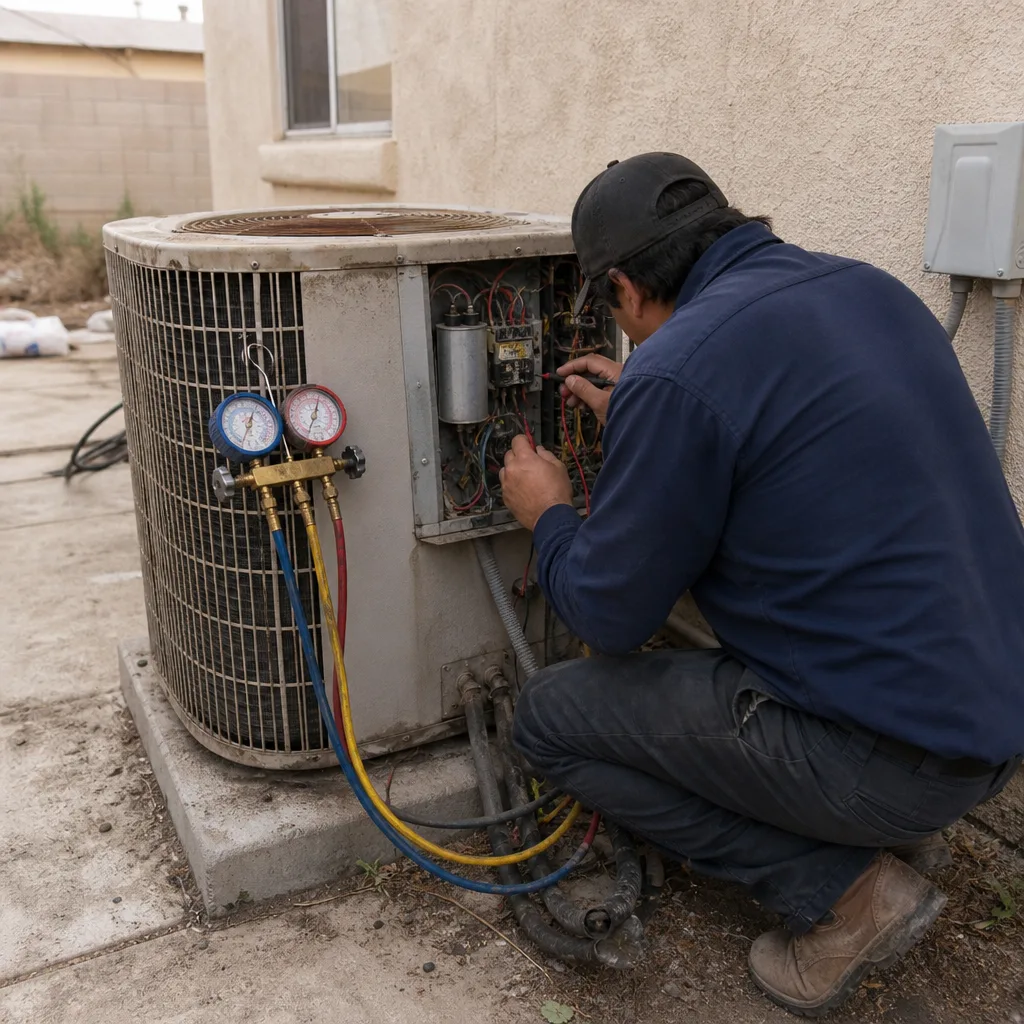
- Approving a compressor replacement without seeing the test readings. A failed capacitor looks like a failed compressor to a hasty diagnosis. Ask to see the readings first, every time.
- Ignoring the bill jump because the AC “still works.” The bill is the cheapest warning you’ll get, and a 10 to 15 percent climb with steady usage is worth a phone call.
- Skipping the photo documentation. A photo of the frozen line and the nameplate takes a few seconds and will shorten the diagnostic visit. It’s free information for the person showing up.
See the difference
 Before
 After
 Before
 After
 Before
 After
When to Call a Professional
Call when a warning sign reaches Red: burning smell, repeated breaker trips, ice on the line, or a system that runs continuously through peak heat and still can’t keep up. Call when a Yellow symptom has been sitting for more than a day or two without improving, or when you notice the same symptom twice in one summer. Call before the summer heat on any system over eight years old, if only to get a baseline. And call when you’re not sure, because a short call is cheaper than a failed compressor. Ray’s Heating & Air North Las Vegas offers free estimates in North Las Vegas – call (844) 761-6871. If you’ve got a written estimate from another company, bring it in for a free second opinion, and there’s no trip charge inside the county.
Frequently Asked Questions
A failing capacitor. It’s a relatively cheap part that a lot of hasty diagnoses skip past when the compressor looks like the culprit. If your unit clicks, hums, and won’t start, ask for the capacitor to be tested before anyone mentions the compressor. That’s the reading that often decides whether you’re looking at a $200 repair or an $1,800 one.
Roughly one to three weeks on average for a compressor on its way out. That’s a real window, but it’s not a guarantee, and it’s shorter when a symptom reaches Red (burning smell, ice on the line, repeated breaker trips). Call the same day for Red symptoms.
Yes, if it’s sustained and the weather and usage were similar to last year. A 10 to 15 percent climb above the same month last year correlates with refrigerant loss or compressor degradation. Run the comparison before you assume a rate hike, then call if the pattern holds.
Low refrigerant or restricted airflow, most often. It can thaw during monsoon humidity swings and look fine by evening, which is why people miss it. Photograph it before it thaws. Ice on the line is a Red-tier warning in North Las Vegas desert heat because the compressor is working against itself.
Burnt electrical or hot plastic, and any chemical or sweetish refrigerant smell. Turn the unit off at the thermostat and call. Musty odors can wait a day and get scheduled. If you can’t name the smell, describe it in plain words on the phone.
The warning signs are similar, but the diagnosis differs for heat pumps and ductless systems. You’ll want to have the specific equipment checked. We cover heat pump and mini-split warning signs on our Heat Pump & Mini Split in North Las Vegas page.
The Bottom Line
Most AC failures announce themselves for around eleven days. The signal is there: a bill that steps up 10 to 15 percent, a fan that runs slow in the morning, ice on the line during a monsoon-humidity day, or a smell that says “turn it off.” The point of this guide is to give you the ranked list, so you know which sounds mean call now, which mean schedule by 72 hours, and which mean jot it down for the next maintenance visit. Photograph what you find, note the date and time, and get the readings before you agree to a compressor job. That habit is worth more than any single repair. In North Las Vegas, where the desert heat gives warning signs less margin, it’s the difference between a small fix and a big one.
Ready to have someone look at it now, rather than wonder about it later? Ray’s Heating & Air North Las Vegas offers free estimates in North Las Vegas, answers every call with a live person, and stands behind every job with our 90-Day Done Right Promise: if it’s not done right, one call brings Ray back. Call (844) 761-6871 for a free estimate.
Written by the team at Ray’s Heating & Air North Las Vegas.