
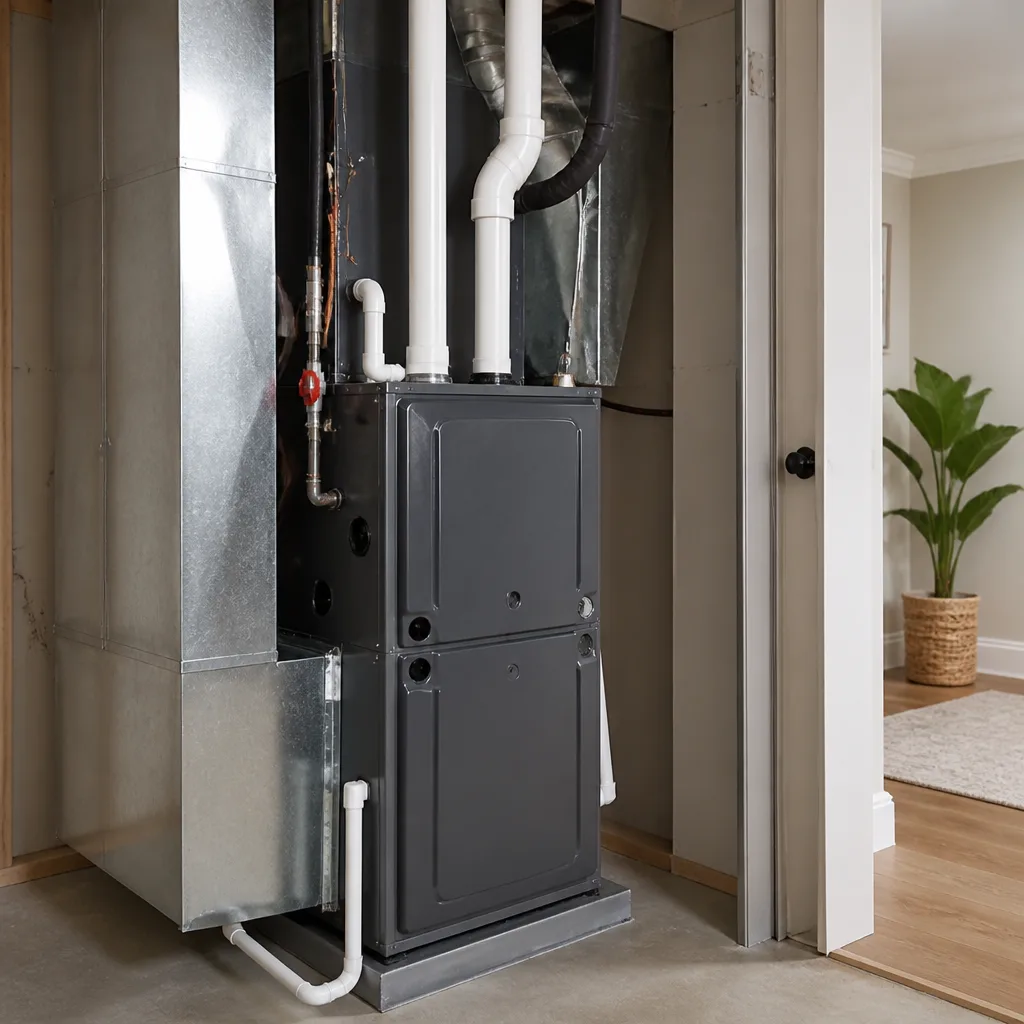
 Furnace & heating
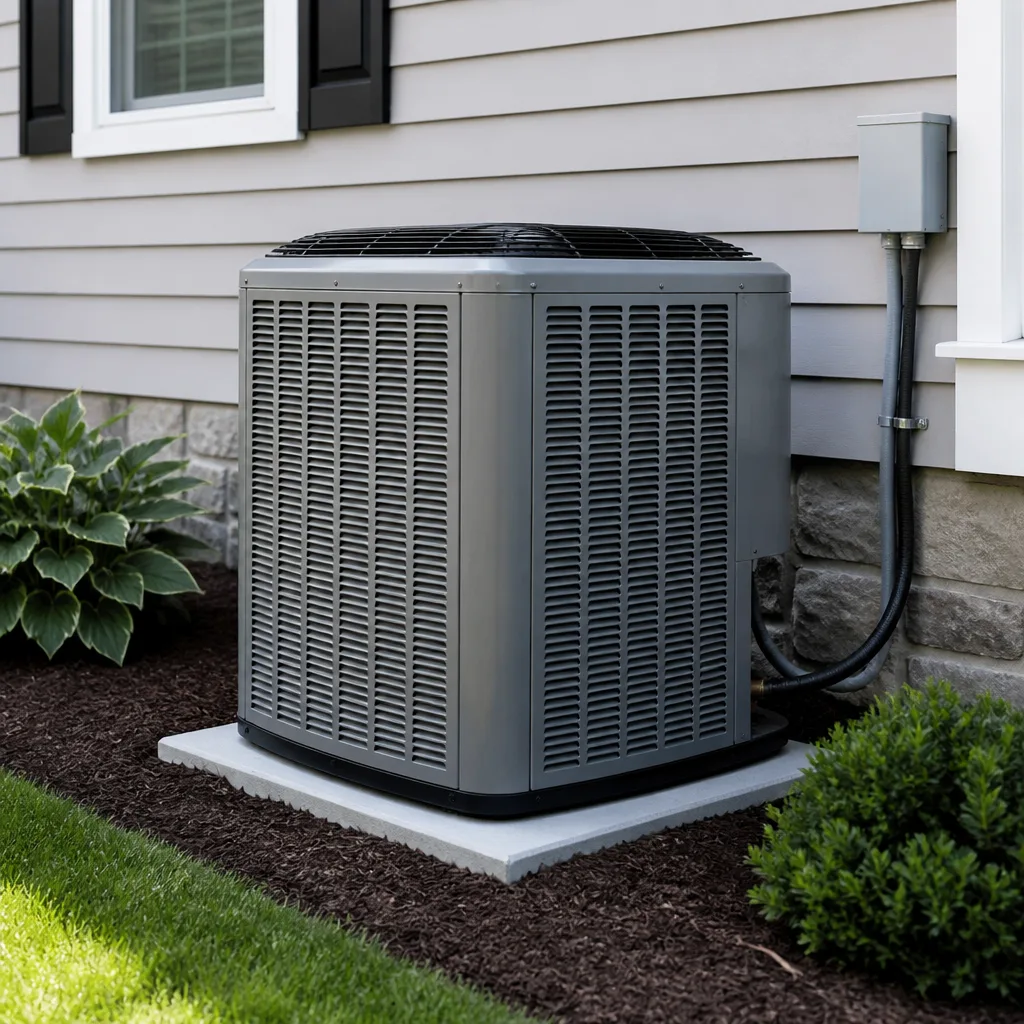 AC repair
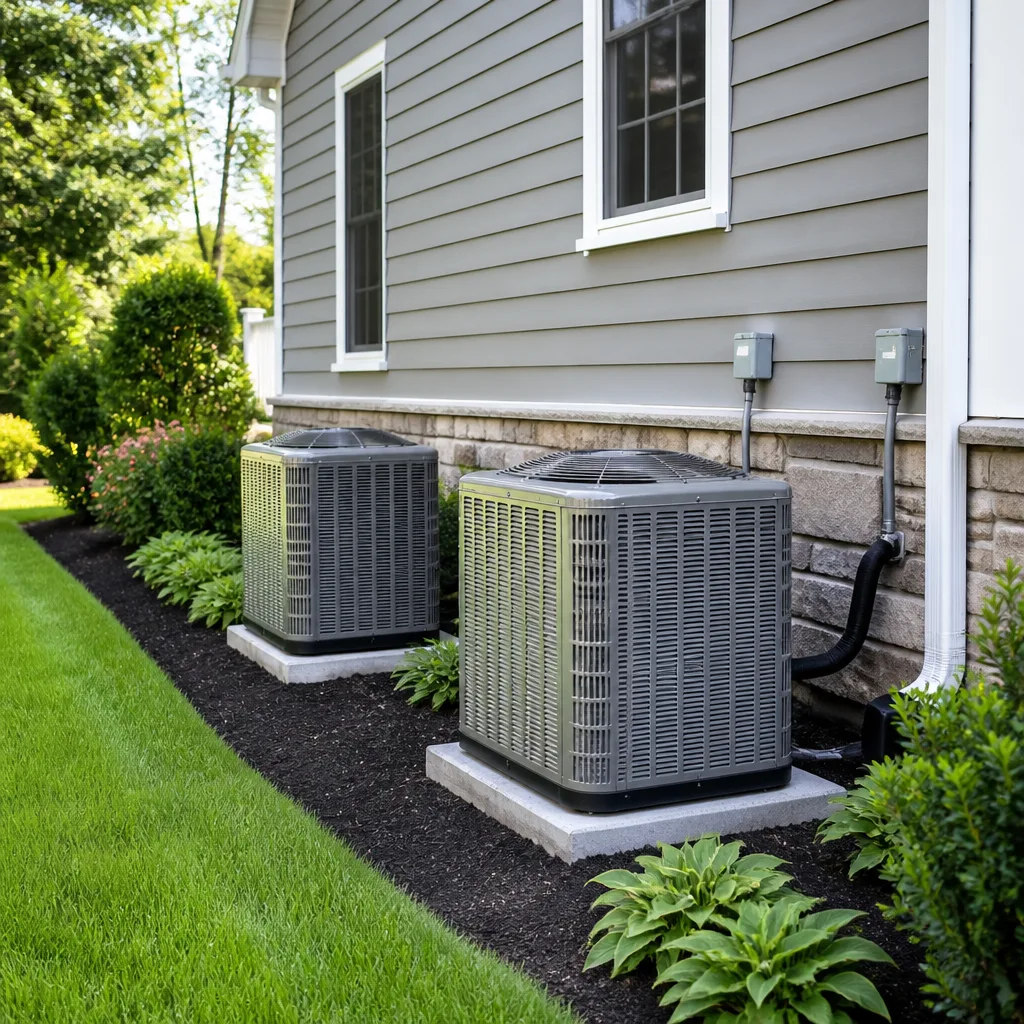 Heat pumps
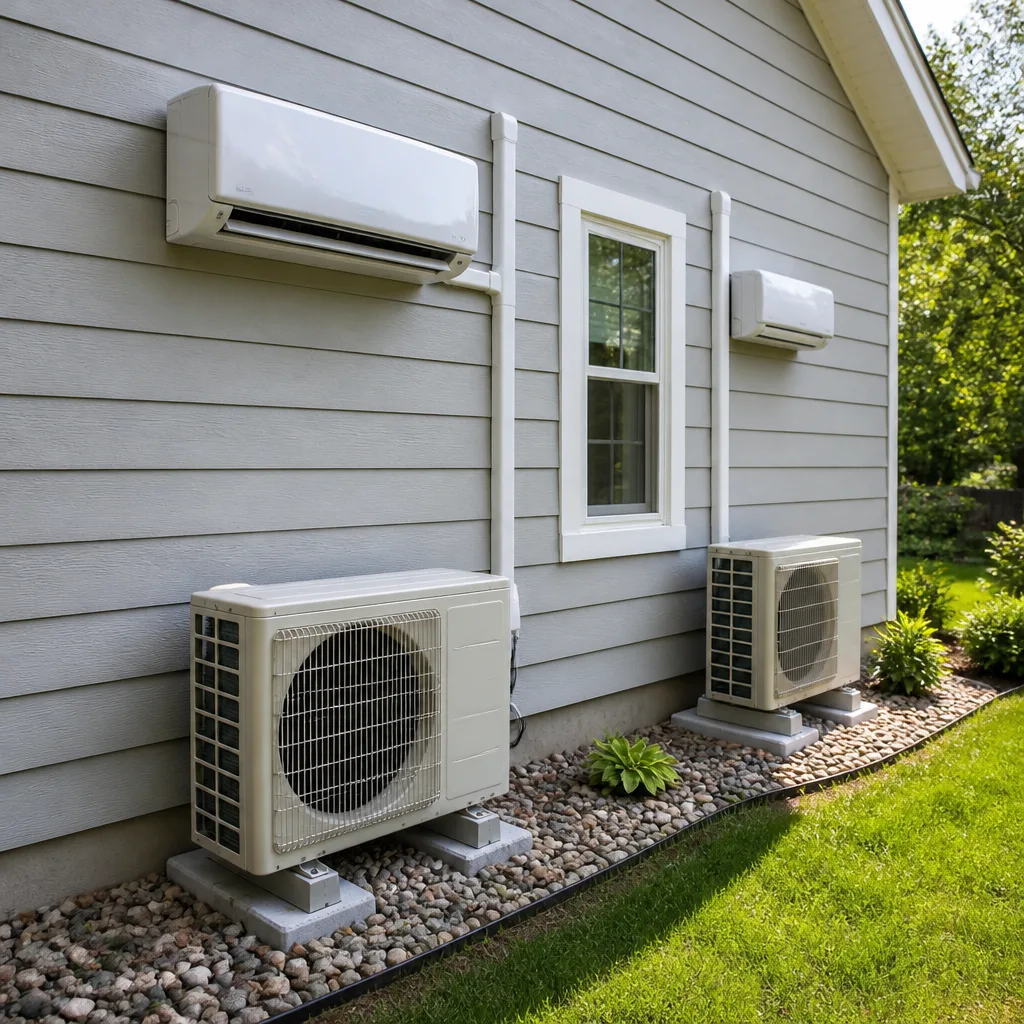 Ductless mini splits
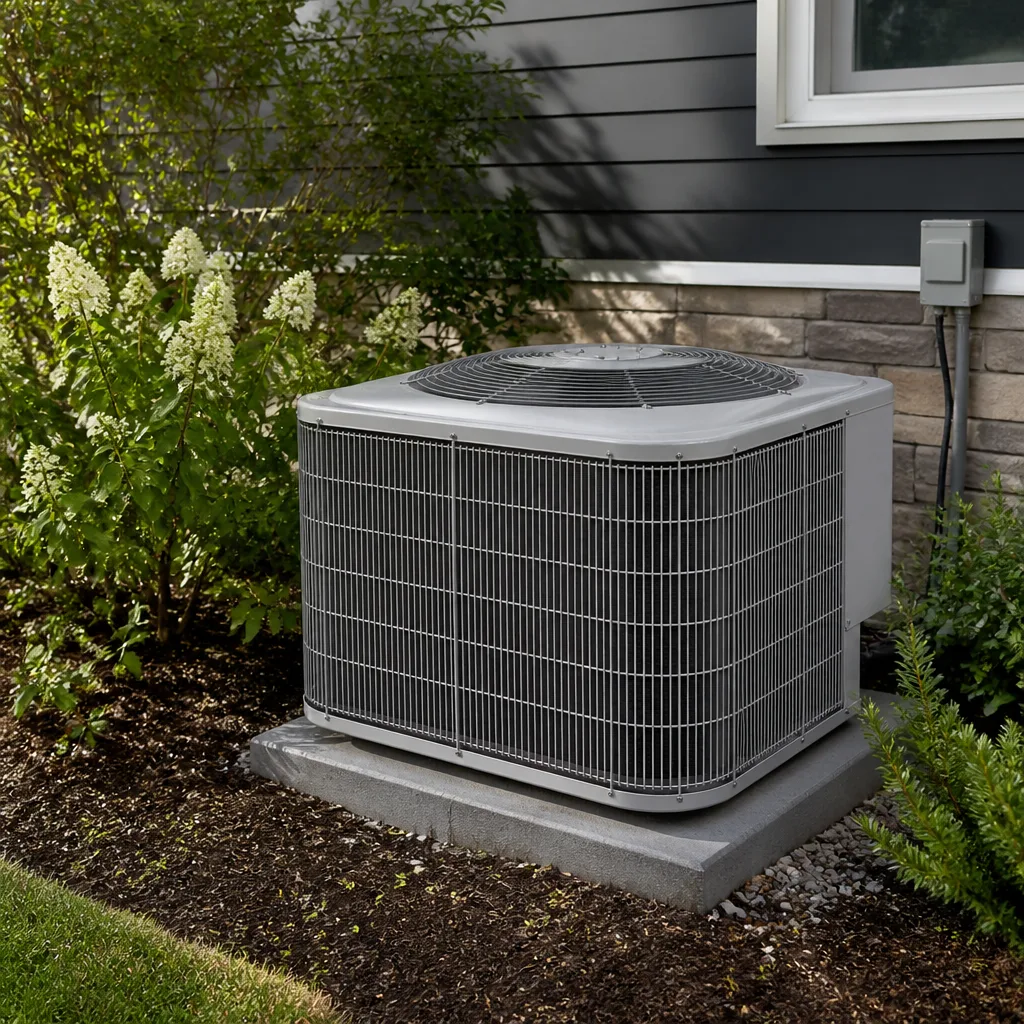 Carrier
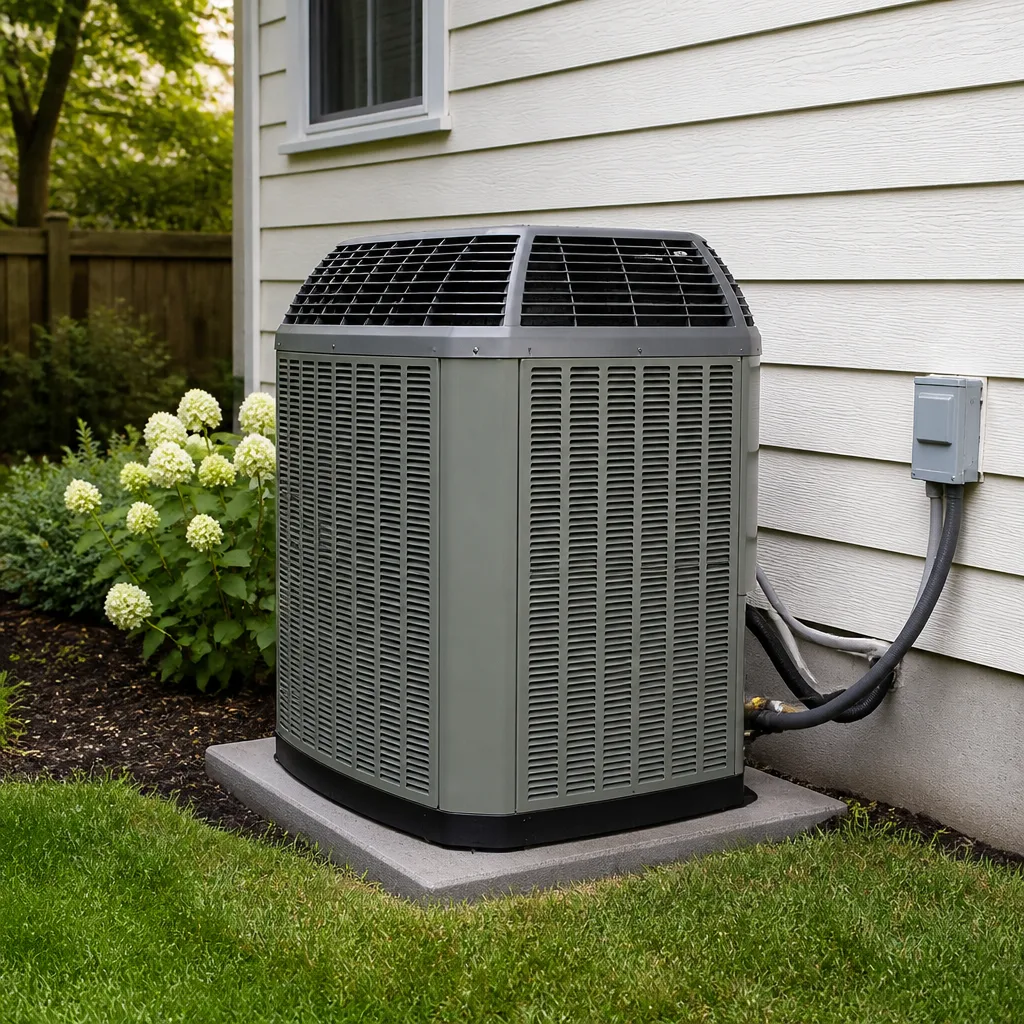 Trane
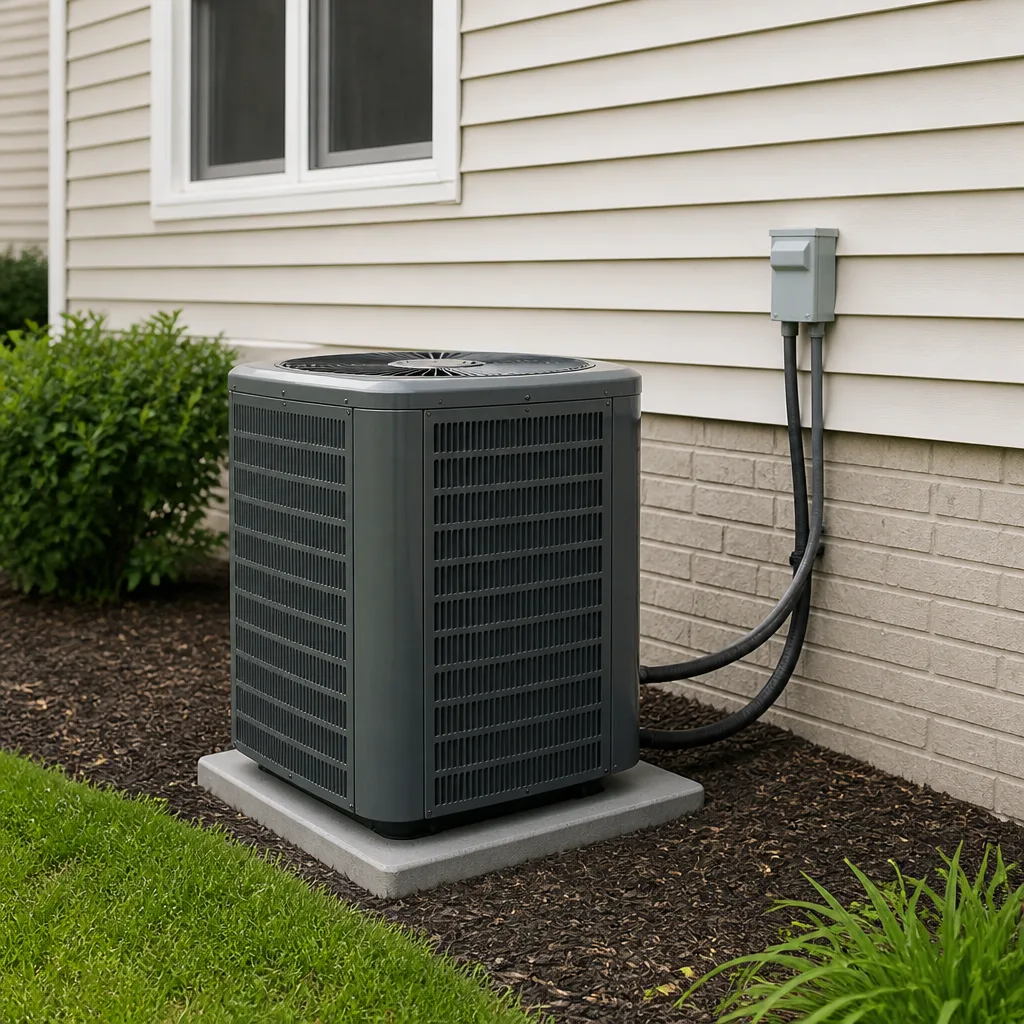 Goodman
Seasonal tune-up and full diagnostic on your Carrier, Trane, or Goodman system - readings shown to you before any repair is proposed
Diagnosis first, numbers second - you approve the repair price before a single part goes in.
Get your free estimateStyles & brands we work with
- AC repair
- Furnace & heating
- Heat pumps
- Ductless mini splits
- Carrier
- Trane
- Goodman
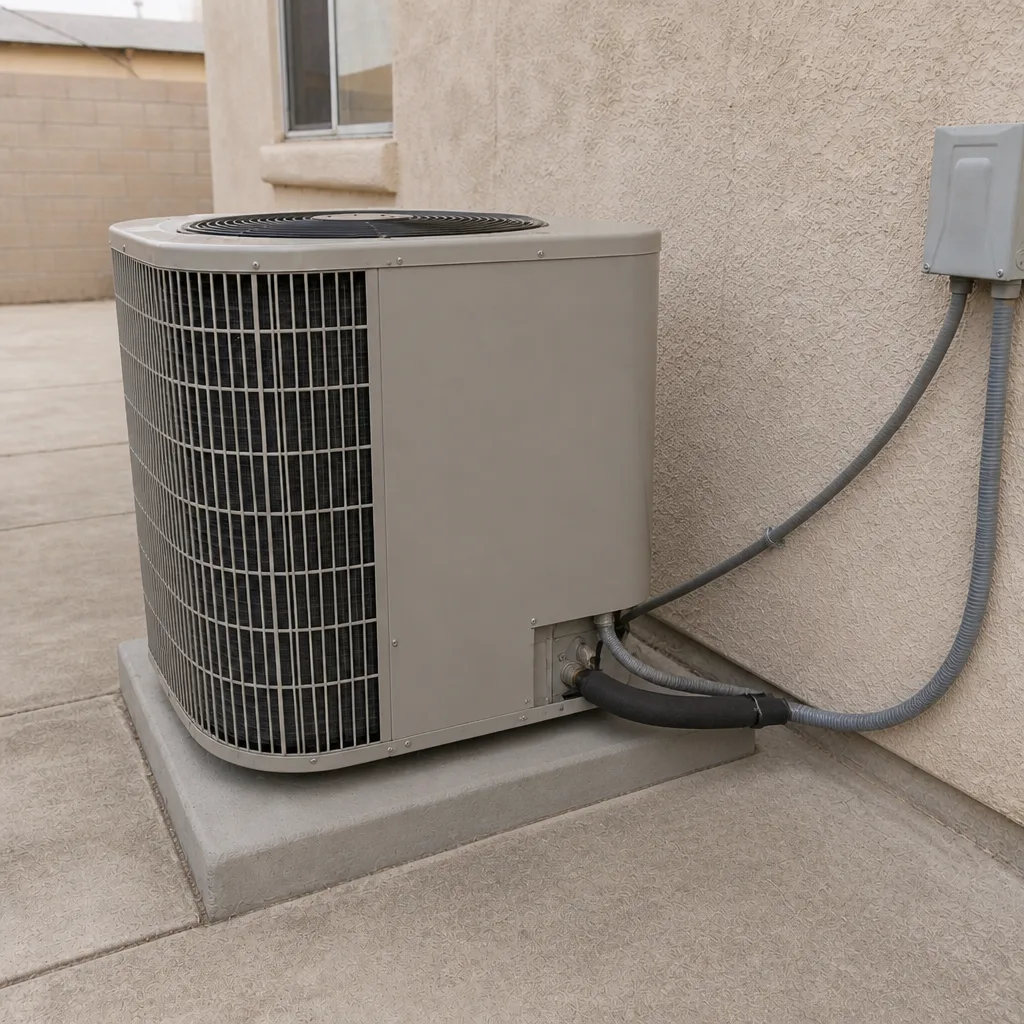
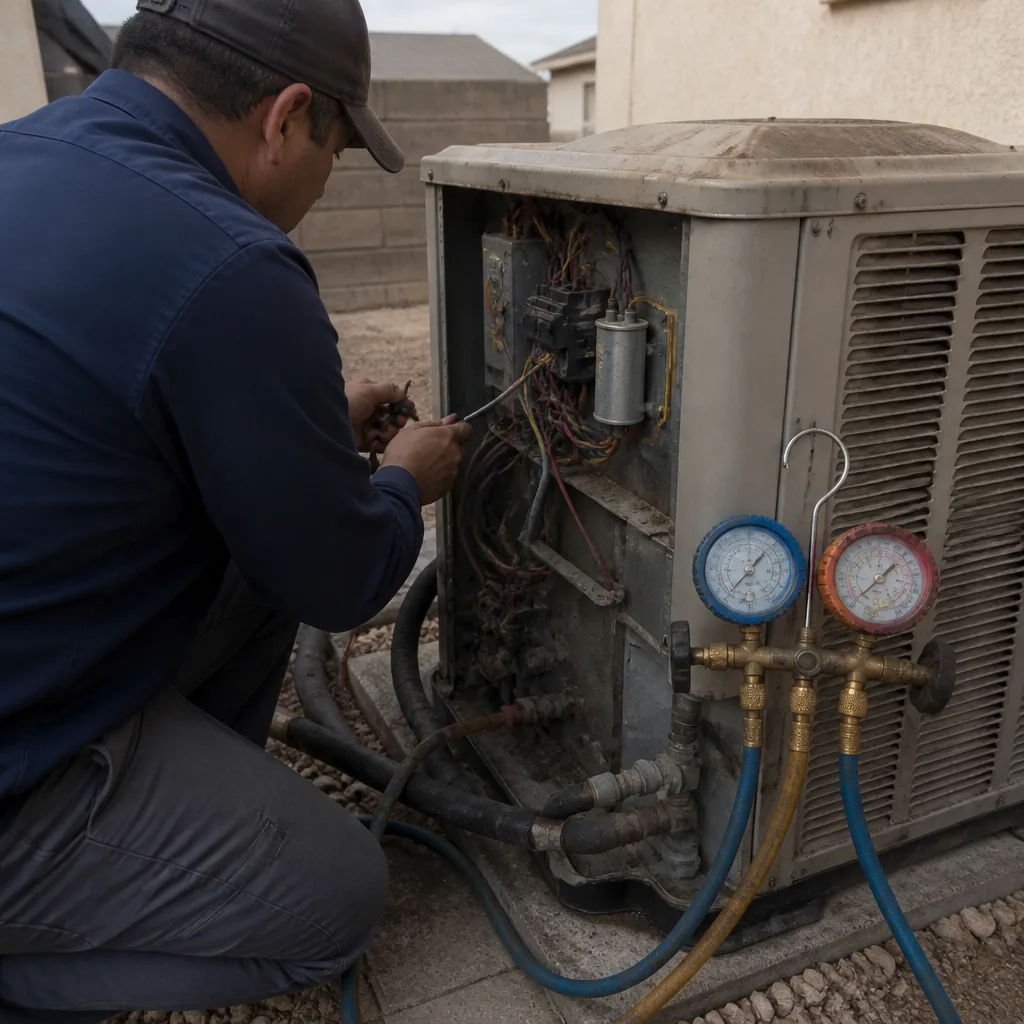
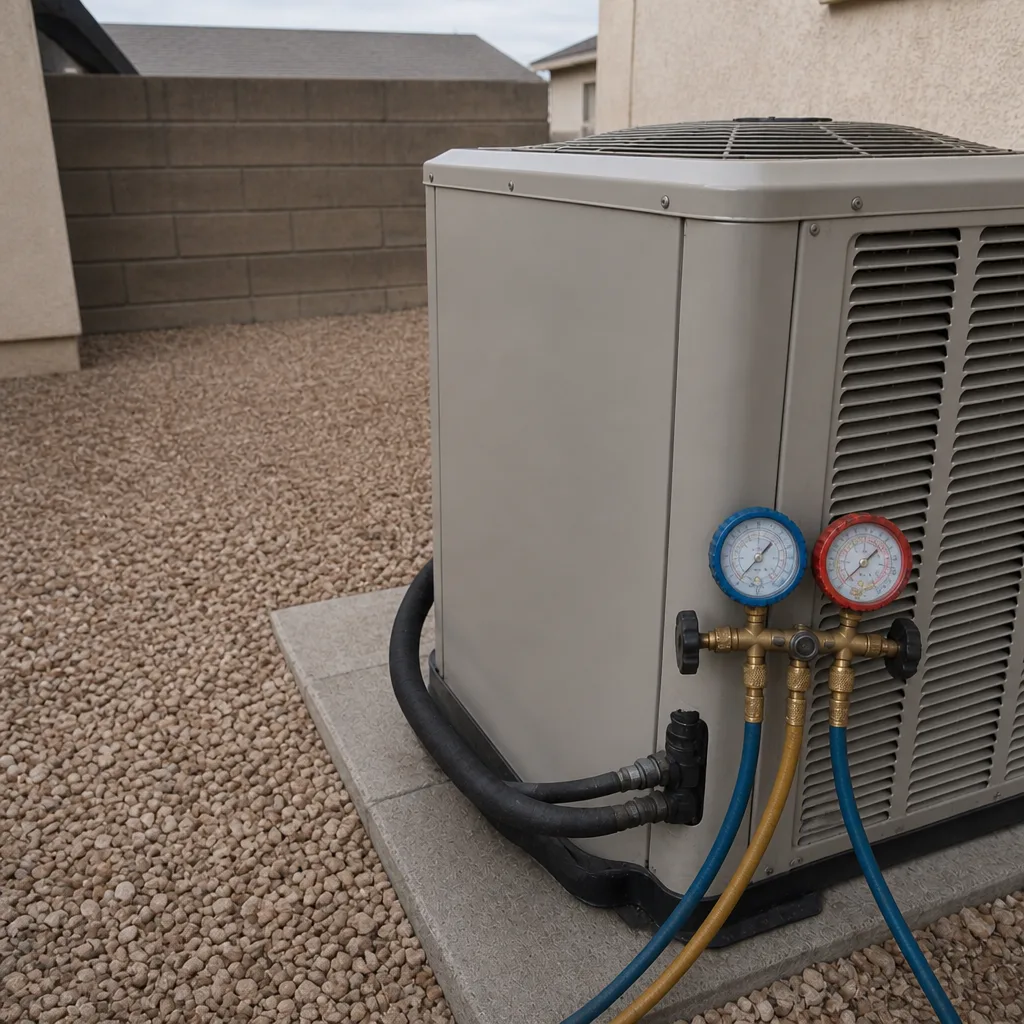
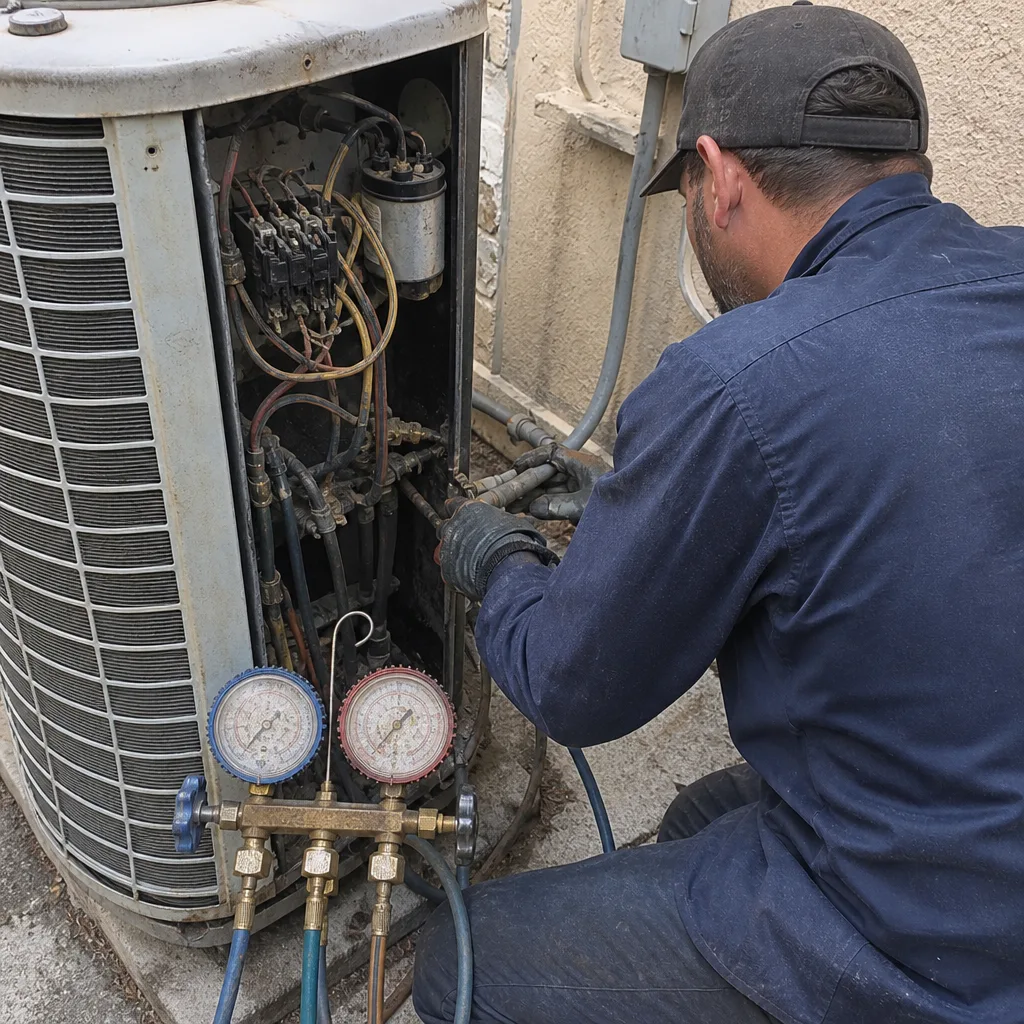
See the difference
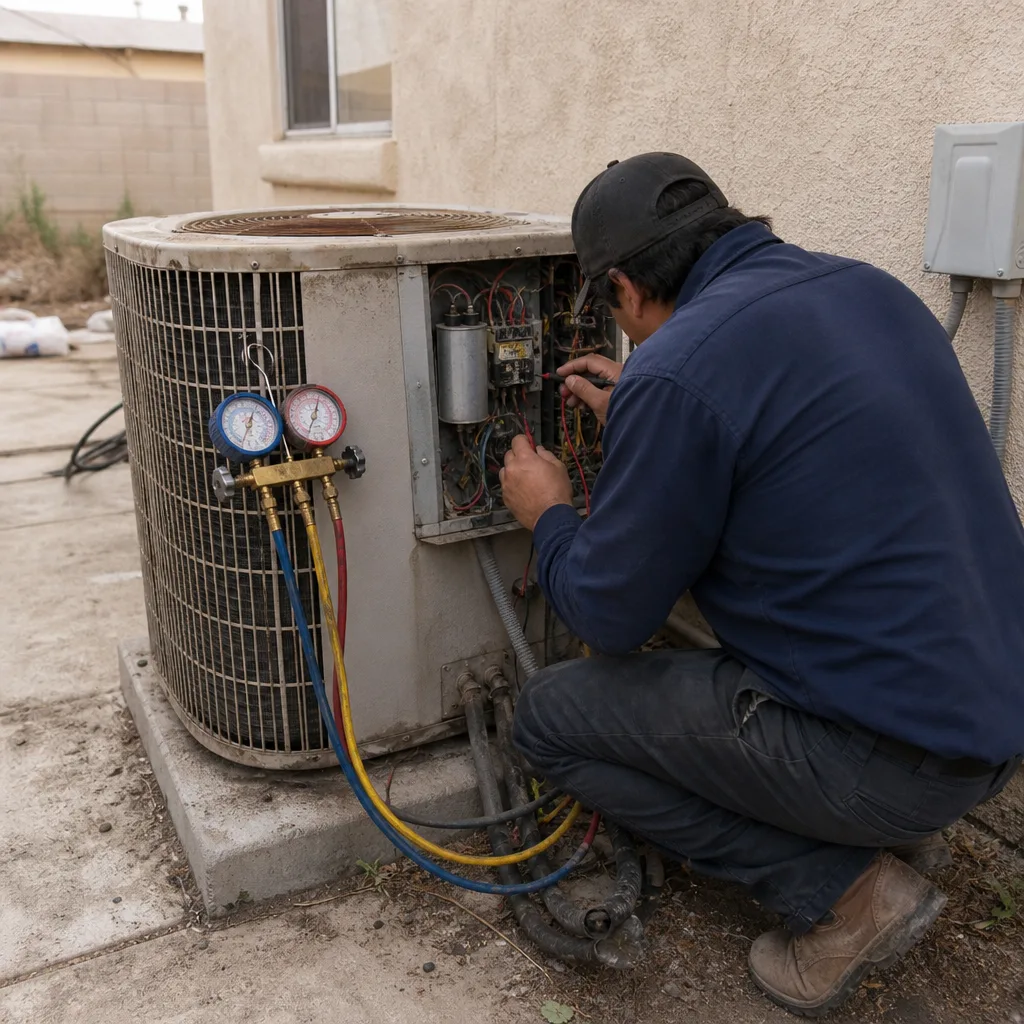 Before
 After
 Before
 After
 Before
 After
How to Improve Indoor Air Quality in North Las Vegas: Start at the Return Duct, Not the Air Purifier Aisle
If your North Las Vegas home was built between 2004 and 2008 and you’re wondering how to improve indoor air quality, the answer usually isn’t a new air purifier – it’s the desert silt that’s already blowing past your builder-grade filter and caking your evaporator coil. Ultra-fine silica dust from our spring haboobs slips straight through the MERV 4 filter still sitting in most boom-era tract homes. Fix the return duct and the coil first. Then consider upgrades. Call (844) 761-6871 if you’d like a straight answer on where your house stands.
Why filters out here look like they’ve been buried
After a March windstorm, we pull filters out of 2004 to 2008 tract homes in places like Aliante and the older subdivisions off Craig Road that look like they’ve been in a sandbox for months – because they have. The open desert north of North Las Vegas is a wind corridor. When those spring winds come through, fine silt gets packed into return grilles, and particle size is the whole problem. Most of that dust is PM2.5 or finer. A builder-grade MERV 4 to MERV 6 filter – which is what’s still in most of these homes – catches the big stuff and waves the fine stuff on through. That fine dust doesn’t stop at the filter either. It coats the evaporator coil, narrows airflow, and gets pushed back into your living room all summer while your system works harder than it should.
What MERV rating actually stops North Las Vegas dust?
For our dust, MERV 11 is the practical floor. That’s the point where a filter starts catching the fine silica particles that make it past MERV 4 through 8. Marketing around “hospital-grade” or “HEPA” filtration gets confusing, but here’s what matters when you’re standing in front of a filter rack in North Las Vegas:
- MERV 4 to 6: Builder default. Catches hair and lint, misses the silt that actually fouls coils.
- MERV 8: Better, still lets fine dust through. Fine for a rental, not for a house you plan to live in.
- MERV 11: The realistic sweet spot. Catches fine dust without choking airflow on most residential systems.
- MERV 13 and above: Tighter filtration, but if your ductwork and blower weren’t sized for it, you’ll lose airflow and stress the system. In a lot of NLV tract homes, that filter becomes a strain.
Here’s the catch: you can’t just jam a MERV 11 filter into a thin 1-inch rack and call it fixed. Static pressure goes up, airflow drops, and now the system runs hot. The filter has to be sized for the rack, and sometimes that means upgrading to a 4-inch media cabinet that fits the tighter media without choking the blower. That’s the difference between an upgrade that works and one that quietly costs you a compressor.
The infiltration points nobody talks about in this housing stock
North Las Vegas homes are mostly stucco, slab-on-grade, and tile roof – built fast during the 2000s boom. That construction has specific sneaky leak points that bring outside air in through places that have nothing to do with your windows:
- Attic bypasses around recessed lights: Those can lights in your hallway and kitchen are often open holes into a 130°F attic. When the house is under negative pressure, that hot, dusty attic air gets pulled down into your living space.
- Duct boot gaps in slab construction: The metal boot where the duct meets the floor register often has a gap at the slab connection. It’s not visible, but return-side leaks pull attic and wall-cavity dust straight into the system.
- Undersized or crushed flex runs in the attic: Common in boom-era builds where the original installer ran the shortest route possible. A crushed run means the system pulls air from wherever it can find it – including gaps and bypasses.
The reason this matters: no filter upgrade fixes a return duct that’s pulling attic air. You’re just filtering dirtier air faster. That’s why Air Quality & Ventilation work starts with pressure and airflow readings, not with a product recommendation.
Why a dirty coil has to be cleaned before any IAQ upgrade
A coil caked in desert silt is wet for hours after every cooling cycle. In low desert humidity, that may sound like it should dry out fast, but a fouled coil holds moisture in the matted dust and grows mold just like a humid climate would. We’ve pulled panels off NLV units where the coil had a fuzzy gray mat across the fins – that’s a biological film feeding on trapped dust. No UV lamp and no $700 air scrubber fixes a fouled coil. The light doesn’t reach the dirt. The scrubber just re-filters air that’s still being pushed through a moldy coil. Clean the coil, confirm airflow, and then talk about add-ons.
What we check before recommending any product
Here’s the honest order. No one should quote you a media filtration system before confirming three things:
- Return duct integrity: We smoke-test or pressure-check the return path. If it’s pulling attic air at 130°F, that’s the first fix.
- Evaporator coil condition: Pull the panel, look at the fins, check for matting. If it’s caked, clean it before anything else.
- Static pressure and airflow: Readings first, numbers second. A system running high static pressure can’t benefit from a tighter filter until the ductwork is right.
- Blower and filter rack sizing: Confirm the existing rack can take a right-sized MERV 11, or plan for a media cabinet.
Only after those four checks do we start talking about what filter makes sense. That’s not a sales pitch – it’s the order that actually improves your air instead of selling you a gadget that makes things worse.
The upgrade ladder for North Las Vegas homes, priced upfront
Start small, do it right, and move up only if you need to. Here’s the order that fits NLV tract homes:
| Upgrade | What it fixes | Typical range |
|---|---|---|
| Right-sized MERV 11 filter in existing rack | Fine silt bypassing MERV 4 to 6 | Often under $100 in parts; installation bundled with AC repair visit ($150-$650) |
| Seal return duct boots and attic bypasses | Attic air pulled into the return | Included in most tune-up range ($80-$200) for minor sealing |
| 4-inch media filtration cabinet | Larger filter surface, less airflow loss, longer change interval | Quoted separately before any work begins |
| ERV (energy recovery ventilator) | Fresh air exchange in a sealed house | Evaluate only after the first three steps |
Upfront pricing, no surprises – you see the readings and the numbers before any work starts. If you want a second opinion on any written estimate from another shop, we’ll give you one free. No trip charge inside Clark County.
Common local scenarios we see in North Las Vegas
The 2005 build in Aliante with “allergy season” that never ends. The filter is original-style MERV 6, the coil has never been pulled, and the return duct boot in the hallway has a gap. Readings confirm the return is pulling attic air. Clean the coil, seal the boot, step up to MERV 11. The dust settles down noticeably within a week.
The 2003 home with a “cold” that keeps coming back. Filter looks fine, but the coil is matted. It’s been pulling dust straight past the filter for a decade. The unit is running on borrowed time, and the air quality complaints won’t clear until that coil gets cleaned. On the older Goodman and Rheem systems we see in this housing stock, the coil cleaning is often cheaper than the AC repair that follows an ignored dirty coil.
The newer build up in the north valley that feels “stuffy.” Tighter construction, less natural infiltration, and the family wants an air scrubber. We check the return path and static pressure first. Sometimes the fix is a MERV 11 and a sealed boot; sometimes the home genuinely needs an ERV. The point is to measure before we sell.
North Las Vegas sits in a high-desert wind corridor, so this is not a one-time fix – the silt keeps coming. We service all major brands, including Lennox, Goodman, and York, and the same problem shows up on every one of them when a filter is undersized for the dust. See our full guide to Air Quality & Ventilation in North Las Vegas for the deep dive on ductwork and system sizing.
FAQs
MERV 11 is the practical choice for most North Las Vegas homes because it catches the fine desert silt that blows past builder-grade MERV 4 to 6 filters without choking airflow on a residential system. MERV 13 is worth considering only if your ductwork and blower are sized for the tighter pressure drop. Call (844) 761-6871 if you want us to check your rack and static pressure before you buy a filter that doesn’t fit.
No – not if your evaporator coil is fouled or your return duct is pulling attic air. UV lamps and standalone air scrubbers don’t fix a dirty coil or a leaky return, so they add cost without solving the problem. Clean and seal first, then evaluate media filtration or an ERV. We’ll give you a no-pressure assessment before recommending anything.
During spring wind season (roughly March through May), change a 1-inch filter every 30 days in North Las Vegas. The rest of the year, every 60 to 90 days is usually fine unless you have pets or nearby construction. A 4-inch media filter can stretch to 6 to 12 months, but check it after the first spring so you know how much silt your specific return is pulling.
A right-sized MERV 11 filter and sealed return boots typically run inside a standard AC repair visit ($150-$650) or tune-up ($80-$200), depending on what’s needed. Media cabinets and ERV systems are quoted separately with upfront pricing before any work starts. Call (844) 761-6871 – estimates are free, and we’ll give you the readings behind the number.
If you’d rather have it looked at, Ray’s Heating & Air North Las Vegas offers a no-pressure assessment in North Las Vegas – call (844) 761-6871 for a free estimate. We’ll pull the filter, check the coil, and tell you straight what your house actually needs.
Written by the team at Ray’s Heating & Air North Las Vegas, serving North Las Vegas, NV.