
Last updated November 17, 2026
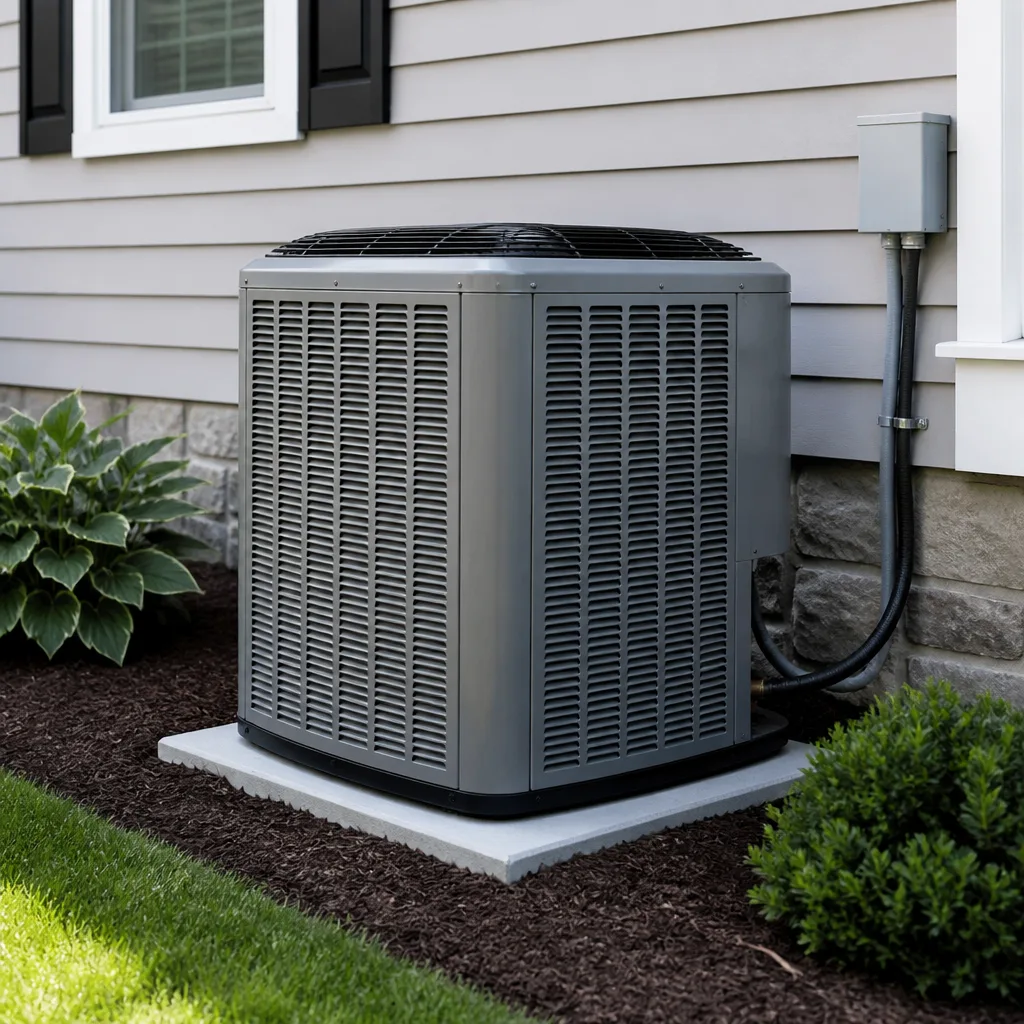 AC repair
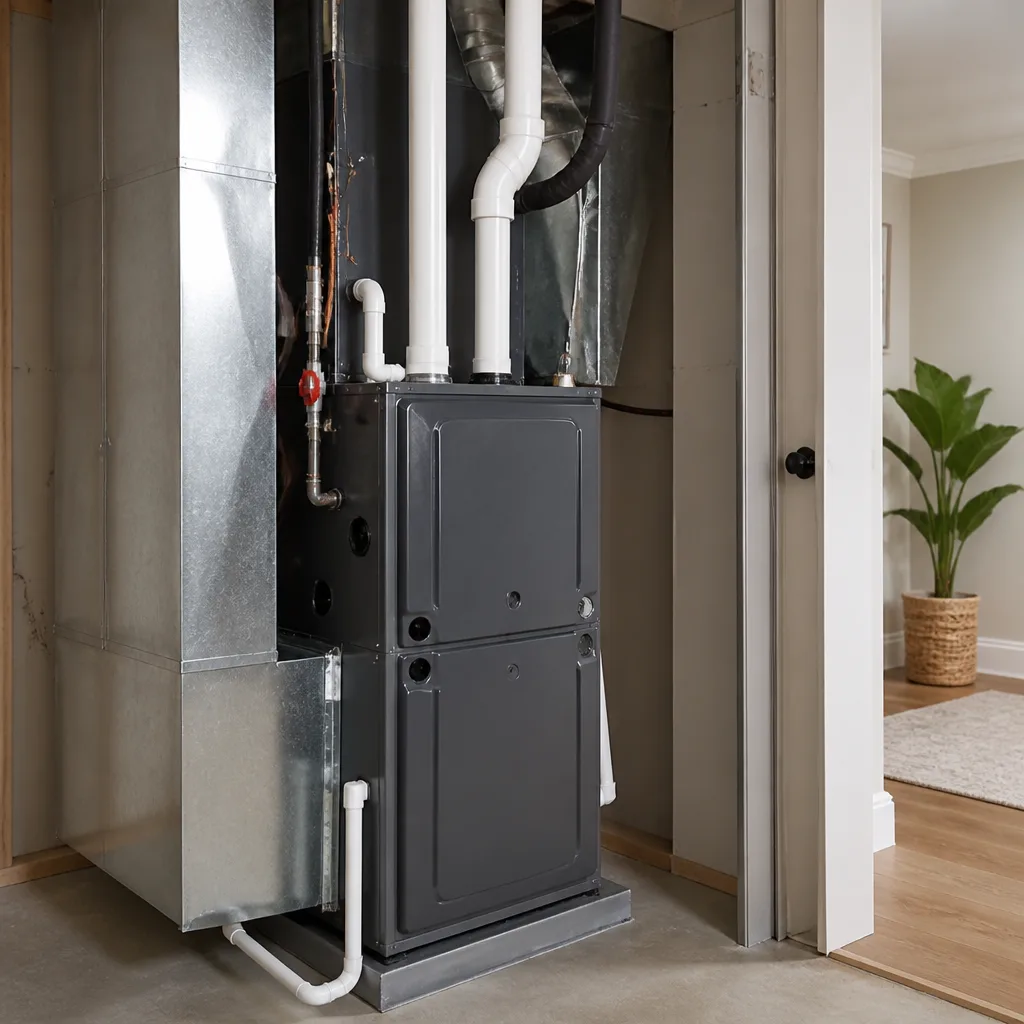 Furnace & heating
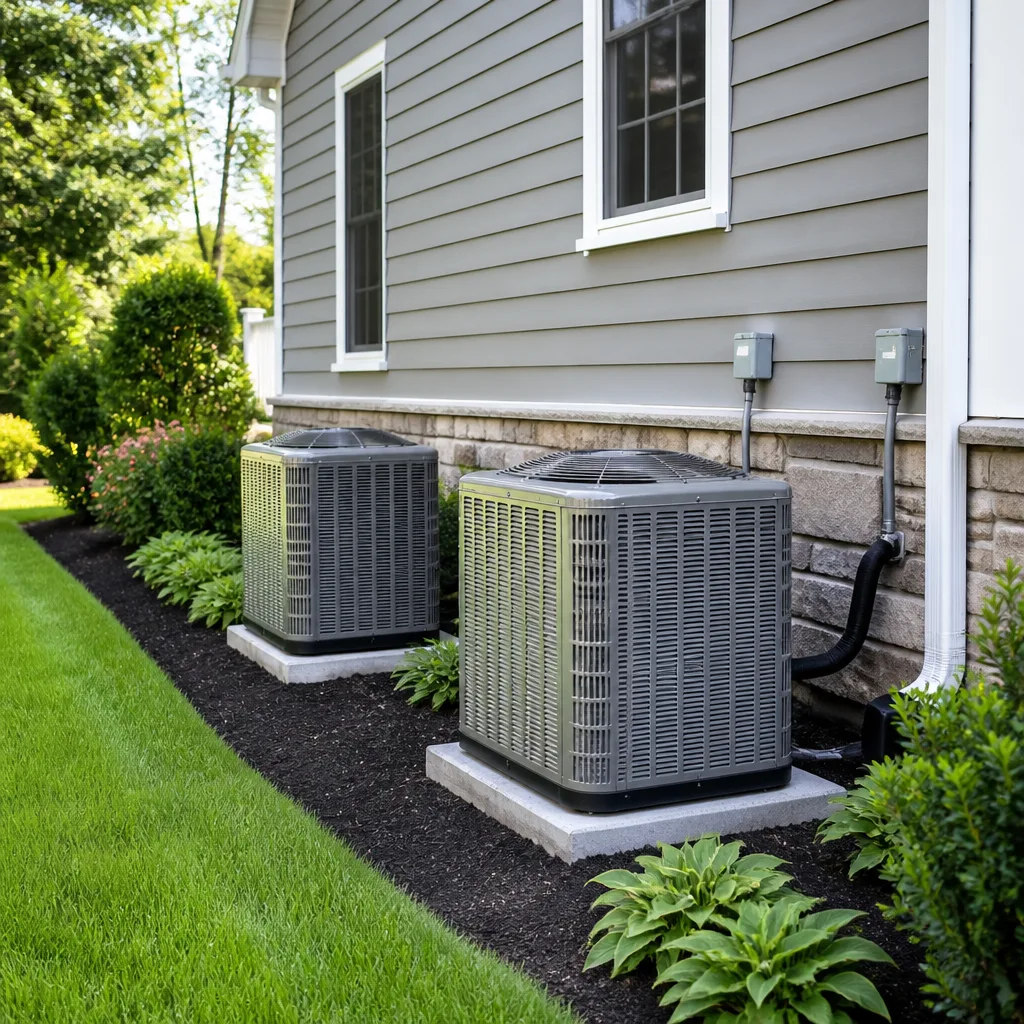 Heat pumps
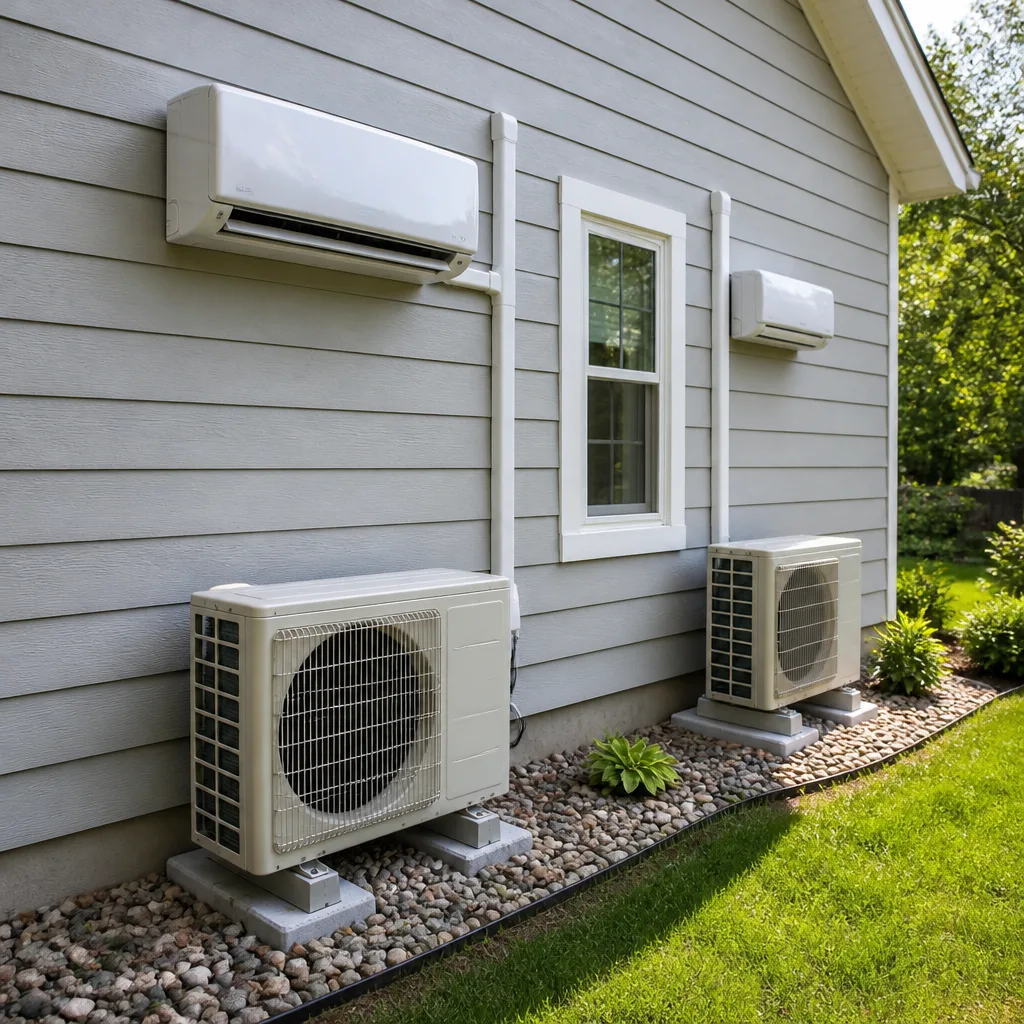 Ductless mini splits
 Carrier
 Trane
 Goodman
Seasonal tune-up and full diagnostic on your Carrier, Trane, or Goodman system - readings shown to you before any repair is proposed
Diagnosis first, numbers second - you approve the repair price before a single part goes in.
Get your free estimateHow Long Does Emergency & Commercial HVAC Take? Timelines and What to Expect
When we tell a commercial client we’ll have them back up in four hours, that’s based on what’s actually sitting in front of us. The dispatcher who quoted you “same day” hasn’t seen your equipment, doesn’t know what’s on the shelf at the local distributor, and has never looked at the Clark County inspection queue on a Tuesday in July. Commercial HVAC timelines are almost never what the phone quote says, because parts availability, permit timing, and equipment age create variables a residential call doesn’t have. This guide maps the realistic timeline for every common scenario in North Las Vegas so you can plan around a real number instead of a best case.
Quick Answer
Most emergency commercial HVAC repairs in North Las Vegas wrap up in 2 to 6 hours on the same day when the failed part is a capacitor, contactor, thermostat, or blower motor that’s on the truck or at a local distributor. Repairs that need a compressor, condenser fan assembly, or control board not stocked locally run 1 to 4 business days once the part ships from Phoenix or Los Angeles. Anything that requires a Clark County permit and inspection adds 1 to 3 business days to the calendar even when the mechanical work is finished.
Styles & brands we work with
- AC repair
- Furnace & heating
- Heat pumps
- Ductless mini splits
- Carrier
- Trane
- Goodman
Table of Contents
- What Actually Stays Same-Day and What Slips to Next Morning
- The Parts Availability Reality in the North Las Vegas Market
- Permits and Inspections: When They Apply and When They Don’t
- Temporary Cooling: What It Costs Per Day and What It Buys You
- How to Ask the Right Questions on a Time Estimate
- Why Commercial Timelines Differ From Residential
- North Las Vegas Seasonal Timing and Why It Matters
- What Documentation You Should Get Back From Any Repair
What Actually Stays Same-Day and What Slips to Next Morning
A commercial HVAC call is not one job. It’s a diagnostic step, then a repair step, then a verification step. Each one has its own clock, and the clock only starts once somebody qualified is standing at the unit with a meter in hand.
In our experience servicing commercial sites around North Las Vegas, these failures reliably close out the same day:
- Failed run or start capacitor. Universally stocked, 30 to 60 minutes to test and swap. We test the capacitor before anyone says the word compressor.
- Pitted contactor. Stocked on the truck, 20 to 40 minutes to replace and verify.
- Thermostat or control head failure. Common in strip-mall suites that get afternoon sun on an east wall. Same-day unless it’s a proprietary building automation head.
- Blower motor on a common frame size. Same-day when the local distributor has one, next morning when they don’t.
- Clogged condensate drain or a tripped float switch. Fifteen to thirty minutes if the blockage clears with a drain gun.
These are the calls that turn into next-morning or longer:
- Compressor failure. Nobody carries a commercial compressor on the truck. Diagnosis takes 45 minutes; sourcing takes a day or three.
- Condenser fan motor with an unusual frame or horsepower rating. North Las Vegas has a lot of older rooftop units on light industrial buildings, and older units often use motors that were discontinued.
- Cracked heat exchanger on a packaged unit. This one stops being a repair and becomes a decision about replacement once the readings are on the table.
- Refrigerant leak requiring a system evacuation and recharge. The leak detection and repair is a half day; the recharge and pressure hold adds a couple hours on top.
If you’re already running a failing unit at home too, our AC Repair & Installation in North Las Vegas page covers the residential side of the same timeline question.
The Parts Availability Reality in the North Las Vegas Market
This is the single biggest variable nobody quotes you on the phone, and it’s where most “same day” promises die. Here’s what actually exists in this market.
What rides on the truck. Capacitors in every common microfarad rating, contactors, thermostats, fan blades, fuses, filter driers, contactor coils, and a handful of universal blower motors. That covers most diagnostic-to-repair transitions without a parts run.
What sits at a local North Las Vegas or Las Vegas distributor. Common blower motors for Carrier, Trane, Lennox, and American Standard packaged units, gas valves, ignitors, flame sensors, inducer assemblies for the most common residential and light commercial sizes, and most control boards under fifteen years old. A parts run to one of these counter locations adds 45 minutes to 2 hours to the job depending on where in the valley you are.
What ships from Phoenix or LA and kills your timeline. Commercial compressors, unusual-horsepower condenser fan motors, proprietary control boards for older building automation systems, and anything for equipment that’s been discontinued. That’s an overnight to three-day window depending on freight and whether the distributor has it in a regional hub. We’ve seen a Thursday afternoon compressor diagnosis close out the following Tuesday because the part routed through Phoenix and the freight dock wasn’t open Saturday.
The practical takeaway: ask what part failed and whether it’s on the truck, at a local counter, or coming from out of state. Anybody who can’t tell you which of those three buckets your repair falls into doesn’t have a timeline. They have a guess.
Permits and Inspections: When They Apply and When They Don’t
Clark County and the City of North Las Vegas both require permits on certain HVAC work, and the inspection queue is a real scheduling constraint that a dispatcher on the phone has no visibility into. Here’s how the rules play out in practice.
- Like-for-like repair with no equipment change. No permit. Capacitor, contactor, motor swap, thermostat, refrigerant work on existing equipment. This is the majority of emergency commercial calls, and it’s why most of them close out the same day.
- Equipment replacement, even like-for-like tonnage. Permit required. Plan for 1 to 3 business days for the permit to be pulled and the inspection scheduled, plus the install day itself.
- New refrigerant line sets or electrical work beyond the disconnect. Permit required, and inspection timing depends on which jurisdiction has authority over the address. North Las Vegas addresses inside city limits go through the city; unincorporated areas go through Clark County.
- Emergency provisions. True emergencies (no cooling in occupied commercial space during extreme heat) sometimes allow work to begin before the permit is issued, with the permit pulled the next business day. This is a conversation with the building department, not something we can promise on the phone.
If your business is a restaurant, medical suite, or anything with a health or safety inspection on the calendar, the permit timeline should be the first thing you ask about, not the last. A finished repair without an inspection sign-off doesn’t protect your certificate of occupancy.
For heating-side commercial equipment going into the cooler months, the permit picture works the same way, and our Heating & Furnace in North Las Vegas page walks through the furnace-specific rules.
Temporary Cooling: What It Costs Per Day and What It Buys You
When a commercial repair slips to a multi-day timeline, “temporary cooling” is the bridge. It’s not a mystery product, and it’s not always the right call. Here’s what it actually looks like.
The two real options for a commercial space in North Las Vegas:
- Portable spot coolers. Rolled in through a doorway and vented out a window or ceiling tile. Realistic for server rooms, small offices, and single retail suites. Daily rental in this market typically runs a few hundred dollars per unit per day, plus delivery and pickup, and they need a dedicated circuit or a generator.
- Rented rooftop or trailer-mounted units. The right answer for a restaurant, warehouse, or anything over a couple thousand square feet. Daily rental plus delivery and setup can run well into four figures per day depending on tonnage and how far the unit has to be staged. Requires temporary power, and often a crane or forklift for rooftop placement.
What it buys you is time on a real repair instead of a rush job on a compressor that shouldn’t be rushed. What it doesn’t buy you is a discount on the eventual repair, so the math is: how many days of temporary cooling cost less than the business you’d lose? For a restaurant in July, the answer is usually “all of them.” For a warehouse that’s running three shifts in 105-degree heat, the answer is more complicated because of the workplace heat exposure issue.
Ask whoever quotes your temporary cooling for the full delivered cost, including delivery, pickup, and electrical connections. A daily rate without those numbers isn’t a real number.
How to Ask the Right Questions on a Time Estimate
The reason people get burned on commercial HVAC timing is that they plan around a best-case number from someone who’s never seen the equipment. These are the questions that get you a real answer.
- “What part failed, specifically?” Not “the motor” – the microfarad rating, frame size, or model number. If they can’t name it, they haven’t diagnosed it.
- “Is that part on your truck, at a local counter, or shipping in?” Those three buckets have completely different timelines.
- “Does this work need a permit, and who pulls it?” If the answer is “you do,” push back. A licensed contractor manages the permit and the inspection on commercial work.
- “What’s the range on your estimate, not the floor?” A real contractor gives you a range and tells you what pushes toward the top of it.
- “What triggers a callback, and is that covered?” Every job Ray runs carries the 90-Day Done Right Promise, and one call brings him back. Ask what any contractor’s version of that looks like before you sign anything.
If a contractor answers all five without hedging, you have a real timeline. If they answer two and hurry to a price, plan for a slip.
Why Commercial Timelines Differ From Residential
A residential AC call in North Las Vegas is usually a single-zone system, one thermostat, one set of readings, and one failure point. A commercial call is often a rooftop with multiple packaged units, zone controls, a building automation layer, and equipment of five different vintages on the same roof. The diagnostic time alone can double.
Add in that commercial sites need to stay occupied during the repair, so the work often has to happen around business hours or in a planned shutdown window. An after-hours commercial repair costs more, and it should – but it also lets a crew do in three hours what takes eight during business operations.
One more thing that shows up on commercial but rarely residential: continuity. A building manager who’s had four different techs on the roof in two years has to re-explain the equipment every visit. Our approach is that the person at your door on the second call is the same person who was there the first call, background-checked and uniformed, so you’re not starting the conversation over.
For heat pump and mini-split commercial installations, the timeline is a different animal entirely – load calculation, equipment order, and scheduling. That’s covered on our Heat Pump & Mini Split in North Las Vegas page.
North Las Vegas Seasonal Timing and Why It Matters
Timing pressure in this market is not symmetrical. The peak cooling call window runs late May through early September, and the worst of it hits when overnight lows don’t drop under the mid-80s. Commercial units run around the clock then, and failure rates climb.
What that means for your timeline: any repair that requires a part shipped from out of state during peak season adds a day or more because every contractor in the valley is competing for the same freight. A part that’s a two-day ship in March can be a four-day ship in August. Plan around it.
Heating-side commercial calls in December and January are less crowded, and the timeline is usually tighter for it. The reverse problem: gas valve and heat exchanger parts are less commonly stocked at local counters, so the availability picture gets worse even as the queue gets shorter.
Spring is the window to catch the things that would turn into August emergencies. A commercial maintenance visit in April or May finds the failing capacitor and the pitted contactor before they leave you with a hot building and a week-long wait.
What Documentation You Should Get Back From Any Repair
A repair without documentation is a guess. Every commercial job should close out with a few things in writing:
- Before and after readings. Superheat, subcooling, amp draw on the compressor, static pressure. You should see the numbers, not just a verbal “it’s good now.”
- The failed part and the serial number of the replacement. This protects the parts warranty and lets the next person know what’s already been done.
- A written note on any part that’s nearing the end of its useful life but didn’t fail. The blower motor that’s pulling 15% over nameplate amps today is next month’s emergency.
- The permit and inspection sign-off, if one was required.
- A written promise about the work itself. Ours is the 90-Day Done Right Promise – if it’s not done right, one call brings Ray back.
Common Mistakes to Avoid
- Planning around a phone quote. A dispatcher who hasn’t seen your equipment is giving you a floor, not a timeline. Ask for a range and a trigger for the top of it.
- Not asking whether the part is local. The single biggest slip factor in this market is a part that has to ship from Phoenix or LA. It should be your first question.
- Skipping the permit on equipment replacement. North Las Vegas and Clark County both require it, and a repair without inspection can affect your certificate of occupancy. Don’t let a contractor talk you into skipping it.
- Assuming temporary cooling is cheaper than it is. A portable spot cooler for a server room and a trailer-mounted rooftop unit for a restaurant are two completely different price points. Get the delivered cost, not the daily rate.
- Letting a rotating crew diagnose the same unit twice. A system with a history needs somebody who has seen it before. Ask whether you’ll see the same person on the next call.
- Waiting until peak season to catch a failing part. The capacitor that’s testing low in April is the August emergency call that slips to four days because the freight is backed up.
- Not reading the callback terms. Anybody can say “we stand behind our work.” Ask what “stand behind” means in writing before you sign.
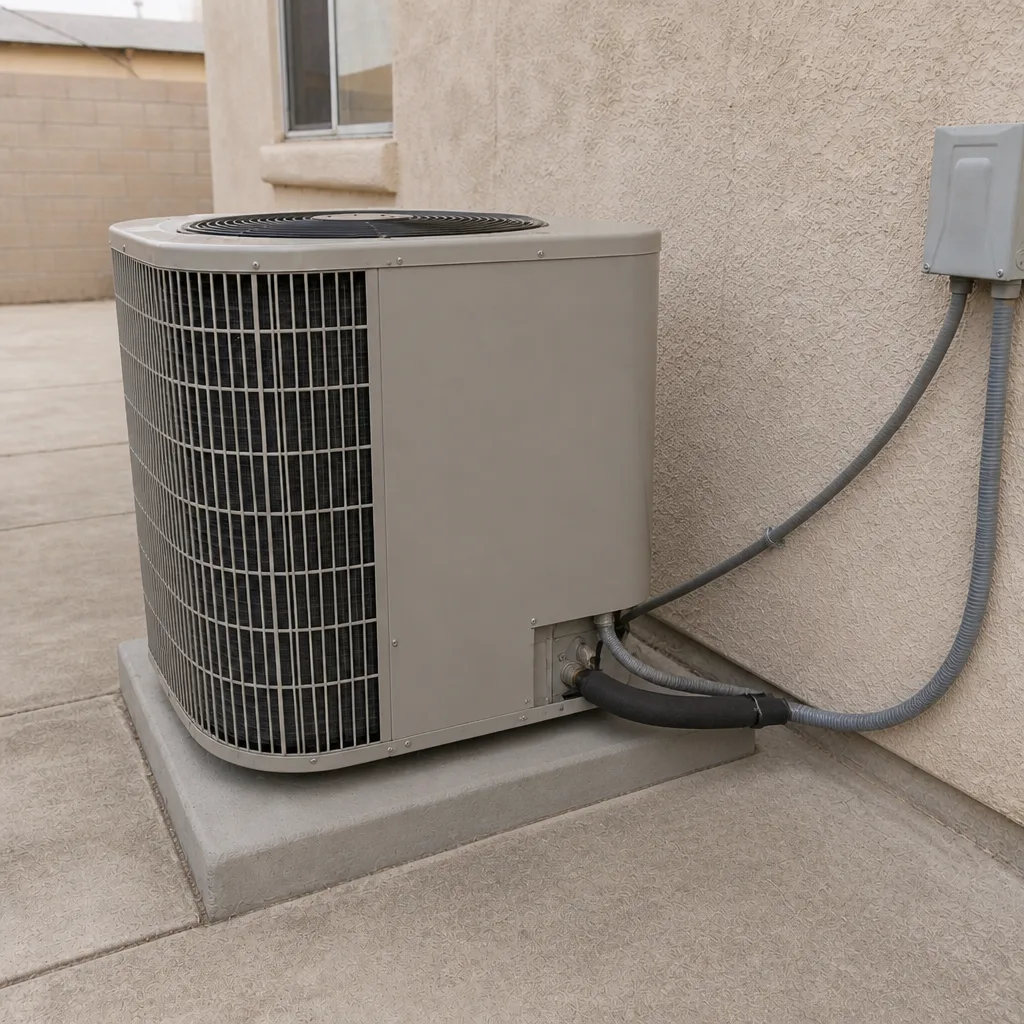
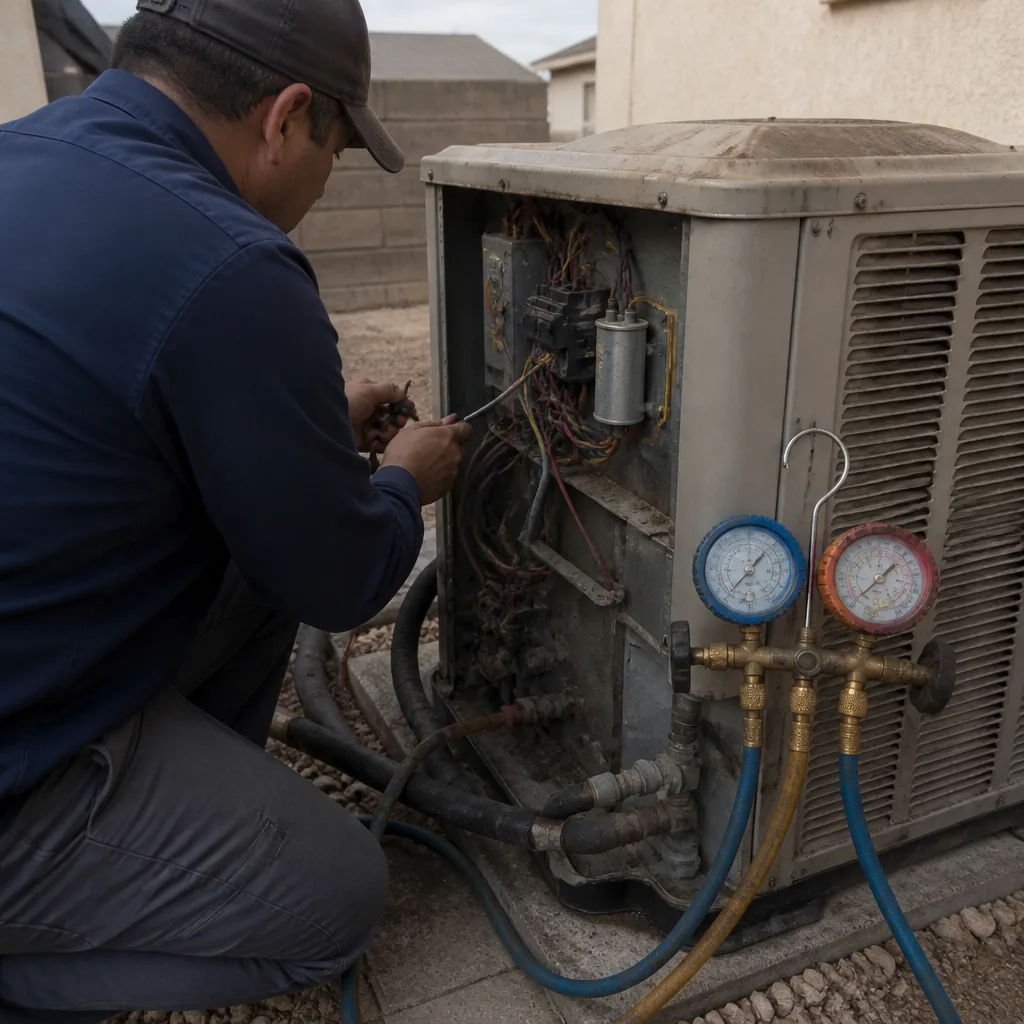
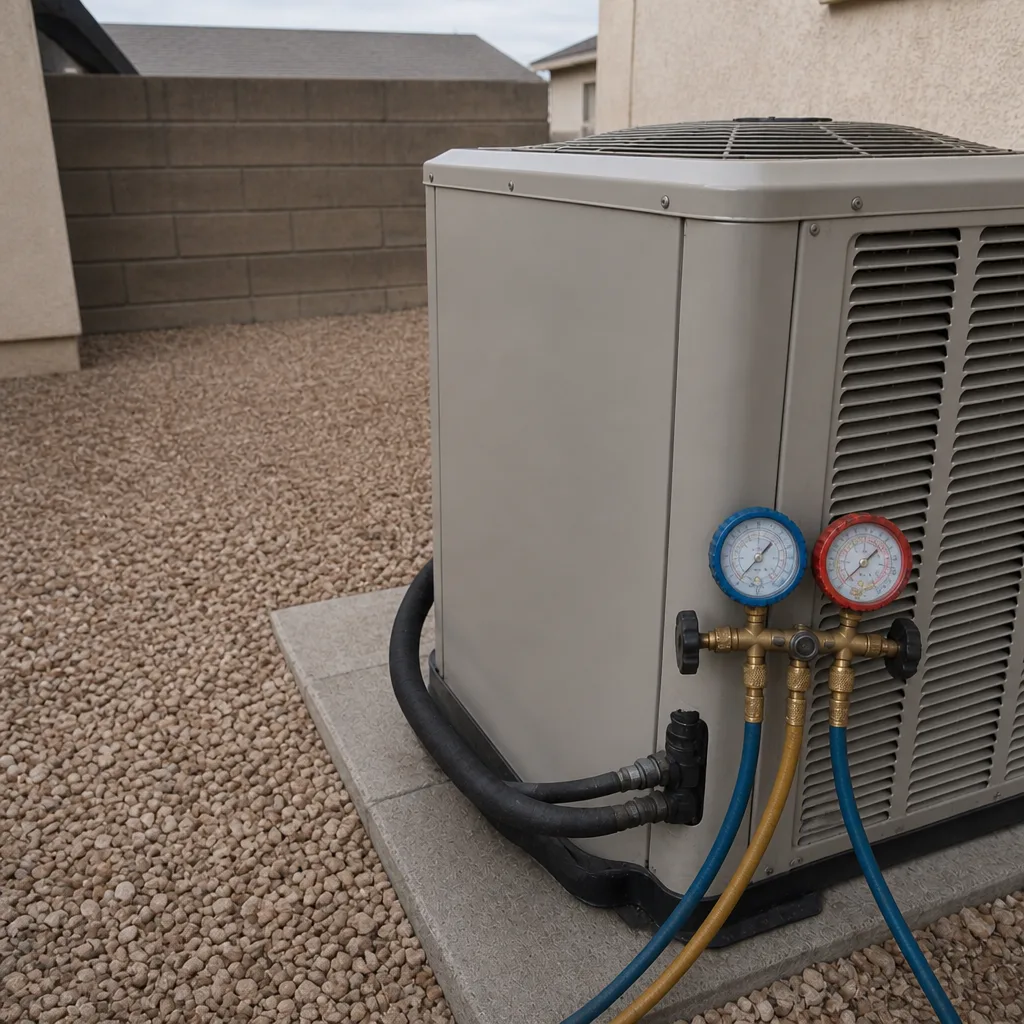
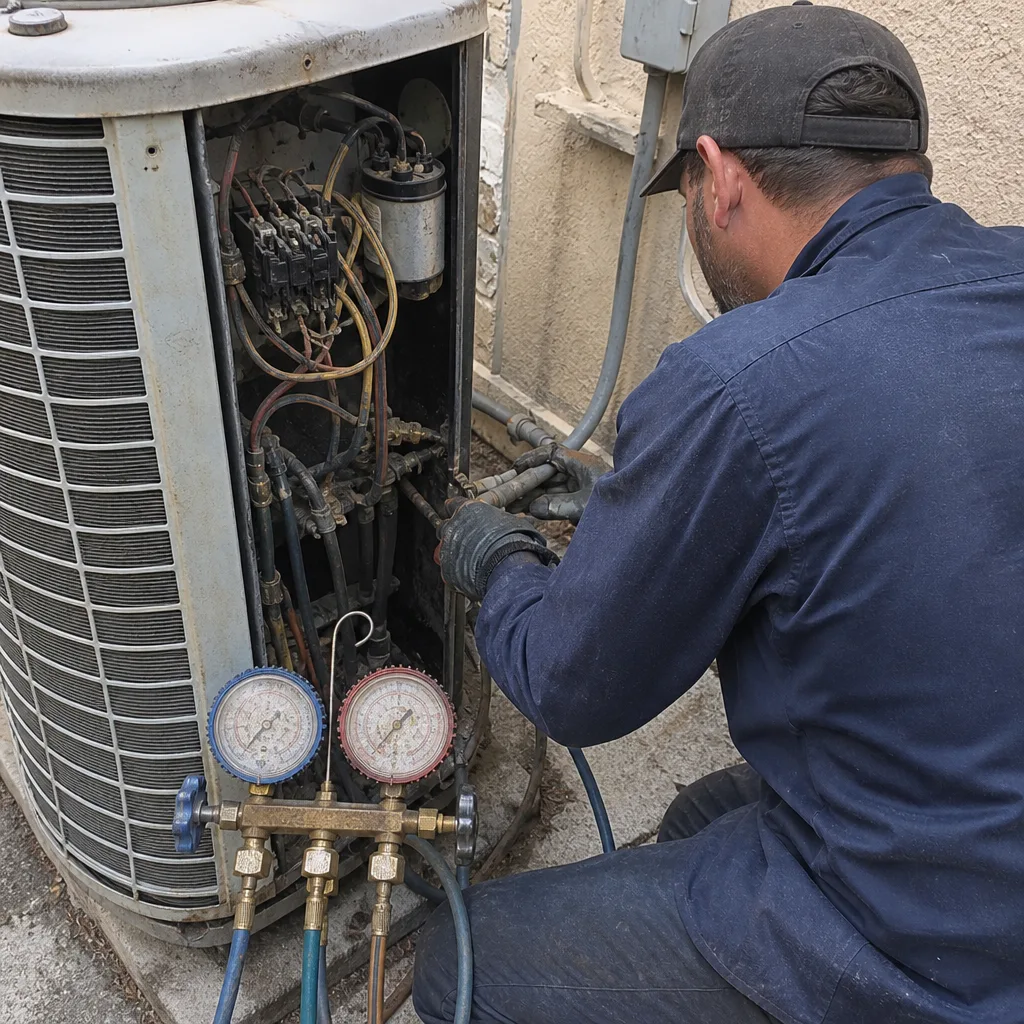
See the difference
 Before
 After
 Before
 After
 Before
 After
When to Call a Professional
Commercial HVAC is not a system to troubleshoot with a phone call and a guess. Call us when a commercial unit is down and the building is occupied, when a part is failing and the timeline matters to your operations, when you’re hearing a quote that feels too good to be the whole story, or when you need a second opinion on a written estimate before you commit. Same for any commercial system that’s been through a repair and isn’t holding. Ray’s Heating & Air North Las Vegas offers free estimates in North Las Vegas, and a live person answers every call around the clock. Call (844) 761-6871. If you’ve already got a written estimate from somebody else and you’d like a number to compare against, we’ll do a free second opinion.
Frequently Asked Questions
Most emergency commercial repairs close out in 2 to 6 hours on the same day when the failed part is a capacitor, contactor, thermostat, or blower motor that’s on the truck or at a local distributor in the valley. If the part has to ship from out of state, plan on 1 to 4 business days once the diagnosis is done. Call (844) 761-6871 if your commercial unit is down right now and you want a real timeline based on what’s actually at your site.
No, and any contractor who does is guessing. The honest answer before a diagnostic visit is a range based on the failure category, then a firm number once the tech has readings in hand. We’ll tell you what the range looks like and what pushes toward the top of it. Call (844) 761-6871 for a free estimate and we’ll walk through it.
Like-for-like repairs on existing equipment – capacitors, contactors, motors, thermostats, refrigerant work – generally don’t require a permit. Equipment replacement, new refrigerant line sets, and electrical work beyond the disconnect require a permit through the City of North Las Vegas or Clark County depending on the address. Plan for 1 to 3 business days for permit and inspection on those jobs. Call (844) 761-6871 if you’re not sure which category your repair falls into.
Portable spot coolers in this market typically run a few hundred dollars per unit per day plus delivery and pickup, which works for server rooms and single retail suites. A trailer-mounted or rented rooftop unit for a restaurant or warehouse runs well into four figures per day once delivery, setup, and temporary power are factored in. Call (844) 761-6871 and we’ll talk through what your building actually needs.
Sometimes a four-day compressor replacement on a fifteen-year-old rooftop is the wrong money. If the equipment is near the end of its life and the parts availability is bad, we’ll put the repair cost and the replacement cost on the same page and let the readings make the case. Call (844) 761-6871 for a free second opinion on any written estimate you’re holding.
After-hours calls cost more than business-hours calls, and they should – but they often save money overall because a crew can work in three hours after close what takes eight during operations. If your building can wait until morning, the morning rate is the better number. If it can’t, we answer the phone at two in the morning. Call (844) 761-6871 either way.
The Bottom Line
Commercial HVAC timelines are honest numbers once you know what breaks them: parts availability, permit timing, and equipment age. Capacitors, contactors, and common motors close out the same day in this market. Compressors, unusual motors, and anything discontinued slip to a day or four once freight is in the picture. Any job with a permit adds 1 to 3 days. The right questions on the phone – what part, where’s it coming from, does it need a permit – turn a guess into a plan. That’s the difference between a hot building for four hours and a hot building for a week.
If you’d rather have a real number from somebody who’s seen the equipment, we’ll come look at it. Our team has up to 24 years of experience across every major brand, and we answer the phone with a live person around the clock. Call (844) 761-6871 for a free estimate in North Las Vegas, or stop by the Ray’s Heating & Air North Las Vegas home page to see what else we handle.
Written by the team at Ray’s Heating & Air North Las Vegas.