
Last updated November 17, 2026
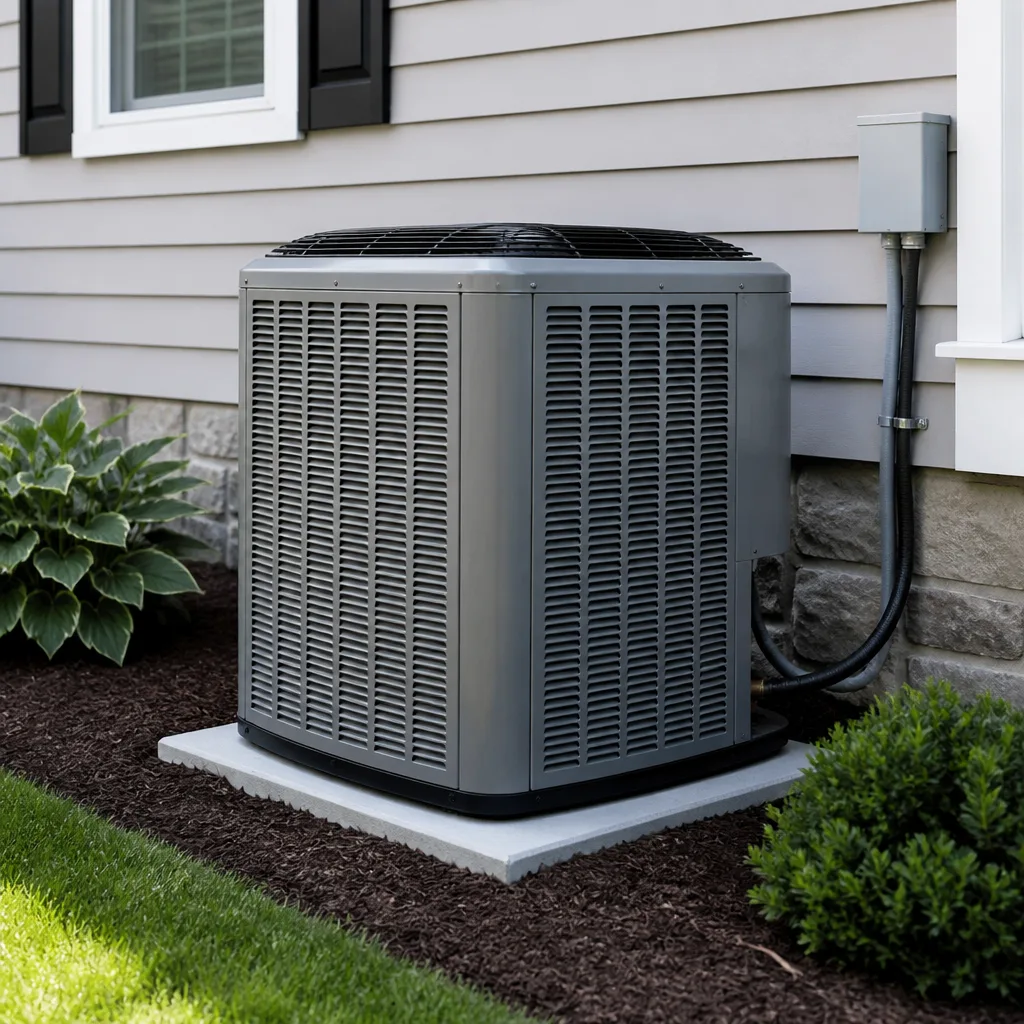 AC repair
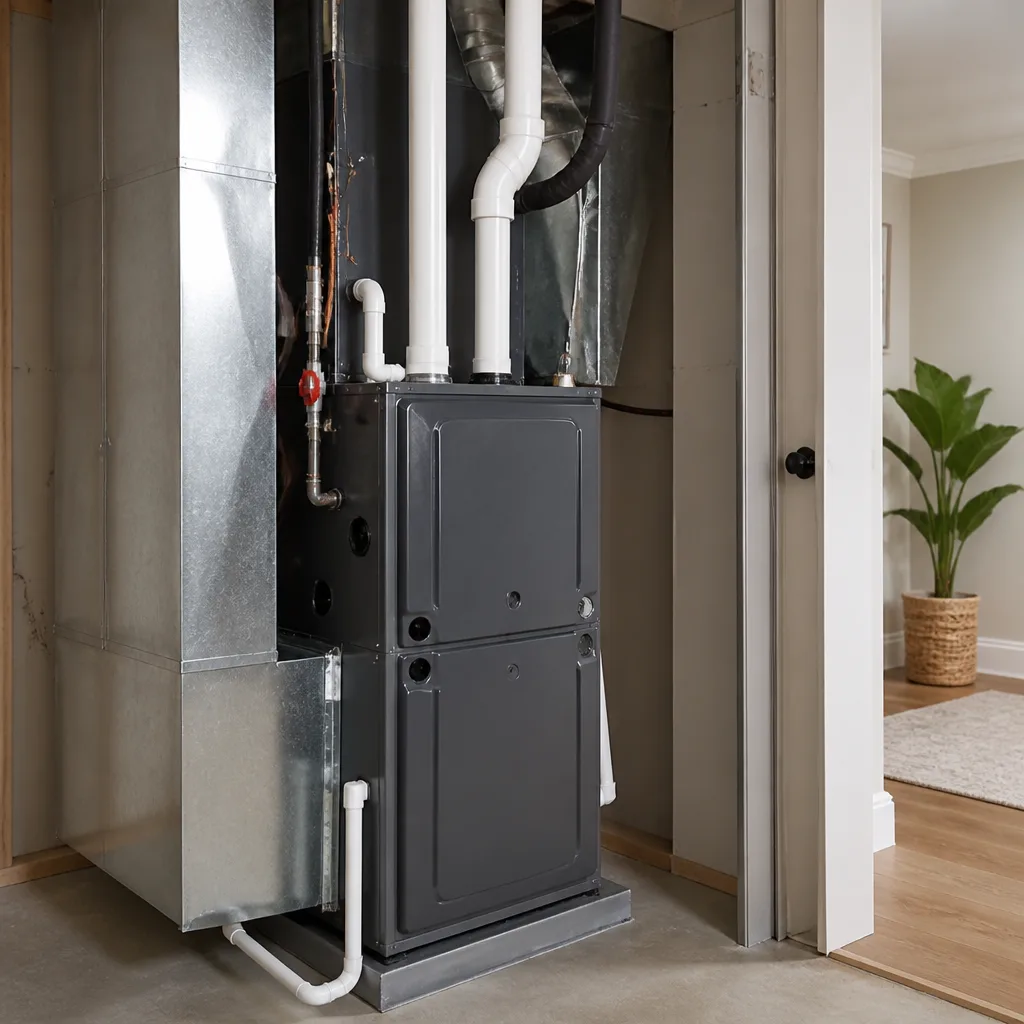 Furnace & heating
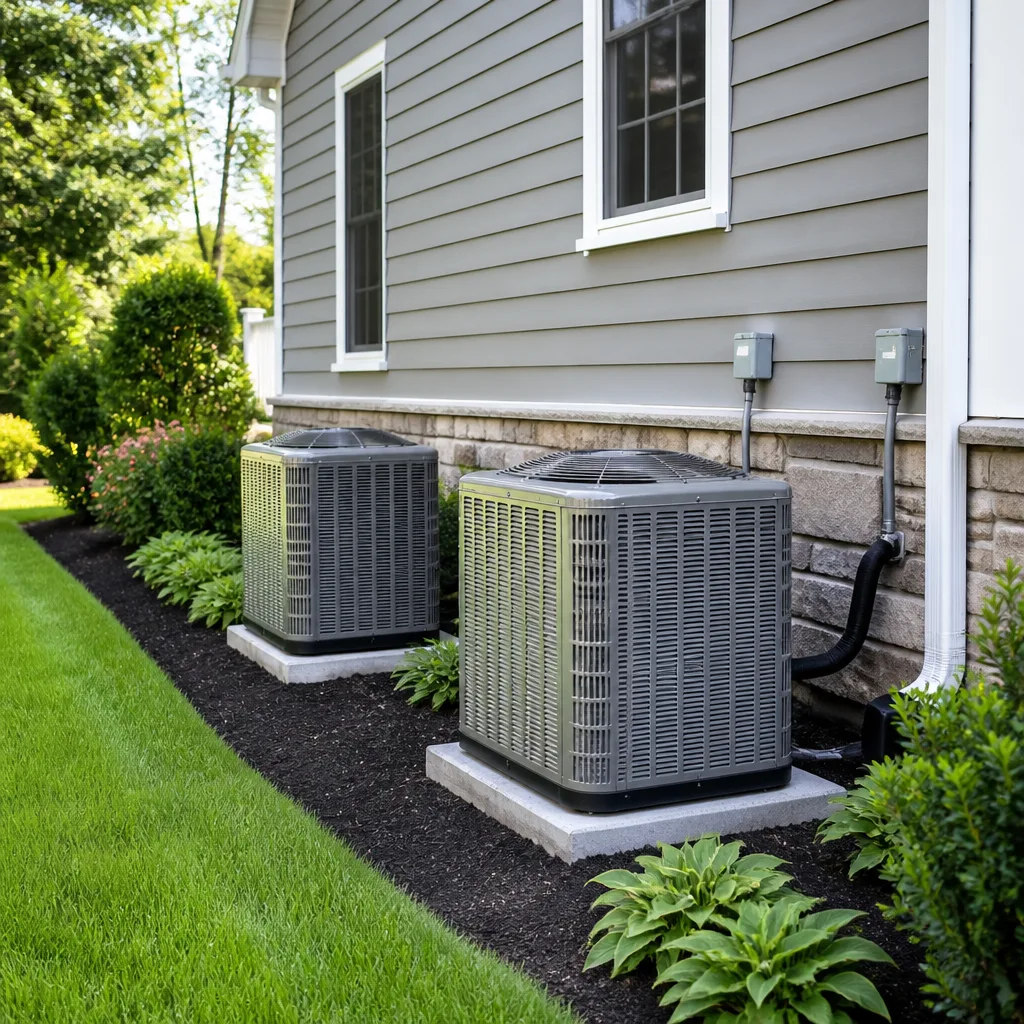 Heat pumps
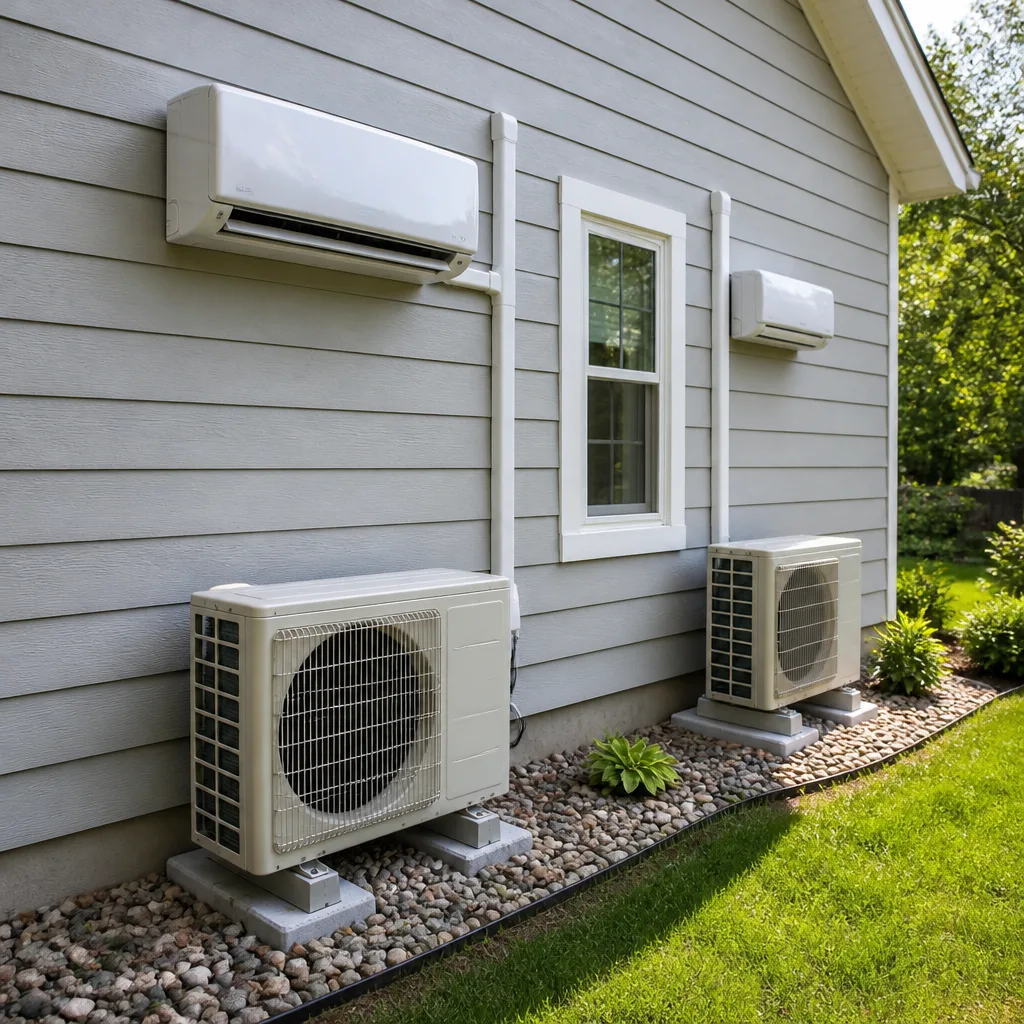 Ductless mini splits
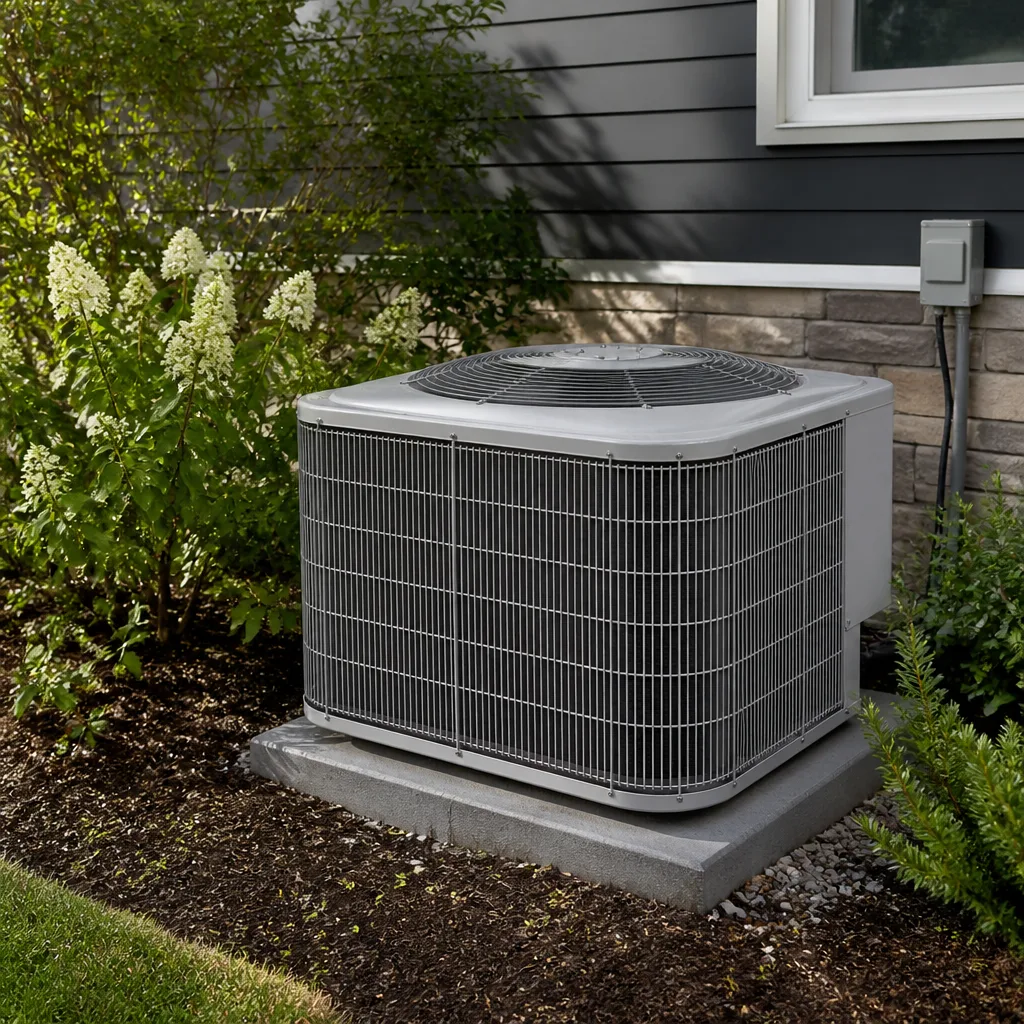 Carrier
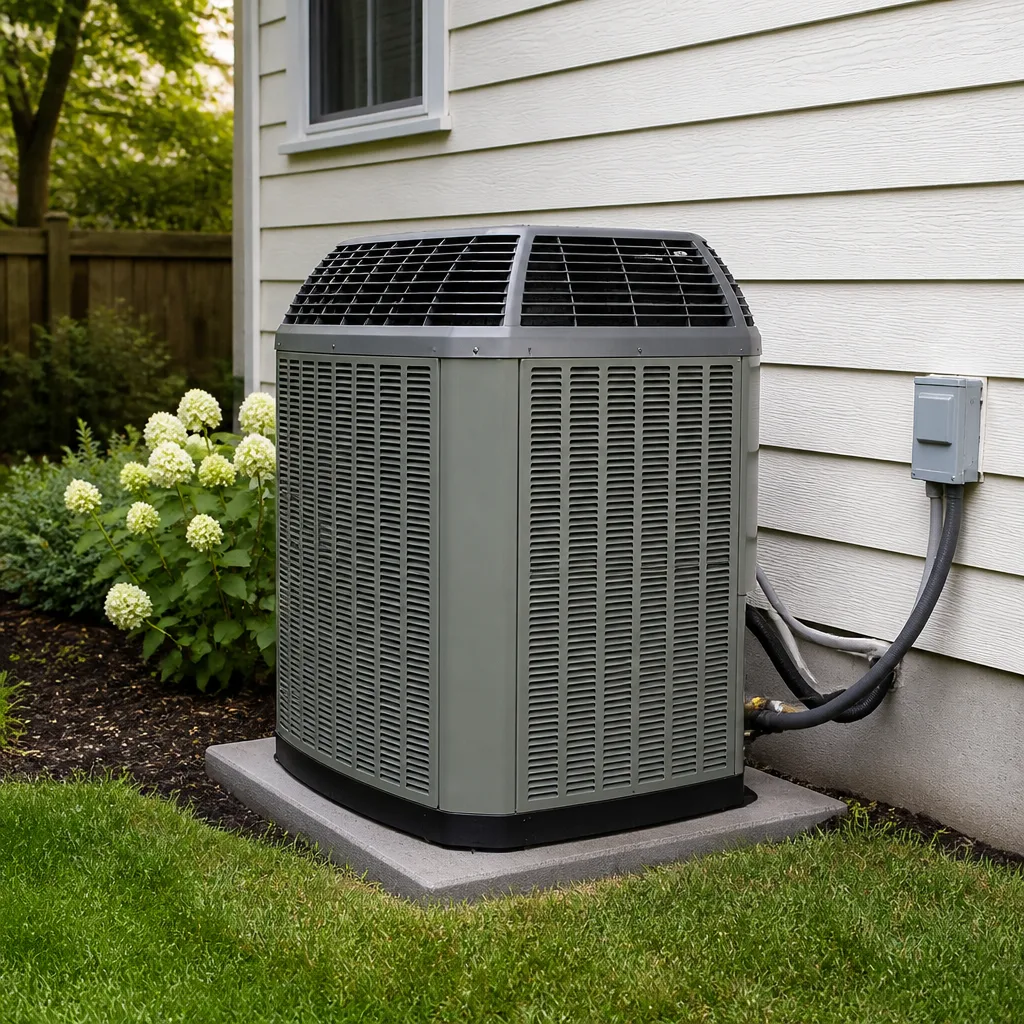 Trane
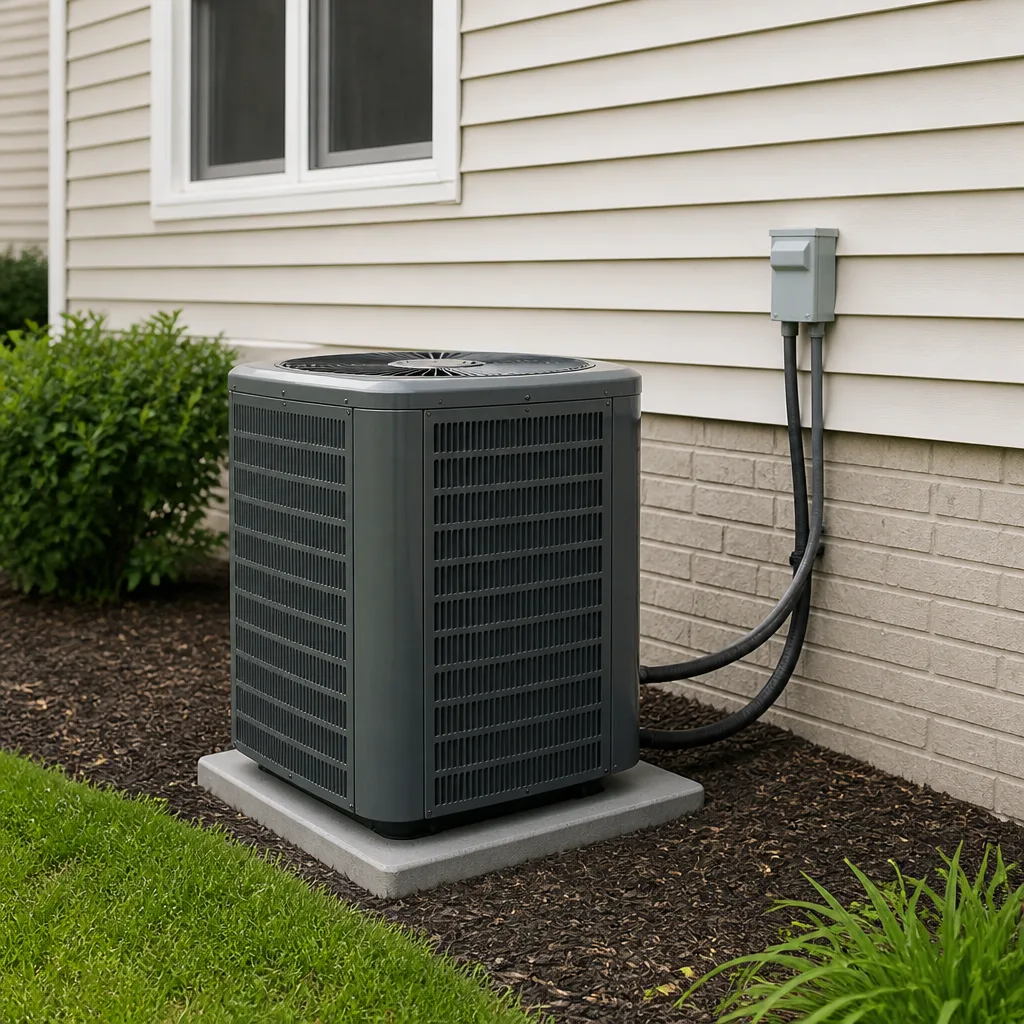 Goodman
Seasonal tune-up and full diagnostic on your Carrier, Trane, or Goodman system - readings shown to you before any repair is proposed
Diagnosis first, numbers second - you approve the repair price before a single part goes in.
Get your free estimateHow to Hire an HVAC Contractor in North Las Vegas: A Step-by-Step Guide
There are over 400 licensed HVAC contractors active in Clark County right now. Around 60 of them have a complaint filed with the Nevada State Contractors Board in the last three years. That list is public, it takes about 90 seconds to check, and almost nobody checks it. Most homeowners in North Las Vegas pick a contractor the way they pick a restaurant: whoever answers first, or whoever a neighbor mentioned. That works fine for dinner. It stops working around month seven, when the system that was “running great” in July starts icing up in August and the guy who installed it won’t call back. This guide walks you through the exact checks, questions, and red flags that separate a contractor who will still answer the phone next year from one who won’t.
Quick Answer
Hiring an HVAC contractor in North Las Vegas comes down to four checks: verify the license and complaint history on the Nevada State Contractors Board website, confirm the business has a real physical address you can drive to, ask who will actually be doing the work, and require a Manual J load calculation and a written warranty before you sign. Price matters, but it matters a distant fourth. The contractor who will still answer in month seven is the one worth a few hundred dollars more.
Styles & brands we work with
- AC repair
- Furnace & heating
- Heat pumps
- Ductless mini splits
- Carrier
- Trane
- Goodman
Table of Contents
- Step 1: Run the Nevada State Contractors Board Lookup
- Step 2: Ask the Three Questions That Reveal Who Does the Work
- Step 3: One Honest Manual J Beats Three Bids
- Step 4: Read the Warranty Like It Will Break
- Step 5: Verify the Physical Address Is Real
- Why North Las Vegas Climate Punishes Bad Installs
- Signs You’ve Found an Honest Contractor
Step 1: Run the Nevada State Contractors Board Lookup
Start at the Nevada State Contractors Board website (nscb.nv.gov) and open the “License Lookup” tool. You’ll need either the contractor’s license number or the business name. Any legitimate HVAC company in North Las Vegas will hand that license number over without hesitation. If you have to ask twice, that’s your answer.
Here’s what the license page actually shows you, and what each section means:
- License status. Look for “Active” and the correct classification. HVAC work falls under Classification C-21 (air conditioning and refrigeration). If the license shows “Suspended,” “Expired,” or “Revoked,” walk away. No exceptions.
- Complaint history. Scroll down to the complaints section. You’ll see the date, the type (workmanship, contract dispute, etc.), and the resolution. One resolved complaint over 10 years means little. Three complaints in 18 months means a pattern. Read them.
- Bond status. Nevada requires a surety bond on licensed contractors. The lookup shows the bond carrier and whether it’s current. A lapsed bond means you have less recourse if something goes wrong.
- Qualifying party. The license lists the person who passed the trade exam and is legally responsible for the work. If that name doesn’t match the person who shows up to quote your job, ask why.
We’ve watched homeowners in North Las Vegas skip this step because the contractor was “a nice guy on the phone.” The lookup doesn’t care how nice he was. It cares whether he’s licensed, bonded, and clean. Ninety seconds. Do it before anyone comes to your door.
Step 2: Ask the Three Questions That Reveal Who Does the Work
The single biggest difference between a contractor worth hiring and one you’ll regret isn’t price. It’s whether the person quoting you will be the person doing the work, or whether your house gets handed off to a rotating cast of subcontractors who have never seen your system before.
Ask these three questions. The answers tell you almost everything:
- “Who’s actually doing the install?” If the answer includes the words “our crew,” “a team,” or “one of our techs,” ask for a name. A good contractor will give you one. A bad one will dodge.
- “Have you done work in this neighborhood before?” Las Vegas tract homes built between 1995 and 2005 often have duct layouts that share quirks. A contractor who knows the area can tell you what those quirks usually are. A contractor who doesn’t will just nod and quote the same thing he quoted yesterday.
- “Will you be the one I call if something goes wrong?” This is the accountability question. If the answer is “the office” or “our warranty department,” you’re dealing with a machine, not a person. If the answer is “my cell is on the invoice,” you’ve found someone worth working with.
Owner-operated shops tend to pass this test because the owner’s name and license are on the paperwork. Ray’s Heating & Air has run this way since 2002, and that continuity is why we handle AC repair and installation in North Las Vegas with the same faces job after job. In our experience, the “who’s doing the work” question alone eliminates half of the bids you’re comparing.
Step 3: One Honest Manual J Beats Three Bids
Every homeowner has heard the advice “get three bids.” It’s not wrong, but it’s incomplete. Three bids from three contractors who all skipped the load calculation are three guesses. What you actually want is one honest Manual J from a contractor willing to do the math.
Manual J is the ACCA standard used to calculate exactly how much heating and cooling capacity your home needs. It factors in square footage, window count and orientation, insulation, ceiling height, and – critically for North Las Vegas – local design temperatures that account for 110-degree summer afternoons and the dry swing down to the 40s in January. Skip it and you risk an oversized system that short-cycles, wears out fast, and never quite dehumidifies.
How to tell if a contractor ran a real Manual J:
- They measured your windows, not just your square footage.
- They asked about attic insulation and duct location.
- The proposal lists a specific “tons” figure (e.g., 3.5 tons) rather than “we’ll match what’s there.”
- You got a printed or emailed report, not a verbal “it’s about right.”
If a contractor shows up, paces the living room, and quotes you a system in 20 minutes without a single measurement, they’re selling equipment, not comfort. That’s how undersized and oversized systems end up in North Las Vegas homes every summer. Our approach is readings first, numbers second – you see the diagnostic data before you ever see a price.
Step 4: Read the Warranty Like It Will Break
Warranties are where bad contractors hide the gotchas. The trick is learning to spot the language that sounds protective but isn’t.
Red-flag language:
- “Parts only.” This means the compressor is covered, but the $800 labor to install it isn’t. Guess who pays.
- “Labor at our discretion.” That means the company decides case by case whether to charge you full labor. In practice, they usually do.
- “Warranty void if serviced by another contractor.” This is a contract enforcement tool. It’s fine for manufacturer warranties, but as a labor warranty it locks you in.
- Any warranty without a specific number of days, months, or years. If it doesn’t have a figure, it has no teeth.
Language with teeth:
- A stated time window: jobs carry a 90-Day Done Right Promise – if it’s not done right, we come back and make it right, no charge.
- “No-charge callback within X days.”
- “Labor included” language, spelled out.
Before you sign anything, ask the contractor to point at the exact line in the warranty that says what happens if the install fails in month two. If they can’t, they haven’t read their own warranty. That’s a warning sign about how they’ll handle your callback.
Step 5: Verify the Physical Address Is Real
Here’s a test most homeowners never think to run: Google the contractor’s address. If it comes back as a P.O. box, a UPS Store suite, or a Regus virtual office, that’s not a physical shop. It’s a mailing address. There’s nothing wrong with a mail drop per se, but it tells you something important about accountability.
When something fails in month seven – and statistically, something will – you want to know the contractor has an actual place of business. Here’s why it matters:
- A real address means the business carries property overhead and has something to lose if it ghosts you.
- The Nevada State Contractors Board investigates based on the address on the license. A virtual suite slows that process.
- Warranty claims and small-claims filings route to a physical address. A P.O. box is a dead end.
Cross-check in 60 seconds: type the address into Google Maps Street View. Does it show a shop or warehouse? Does the business name appear on the building? Call the number and ask what hours walk-ins are welcome. An honest shop will tell you. A mail drop will fumble. When we say Ray publishes his address and license number, that’s the point – you can drive over and verify.
Why North Las Vegas Climate Punishes Bad Installs
North Las Vegas sits at the bottom of the Mojave basin, and that geography is brutal on HVAC equipment. Summer design temperatures hit 108 to 110 degrees for weeks at a stretch, which means your system runs at or near maximum capacity from June through September. Condensers on the south or west side of the house see 130-plus degrees in direct sun, which shortens compressor life if the unit is undersized, overcharged, or installed with poor airflow clearances.
Two local specifics most out-of-area contractors get wrong:
- Duct runs in the attic reach 150 degrees. If ducts leak or have poor insulation in a North Las Vegas attic, your system loses 20 to 30 percent of its cooling capacity before the air ever reaches a vent. A Manual J that ignores duct loss is a fantasy.
- Winter mornings hit the low 30s a few times a year. That’s not much compared to northern Nevada, but it’s enough that a heat pump sized for cooling alone may struggle on the coldest mornings. The right size balances both.
Neighborhoods like Aliante, Eldorado, and the older sections near Craig Road have different housing stock and different duct layouts. A contractor who knows North Las Vegas will know what to look for before climbing into the attic. Here’s our guide to heat pump and mini-split work in North Las Vegas if you’re weighing equipment options – it walks through the cooling-to-heating balance for this climate specifically.
Signs You’ve Found an Honest Contractor
The signs are subtle, but they add up fast. When you meet a contractor, watch for these:
- They test small parts first. A capacitor is a $15 part. A compressor is $1,500. A good tech tests the capacitor before anyone says the word “compressor.” When heating and furnace work in North Las Vegas is on the table, the same logic applies: test the ignitor, the flame sensor, and the pressure switch before quoting replacing a heat exchanger.
- They hand you readings. Capacitance, static pressure, superheat, subcooling – real numbers, not “it reads fine.”
- They don’t upsell on the first visit. They quote what’s broken, and if a bigger conversation makes sense, they schedule it for later.
- They answer the phone. Live person, any hour. Not a callback voicemail maze.
- They offer a second opinion free. If a contractor is confident in their estimate, they aren’t afraid of you comparing it. Our standing Free Second Opinion on any written estimate comes from exactly that logic.
Brands matter less than the person doing the install, but here’s what we work with most in North Las Vegas: Rheem and York for reliable mid-range installs, Bryant for the value tier. All major brands are on the table when the system calls for it. Get the installation right and the brand becomes a footnote.
Common Mistakes to Avoid
- Picking the lowest bid without checking the license. Bids are 30 to 40 percent apart in this market for the same equipment. The gap is usually labor, warranty coverage, or a skipped Manual J. Verify first, then compare prices.
- Believing the “free tune-up” phone call. Nobody who won’t state their company name before asking for your address is running a real tune-up. The tune-up is the loss leader for a sales visit.
- Signing a work authorization before a diagnostic. Never authorize work until you’ve seen readings. “Diagnose first, quote second” is what an honest shop does.
- Skipping the address check. Google the address on the estimate. A virtual suite isn’t disqualifying, but it removes a layer of accountability you’re paying for.
- Assuming “our technician” means the same person each time. If the crew rotates, nobody remembers your attic, your ducts, or the last repair. Continuity is what you’re paying for on an owner-operated job.
- Ignoring the warranty fine print. Words like “parts only” and “labor at our discretion” cost real money in year two. Read them before you sign.
- Letting a company pressure you on the first visit. A quote that expires “today” because of a “manager special” isn’t a quote. It’s a sales tactic.
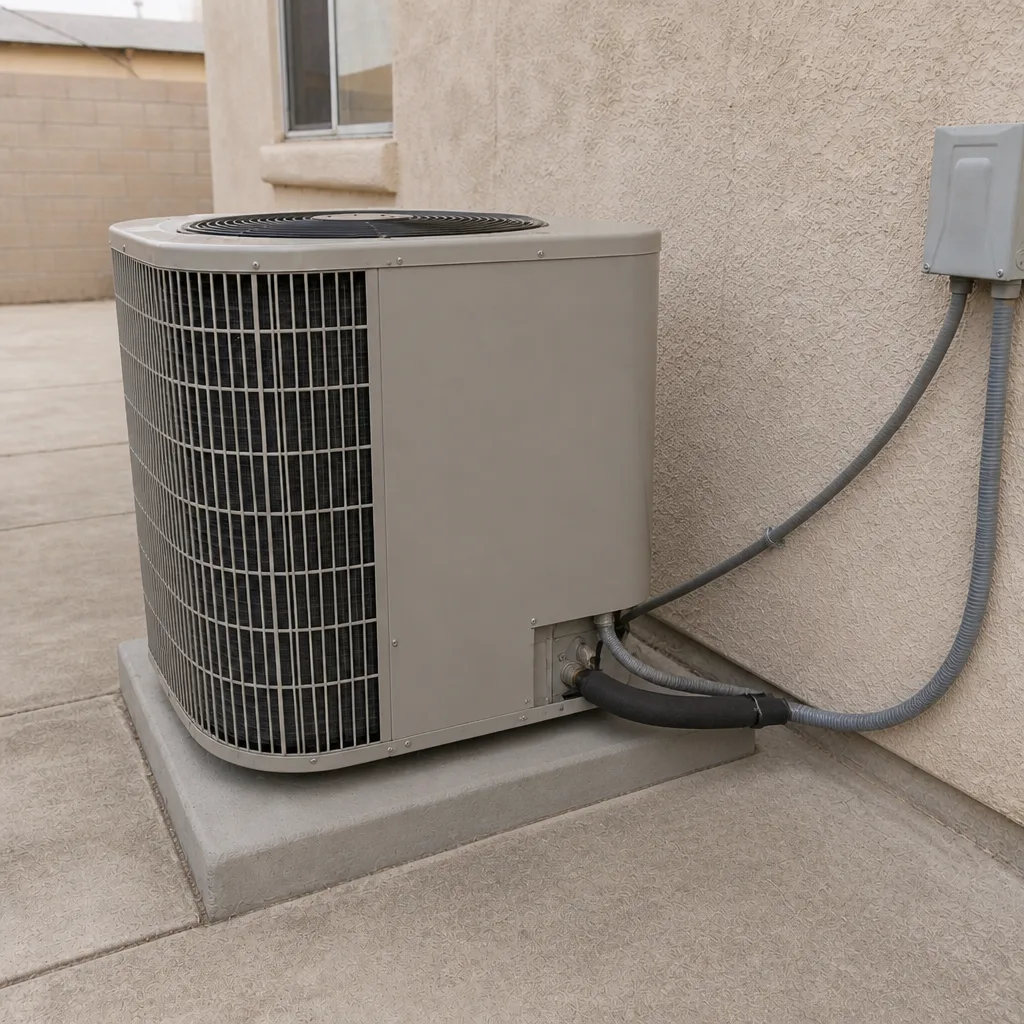
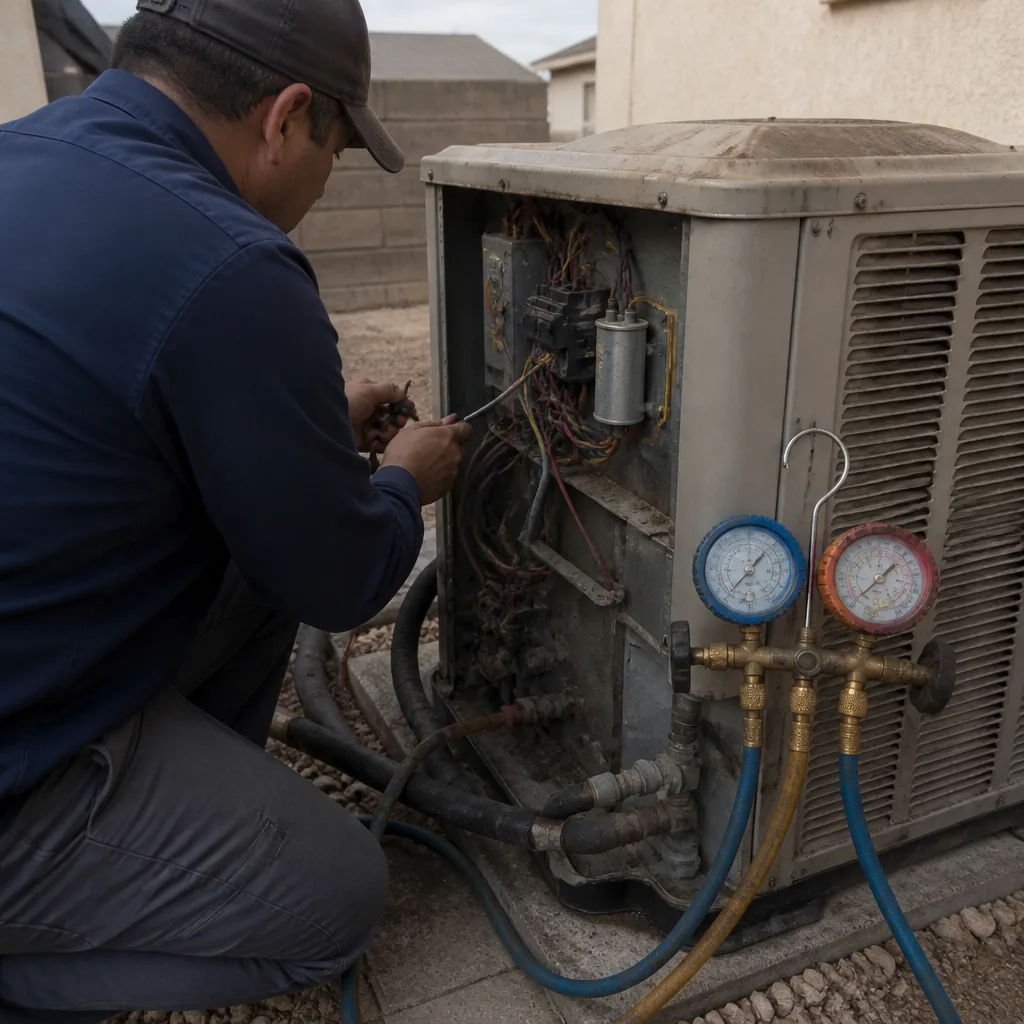
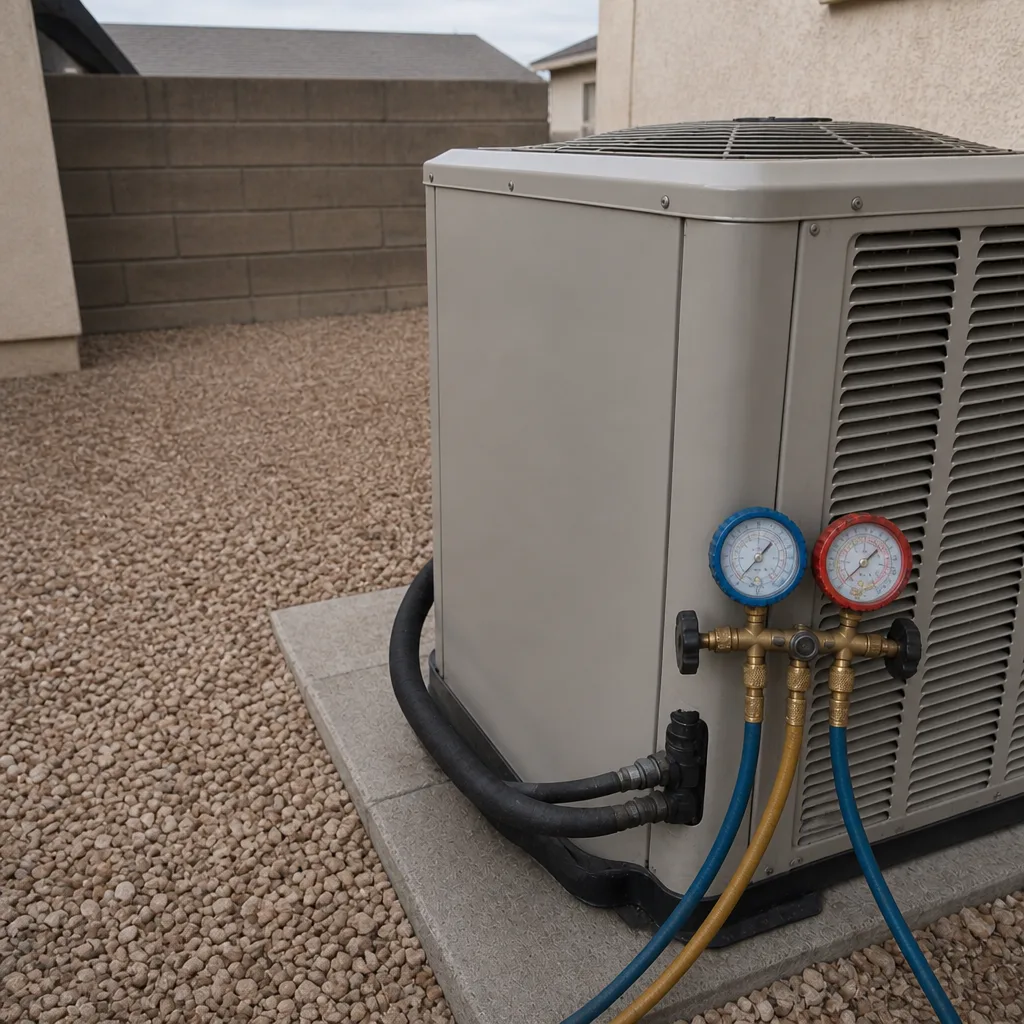
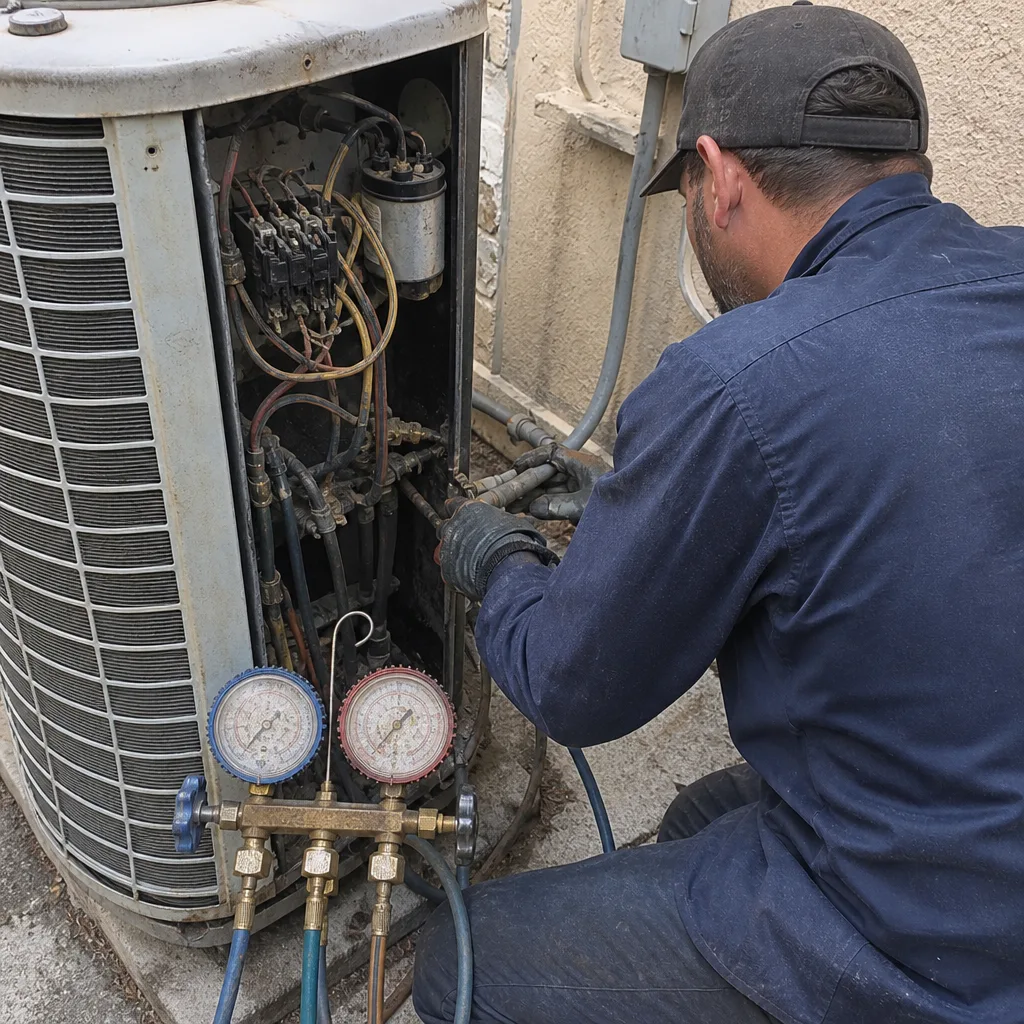
See the difference
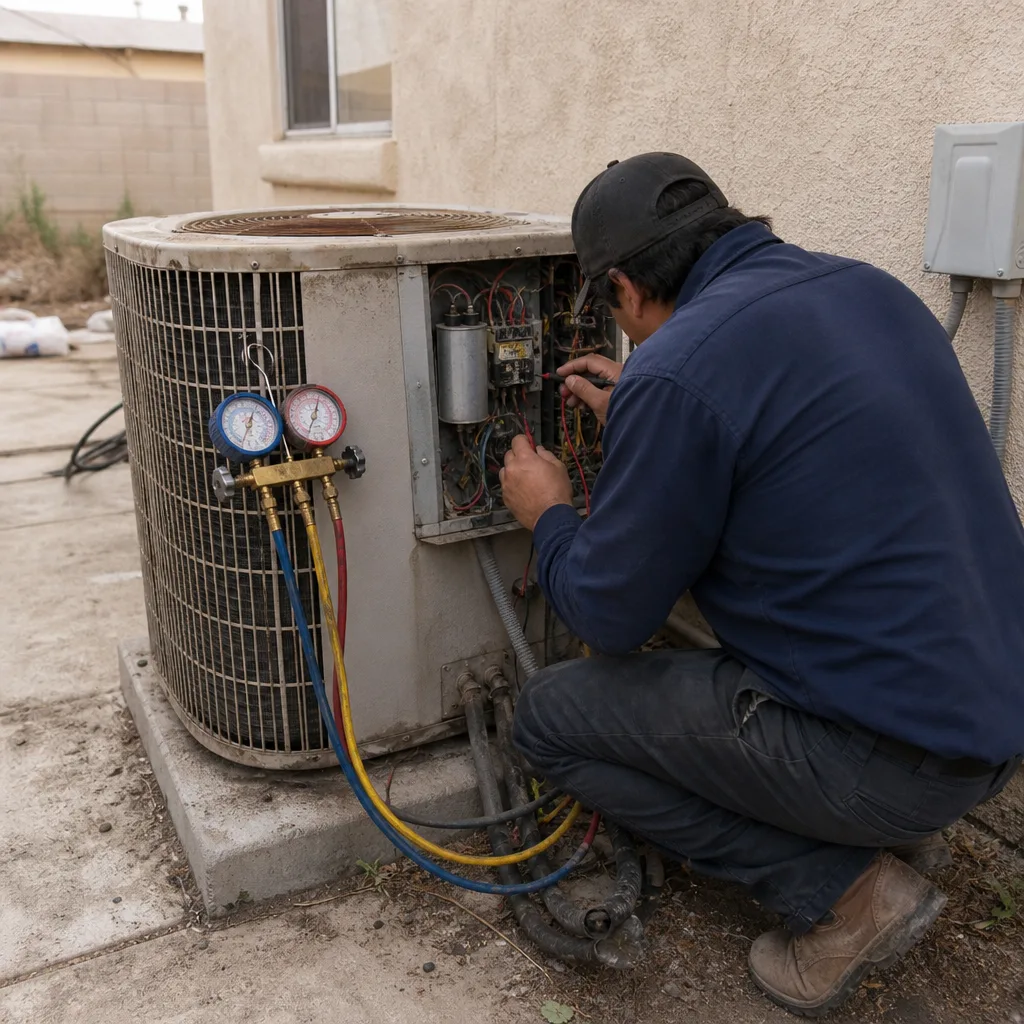 Before
 After
 Before
 After
 Before
 After
When to Call a Professional
Some things are worth calling about today. A system blowing warm air on a 108-degree afternoon isn’t an inconvenience – it’s a health risk for anyone over 65 or under 5, and it deserves a same-day call. The same applies to a gas furnace that won’t stay lit, a refrigerant leak you can smell, or any noise from the breaker panel or the outdoor disconnect. High-voltage wiring and refrigerant circuits are not DIY territory; misdiagnosed capacitors and shoddy refrigerant work cause fires and injuries. Call a licensed professional. Ray’s Heating & Air North Las Vegas offers free estimates in North Las Vegas – call (844) 761-6871. If you’re pricing out a full replacement rather than a repair, our Ray’s Heating & Air North Las Vegas home page walks through how we scope and schedule that work.
Frequently Asked Questions
Use the Nevada State Contractors Board website at nscb.nv.gov, enter the license number, and confirm three things: active status, HV classification (or C-21 for HVAC-specific), and clean complaint history. Look at the bond status too. It takes about 90 seconds and eliminates most bad actors before they reach your door. Any contractor who hesitates to give you the license number is telling you something.
One good Manual J. Three bids only help if all three contractors ran the load calculation; otherwise you’re comparing guesses. A proper Manual J measures windows, insulation, and duct location, then produces a specific tonnage sized to your home and North Las Vegas’s summer design temperatures. Get one thorough Manual J from a contractor you trust, then a second bid on the same scope if you want price comparison. If a quote comes without a Manual J, it’s missing the foundation.
A virtual office or P.O. box means there’s no physical shop. That’s not always disqualifying, but it removes a layer of accountability: warranty claims route to a real address, and the Nevada State Contractors Board investigates based on the address on the license. When something fails in month seven, a real address gives you a place to go. Cross-check on Google Street View before signing anything.
For repairs, yes – many local shops offer same-day service, and a live-answer dispatcher makes the difference between same-day and next-week. For replacement or full installation, no. That work requires a Manual J, equipment ordering, and a scheduled install date, often one to three weeks out depending on brand availability. Trust the contractor who tells you that honestly over one who promises an install tomorrow.
It should state a specific time window (days, months, or years), say whether labor is included, and describe the callback process. “Parts only” language means labor is on you; “labor at our discretion” means the company decides case-by-case whether to charge. Look for a stated promise – for example, a 90-Day Done Right Promise that spells out what happens if the install fails. If the warranty has no number in it, it has no teeth.
No – or rather, they can, but you shouldn’t accept it. A phone quote for a full system replacement is at best a placeholder and at worst a bait-and-switch. A real quote requires measuring windows, checking attic insulation and duct layout, running a Manual J, and confirming electrical capacity. If someone quotes a full install over the phone, that’s a sales call, not a diagnostic. Call (844) 761-6871 if you’d like a real estimate.
The Bottom Line
Hiring an HVAC contractor in North Las Vegas isn’t about picking the lowest bid. It’s about separating the contractor who will answer in month seven from the one who won’t. Verify the license on the Nevada State Contractors Board site. Ask who’s actually doing the work. Insist on a Manual J. Read the warranty for the words “parts only” and “labor at our discretion.” Verify the address is real, not a mail drop. Those five checks take an afternoon and save years of headaches. Price is important, but accountability is what you’re really paying for. Ask anyone on your street – the name they remember is usually the contractor who came back.
Ray’s Heating & Air has been locally owned and owner-operated since 2002, with a 90-Day Done Right Promise on every heating and cooling job and a live person answering the phone every hour of every day. Reach out at (844) 761-6871 for a free estimate, or browse our full lineup of services and the L.O.C.A.L. values that anchor every job we take on.
Written by the team at Ray’s Heating & Air North Las Vegas.