
Last updated November 17, 2026
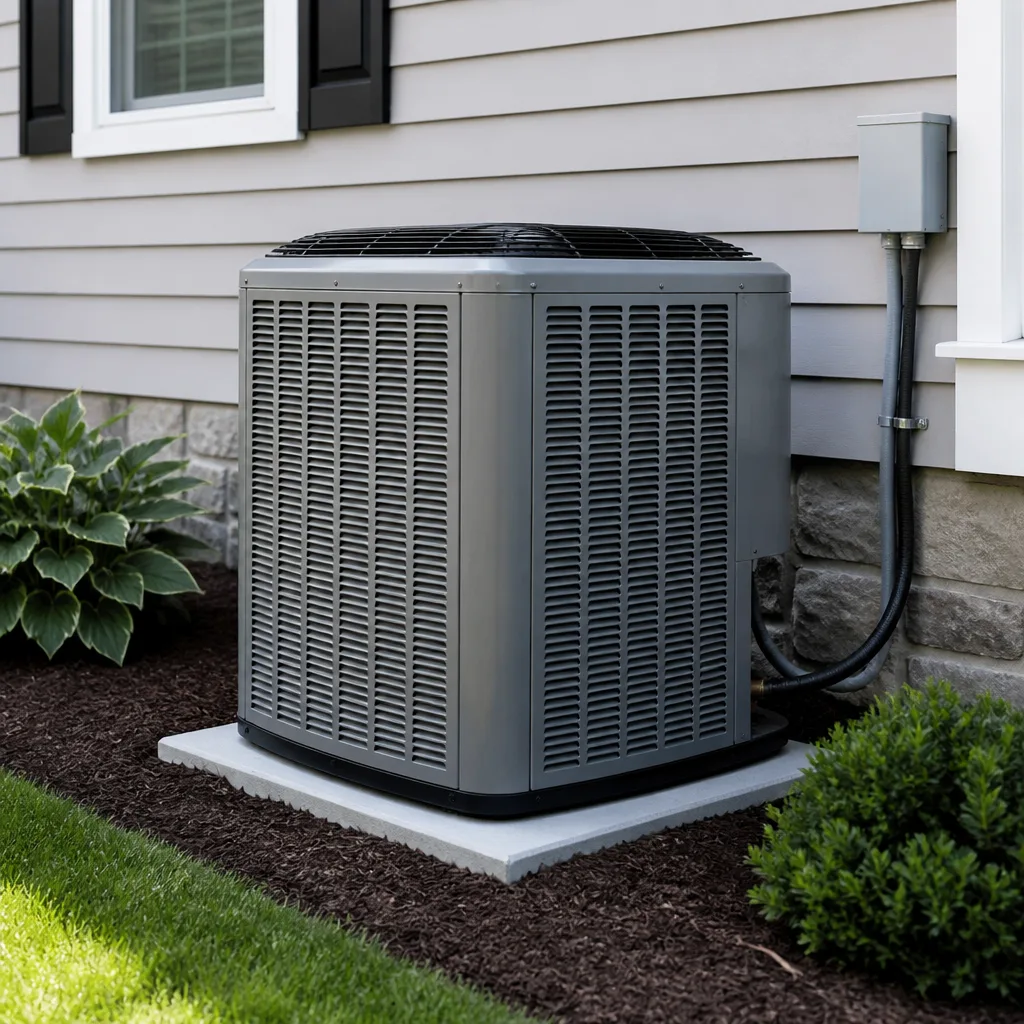 AC repair
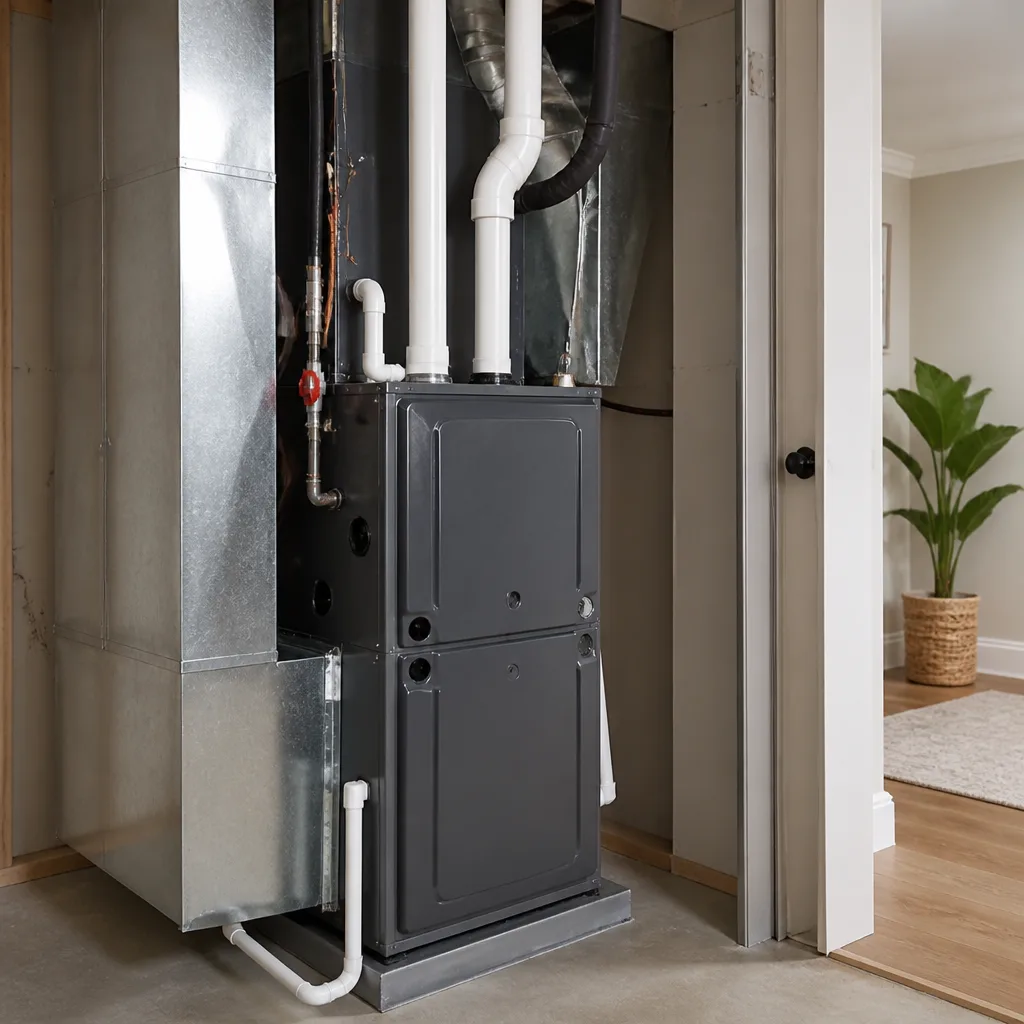 Furnace & heating
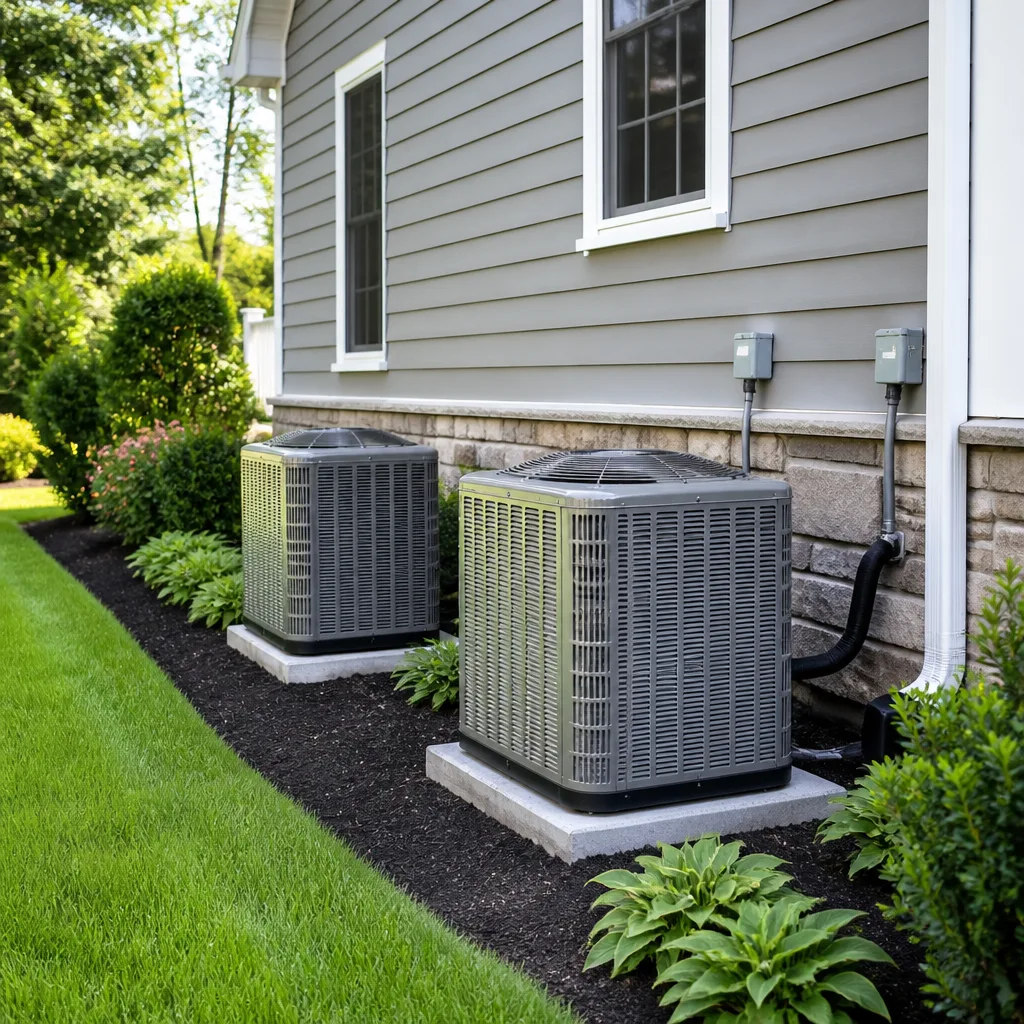 Heat pumps
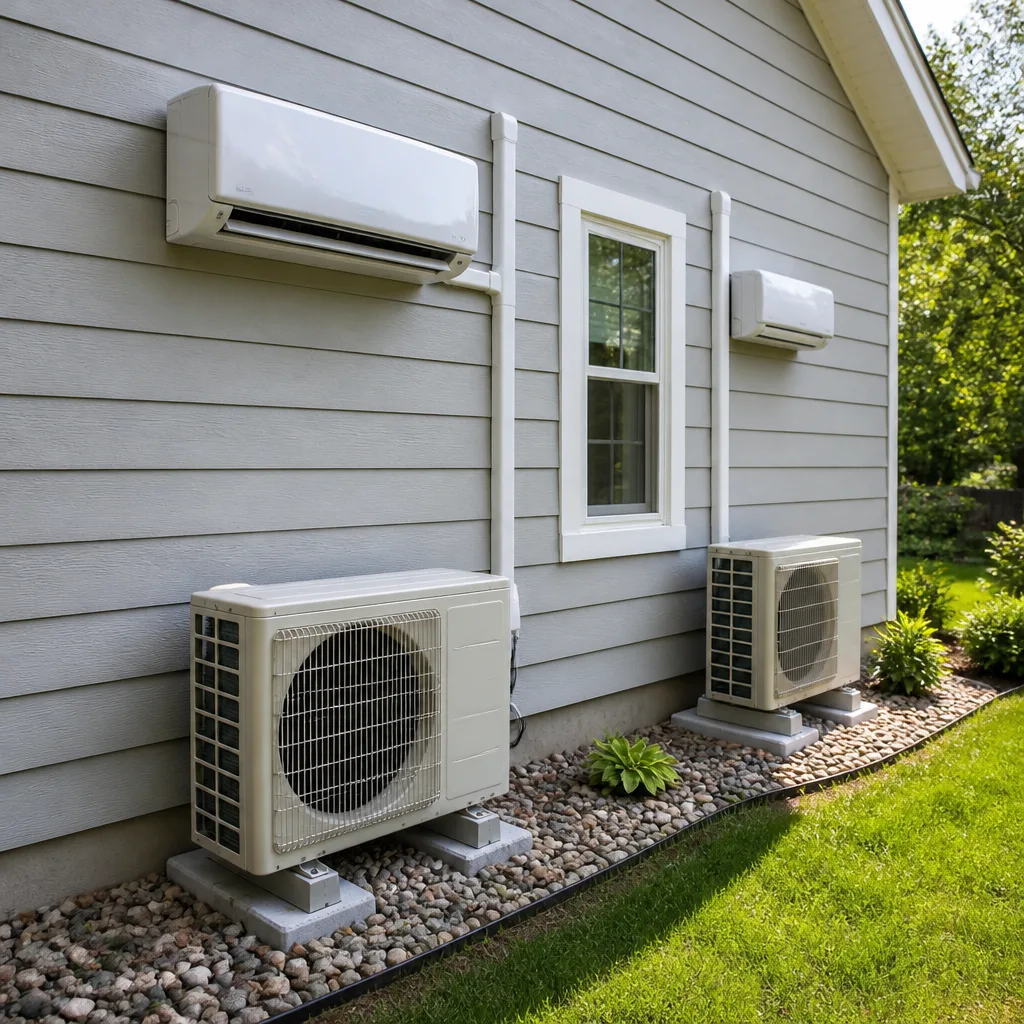 Ductless mini splits
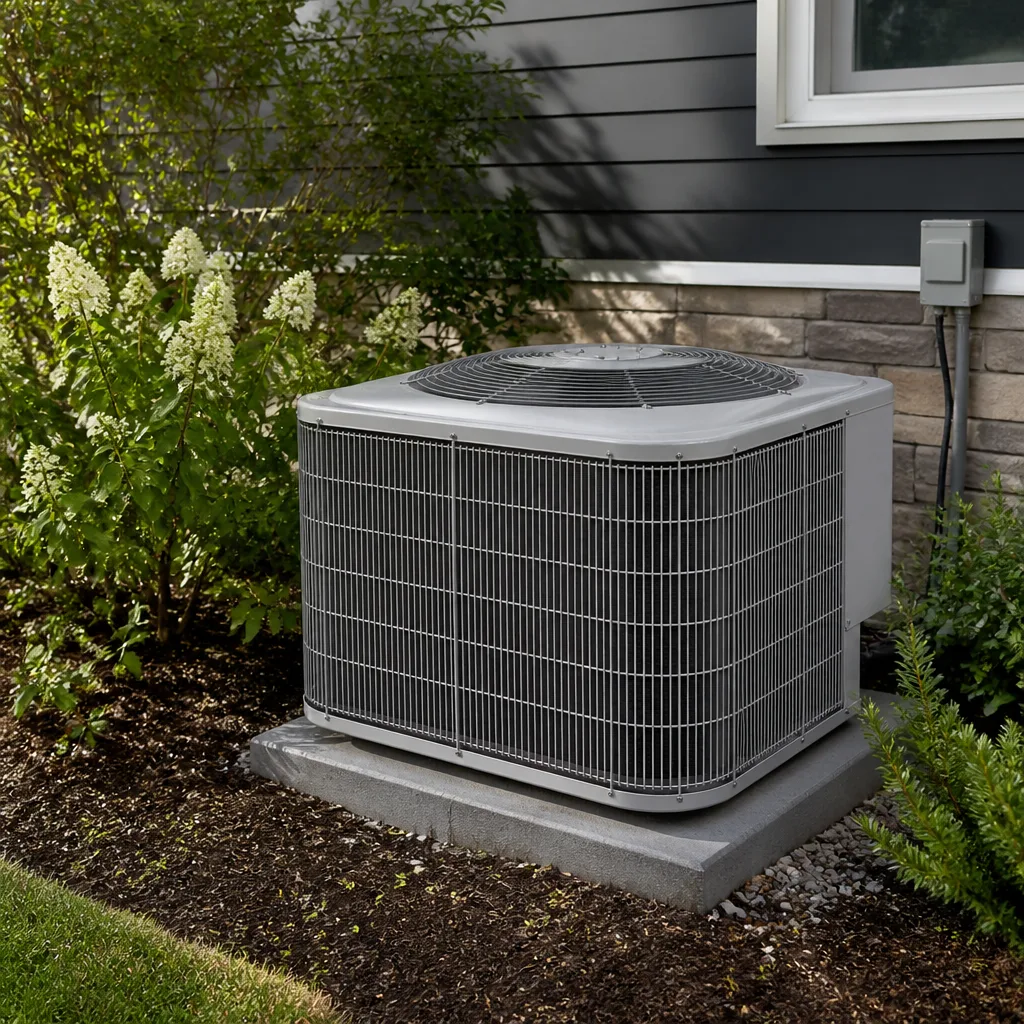 Carrier
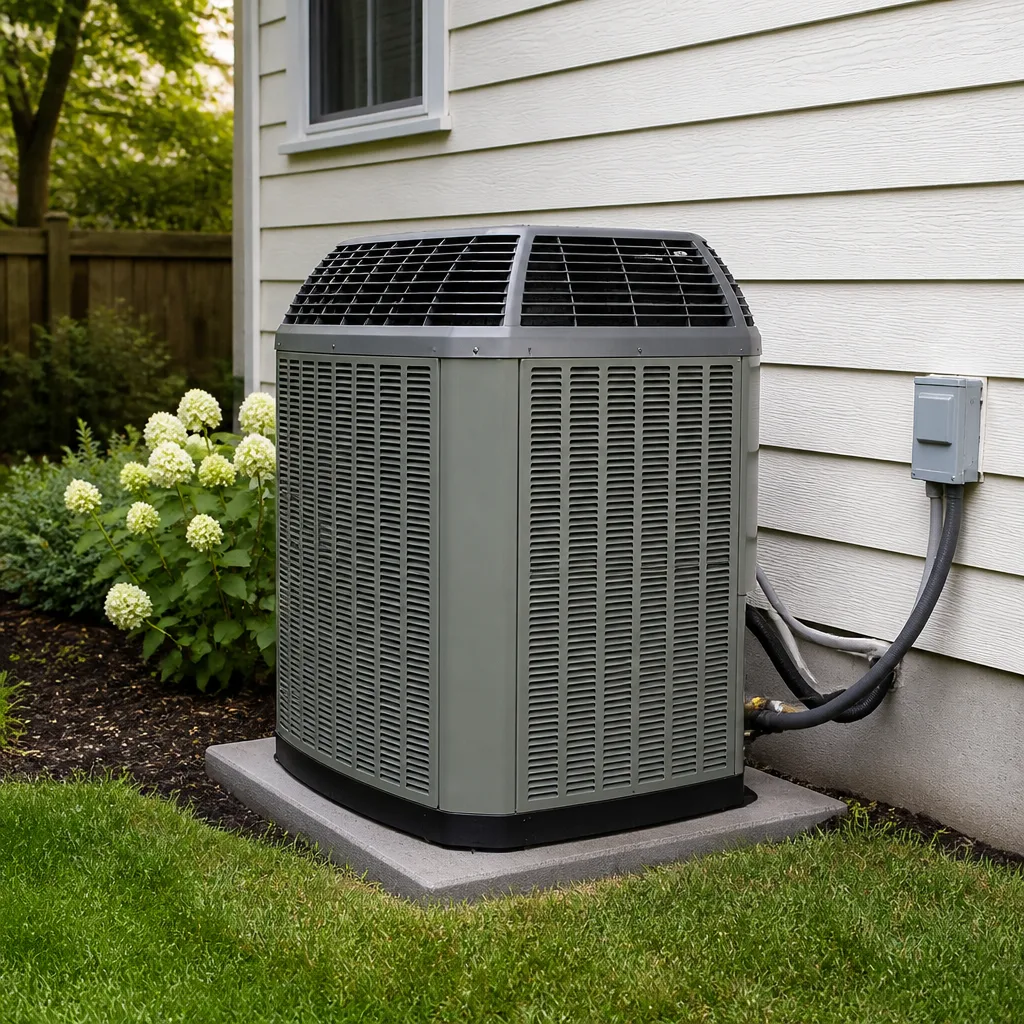 Trane
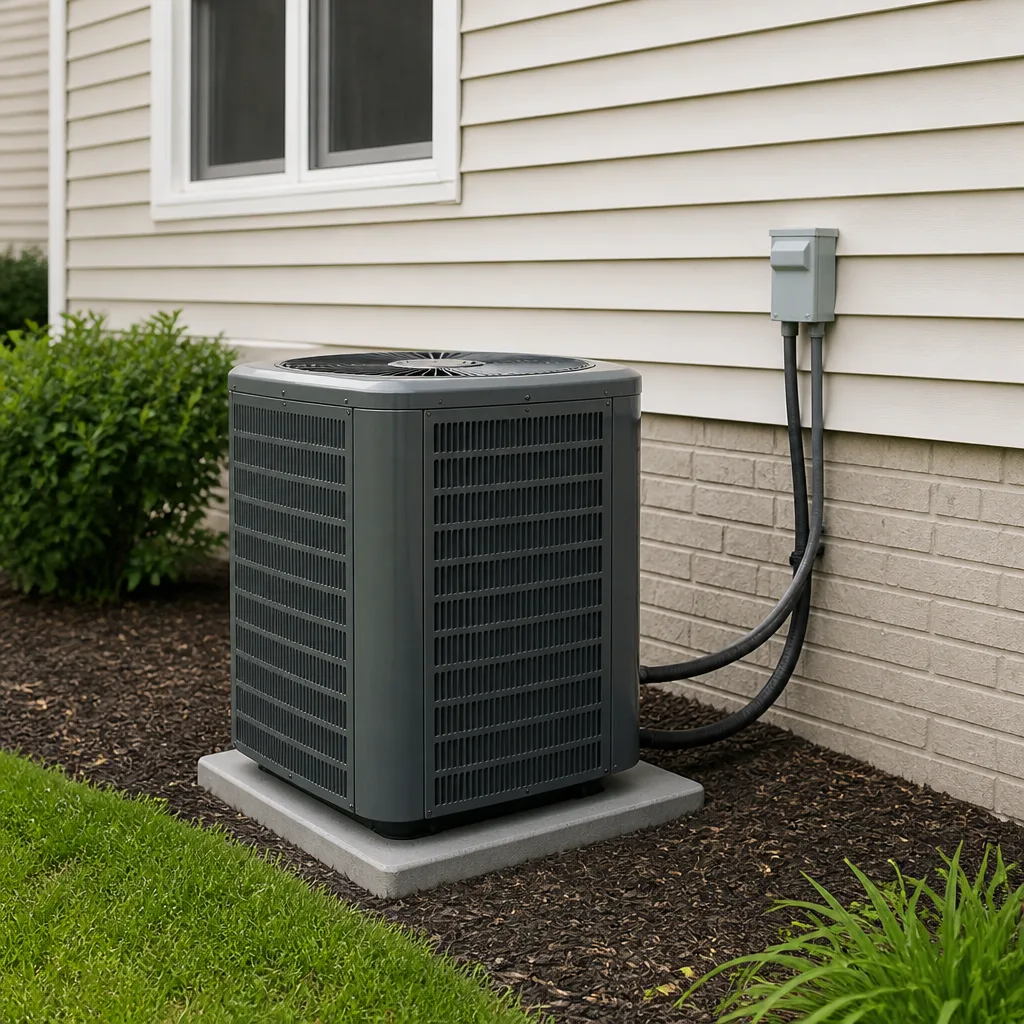 Goodman
Seasonal tune-up and full diagnostic on your Carrier, Trane, or Goodman system - readings shown to you before any repair is proposed
Diagnosis first, numbers second - you approve the repair price before a single part goes in.
Get your free estimateHow Long Does AC Repair & Installation Take? Timelines and What to Expect
Here’s the number that should change how you think about your air conditioner: during the first week of July, the average wait for a non-emergency AC repair from a large national outfit in the Las Vegas Valley runs 4 to 6 days. Not hours. Days. That means if your system quits on a Sunday, you might be sweating until Friday. Knowing that in February changes how you think about spring maintenance. This guide is written to take the panic out of that decision. We’ll walk through realistic hour-by-hour timelines by job type, what parts availability actually looks like in North Las Vegas, how permits and Clark County inspections add days to an installation, and the three questions that separate an honest time estimate from a vague one. If you’ve been burned by a phone quote that doubled at the door, you’re in the right place.
Quick Answer
Most AC repairs in North Las Vegas take between 90 minutes and 3 hours on site, depending on the job: a capacitor swap runs under 90 minutes, a refrigerant recharge with a leak search takes 2 to 3 hours, and an evaporator coil replacement runs 4 to 6 hours. A full system replacement is a separate animal, usually 6 to 10 hours of install time for a standard home, plus permit and inspection scheduling that can add several business days. The single biggest factor in how long you wait isn’t the repair itself. It’s whether the company you call has a crew available when your system actually fails.
Styles & brands we work with
- AC repair
- Furnace & heating
- Heat pumps
- Ductless mini splits
- Carrier
- Trane
- Goodman
Table of Contents
- How Long Do Common AC Repairs Take?
- How Long Does a Full AC Installation Take?
- Why “We Can Be There Tomorrow” Is a Red Flag in Peak Summer
- Parts Availability in North Las Vegas and How It Adds Time
- Permits, Clark County Inspections, and the Time Companies Skip
- Three Questions That Get You an Honest Time Estimate
- Why February Is the Best Month to Think About July
- Common Mistakes to Avoid
- When to Call a Professional
How Long Do Common AC Repairs Take?
Repair time depends almost entirely on which component failed and how easy it is to reach. A capacitor is a small part behind the service panel. An evaporator coil is buried inside the air handler and often means opening up the plenum. Here’s the realistic on-site range we see across North Las Vegas homes, from the older ranch houses off Carey Avenue to the newer builds out near Aliante.
- Capacitor or contactor swap: under 90 minutes. These are the most common summer failures, and they’re quick because the diagnosis is quick. We test the capacitor before anyone says the word compressor.
- Refrigerant recharge with leak search: 2 to 3 hours. The recharge itself is fast. Finding where the refrigerant went is what takes time.
- Blower motor replacement: 2 to 4 hours, depending on access to the air handler.
- Evaporator coil replacement: 4 to 6 hours. This is a heavier job with more labor and more disassembly.
- Condenser fan motor: 1.5 to 3 hours.
- Full system replacement: 6 to 10 hours of install time for a standard home, not including permitting.
One thing that gets left out of most timelines: the diagnostic itself. Readings first, numbers second. That means the person at your door should spend real time with gauges and a meter before quoting anything. A diagnosis that takes ten minutes and ends in “you need a whole new system” is not a diagnosis. It’s a sales pitch. For a full breakdown of what each repair involves, see our page on AC Repair & Installation in North Las Vegas.
How Long Does a Full AC Installation Take?
A full system replacement is not a repair and shouldn’t be scheduled like one. It’s a load-calculated, ordered, permitted job. Here’s what the honest timeline looks like from the day you say yes to the day cold air is blowing again.
- Day 0 – Assessment and written quote. A proper load calculation and a fixed written price. No surprises later.
- Day 1 to 3 – Permit filing. In Clark County, a residential HVAC replacement permit is typically filed within a business day or two, and approval usually comes back within several business days. Skipping this step is how companies save you “time” at your expense.
- Day 3 to 7 – Equipment ordering. Most standard systems (Carrier, Bryant, American Standard, and similar) are available through local supply houses in a few business days. Specialty or oversized units can take longer.
- Install day – 6 to 10 hours on site for a standard home. This is the actual removal and installation.
- Post-install – Inspection scheduling. Figure a few more business days for the county inspection, depending on the schedule.
So the realistic calendar window for a North Las Vegas replacement is roughly one to two weeks, with the actual labor concentrated on a single day. Anyone promising a same-day full install in July is either cutting the permit or installing a unit that wasn’t properly sized. If you’re also considering a heat pump in place of a straight AC, our Heat Pump & Mini Split in North Las Vegas page covers how those timelines differ.
Why “We Can Be There Tomorrow” Is a Red Flag in Peak Summer
Read that headline again slowly. In the first week of July, a company that can be at your door the next morning for a non-emergency call is telling you something about itself. Either it has a large enough crew to absorb summer demand, or its backlog is empty. Those are very different reasons and only one of them is good.
Here’s what “tomorrow” often means when a large outfit says it in July:
- You’re getting the next available slot in a queue, not a commitment from the person who will actually show up. The tech you book may not be the tech who arrives.
- The follow-up visit is a different person. If a part has to be ordered, the person who diagnoses it and the person who installs it are frequently not the same. They haven’t seen your system before. They start from scratch.
- The estimate was generated by a call center, not a diagnostic. That’s why the number at the door doesn’t match what you were told on the phone.
The alternative is a smaller operation with real continuity. You want the same face at the door on the return trip. That’s a scheduling constraint, and it’s a good one. If your call gets answered by a live person at 2 a.m., that’s a sign the operation is built to be reachable, not just advertised. Ray’s Heating & Air has answered every call with a live person since 2002 because that’s how a small operation earns the next call. Continuity isn’t a slogan. It’s a scheduling choice with a cost, and it’s worth knowing which companies pay it.
Parts Availability in North Las Vegas and How It Adds Time
Local parts availability is the hidden variable in every repair timeline. Some failures can be solved from what’s on hand. Others require a morning parts run. Here’s the honest split.
Usually on hand for a same-day fix: capacitors, contactors, common relays, fan motors, thermostats, and standard refrigerant. These cover the majority of summer calls.
Requires a parts run: compressors, evaporator coils, condensers, and any brand-specific control boards. These usually mean a trip to a supply house and, in some cases, an overnight order.
Here’s the part most homeowners don’t know: the major supply houses across the Valley stock different brands. A shop that carries Carrier and Bryant parts in one location may have to order a Daikin or American Standard component from across town. That’s not a knock on those brands – they’re all solid equipment. It’s simply how distribution works. A company with strong local supply relationships can often pull a part the same day. A company without those relationships will tell you “three to five business days” and mean it.
If you want the fastest possible repair, ask before you book: “Do you have the part for my unit in stock, or will you need to order it?” An honest answer here tells you more about your wait than any scheduling promise. For brands we service regularly, ask directly when you call – the answer will be specific, not vague.
Permits, Clark County Inspections, and the Time Companies Skip
A permit is one of those things nobody thinks about until a home sale falls apart because the work wasn’t inspected. In North Las Vegas, a residential HVAC replacement requires a permit through Clark County. The filing and approval add days to the calendar. The county inspection adds a few more once the install is done. Companies that skip the permit are saving you time on the front end and handing you a problem on the back end.
What proper permitting time actually looks like:
- Filing: one to two business days for a standard residential replacement.
- Approval: several business days, sometimes faster, sometimes slower, depending on the county queue.
- Inspection: scheduled after install, typically within a few business days.
The total added time is realistic and reasonable. The alternative – an unpermitted install – means the work isn’t documented. When you sell the house, the buyer’s inspector will flag it. When a warranty claim comes up, the manufacturer may deny it. You’ll spend far more time untangling that than you would have spent waiting a few days for the permit. If you’re comparing quotes and one is dramatically faster than the other, ask the direct question: “Is this permit going to be pulled?” A right answer is a yes without hesitation.
Three Questions That Get You an Honest Time Estimate
The fastest way to filter honest companies from vague ones is to ask three questions before you book. The answers tell you more than any website ever will.
- “What’s my realistic on-site window – not the arrival window, the work window?” A company that can tell you “a capacitor is under 90 minutes, a coil is 4 to 6 hours” has done this enough to be honest. A company that says “it depends” without specifics is dodging.
- “If a part has to be ordered, what does that do to the timeline?” The honest answer includes a specific range. The vague answer is “we’ll get back to you.”
- “Am I getting the same tech for the follow-up, or a different one?” Continuity is the tell. If the answer is a real name or a real commitment, you’ve found a company built for the long haul. If it’s a call center or a rotating crew, you’ve found a company built for volume.
Ask these on the phone, before you agree to anything. The quality of the answers tells you exactly who you’re dealing with. Our Ray’s Heating & Air North Las Vegas home page lists what to expect from the first call, and it’s the same standard on every job.
Why February Is the Best Month to Think About July
The deeper insight in this whole guide isn’t about any single repair. It’s about when you make the decision. A well-maintained system that gets its spring checkup in February or March is dramatically less likely to fail on the hottest day of the year. That’s not a sales line – it’s how capacitors, contactors, and refrigerant levels actually behave in Las Vegas heat.
The spring months are also when scheduling is easy. A tune-up in February takes an hour and a half and no one has to wait. A repair call in July takes three hours on site plus two days of waiting, and you’re making the decision with sweat on your forehead. Same repair, very different experience.
If your system is already on its last legs, spring is also the smart window for a replacement quote. You get the full load calculation, the permit filed, the equipment ordered, and the install scheduled before the season starts. You also get to compare financing and rebates without panic. Our Heating & Furnace in North Las Vegas page covers the overlap for homeowners with a heat pump or a dual-fuel setup that needs both sides checked.
Common Mistakes to Avoid
- Booking the first company that answers in July. That’s exactly the company counting on you not to compare. A 4 to 6 day wait from a national outfit is a completely different thing from a same-week repair from a local one.
- Accepting a phone quote as a real number. A phone quote is a guess. A written estimate after real diagnostics is a commitment. Ask for the second one.
- Letting anyone skip the permit to “save time.” The permit is there for a reason. Skipping it shifts the cost back to you at resale or warranty claim time.
- Assuming a recharge is a repair. If your refrigerant is low, it went somewhere. A recharge without a leak search is a two-hour job that buys you a few months – not a fix.
- Getting a new compressor quote without a capacitor test. We’ve seen plenty of “compressor” diagnoses that turned out to be a $30 capacitor. Ask for the readings.
- Replacing the whole system when a $40 part will do. A good tech will tell you when repair is the smarter move. A good company will let them.
- Ignoring the follow-up question. “Will the same person come back?” is the question that separates continuity from a rotating cast. If the answer is vague, keep looking.
When to Call a Professional
Some things you can check yourself. Some things you absolutely should not. If your system isn’t cooling, check the thermostat, the air filter, and the breaker first. That’s the safe list. Beyond that, refrigerant handling, electrical work inside the panel, and any diagnosis of the compressor are not DIY territory. Refrigerant is regulated and dangerous to handle without training. A misdiagnosed capacitor or a shorted contactor can cause real harm. If you smell burning, hear a loud rattle from the outdoor unit, or see ice on the indoor coil, call a professional.
Ray’s Heating & Air North Las Vegas offers free estimates in North Las Vegas – call (844) 761-6871. Your system tells us what’s wrong. We just listen first. You’ll see the readings and the numbers before any work begins, and if we tell you a repair will take a certain number of hours, that number is based on the actual diagnosis, not a guess from a call center.
See the difference
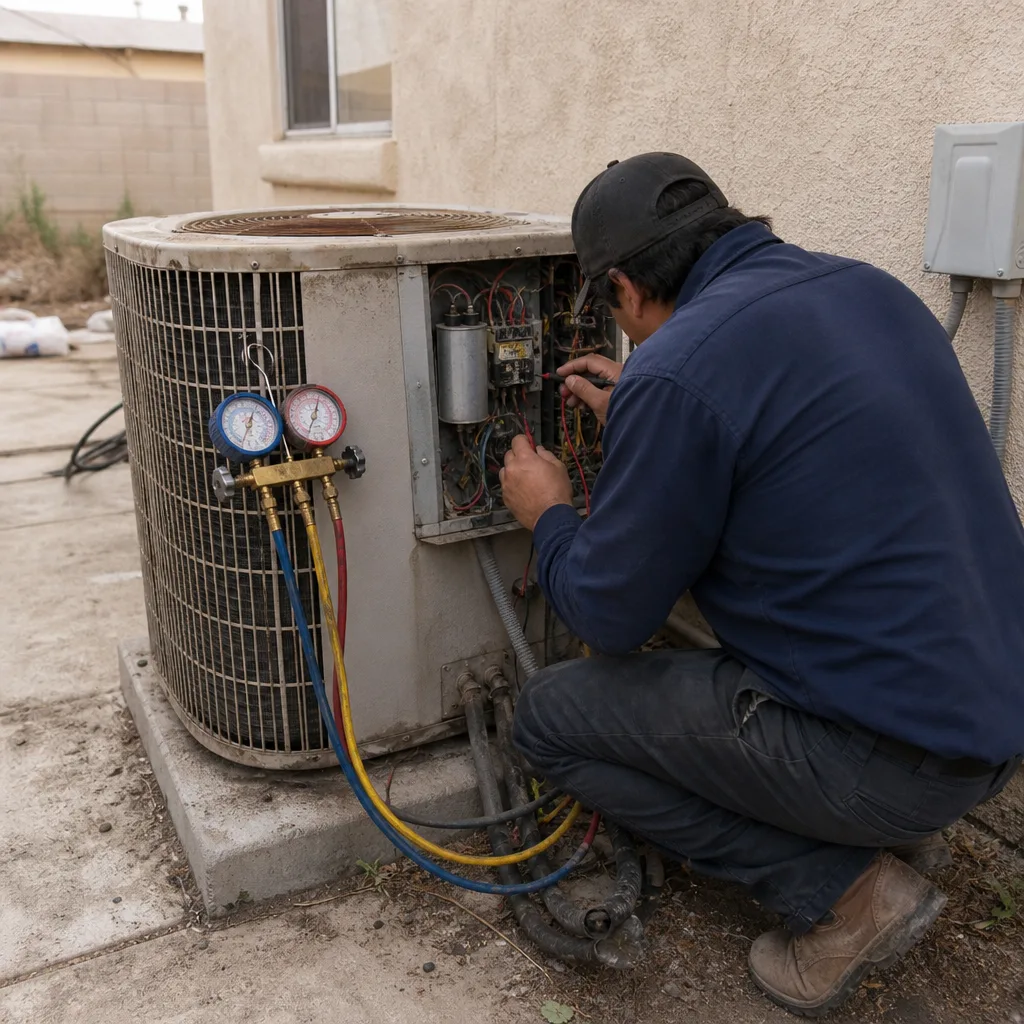 Before
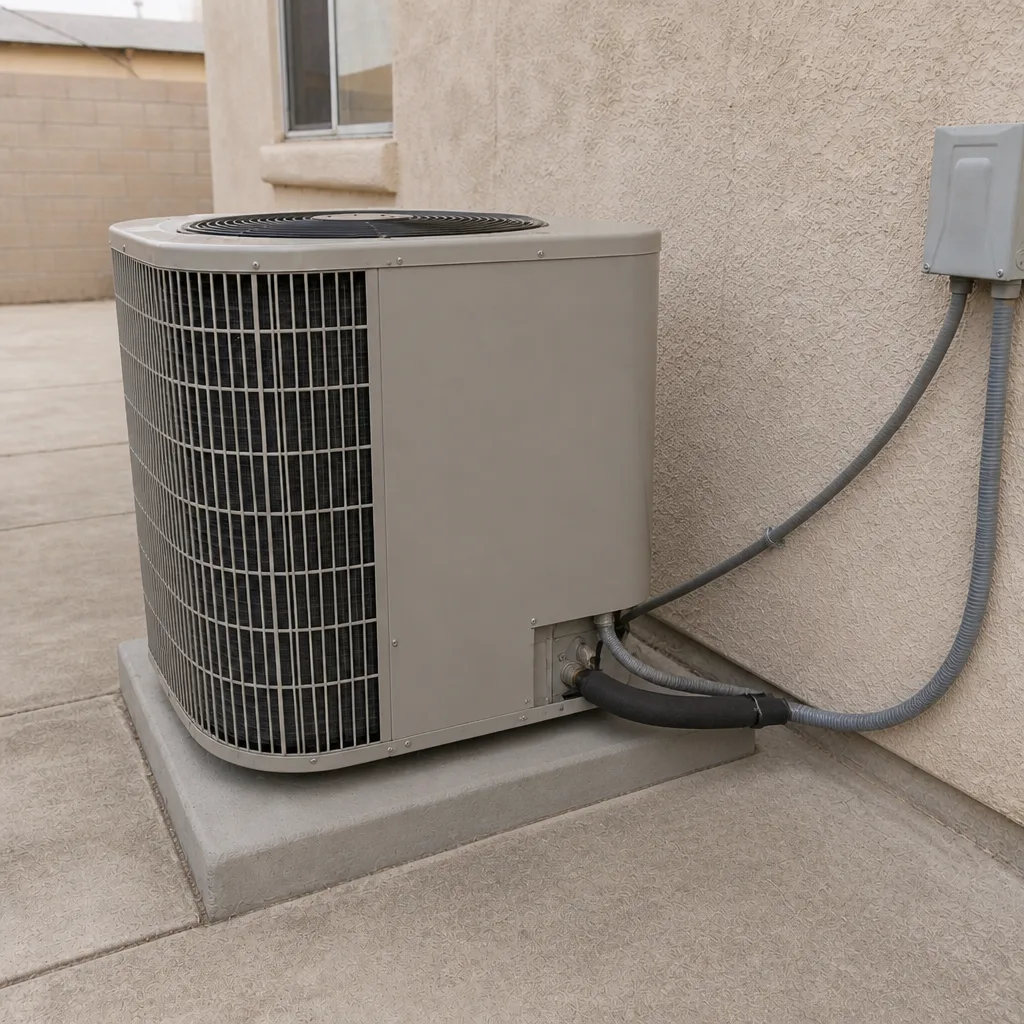 After
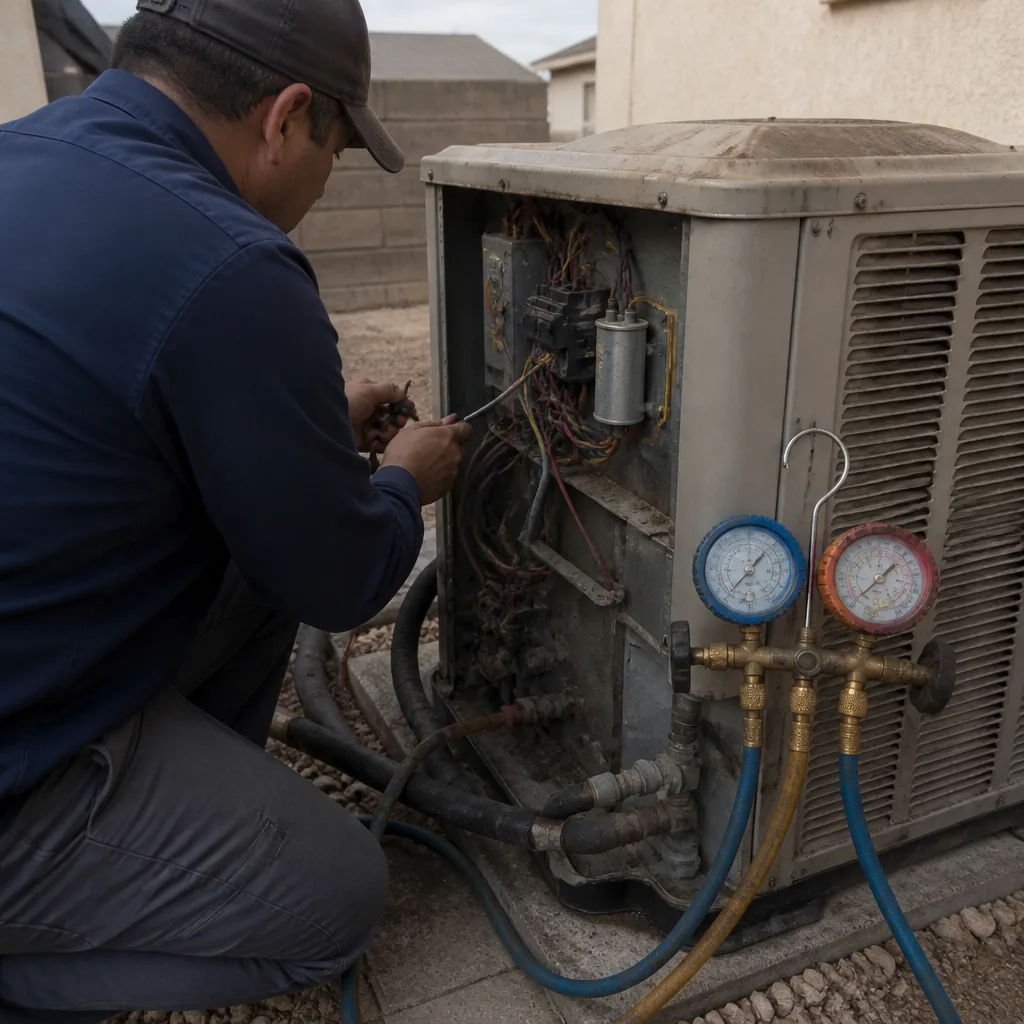 Before
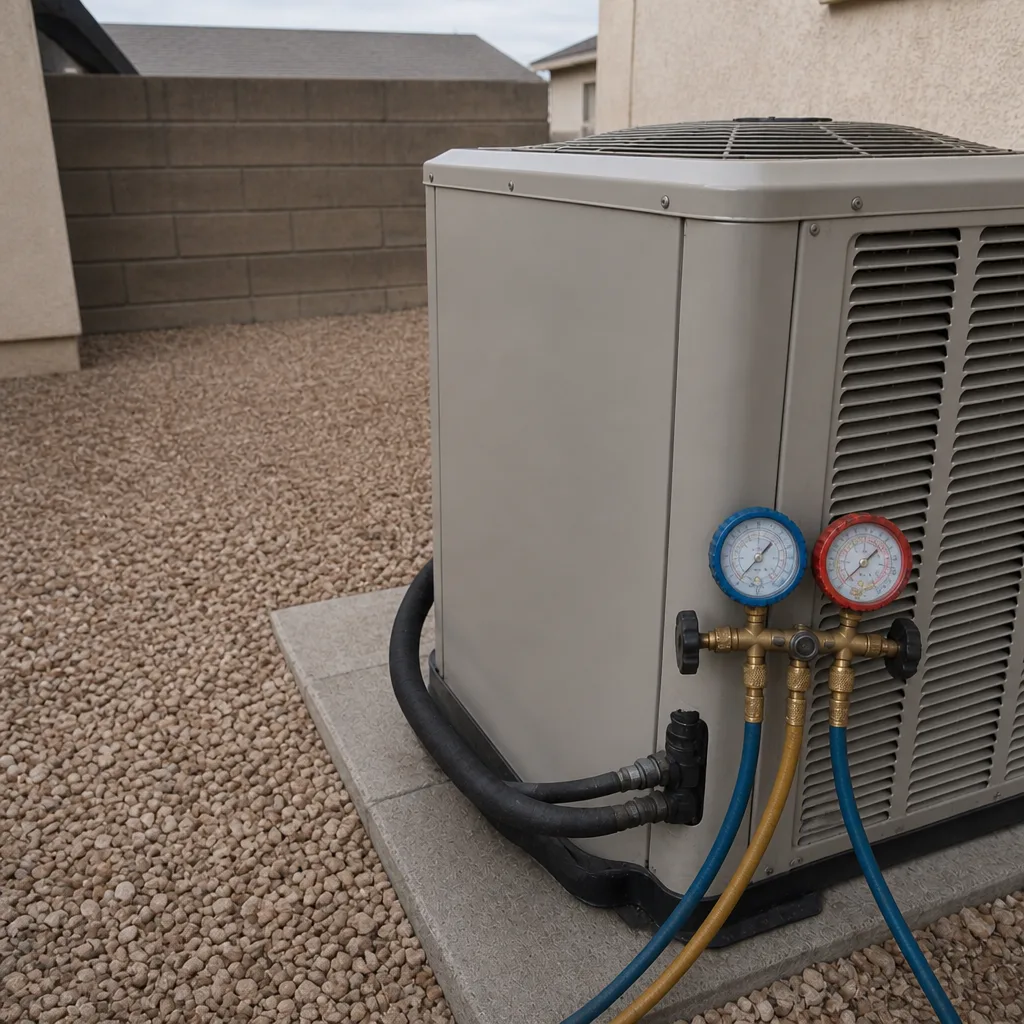 After
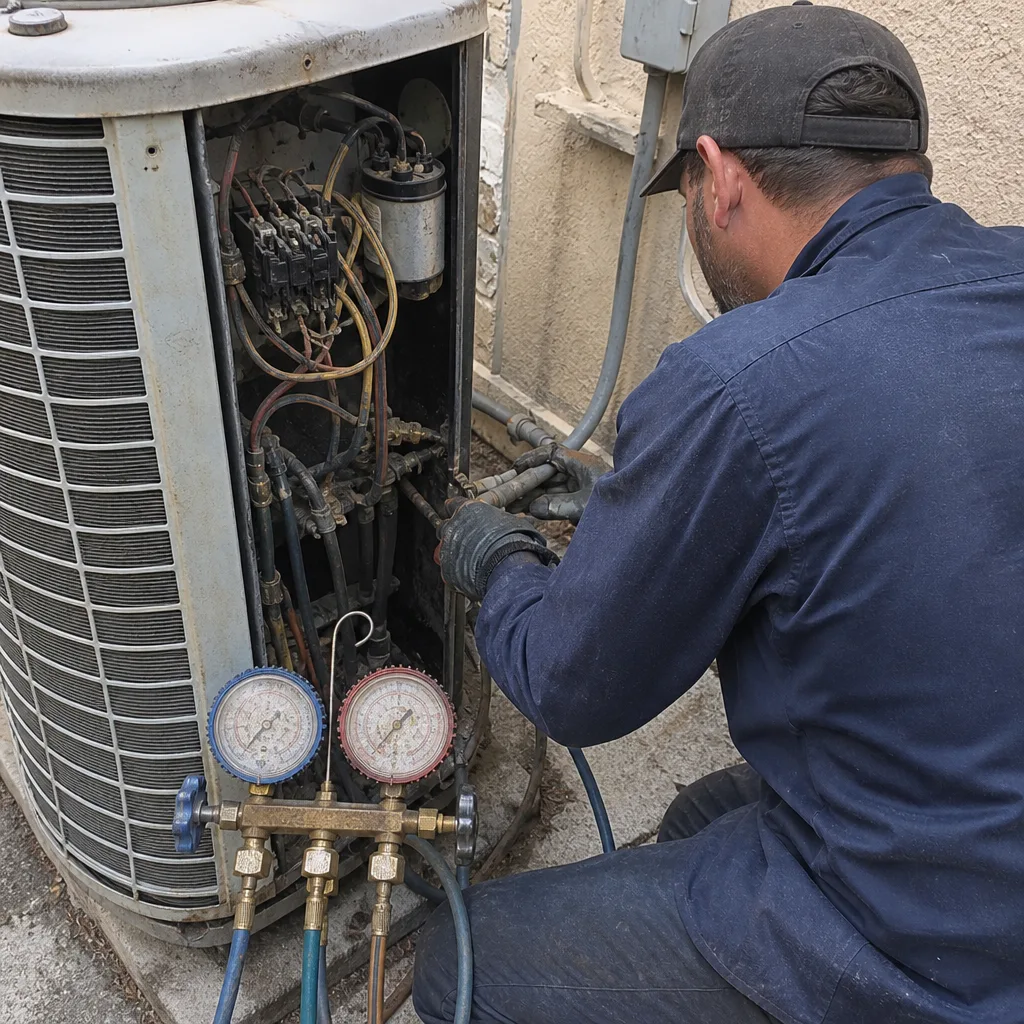 Before
 After
Frequently Asked Questions
Most repairs run 90 minutes to 3 hours on site. A capacitor or contactor swap is under 90 minutes. A refrigerant recharge with a leak search is 2 to 3 hours. An evaporator coil replacement is 4 to 6 hours. The on-site time is predictable once the diagnosis is done. Call (844) 761-6871 for an exact estimate – estimates are free.
Sometimes, yes. Availability on the same day depends on how many calls are already in the queue and what time of year it is. In spring and fall, same-day is common. In the first week of July, the honest answer is a same-week repair with a real commitment. Call and we’ll tell you the real timeline, not a sales line.
Replacement pricing depends heavily on tonnage, brand, and whether you’re upgrading to a heat pump or staying with a straight AC. We don’t quote numbers over the phone – that would just be a guess. A proper written estimate after a load calculation is the right number to compare against. Call (844) 761-6871 and we’ll set up a time to look at the actual system.
Rule of thumb: if the repair is a small part and the system is under 12 years old, repair. If the repair is a compressor or coil on a system over 15 years old, replacement usually makes more financial sense. We’ll show you the readings either way. You make the decision with the numbers in front of you.
There can be, depending on efficiency ratings and current program availability. We’ll walk you through what’s currently being offered and what paperwork is involved before you commit to anything. Call (844) 761-6871 to talk through your options.
The on-site install is 6 to 10 hours for a standard home. The full calendar window, including permit filing, Clark County inspection, and equipment ordering, is usually one to two weeks. We schedule a firm install date and give you a written fixed price before any work begins.
Because it saves them time and cost on the front end. The problem lands on you later, at resale or warranty claim time. A permit and inspection are part of a complete installation. If a company is vague about permitting, that’s a real warning sign.
The Bottom Line
Timeline anxiety is the thing that pushes most North Las Vegas homeowners to accept the first available technician over the right one. Here’s what to hold onto instead: a capacitor takes 90 minutes, a recharge takes 2 to 3 hours, an evaporator coil takes 4 to 6 hours, and a full install is 6 to 10 hours on site plus a real permitting window. The parts reality is local and knowable. The permit is non-negotiable. And the three questions – on-site work window, parts timeline, and same-tech follow-up – filter out the companies that can’t commit to any of them. Make the decision in February, not at noon in July. If you’d like to talk through your system with someone who has seen it, call (844) 761-6871 for a free estimate.
Written by the team at Ray’s Heating & Air North Las Vegas.