
Last updated November 17, 2026
 AC repair
 Furnace & heating
 Heat pumps
 Ductless mini splits
 Carrier
 Trane
 Goodman
Seasonal tune-up and full diagnostic on your Carrier, Trane, or Goodman system - readings shown to you before any repair is proposed
Diagnosis first, numbers second - you approve the repair price before a single part goes in.
Get your free estimateAir Quality & Ventilation Troubleshooting: Common Problems and How to Fix Them
When someone calls us saying “the air just feels wrong in here,” that’s not a vague complaint. It’s usually one of four specific problems, and three of them have a homeowner fix that costs under twenty dollars. A musty smell in August, dust that settles back onto the coffee table an hour after you wipe it, sinuses that act up only indoors – each of those points to a mechanical cause you can narrow down yourself with the right questions. This guide walks through those questions the way we’d talk them through on the phone before deciding whether a truck needs to roll. If you’re in North Las Vegas, the answers get even more specific, because our monsoon humidity and desert dust create patterns you won’t read about in a generic homeowner manual.
Quick Answer
Most indoor air quality problems trace back to one of four causes: a clogged or bypassing filter, a wet drain pan or coil feeding mold and mustiness, return-air leaks pulling dust from your attic or crawlspace, or an airflow imbalance between rooms. Fix the filter and the drain pan first – that’s cheap and it solves more than half of what we see. If the smell or dust returns, the next step is a real inspection of the return side and the ductwork, because that’s where the problems hide.
Styles & brands we work with
- AC repair
- Furnace & heating
- Heat pumps
- Ductless mini splits
- Carrier
- Trane
- Goodman
Table of Contents
- The Symptom-to-Cause Diagnostic Tree
- The Return Air Leak Almost No Homeowner Knows About
- The Toilet Paper Pressure Test
- Monsoon Season and the Sudden Musty Smell
- Dry Sinuses and Low Humidity in the Desert
- Filters: The Cheapest Fix and the Most Common Mistake
- The Honest Escalation Guide
- Common Mistakes to Avoid
The Symptom-to-Cause Diagnostic Tree
Start with what you smell, see, or feel. Each symptom maps to a short list of causes, and you can work through them in order from cheapest to most expensive. In our experience across North Las Vegas homes, this tree catches the answer about 80% of the time before anyone needs to pick up a wrench.
Musty smell. That’s moisture somewhere it shouldn’t be. Check the condensate drain pan under the air handler first. If it’s holding water or has a slimy film, you’ve found your source. Next, look at the evaporator coil – a dirty, wet coil grows the same stuff. If both are clean and dry, the smell is likely coming from ductwork with a leak or from a duct run passing through an unconditioned attic that’s sweating in summer.
Stale or stuffy air. This usually means insufficient fresh air exchange or a filter that’s choking the system. A filter loaded with dust drops airflow, and rooms feel closed-in as a result. In a well-sealed newer home in North Las Vegas, tight construction can also mean the house simply doesn’t breathe enough – that’s a ventilation question, not a filter question.
Dusty surfaces despite regular cleaning. Filter bypass (air sneaking around the filter frame instead of through it) and return-air leaks are the two big causes. Both push unfiltered air into the living space. A filter that’s too small for its slot is a common culprit – you’ll see a visible gap around the edges.
Dry, irritated sinuses. Low indoor humidity, or a dirty coil blowing particles. Desert humidity routinely drops under 20% in spring, and that dries out nasal passages. A dirty coil adds dust on top of the dryness. Test the humidity with an inexpensive hygrometer before assuming anything else.
Work the tree in order. Cheapest fix first, then reassess before spending more.
The Return Air Leak Almost No Homeowner Knows About
Here’s one that surprises people. Your return air system pulls air back into the air handler to be filtered and cooled. If there’s a gap around the return grille frame, or a joint in the return duct that’s come apart, the system doesn’t pull air from your living room – it pulls from the attic or crawlspace behind the wall. That air is unconditioned, unfiltered, and full of insulation fibers, dust, and whatever else lives in a North Las Vegas attic in July. And then it gets delivered right back into your bedrooms.
You can spot the signs yourself before calling anyone:
- Dust collecting on the wall or ceiling around the return grille, especially in a halo pattern
- A return grille that sits loose in its frame, or one you can wiggle by hand
- Attic or crawlspace smell in a room that’s closest to the air handler
- Higher-than-expected dust in a house where you rarely open windows
- A return duct you can see in the attic with visible gaps at the seams or at the plenum connection
Gaps around a return grille are usually a caulk-and-foam fix. Return duct leaks in the attic can be sealed by hand with mastic and mesh tape if you’re comfortable in the attic – but be careful, because attic temperatures in North Las Vegas regularly climb past 140°F in summer, and that’s not a place to spend an afternoon unless you’re prepared. If the duct is disconnected or crushed, that’s a repair call. We’ve seen this one problem explain years of “I clean and it’s dusty again by dinnertime” complaints, and fixing it costs a fraction of what people expect.
The Toilet Paper Pressure Test
You don’t need a manometer to find an airflow imbalance. A piece of toilet paper and ten minutes will tell you plenty. Here’s how:
- Turn the system to fan-only mode so the blower runs without heating or cooling. Give it two minutes to stabilize.
- Tear off a single square of toilet paper. One square, not a whole sheet – you want it light enough to be moved by a gentle breeze.
- Hold the square about two inches in front of a supply register. Note how strongly it pulls or flutters. Do this at every register in the house and write down what you see – strong, weak, or nothing.
- Do the same at each return grille. A return should pull noticeably harder than a supply pushes. If a return feels weak, it’s either restricted or leaking.
- Compare rooms. A bedroom where the paper barely moves while the living room register pulls it tight is a room with a starved supply. That room will feel stuffy and collect dust patterns differently from the rest of the house.
- Note whether any register is shut or blocked by furniture. A closed register in an otherwise balanced system will push extra air to nearby rooms and starve the rest.
What you’re looking for is consistency. If one room is dead and the rest are strong, you have a duct or damper problem feeding that room. If every register is weak, the problem is upstream – filter, blower, or a return that’s undersized. Weak everywhere plus dusty surfaces is a strong indicator of a return leak. Call this in with your numbers. Being able to say “the back bedroom register moves the paper barely at all, the rest are fine” saves the person at your door twenty minutes and gets you to a real answer faster.
Monsoon Season and the Sudden Musty Smell
Around late July and August, North Las Vegas gets its monsoon humidity spike. Indoor humidity goes from single digits to 50% or higher in a day, and we start getting calls the following week: “It smells musty in here all of a sudden, and it didn’t before.” That pattern is diagnostic. It means there’s a moisture source in the system that was dry until the air got wet.
Check these three things in this order:
- The drain pan. Look for standing water, a slimy layer, or a pan that’s clogged at the drain outlet. A slow drain in high humidity backs up and wets everything above it.
- The evaporator coil. A coil with a light dust load that was fine in dry air can turn into a wet, smelly surface once humidity rises. If you can see the coil and it looks brownish or fuzzy, that’s the source.
- Ductwork near the air handler. Insulated flex duct that’s sweating or has a torn vapor barrier will hold moisture and grow the same organisms. Look for wet insulation, dark staining, or a musty smell strongest right at the plenum.
When the smell is mild and clears after you clean the pan and run the system a few days, you’ve likely caught it early. When the smell is strong, persists after cleaning, or returns within days, treat it as a duct and coil cleaning job – and if you can see visible growth on the coil or duct interior, get it evaluated before it spreads through the house. In a North Las Vegas home with a system in the attic, that growth can move into the supply ducts and start delivering spores to every room.
Dry Sinuses and Low Humidity in the Desert
Indoor humidity under 30% is common here from March through June, and it dries out sinuses, skin, and wood furniture. If your complaint is “my nose is irritated every morning but only when I’m inside,” start by measuring rather than guessing. A $15 hygrometer will tell you if you’re at 15% or 45%. Under 30% is the threshold where most people start feeling it.
Two fixes make sense. First, a whole-house humidifier tied into the system is the durable answer, sized to your home’s square footage and controlled with a humidistat. Second, and cheaper: run a standalone humidifier in the bedroom only, and see if the morning symptoms ease. If they do, that tells you the problem is really whole-house dryness and it’s worth solving properly. Do not over-humidify – above 50% you’re inviting the same mold problems you’re trying to avoid. And if you have a dirty coil blowing dust, adding humidity won’t fix irritated sinuses. Clean the coil first, then humidify.
A note on the cooling side: if you’ve just replaced an older unit with a high-efficiency system or a heat pump or mini split in North Las Vegas, the new system may run longer at lower output and pull more moisture out of the air than the old one did. Some people find their homes feel drier after an upgrade. That’s normal, and a humidifier is the right answer. A new AC installation in North Las Vegas is a good time to plan for humidity control alongside cooling.
Filters: The Cheapest Fix and the Most Common Mistake
We’ve pulled filters out of North Las Vegas homes that were installed the wrong way around, sized too small for the slot, or rated MERV 13 in a system designed to move air through a MERV 8. Each of those is a real problem, not a nitpick.
The rules that actually matter:
- Change on a schedule that matches your dust load. In the desert with windows open in spring, a 1-inch filter can load in 30 days. In a tight house with closed windows, 60 to 90 days is fine. Write the install date on the filter edge with a marker – you’ll remember it.
- Match MERV to the system, not to your hopes. A MERV 13 filter in a system with a fixed-speed blower can drop airflow enough to freeze a coil or short-cycle the compressor. MERV 8 is the right default unless the system was designed for higher.
- Check for bypass. With the filter in place, look for a visible gap between the filter frame and the slot. If air can go around, it will. A strip of foam weatherstrip closes the gap for a couple dollars.
- Do not use a “permanent washable” filter unless the system was designed for it. Most aren’t, and they’re worse than a cheap pleated filter at catching fine dust.
Filter changes matter for heating and furnace service in North Las Vegas too, not just cooling. A loaded filter in winter is a strain on the blower and a source of the same dust complaints. If you’re seeing a burning smell when the heat first comes on in fall, that’s usually dust on the heat exchanger burning off – it should clear in a few minutes. If it doesn’t, call.
The Honest Escalation Guide
Not every air quality complaint needs a truck. Here’s how we sort them on the phone, so you can sort them yourself before calling.
Fix yourself with a filter and a drain pan tablet (under $20):
- Mild musty smell that clears after cleaning the drain pan
- Dusty surfaces you can trace to a small filter gap
- Stuffy feeling in one room with a register you can adjust
- A filter that’s simply overdue for a change
Needs a duct inspection:
- Dust returns within a day or two of cleaning, especially in one area
- Attic smell in a specific room, or a return grille that’s loose or damaged
- Strong or persistent musty smell that survives a pan cleaning
- Visible gaps in attic ductwork you can see from the access hatch
- Airflow tests showing one dead room with everything else strong
Means there’s likely mold in the system – get it evaluated before spreading the problem:
- Visible dark growth on the coil, the plenum interior, or duct lining
- Musty smell that comes back within days of cleaning, every time
- Health symptoms that flare indoors and ease outdoors, combined with any of the above
- Water staining or wet insulation in the air handler area
That last group is where remediation comes before any “air quality upgrade.” A UV light or an air purifier installed on a moldy coil just spreads spores faster. Fix the moisture source and clean the system first, then consider the add-ons. For a full picture of how the mechanical side fits together, our Ray’s Heating & Air North Las Vegas home page lays out the services, and there’s more on system-side detail on our heat pump page if you’ve got a heat pump doing your cooling.
Common Mistakes to Avoid
- Installing a high-MERV filter “for air quality” without checking the blower. A MERV 13 in a system built for MERV 8 restricts airflow, freezes coils, and shortens compressor life. The air might be cleaner, but the system won’t last as long.
- Cleaning the drain pan but not the coil above it. The pan is the floor of the problem, not the ceiling. If the coil is dirty, the pan gets dirty again within weeks. Clean both or neither.
- Assuming a room that feels stuffy needs a bigger AC unit. In our experience, a dead register almost always traces to a duct or damper problem, not to undersized equipment. Adding capacity makes the imbalance worse.
- Running a humidifier without a hygrometer. Above 50% indoor humidity, you’re growing the same mold you’re trying to fight. Measure first, humidify second.
- Putting a UV light in a moldy system and calling it fixed. UV kills what it shines on. Spores in duct lining and on insulation don’t get the light. Clean first, then consider add-ons.
- Ignoring return-air leaks in a North Las Vegas attic because “it’s just a small gap.” A quarter-inch gap along a return plenum at 140°F attic temperature pulls in hot, dusty air every minute the system runs. That adds up to more than you think.
- Closing registers in unused rooms to “save energy.” It starves the system and unbalances the whole house. The room you closed off gets stuffy, and the rooms next to it get too much air.
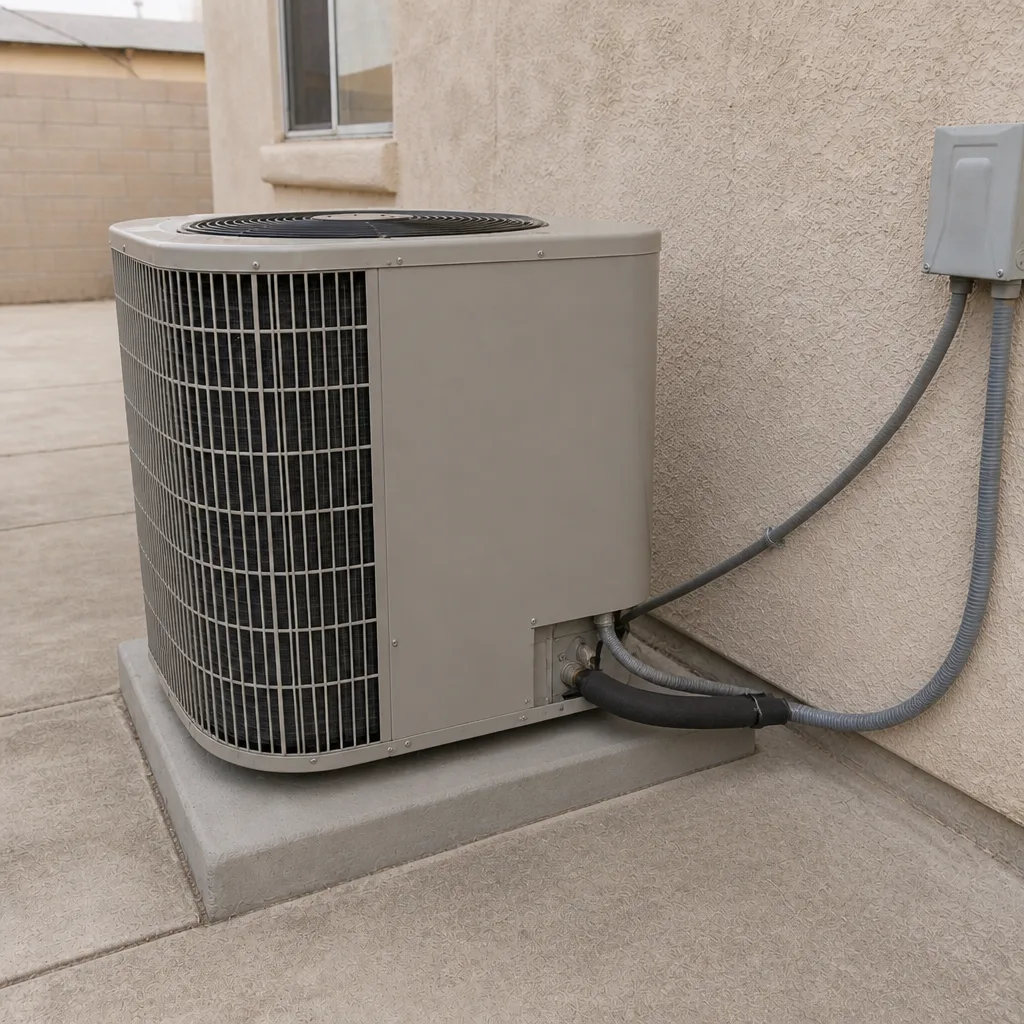
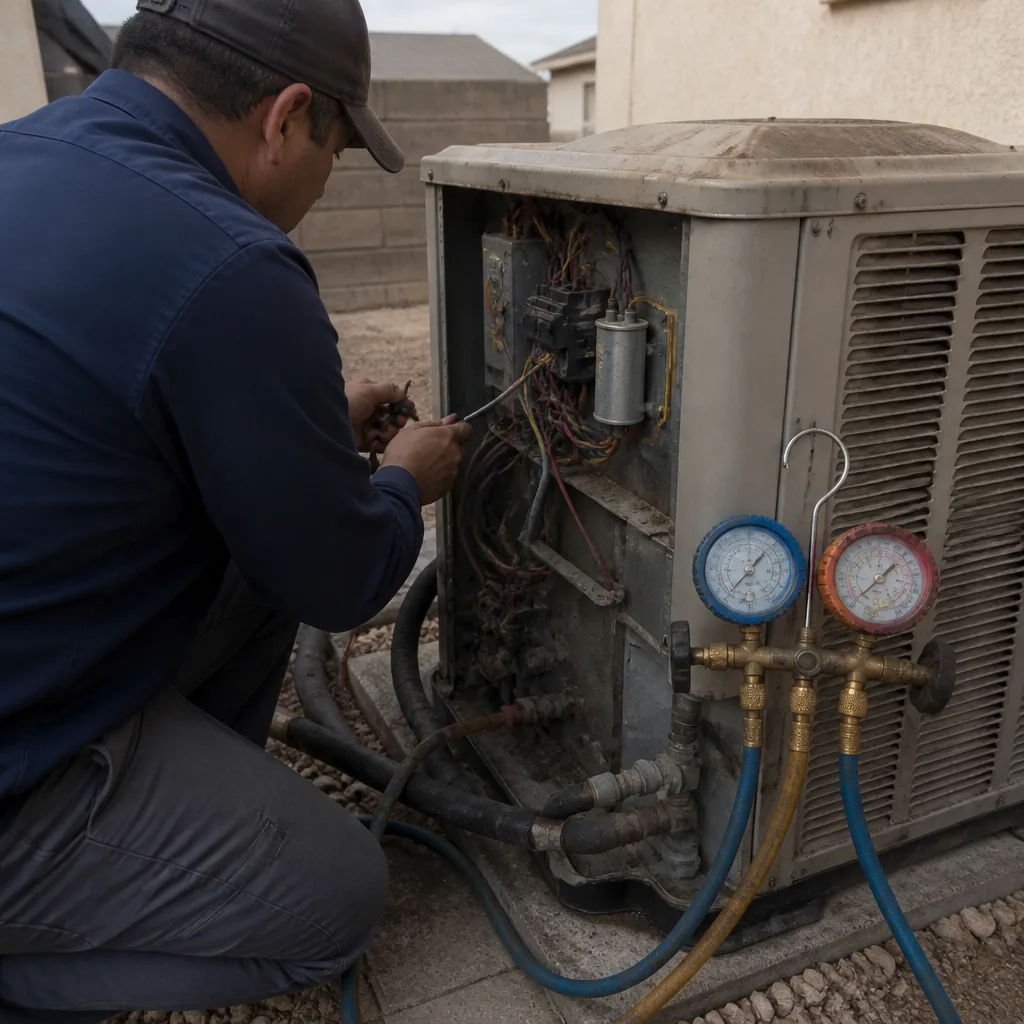
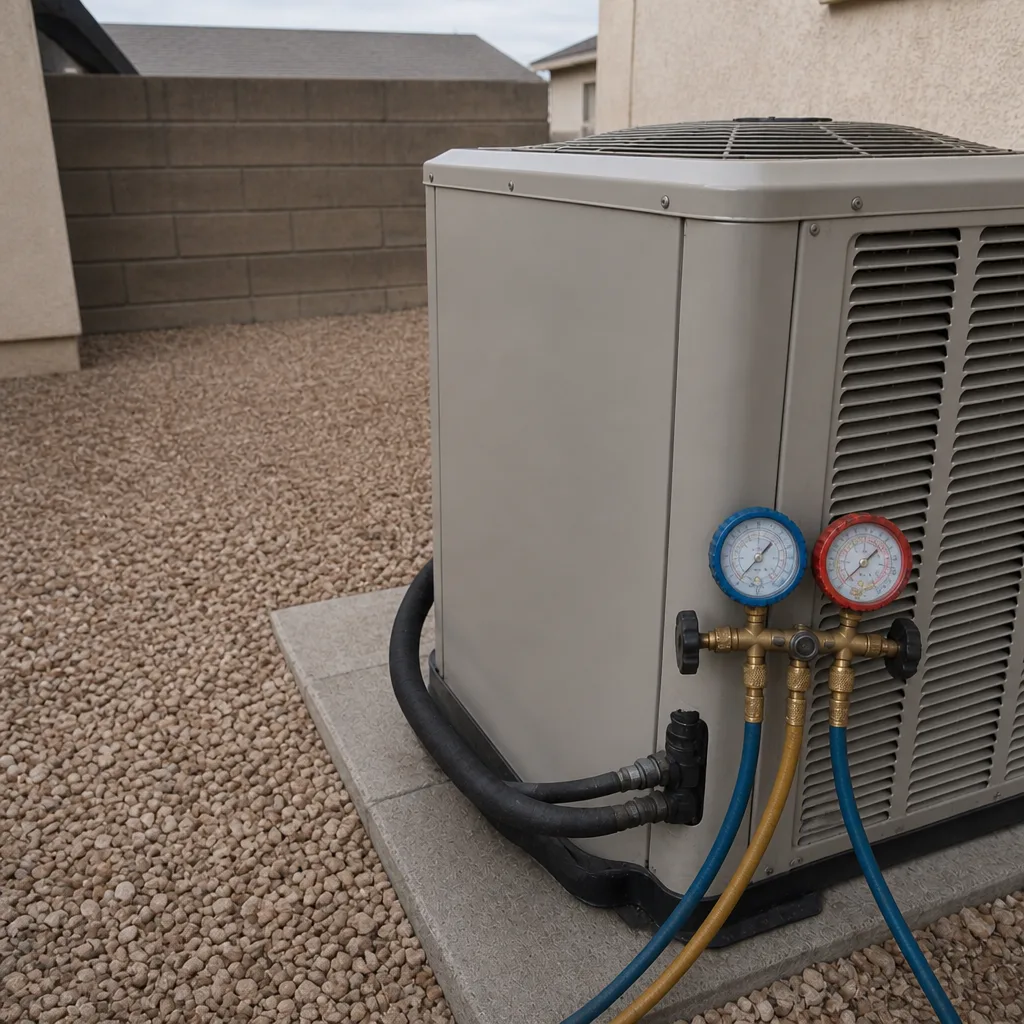
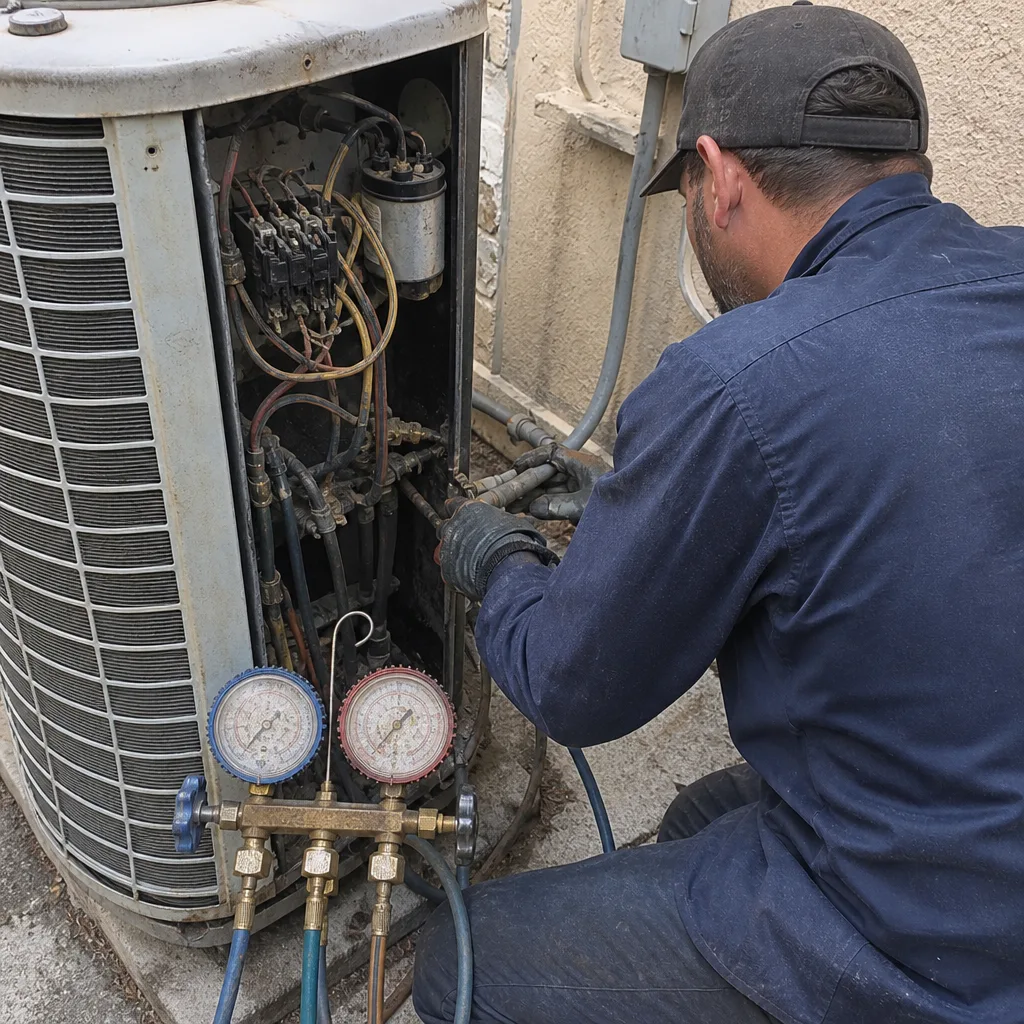
See the difference
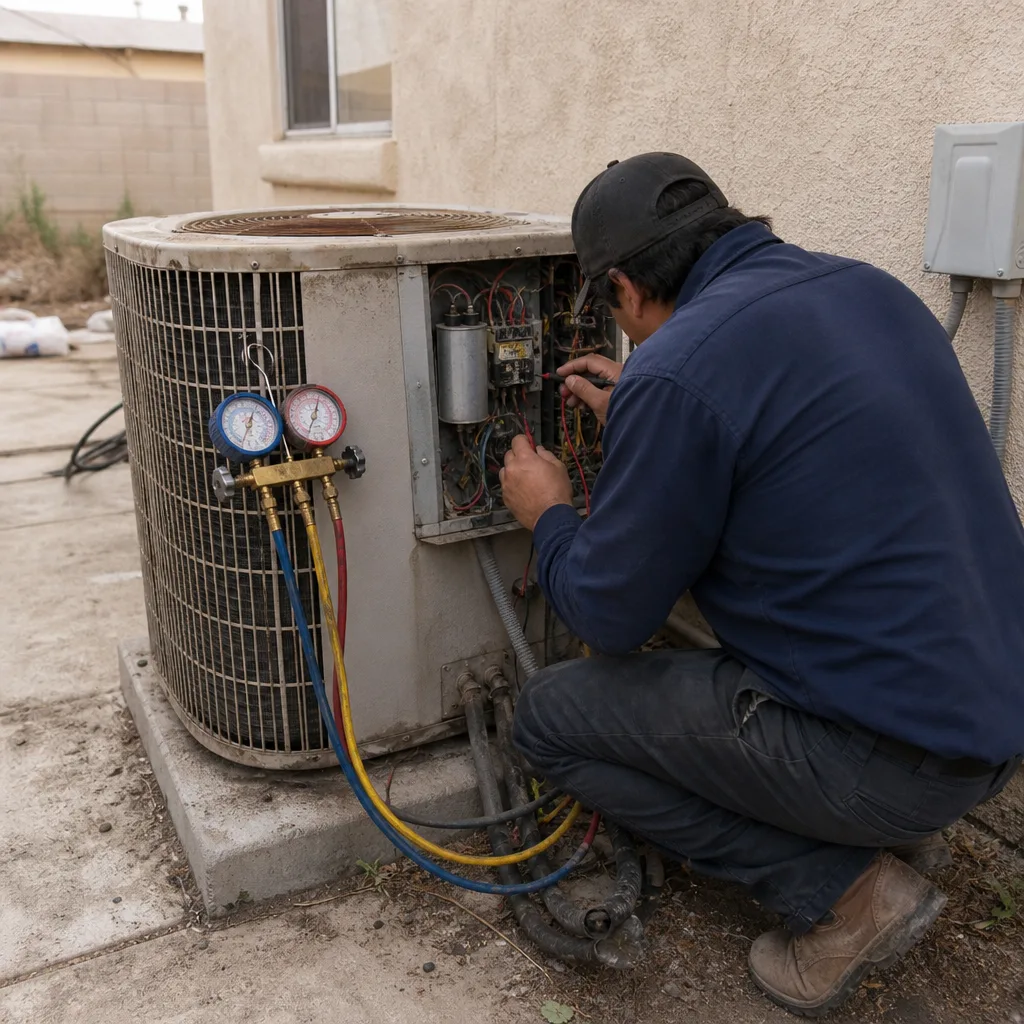 Before
 After
 Before
 After
 Before
 After
When to Call a Professional
Call when the smell survives a drain pan cleaning, when dust comes back in days instead of weeks, when one room is dead on the toilet paper test and the rest are fine, or when you can see dark growth inside the air handler or on the coil. Call when you’ve got wet insulation or water staining near the air handler – that’s not a filter problem. Call when the system itself is acting up alongside the air quality complaint: a frozen coil, a short cycle, or a filter that keeps loading faster than the calendar says it should. In North Las Vegas, we also get calls for what we call the “closed-house” problem – a tight home where the air never feels fresh no matter what, and that often needs a proper fresh-air ventilation assessment. Ray’s Heating & Air North Las Vegas offers free estimates in North Las Vegas – call (844) 761-6871. If you already have a written estimate from another company, our standing free second opinion on any written estimate is there for a reason.
Frequently Asked Questions
August humidity spikes turn any moisture source in the system into a smell. Check the drain pan, the evaporator coil, and the ductwork near the air handler in that order. Mild smells that clear after cleaning the pan are usually caught early. If the smell returns within days, it’s coming from the coil or ducts.
Look for dust halos on the wall around return grilles, a loose grille frame, and attic smell in the room closest to the air handler. The toilet paper test helps too – a weak return that doesn’t pull the paper toward it points to leakage or restriction. If you can see gaps in the attic ductwork at the plenum, that’s the leak.
Not always. A filter rated higher than the system was designed for restricts airflow and can freeze coils or strain the blower. MERV 8 is the right default for most homes in North Las Vegas unless the system was specified for higher. Ask before upgrading.
Duct cleaning alone rarely solves dusty surfaces. The cause is usually a return-air leak or filter bypass pulling unfiltered air into the living space. Seal the leak, fix the filter gap, and then cleaning has something to hold onto. Cleaning a leaking system just re-dirties it.
Measure first with a hygrometer. Under 30% indoor humidity is where most people feel it. A whole-house humidifier sized to your home solves it properly, or a bedroom humidifier tells you whether whole-house dryness is the real issue. Stay under 50% to avoid mold.
When you can see visible growth on the coil, plenum, or duct lining, when the smell returns within days of cleaning every time, or when water staining and wet insulation are present. That’s the point where air purifiers and UV lights don’t help – the system needs cleaning before any add-on.
The Bottom Line
Air quality complaints almost always trace to one of four causes: a filter problem, a wet drain pan or coil, a return-air leak, or an airflow imbalance. Start with the filter and the pan. Run the toilet paper test to find the dead room and the weak return. Watch the monsoon months, because August humidity exposes moisture problems the dry season hides. Know when to stop and call – visible growth, water staining, or a smell that keeps coming back is the line. You can solve a lot of this yourself with a filter, a drain pan tablet, and twenty minutes. When you can’t, we’re a phone call away.
Call (844) 761-6871 for a free estimate. Ray’s Heating & Air North Las Vegas is locally owned and owner-operated since 2002, and every job carries our 90-Day Done Right Promise in writing – if it’s not done right, one call brings Ray back. We service all major brands including Carrier, Trane, Lennox, Goodman, Rheem, York, Daikin, Bryant, and American Standard. Live person answers every call, 24/7.
Written by the team at Ray’s Heating & Air North Las Vegas.