
Last updated November 17, 2026
 Heat pumps
 AC repair
 Furnace & heating
 Ductless mini splits
 Carrier
 Trane
 Goodman
Seasonal tune-up and full diagnostic on your Carrier, Trane, or Goodman system - readings shown to you before any repair is proposed
Diagnosis first, numbers second - you approve the repair price before a single part goes in.
Get your free estimateHow Long Does Heat Pump & Mini Split Take? Timelines and What to Expect
Ray has had customers shocked that their mini-split took three weeks from handshake to cold air. Not because the install itself is complicated. Because the electrical subpanel upgrade they needed had a permit queue at Clark County, and the inspector had a ten-day backlog behind it. The equipment sat boxed in the garage for a week and a half waiting on paperwork nobody warned them about. That gap between “we can install this Thursday” and “you’ll have cold air next month” is where most frustration lives, and it’s the part most installers skip over when they want the deposit today. This guide walks through every variable that controls how long you’re actually waiting in North Las Vegas, from the four-hour single-zone job to the month-long multi-zone project.
Quick Answer
A single-zone mini-split with a ready electrical panel typically takes 4 to 6 hours to install in one visit. A single-zone that needs a panel upgrade runs about 2 days once the electrician and permit are lined up. Multi-zone systems take 1 to 2 days per zone depending on how hard the refrigerant lines are to route. Add North Las Vegas permit processing and equipment lead time, and most homeowners wait 1 to 3 weeks from signed contract to first cold or warm air.
Styles & brands we work with
- AC repair
- Furnace & heating
- Heat pumps
- Ductless mini splits
- Carrier
- Trane
- Goodman
Table of Contents
- How long does installation take by job type?
- What actually controls your install date?
- The North Las Vegas timeline killers most installers don’t mention
- One visit or a return trip? What decides it
- Why electrical readiness is the biggest schedule variable
- Heat and cold during the wait: your honest options
- What you can do before install day to compress the timeline
- What install day actually looks like, hour by hour
How long does heat pump and mini-split installation take by job type?
The install time depends almost entirely on three things: how many zones you’re running, whether your electrical panel can handle the new load, and how hard it is to get refrigerant lines from the outdoor unit to the indoor heads. Here’s what we actually see in North Las Vegas homes.
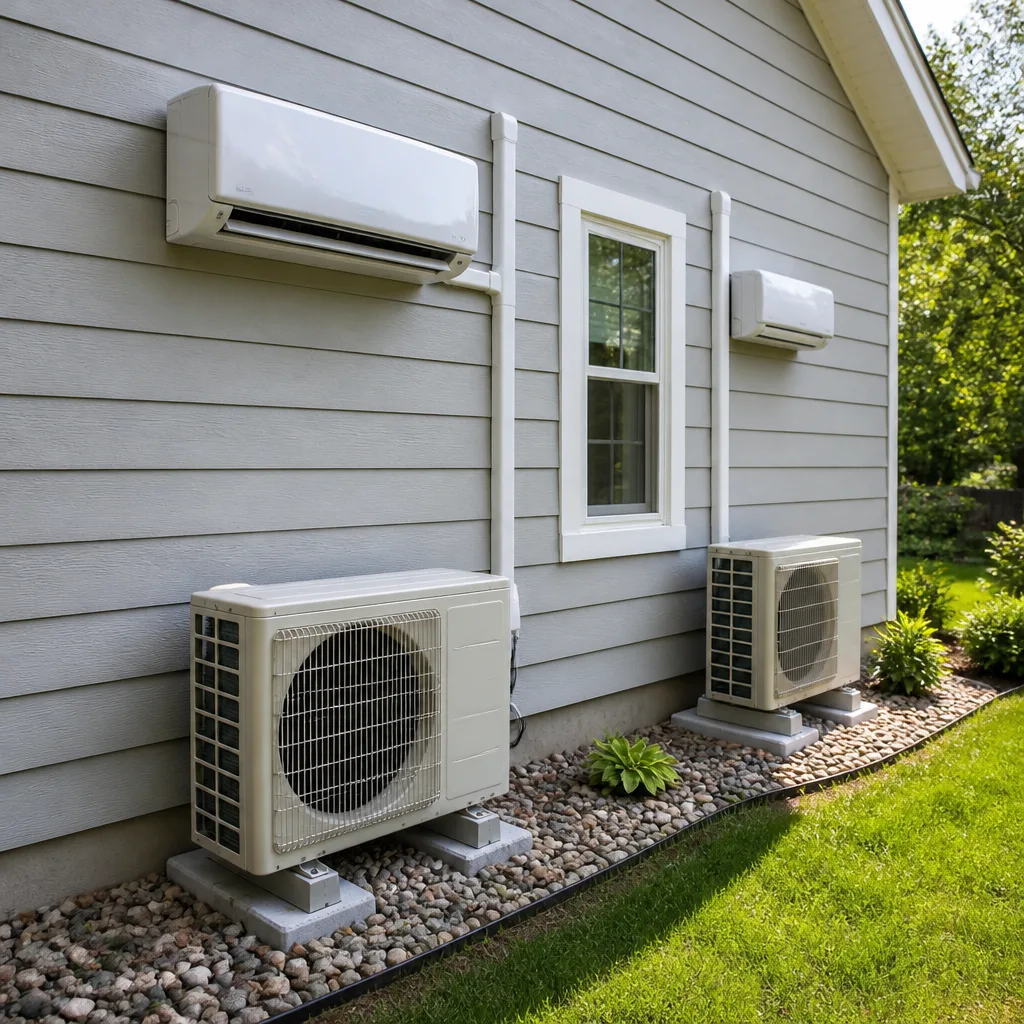
- Single-zone mini-split, no electrical work: 4 to 6 hours. One indoor head, one outdoor unit, lineset through an exterior wall or up the side of the house. Done in an afternoon.
- Single-zone with electrical panel upgrade: 2 days. Day one is the electrician and the subpanel or dedicated circuit. Day two is the actual install, assuming the permit cleared.
- Multi-zone mini-split, easy routing: 1 day per zone. Two heads, two days. Three heads, three days. Add a half day for the outdoor unit placement and commissioning.
- Multi-zone, difficult routing: 1.5 to 2 days per zone. Old construction with fire blocking in the walls, second-story runs, or a finished garage in the way will slow the lineset work down.
- Ducted heat pump replacement (existing ductwork): 1 to 2 days. Outdoor unit swap plus air handler, with the existing duct system tested and sealed as part of the job.
Notice the spread. A one-zone job in a newer North Las Vegas tract home off the 215 can be finished before lunch. A three-zone retrofit in a 1970s ranch house with plaster walls and no accessible attic could stretch a week and a half. Nobody can give you a real number over the phone without seeing the electrical panel and walking the routing path. Anyone who does is guessing.
What actually controls your install date?
Most homeowners think the equipment is the bottleneck. It usually isn’t. Here’s the honest order of what actually pushes your date back.
- Equipment availability at regional distributors. Common Bryant and Carrier single-zone units are usually in stock somewhere in the Las Vegas valley. Less-common sizes, high-efficiency models, and multi-zone outdoor units often need to ship from Southern California, which adds 3 to 7 days.
- Electrical panel capacity. If your existing panel has the room, no problem. If it’s a 100-amp panel already maxed out with a pool pump and an EV charger, you need an upgrade before the mini-split goes in. That’s an electrician, a permit, and a wait.
- Permit processing. North Las Vegas permits run through Clark County’s system. Simple replacements clear faster than jobs that touch the panel or add new circuits.
- Installer scheduling. A busy shop is booked out. That’s reality, and it’s a good sign, not a bad one.
- Your own readiness. If the install crew shows up and can’t get to the panel or the wall isn’t where you said it was, that day gets eaten by discovery and you go back in the queue.
The best installers in North Las Vegas will tell you upfront which of these is your bottleneck before you sign. If they can’t, that’s information too.
The North Las Vegas timeline killers most installers don’t mention
This is the part of the guide that answers the frustrating question: why is this taking so long? Here’s what’s actually going on behind the scenes.
Clark County permit processing
North Las Vegas building permits for HVAC work go through the county’s online portal. Straight equipment replacements on like-for-like systems move through quickly. Anything that touches the electrical panel, adds a new circuit, or installs something the county hasn’t seen in that configuration (like a new multi-zone mini-split in a home that never had one) goes into the review queue and can add a week to ten days. If the job requires an on-site inspection after install, that’s another scheduling window.
NV Energy interconnection paperwork
Certain hybrid heat pump systems and anything with a cold-climate performance spec that ties into a utility rebate program requires NV Energy interconnection paperwork. The installer files it, the utility reviews it, and the approval comes back on their schedule, not yours. This isn’t a scam or a stalling tactic – it’s the price of doing the job right and pulling the rebates you’re entitled to. But it adds time, and you should know about it on day one.
Regional distributor stock
Las Vegas valley distributors are deep on the common stuff. Mid-tier and high-efficiency models, plus multi-zone outdoor units, sometimes come out of the Inland Empire and add 3 to 7 days to the schedule. If you’re trying to get a specific Trane model by a specific date, that’s a conversation to have before deposit, not after.
One visit or a return trip? What decides it
Homeowners ask this constantly. Here’s the honest breakdown of what tips a job from one visit to two.
- Electrical readiness. Panel has room and the circuit can be run in the same visit = one trip. Panel needs work = two trips minimum, sometimes three if the electrician and the HVAC installer can’t sync up.
- Wall construction surprises. Drywall over studs, straight lines, attic access: one trip. Plaster and lath, fire blocking, or a finished third floor with no attic: two trips, and possibly a drywall repair sub you didn’t budget for.
- Refrigerant line routing complexity. A straight shot through an exterior wall and up the outside of the house is a two-hour job. A run that goes through an interior chase, around a load-bearing wall, and out through a soffit can add half a day. Two or more hard runs may need a second visit once the first one’s done and everyone knows how the walls actually behave.
The pattern: the fewer discoveries on day one, the more likely you finish on day one. Which is why the walkthrough before signing matters so much. If the installer doesn’t open the electrical panel and look at the routing path before quoting you, expect a surprise.
Why electrical readiness is the biggest schedule variable
This is the one that catches North Las Vegas homeowners by surprise. The Las Vegas valley has thousands of homes built between 1980 and 2005 with 100-amp panels, and many of those are already loaded with a pool pump, an RV outlet, and a recently added EV charger. Adding a multi-zone mini-split or a high-efficiency heat pump to that panel isn’t a maybe – the load calculation will fail it.
What to check before you sign:
- Panel amperage. Look at the main breaker. 100-amp on a home with a pool and an EV? Plan for an upgrade.
- Spare breaker slots. A mini-split needs dedicated circuits, one per indoor head plus the outdoor unit. No spare slots means a panel rework.
- Panel location. If it’s in a finished closet, behind shelves, or on the far side of the house from where the outdoor unit is going, the electrician’s day gets longer.
- Whether the panel is a known brand with known issues. Some older panels are on the “replace, don’t add” list, and a competent installer will tell you that instead of just wiring into it.
Panel upgrades themselves run $1,500 to $3,000 in this market depending on amperage and complexity, plus a permit. That’s a real number most installers leave off the quote until they’re already on site. We bring it up before we quote so you can decide whether to do it now or hold off on the system for a month and save up for the electrical.
Heat and cold during the wait: your honest options
If your install window falls during a July heat event, or worse, a January cold snap, you’re going to sit in an uncomfortable house for a stretch. Ray’s honest answer: yes, get a temporary window unit, and yes, it’s not ideal.
Here’s what we tell customers in that situation.
- Window units are the right call if your existing system has failed and it’s over 100 degrees. A $250 window unit from the hardware store on Craig Road beats a medical emergency. Heat kills older homeowners faster than any HVAC bill.
- Portable units work but underperform. A single-hose portable unit pulls hot air back into the room. If you’re going that route, get a dual-hose model and put it in the smallest room you’ll actually occupy.
- Move your day around. Close the windows and blinds by 10am, open everything after sunset. That’s not a substitute for AC but it’s real relief.
- If it’s a cold snap, space heaters and a closed room. One room, one heater, door closed. Don’t try to heat the whole house with space heaters.
If you’re stuck in that gap, call us. We can tell you honestly whether we can move your install date forward, and we don’t charge a trip fee inside the county to come look at a temporary situation.
What you can do before install day to compress the timeline
Install day gets eaten by discovery in homes where nobody did the prep. Here’s a short list that will save you the most time.
- Clear the work area. The installer needs three feet of clear space in front of the electrical panel, clear access to the wall where the indoor head goes, and a clear path on the outside of the house where the outdoor unit will sit. Move the chest freezer, the shelving, the lawnmower, the recycling bin. Yes, it matters.
- Know where your panel is, and take a picture of it. Open the cover and get the model number and amperage photographed. Send it to the installer before install day. This single step catches half of the electrical surprises before the truck shows up.
- Decide on line set routing ahead of time. Where do you want the lines to run on the exterior wall? The installer can advise, but you’re the one who has to look at it for the next fifteen years. If you want line set cover painted to match your stucco, decide that before install day so it can be ordered.
- Decide on the indoor head locations. High on the wall, blowing across the room, not directly at the head of the bed or the couch where you sit. The tech will advise on airflow, but the final say is yours and it needs to happen before the hole is drilled.
- Have the gate unlocked, the dog inside, and a parking space clear. Small thing, saves twenty minutes.
- Have someone home over 18 who can make decisions. If you’re not there and the tech has a question, that’s a phone call and a stall.
Do these six things, and install day has a good shot at finishing on schedule. Skip them, and it becomes a two-day job that was quoted as one.
What install day actually looks like, hour by hour
Here’s what a single-zone mini-split install looks like in a typical North Las Vegas home. It’s not glamorous, but knowing the sequence helps.
- Hour 1: Walkthrough, protection of floors and interior walls, staging of equipment. The tech confirms the panel, the routing path, and the wall locations.
- Hours 2-3: The hole through the wall, mounting bracket for the indoor head, drilling for the lineset and drain. This is the loudest part of the day.
- Hours 3-4: Outdoor unit placement and pad or bracket, lineset connection, vacuum pump on the lines to pull moisture and air out.
- Hours 4-5: Electrical hookup, refrigerant charge verification, startup and commissioning. The tech will run the unit through heating and cooling cycles, check line pressures, check amp draw, and confirm everything is within spec.
- Hour 5-6: Cleanup, walkthrough with you, showing you the remote and the app if your unit has one, and a written report on what was done and what was found.
For a multi-zone system, multiply the middle section. Each additional zone is roughly 3 to 4 hours of routing, mounting, and commissioning, plus a shared outdoor unit that has to be sized correctly for the total load.
If you want the longer version of how we approach heat pump and mini split work in North Las Vegas, that page walks through the system types, brands, and rebate programs.
Common Mistakes to Avoid
- Signing before the panel is inspected. The electrical surprise is the number one cause of blown install dates in North Las Vegas. Have the panel opened and photographed before deposit. If the installer won’t do that, walk.
- Believing a “guaranteed one-day install” quote on a multi-zone job. Multi-zone is never a one-day job. Anybody who says so is either cutting corners on line routing or planning to come back on your dime later.
- Forgetting the permit is part of the timeline. A permitted install has inspection windows and paperwork. An unpermitted install is faster but creates a nightmare at resale and voids most manufacturer warranties. Pull the permit.
- Skipping the manual J load calculation. Sizing a mini-split off square footage alone is guessing. A proper load calc accounts for the Las Vegas heat gain, your window orientation, insulation, and duct leakage. Skip it, and the system will run constantly at the edge of its capacity and die early.
- Buying the equipment yourself to “save money.” Many installers won’t warranty a customer-supplied unit, and the manufacturer warranty starts on the purchase date, not the install date. You save maybe $200 and lose 10 years of coverage.
- Scheduling during a heat wave without a plan for the gap. If your old unit is dead in July, have a window unit ready before install day. Don’t wait until the old one fails to figure out where you’re sleeping that night.
- Not reading the rebate paperwork before install. Some North Las Vegas and NV Energy heat pump rebates require specific equipment specs and specific installation practices. Sign first, install wrong, lose the rebate. Get it in writing which model qualifies for what.
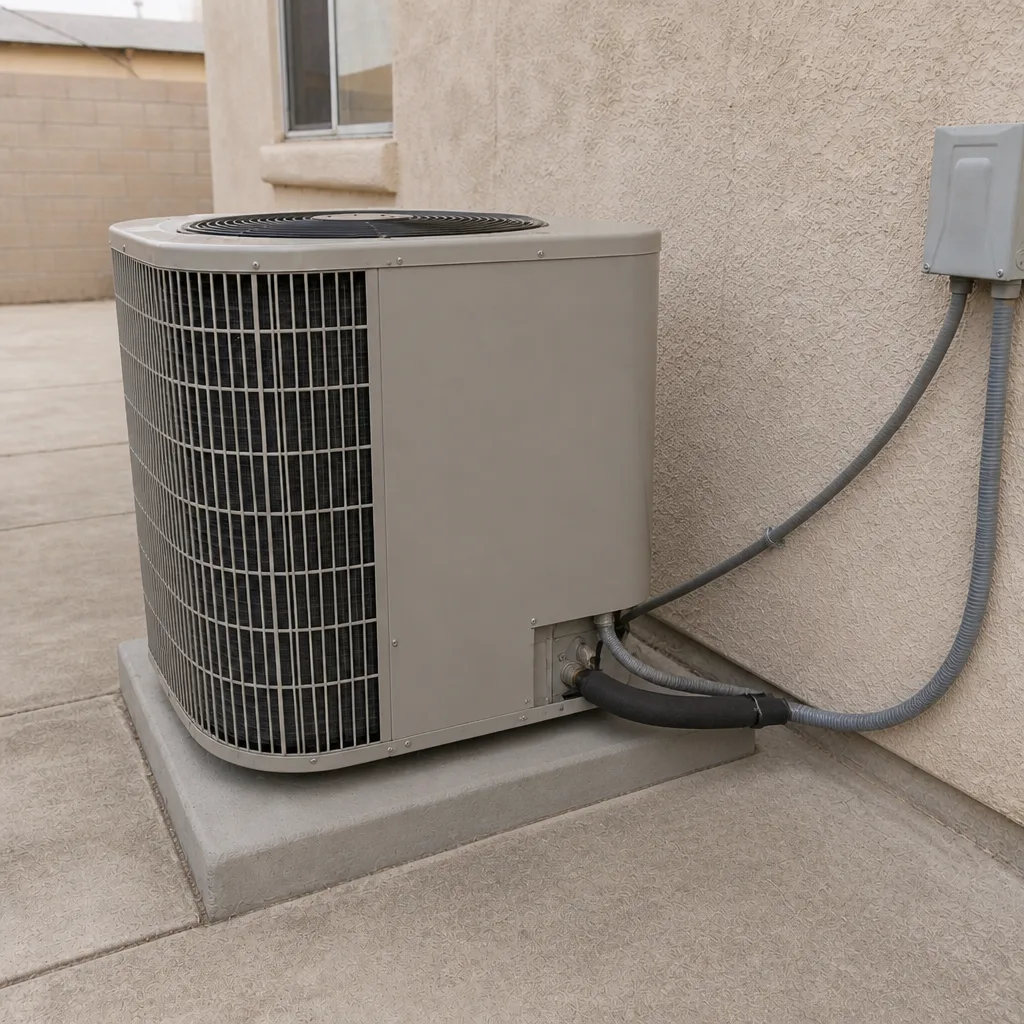
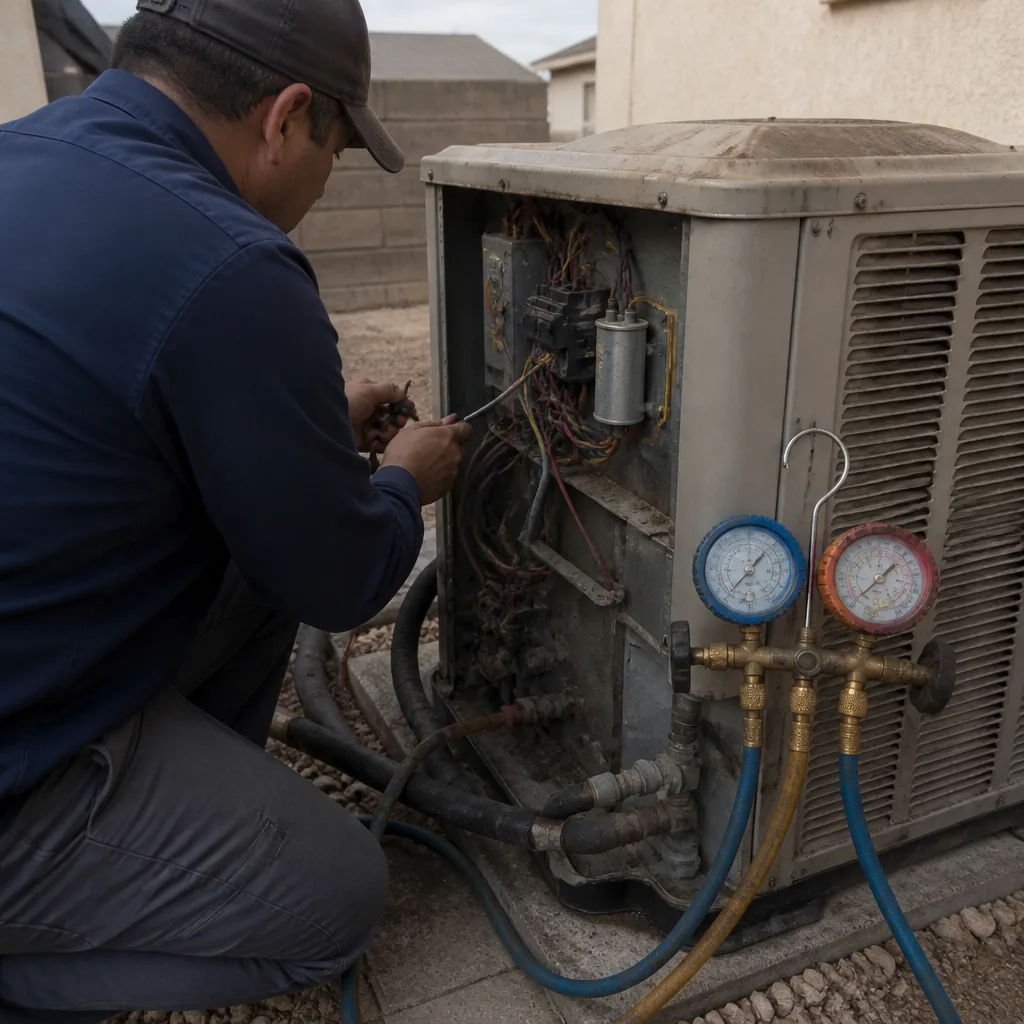
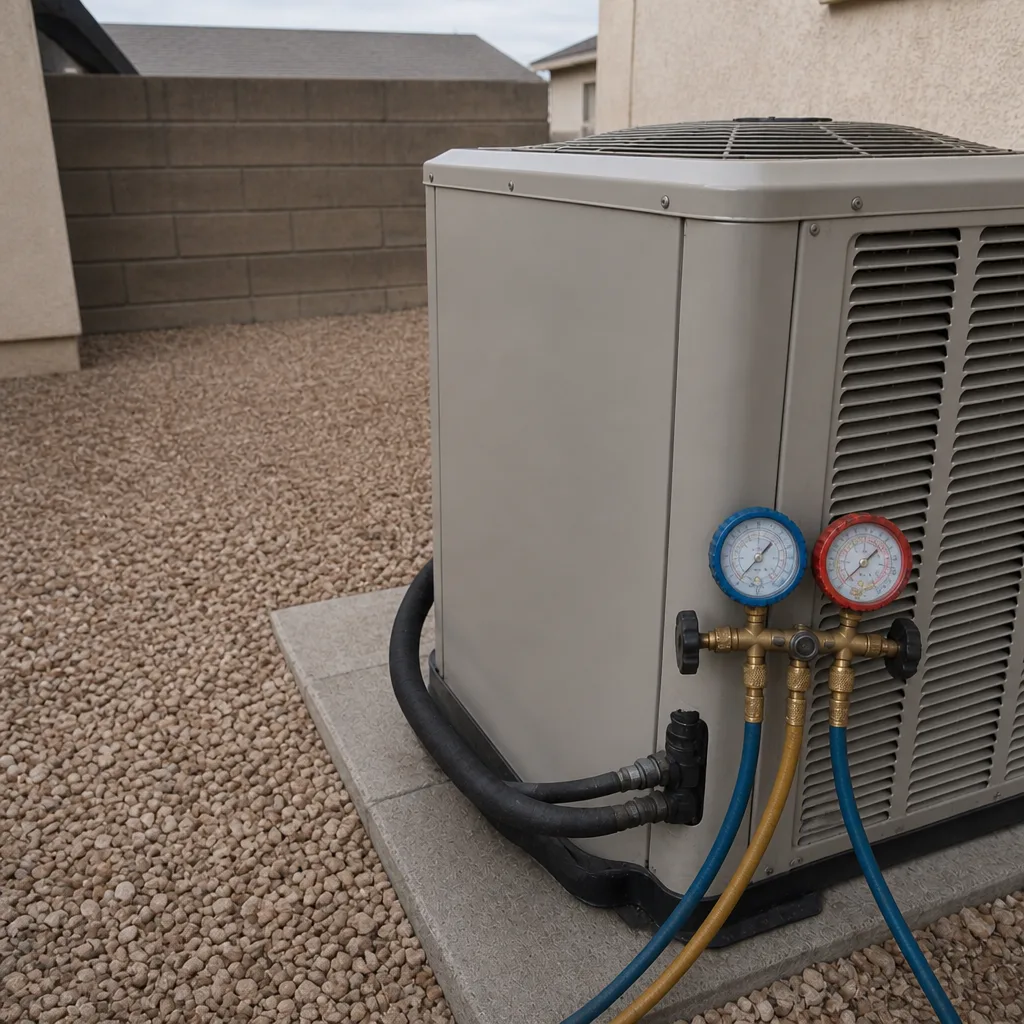
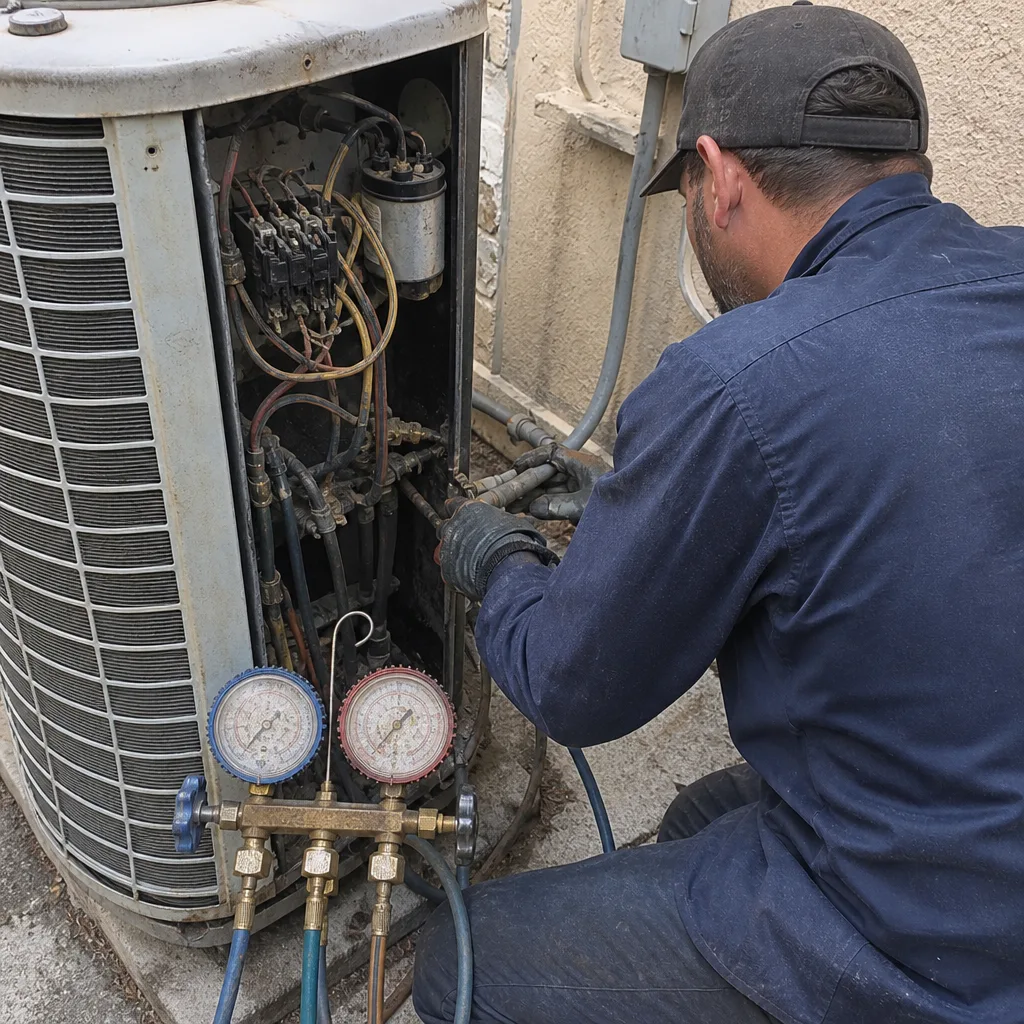
See the difference
 Before
 After
 Before
 After
 Before
 After
When to Call a Professional
If you’re considering a heat pump or mini-split install in North Las Vegas, and your panel hasn’t been opened, your routing path hasn’t been walked, and your load calculation hasn’t been run, you’re shopping on incomplete information. Call a licensed installer before you sign anything. The same applies if your existing system is limping through summer and you’re trying to decide between a repair and a full AC replacement – a proper diagnostic saves you from replacing a system that had a $300 capacitor problem. If it’s the heating side you’re worried about, the heating and furnace service page covers what we look at before we recommend replacement.
Ray’s Heating & Air North Las Vegas offers free estimates in North Las Vegas. We open the panel, walk the routing path, and give you a written fixed price with the permit and electrical scope clearly stated, not hidden for later. Call (844) 761-6871 for a free estimate.
Frequently Asked Questions
A single-zone mini-split with a ready electrical panel and a straightforward routing path usually can be installed in one day, typically 4 to 6 hours of work. Multi-zone systems and jobs that need electrical panel upgrades always take two or more visits. If anyone quotes a multi-zone in one day, ask them to show you the routing plan in writing.
Straight equipment replacements in North Las Vegas typically clear the Clark County permit portal faster than jobs that touch the electrical panel or add new circuits. Panel upgrades and new circuit installations can add a week to ten days for review, plus the inspection window after install. The permit is part of the real timeline, not a bureaucratic footnote.
You need a panel upgrade if your existing panel doesn’t have the amperage capacity or the spare breaker slots the new system requires. In the Las Vegas valley, thousands of homes with 100-amp panels already loaded with pool pumps and EV chargers fail the load calculation for a multi-zone mini-split. A competent installer will check this before quoting, not after.
Have a temporary window unit ready before install day, especially if your existing system has already failed. A window unit from a local hardware store is not a long-term solution, but it’s a real relief valve during a July install gap. Call us if the schedule looks tight – we can tell you honestly whether we can move your date forward.
Mini-splits work well as whole-home systems in North Las Vegas homes with open floor plans and decent insulation, but a full-house multi-zone system is a bigger investment than most homeowners expect. Ducted heat pumps are usually a better fit for homes with existing ductwork. A North Las Vegas home comfort consultation can tell you which way to go based on your house, not on what’s easiest to sell.
A ducted heat pump replacement in an existing home with usable ductwork usually takes 1 to 2 days. A mini-split can take 4 hours or 2 weeks depending on zones and electrical. The question isn’t which is faster – it’s which fits your house. In North Las Vegas homes built before 1990 with ductwork in place, the heat pump replacement is usually the faster and cheaper path.
The Bottom Line
Mini-split and heat pump install timelines come down to three variables: zones, electrical readiness, and permit and equipment lead times. A single-zone job with a ready panel is an afternoon. A three-zone retrofit that needs a panel upgrade is a three-week project. The gap between those two numbers is where most homeowner frustration lives, and it’s the part a straight-dealing installer explains before you sign, not after. Get your panel inspected, get the routing path walked, and get the permit scope in writing. Do that, and the install schedule you’re quoted is the one you’ll actually get.
Ray’s Heating & Air serves North Las Vegas and the surrounding communities with all major brands – Bryant, Carrier, Trane, and American Standard among them – and backs every install with the 90-Day Done Right Promise in writing. A live person answers the phone around the clock, every day. Call (844) 761-6871 for a free estimate.
Written by the team at Ray’s Heating & Air North Las Vegas.