
Last updated November 17, 2026
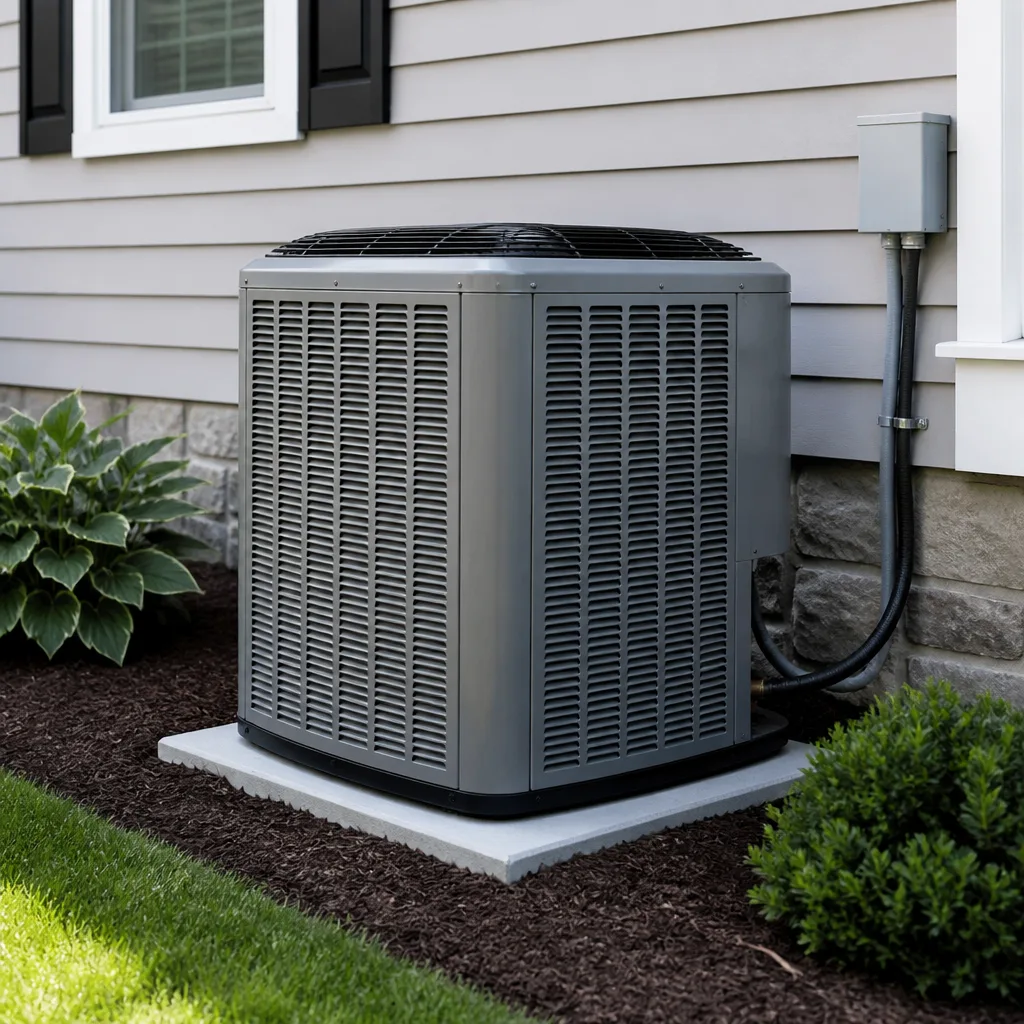 AC repair
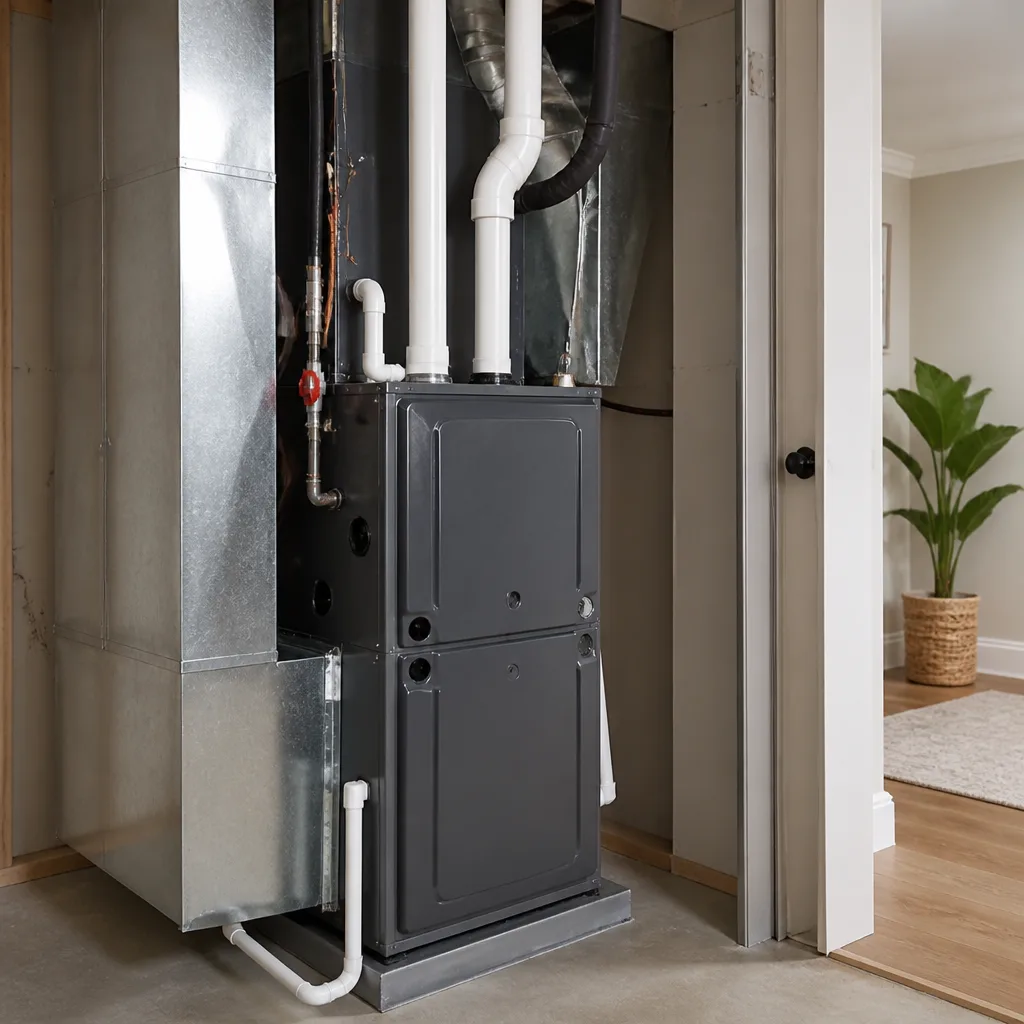 Furnace & heating
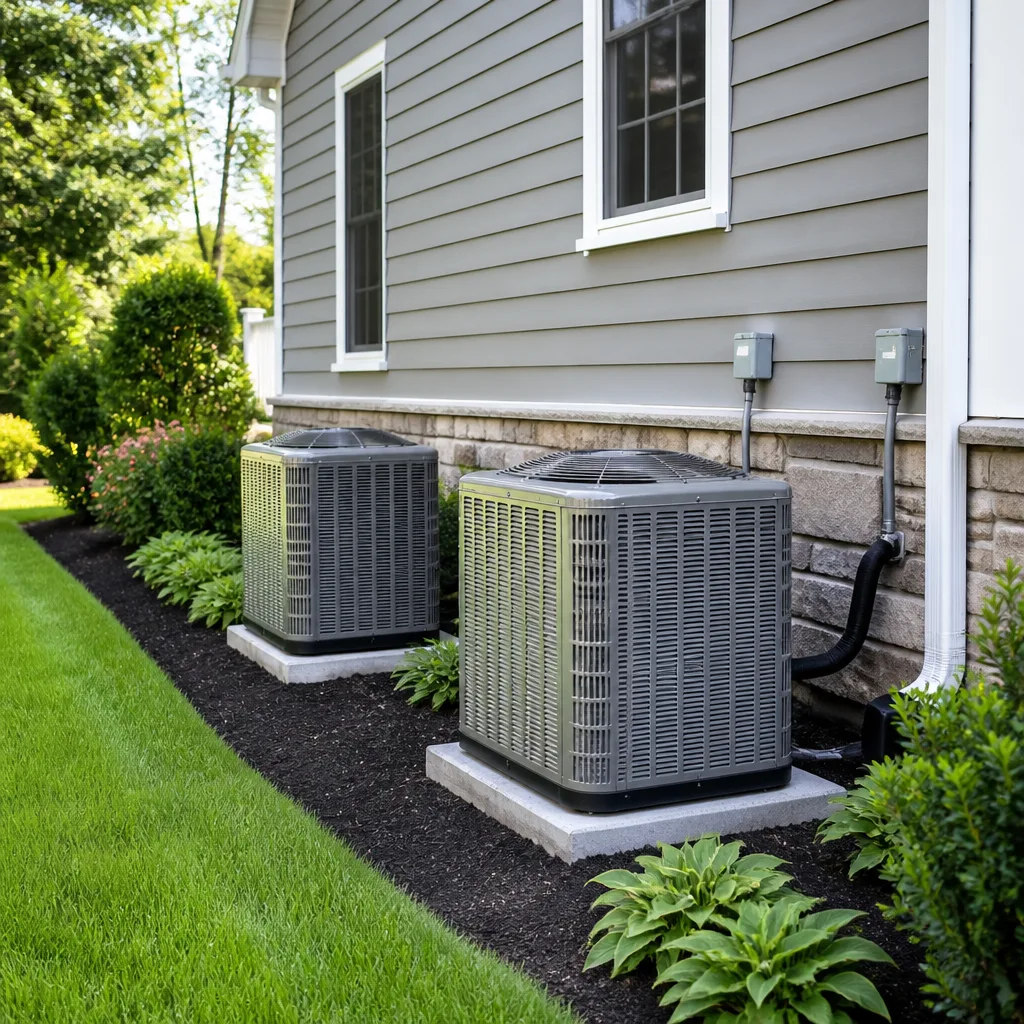 Heat pumps
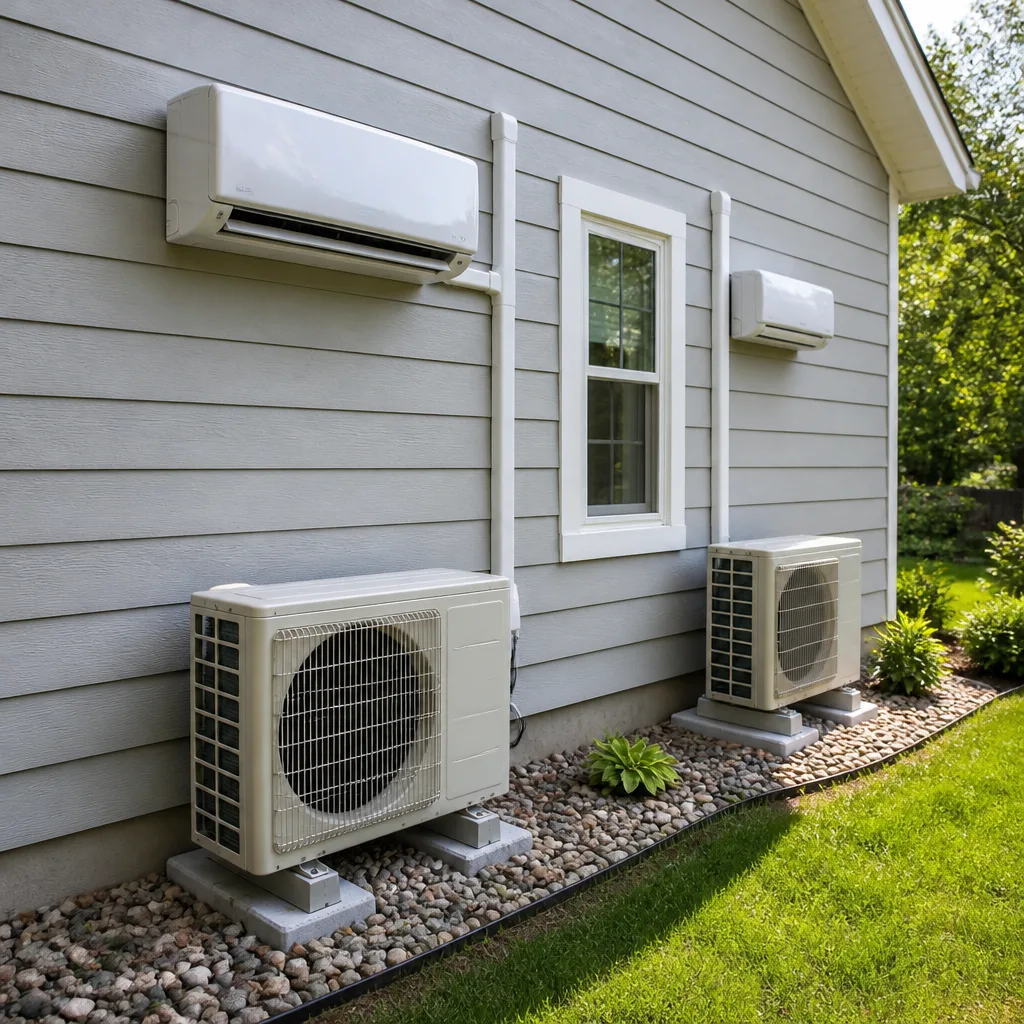 Ductless mini splits
 Carrier
 Trane
 Goodman
Seasonal tune-up and full diagnostic on your Carrier, Trane, or Goodman system - readings shown to you before any repair is proposed
Diagnosis first, numbers second - you approve the repair price before a single part goes in.
Get your free estimateAC Repair & Installation Maintenance Schedule: What to Do and When
If you’re doing your AC tune-up in June, you’re already a month late. By the time it hits 108 in North Las Vegas, there’s no catching up on deferred maintenance – the unit is already behind, and the first triple-digit week will find every weak spot at once. We’ve watched this happen on the same streets year after year: a system that ran fine through May starts short-cycling by the Fourth of July, and the homeowner is surprised. They shouldn’t be. The Mojave doesn’t run on a mild-climate calendar, and a tune-up schedule borrowed from a Phoenix brochure or a Midwest chain’s mailer will get your condenser killed by Labor Day. What follows is the actual calendar for North Las Vegas – the dust window, the monsoon spike, the tasks that have to happen in March or they don’t happen in time.
Quick Answer
In North Las Vegas, your AC needs service twice a year – a full tune-up in February or early March before the spring windstorm season loads the coil, and a shutdown check in October – plus quarterly filter changes and a rinse of the outdoor unit through the dust months. The tune-up that matters most happens before March, not in June. Skip it and you’ll pay for it in electricity and repairs all summer.
Styles & brands we work with
- AC repair
- Furnace & heating
- Heat pumps
- Ductless mini splits
- Carrier
- Trane
- Goodman
Table of Contents
- The North Las Vegas Maintenance Calendar, Month by Month
- Why the Spring Dust Window Kills Condenser Coils
- Three Things You Can Do Yourself (and Three You Can’t)
- The Monsoon Humidity Spike and What It Does to Your System
- How to Keep a Maintenance Log That Actually Protects Your Warranty
- What an “Annual Tune-Up” Contract Includes vs. What Ray Checks
- Common Mistakes to Avoid
- When to Call a Professional
The North Las Vegas Maintenance Calendar, Month by Month
Most maintenance schedules are written for a place with four mild seasons. North Las Vegas has two real ones and two transition windows, and the work that matters has to hit those windows. Here’s the calendar we actually run for homeowners in North Las Vegas, from Aliante out to the rural edges of the valley.
- February (coil cleaning window). The system is mostly idle, so this is the safe month to pull the panels, clean the evaporator coil, check the drain pan and clear the condensate line. A clogged drain line here doesn’t just back up – it puts water in the closet, and by July the pan is full of algae and dust you can’t see. February is when we get ahead of it.
- Early March (pre-season refrigerant check). Refrigerant charge is measured before the load is on. A unit that’s low by 8 ounces in March runs hot all summer and wears the compressor. If your system is under warranty, this is the reading that proves the problem started before the season – hold onto it.
- March through May (dust season). The desert wind kicks up grit from the open lots and the pit, and the condenser coil is a magnet. Rinse the outdoor coil every three to four weeks. This is not optional in North Las Vegas.
- June through September (peak load). Change filters every 30 days. Watch for short-cycling and listen for the outdoor fan. If anything sounds different, call before it fails – a July compressor replacement is a four-figure bill that a $12 filter change might have prevented.
- October (shutdown prep). Before the heat gets used, clean the coil again, check the blower, and confirm the system is set for heat. This is also when we inspect the heat exchanger – a cracked exchanger in a gas furnace is a safety issue, and Octobr is when it gets caught before anyone needs the heat.
- December (heat-mode verification). Run the furnace for a full cycle on a cool morning. A unit that sits idle from May to December will reveal a bad ignitor or flame sensor on the first cold night, usually at the worst moment. December verification costs nothing and saves a no-heat call in January.
That’s the shape of the year. The parts below break down why each window exists and how to keep track of what you’ve done. If you want the full picture of our repair and install work, or to see how the heating side fits the same calendar, our AC Repair & Installation in North Las Vegas page lays it out.
Why the Spring Dust Window Kills Condenser Coils
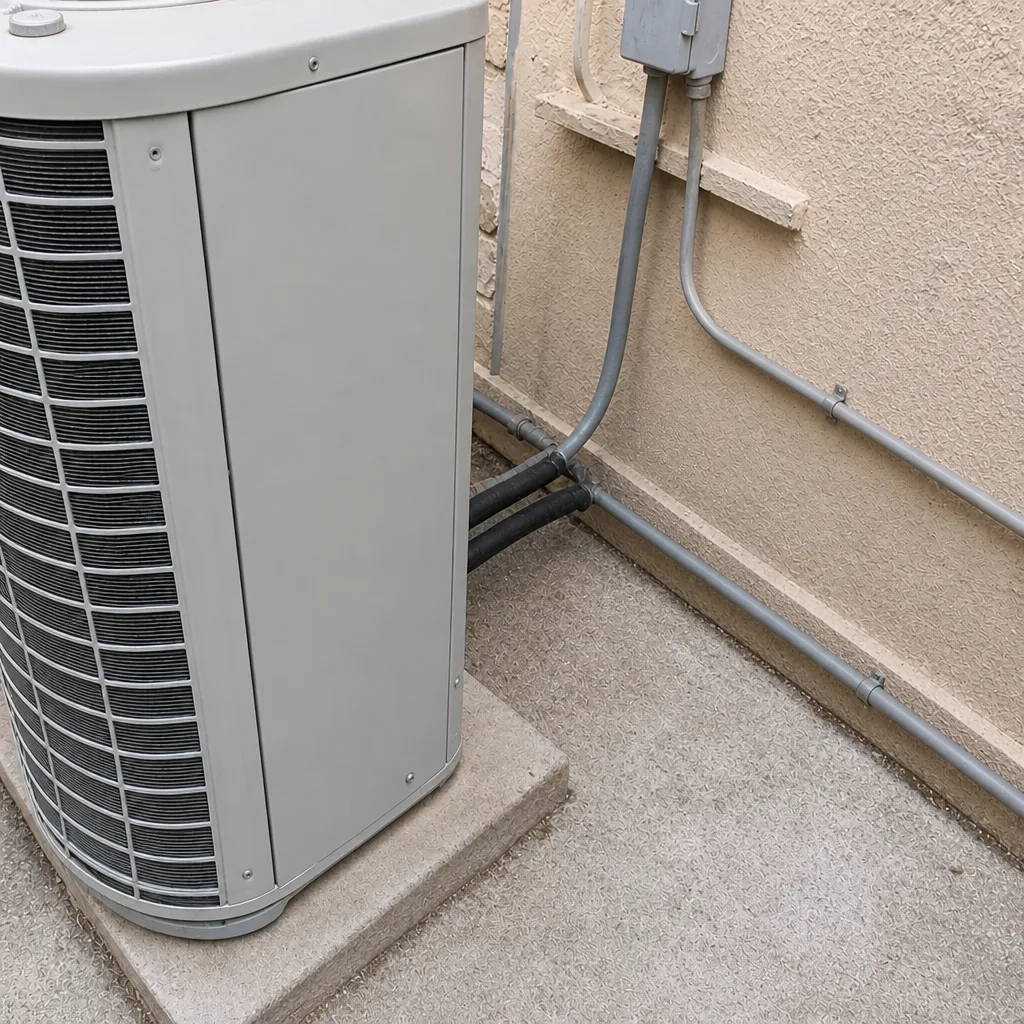
The desert windstorm season typically runs March through May in North Las Vegas, and it does more damage to cooling equipment than the entire summer heat. Here’s the mechanism: the condenser coil on the outdoor unit is a finned coil, and every fin is a surface for dust to stick to. When wind-borne grit packs those fins, the coil can’t reject heat. The refrigerant runs hotter, the compressor works harder, and the unit draws more amps per hour of cooling. A coil that’s 30% blocked can add 10% to 15% to your summer electric bill, and it accelerates compressor wear. The compressor isn’t failing because it’s old – it’s failing because it’s been running hot since March.
The fix is simple and cheap. Rinse the outdoor coil with a garden hose, top to bottom, every three to four weeks through the dust season. Don’t use a pressure washer – the fins bend and you’ve created a permanent airflow problem. If you’re on a street with new construction or open lots nearby, the grit load is higher and you should rinse more often. We see this constantly in the newer builds around North Las Vegas where the surrounding lots haven’t been landscaped yet. The wind off bare dirt is relentless, and nobody warns the new homeowner.
There’s a second dust effect most schedules miss: return-air filter loading. In a dusty North Las Vegas spring, a filter that would last three months in a mild climate loads in six weeks. Check it monthly from March through June. If it’s gray and matted, it’s done. A dirty filter starves the indoor coil, and a starved indoor coil freezes – which then dumps water and stresses the compressor on the thaw cycle. The whole chain starts with a filter you can change for the price of lunch.
Three Things You Can Do Yourself (and Three You Can’t)
There’s a real distinction between homeowner tasks that extend equipment life and tasks that put you or the machine at risk. Getting this wrong is how people void warranties or, worse, get hurt. Here’s the honest split, from someone who’s seen both.
Do these yourself, quarterly
- Change or rinse the air filter. Every 30 days in summer, every 60 in winter. A clean filter is the cheapest maintenance there is, and it protects the indoor coil and blower motor directly. Note the date on the filter frame with a marker so you stop guessing.
- Rinse the outdoor condenser coil. Garden hose, low pressure, top to bottom. Do it three to four times through the dust season. Then look at the pad – if the unit is sitting in a dirt yard, keep the area clear of weeds and grass clippings so air can move.
- Clear the condensate drain outlet and check the pan. Look at the plastic pan under the indoor unit. If you see standing water or algae, the drain is starting to clog. Pour a cup of distilled white vinegar down the drain line once a month through summer – it’s cheap and it slows algae growth. Just don’t open the electrical panel or the refrigerant lines to do it.
Leave these to a licensed technician
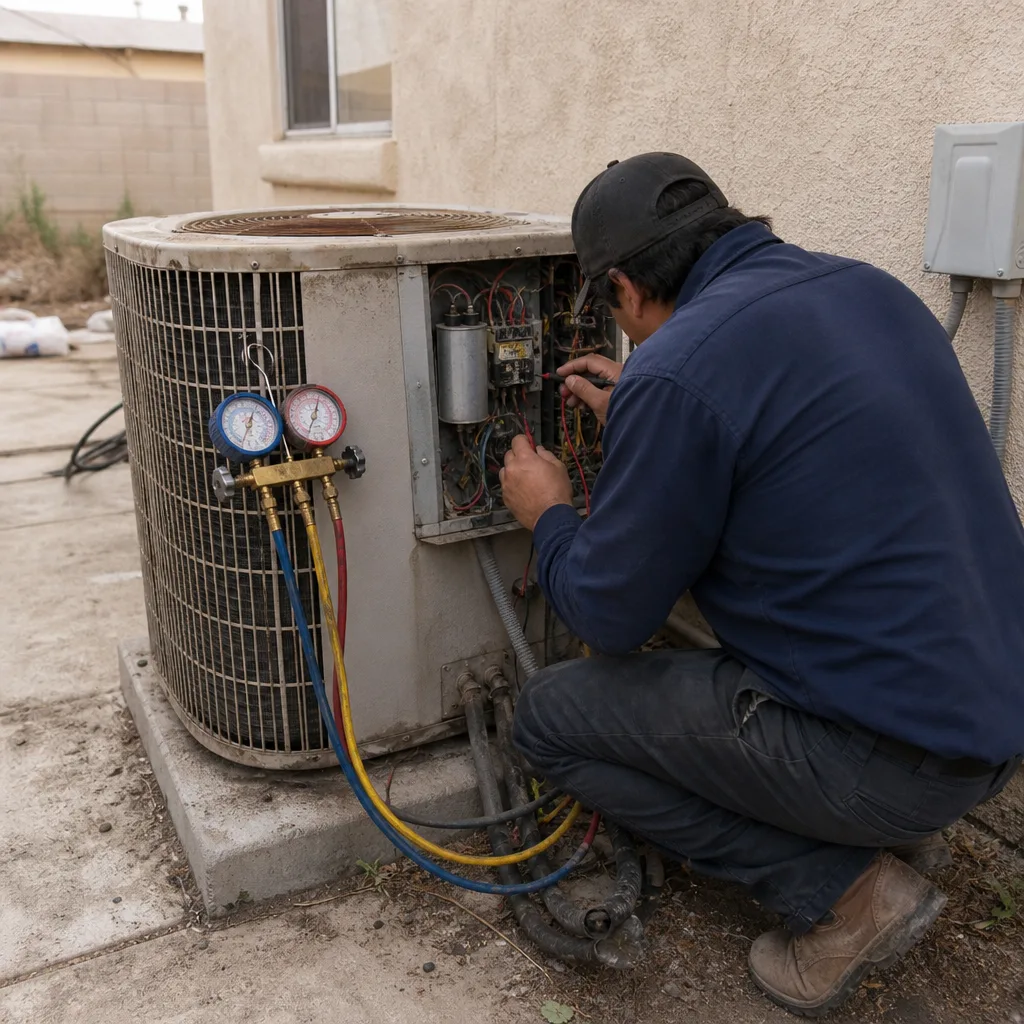
- Checking refrigerant charge. This requires gauges, a manifold, and the training to read them. Guessing at charge and topping off “just a little” is how systems get overcharged and compressors die. This is a March task, done right.
- Testing electrical components. Capacitors and contactors store energy and can bite even with the power off. Capacitor testing requires a meter and the knowledge to discharge it safely. This is the part of a service call where the meter comes out before anyone says the word compressor – and it should.
- Inspecting the heat exchanger. A cracked heat exchanger on a gas furnace can put carbon monoxide into the house. That’s a safety call, not a homeowner inspection. It needs a technician with a combustion analyzer and a scope. Never open the furnace cabinet to “take a look.”
If you’ve never had a proper pre-season check done on your system, that’s what the March visit is for. The full picture of what we cover lives on our Heating & Furnace in North Las Vegas page for the heating side and the AC page for cooling – both follow the same calendar.
The Monsoon Humidity Spike and What It Does to Your System
North Las Vegas gets a monsoon window in July and August, and it changes the maintenance math. Humidity climbs, the indoor coil runs wetter, and the drain pan and condensate line get a workout they don’t get in the dry months. A drain line that’s been fine since April can clog in a week of monsoon moisture because algae growth accelerates when there’s water sitting in the line. That’s when we get the calls: water stain on the ceiling, system tripping on a high-pressure switch, or the pan overflowing into the closet.
During the monsoon, watch for these signs and call before they compound:
- Water in the drain pan or a musty smell near the indoor unit – that’s a clogging drain, not just an annoyance.
- The system running but the house not cooling – a wet coil and a loaded filter can ice the coil, and ice is a symptom, not a fix.
- Clicking or humming from the outdoor unit during the humidity – usually the contactor or capacitor, and both get tested with a meter first.
- Any tripped breaker on the AC circuit. Reset it once. If it trips again, stop and call. Repeated breaker trips are a fire risk, not a fluke.
The monsoon is also when a mini-split or heat pump shows whether its drain is set up right. Condensate handling on a ductless head is easy to get wrong, and a clogged drain on a wall-mounted unit drips straight onto the wall. If you’re running a heat pump or a mini-split in North Las Vegas, the seasonal drain check matters as much as the coil cleaning – our Heat Pump & Mini Split in North Las Vegas page covers the specifics for those systems.
How to Keep a Maintenance Log That Actually Protects Your Warranty
A maintenance log isn’t paperwork for its own sake. When a warranty claim gets denied, the first thing the manufacturer asks for is proof the system was serviced. If you can’t produce it, the claim can be denied on the spot, whether the failure was your fault or not. We’ve seen homeowners lose a compressor warranty over a missing record. A simple log prevents that.
Keep a page for each system (indoor and outdoor are separate units) and record these fields every time anyone touches it:
- Date and hours. When the work happened, and roughly how many hours the system had run since the last entry if you have an hour meter (many thermostats log runtime).
- Work performed. The specific task – “evaporator coil cleaned,” “capacitor replaced,” “filter changed” – not “tune-up.” Specificity is what a warranty reviewer wants.
- Parts replaced and part numbers. The capacitor or contactor that was swapped, with the part number. This tells a future technician what’s already been done and rules out duplicate diagnosis.
- Refrigerant readings. The pressures and the superheat/subcool numbers from the March check. A trend line here shows whether a slow leak exists before it becomes a compressor failure.
- Who did the work. The company name and the invoice number. If a claim arises, this is the evidence trail.
Keep the log with the equipment – a folder taped to the air handler closet door works fine. When you sell the house, that folder is worth real money, because a buyer’s inspector who sees documented maintenance assumes the system has been cared for. That’s a fact every North Las Vegas realtor will confirm.
What an “Annual Tune-Up” Contract Includes vs. What Ray Checks
Big-company annual contracts sound the same on the phone and read very differently on the invoice. Here’s the line-by-line comparison, because North Las Vegas homeowners deserve to know what they’re paying for.
| Task | Typical large-company contract | Ray’s maintenance visit |
|---|---|---|
| Filter change | Often listed, sometimes skipped | Done, filter dated |
| Coil cleaning | “Inspect” only | Cleaned (evaporator and condenser) |
| Refrigerant charge check | Sometimes, only if “needed” | Measured and recorded with gauges |
| Capacitor test | Usually not | Tested with a meter, readings shown |
| Drain line and pan | Usually not | Cleared and checked |
| Heat exchanger inspection | Sometimes | Scoped and documented |
| Written report | Often generic | Readings and notes you keep |
The difference is in the “inspect” versus “clean” line. An inspection finds a dirty coil; it doesn’t clean it. That’s why a big-company contract can be signed, paid for, and leave the coil blocked going into summer. We price the visit so the actual work gets done, and we hand you the readings so you see what we saw. That’s the whole idea behind “readings first, numbers second.”
One more thing worth knowing: not every “annual tune-up” is the same price, and you shouldn’t assume the one in the mailer is the one you get. Ask what’s on the checklist before you sign. For the repair and install side of the picture, the full list is on our home page, and it includes the standing offers we publish – $40 off any repair over $200, a free second opinion on any written estimate, no trip charge inside our county, and a senior and veteran 10% discount. Nothing else.
Common Mistakes to Avoid
- Waiting until June to schedule the tune-up. By June, the coil is already loaded from the dust season and the system has been running hot for weeks. The March window is the one that protects the compressor.
- Pressure-washing the condenser coil. A pressure washer bends fins and packs debris deeper. Use a garden hose, low pressure, top to bottom.
- Topping off refrigerant without finding the leak. Adding a little charge every year without locating the source is a slow way to cook a compressor. If refrigerant is low, we find the leak first.
- Changing the filter “when it looks dirty.” In a dusty North Las Vegas spring, filters load in six weeks. Check monthly from March through June and date the filter.
- Ignoring a clogged drain line until it overflows. Water in the pan, a musty smell, or a stain on the ceiling means the drain is clogging. A cup of vinegar a month through summer prevents most of it.
- Assuming the annual contract covers actual cleaning. Read the checklist. “Inspect” isn’t “clean,” and a dirty coil is the most common reason a “maintained” system runs hot all summer.
- Not keeping a service log. No record, no warranty claim. Keep the dates, parts, and refrigerant readings in one folder, and keep it with the equipment.
When to Call a Professional
Some problems are a phone call, not a filter change. Call if the system trips a breaker twice, if the outdoor unit hums or clicks without the fan turning, if the indoor coil freezes, if the drain pan overflows, if there’s any smell of gas around the furnace, or if the unit can’t hold the set temperature on a 105-degree day. Any of those are diagnostic calls, not DIY jobs, and the safety ones – gas, breaker, repeated trips – are urgent. Ray’s Heating & Air North Las Vegas offers free estimates in North Las Vegas – call (844) 761-6871. Phones are answered by a live person, including Ray himself, and the upfront pricing is grounded in real diagnostics: you’ll see the readings before you see the numbers. Free second opinion on any written estimate, and no trip charge inside the county.
See the difference
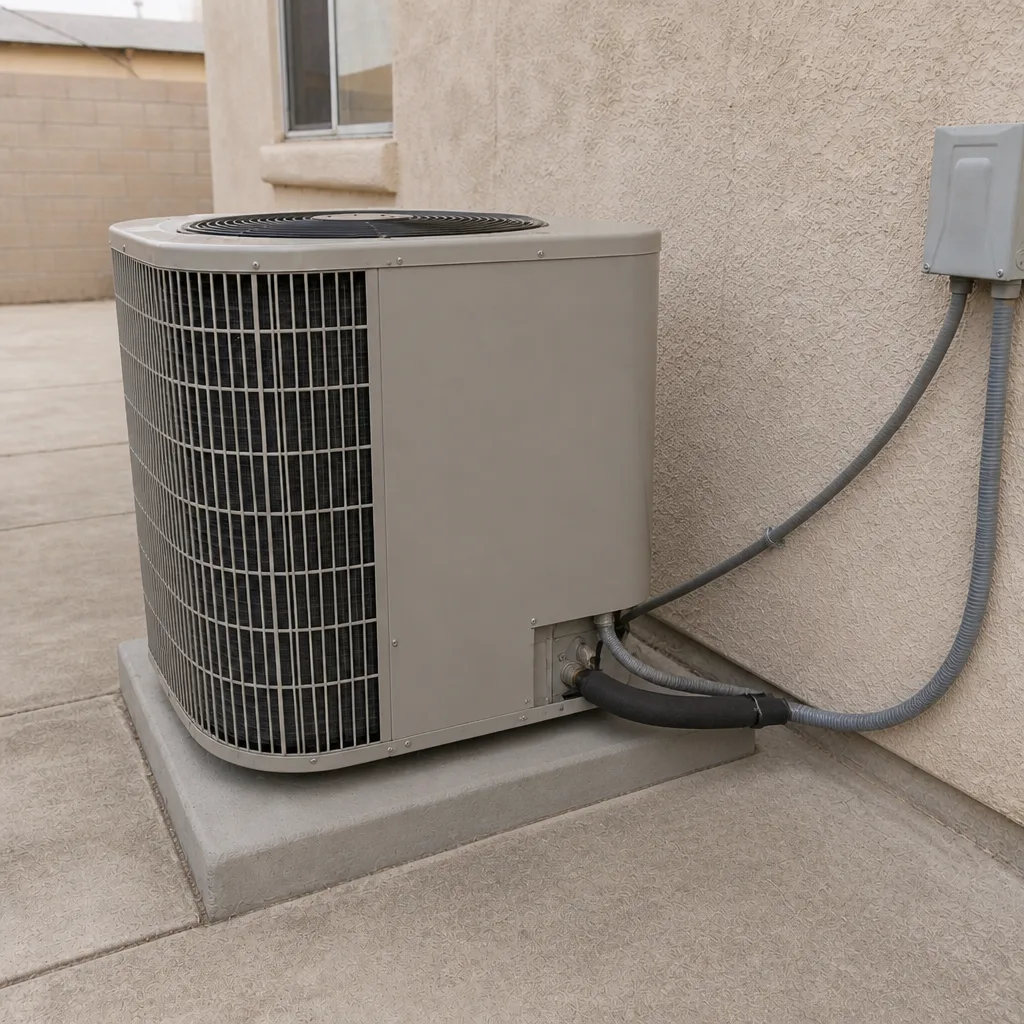
 Before
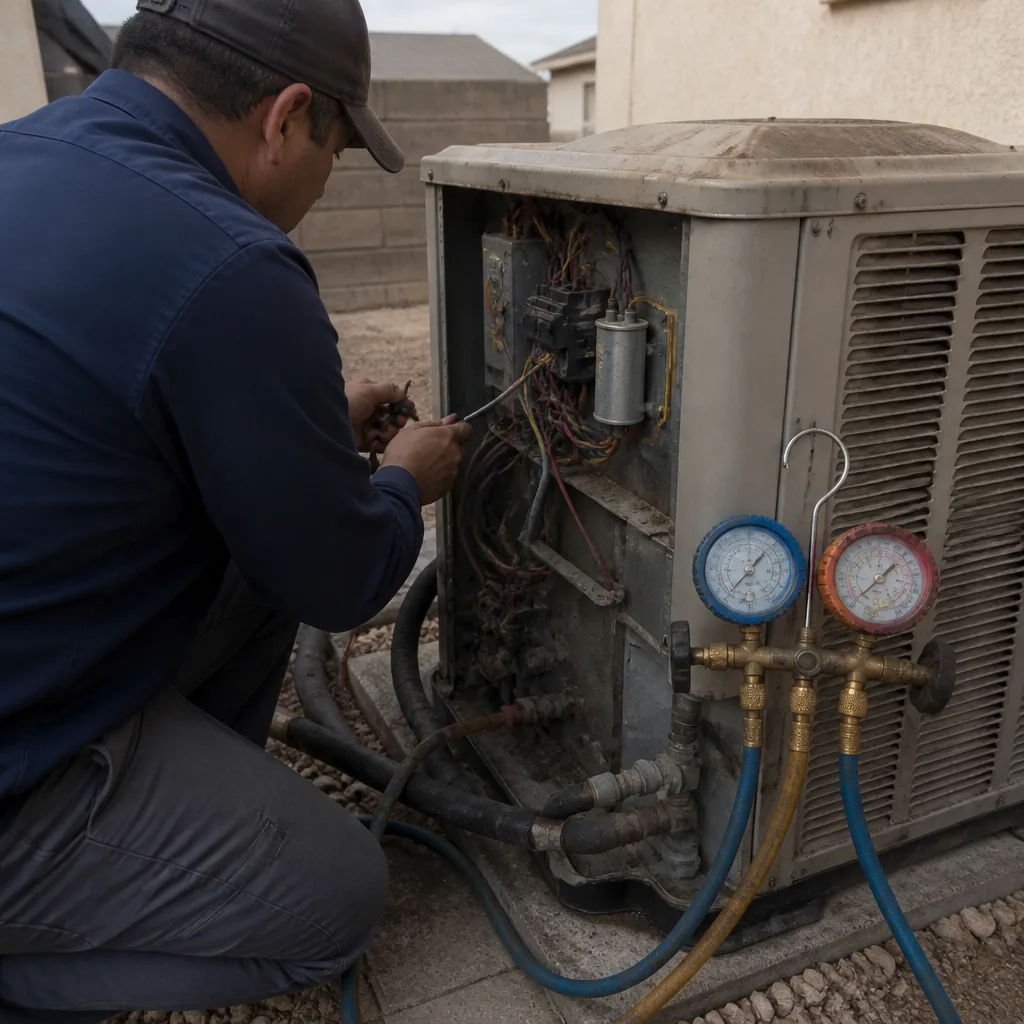
 After
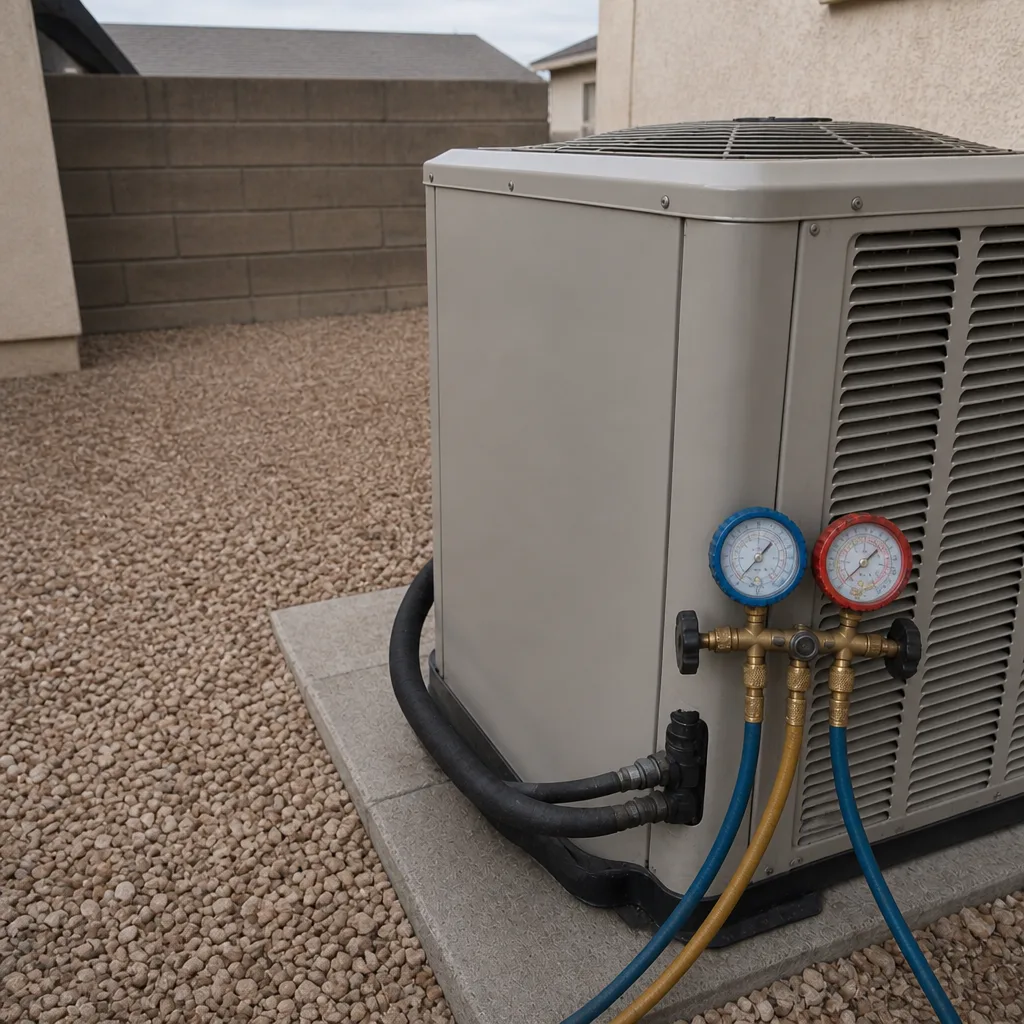
 Before
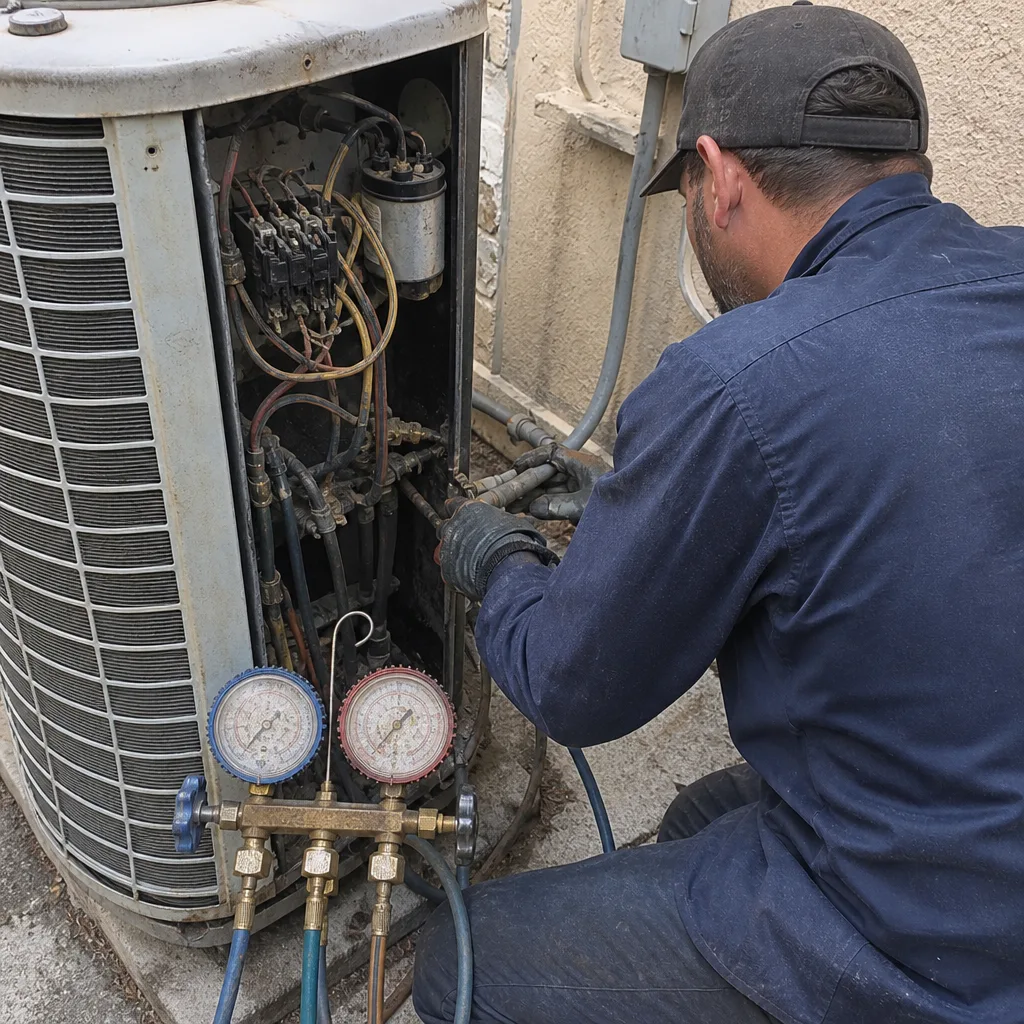
 After
 Before
 After
Frequently Asked Questions
Twice a year: a full tune-up in February or early March, and a shutdown check in October. Quarterly filter changes and coil rinses through the spring dust window keep the system healthy between visits. The March visit is the most important one because it happens before the load and the dust, not after.
The condenser coil packs with grit, the system runs hotter and draws more power, and your summer electric bill climbs by roughly 10% to 15% on a heavily loaded coil. Over a couple of seasons, that’s accelerated compressor wear. A garden hose rinse every three to four weeks through the dust season is the cheapest protection there is.
Only if you read the checklist first. Many contracts list “inspect” where a real maintenance visit does “clean.” Ask specifically whether the coil gets cleaned, whether refrigerant charge is measured, and whether you get a written report. If the answer is no on any of those, the contract isn’t doing much.
Any time a quote includes a compressor replacement, a full system replacement, or a number that surprises you. We offer a free second opinion on any written estimate, no charge and no pressure. It’s a standing offer, and it’s the reason a lot of North Las Vegas homeowners call us first now. (844) 761-6871.
If it’s February or early March, schedule the pre-season check now – that’s the window that protects the rest of the year. If it’s June through September, change the filter and rinse the coil. If it’s already hot and the bill jumped, call for a diagnostic before the compressor pays for the delay.
Yes, with one addition: the condensate drain on a mini-split head needs the same monthly attention as a central system’s drain, because a clogged ductless drain drips straight onto the wall. The March refrigerant check and October shutdown apply to heat pumps and mini-splits the same way they do to a standard split system.
The Bottom Line
The maintenance calendar that works in North Las Vegas is built around the desert – February coil cleaning, a March refrigerant check before the load, dust-season rinses from March through May, a monsoon drain check in July and August, an October shutdown prep, and a December heat-mode verification. Do the three homeowner tasks on a quarterly basis, leave the refrigerant, electrical, and heat-exchanger work to a licensed technician, and keep a simple log with dates, parts, and refrigerant readings. That log is what protects a warranty claim and what tells the next technician exactly what’s been done. If you’re behind on the calendar, the fix starts with one call, and it doesn’t have to be June to be too late. Call (844) 761-6871 for a free estimate, or check out Ray’s Heating & Air North Las Vegas home for the full picture of how we work.
Written by the team at Ray’s Heating & Air North Las Vegas.