
Last updated November 17, 2026
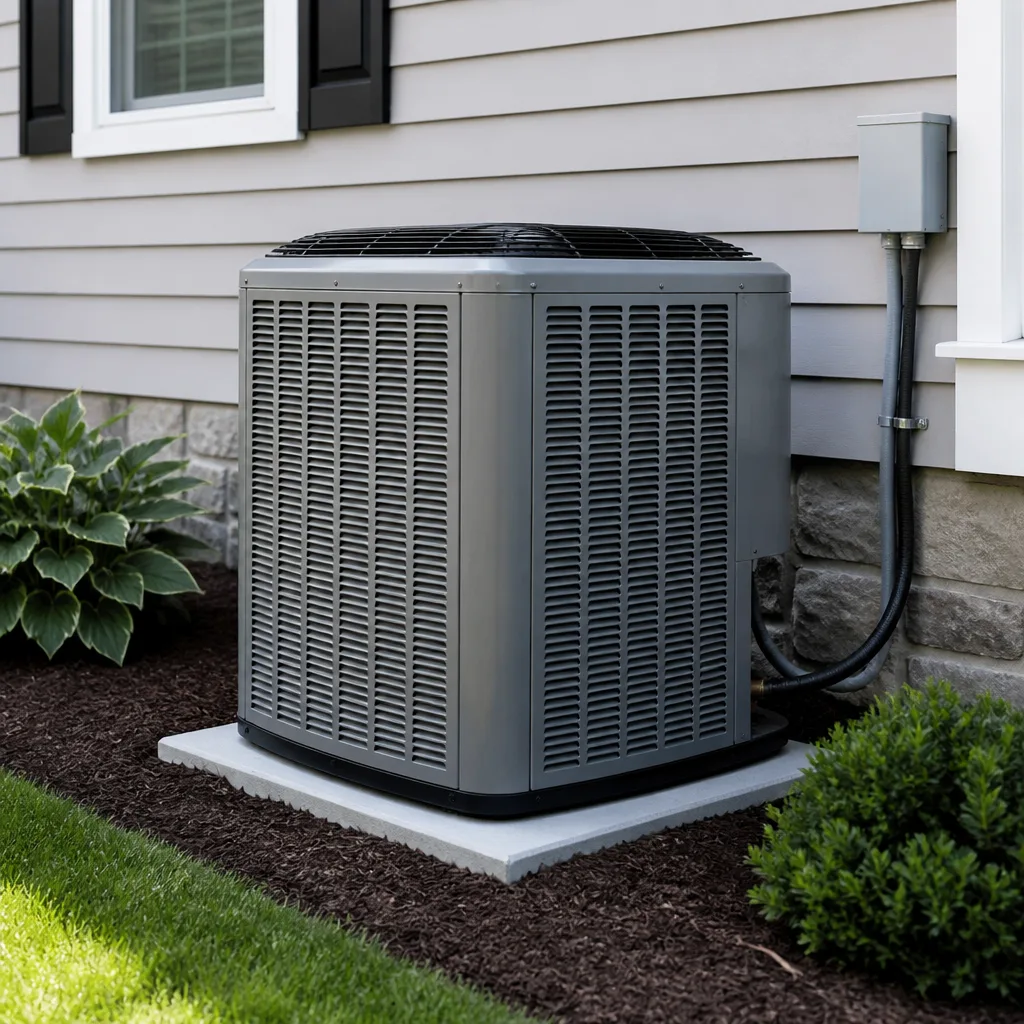 AC repair
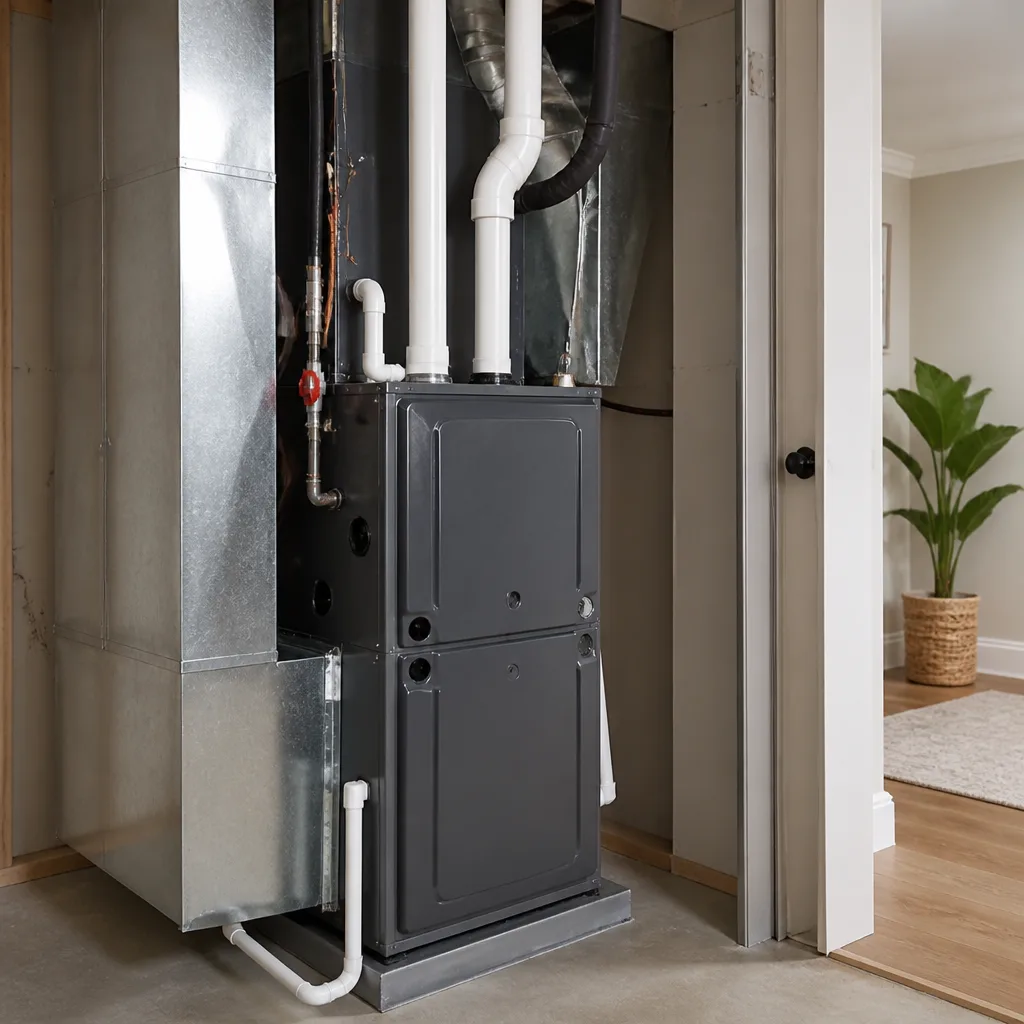 Furnace & heating
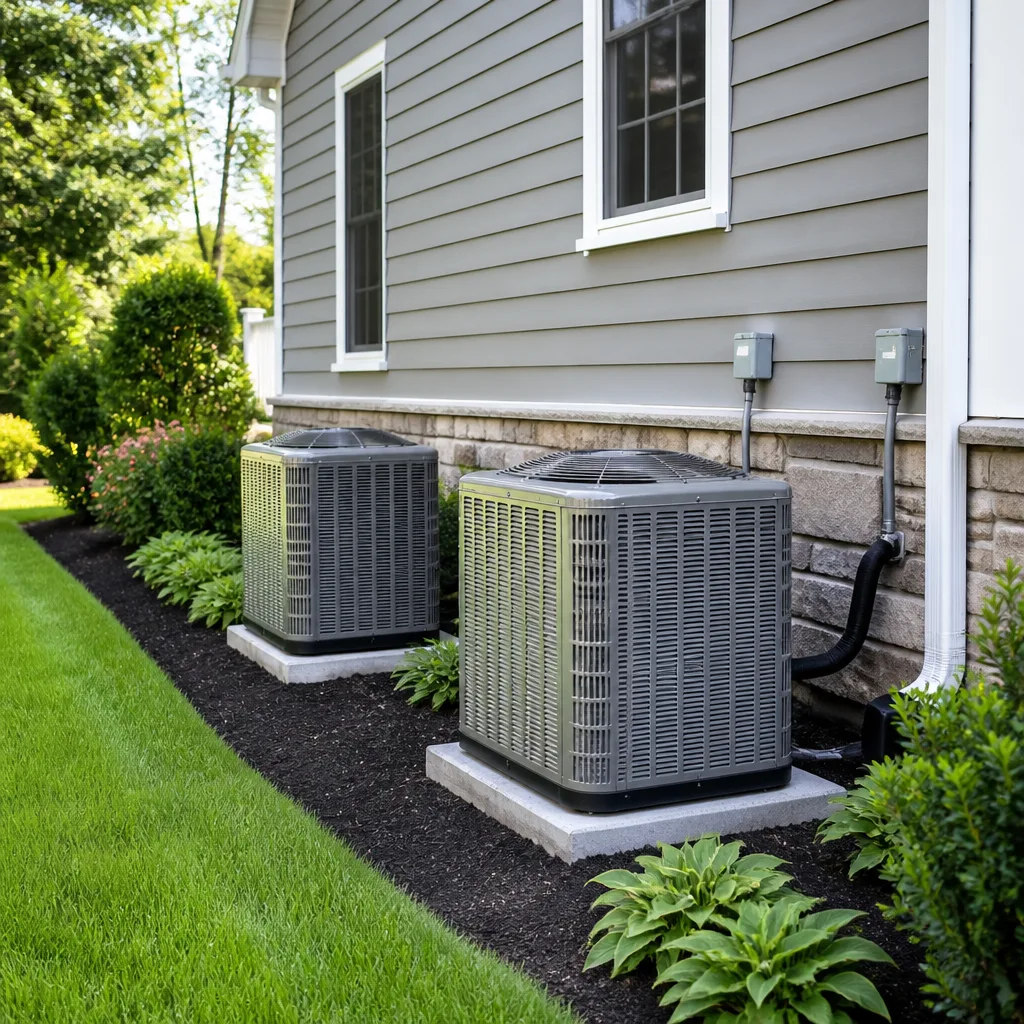 Heat pumps
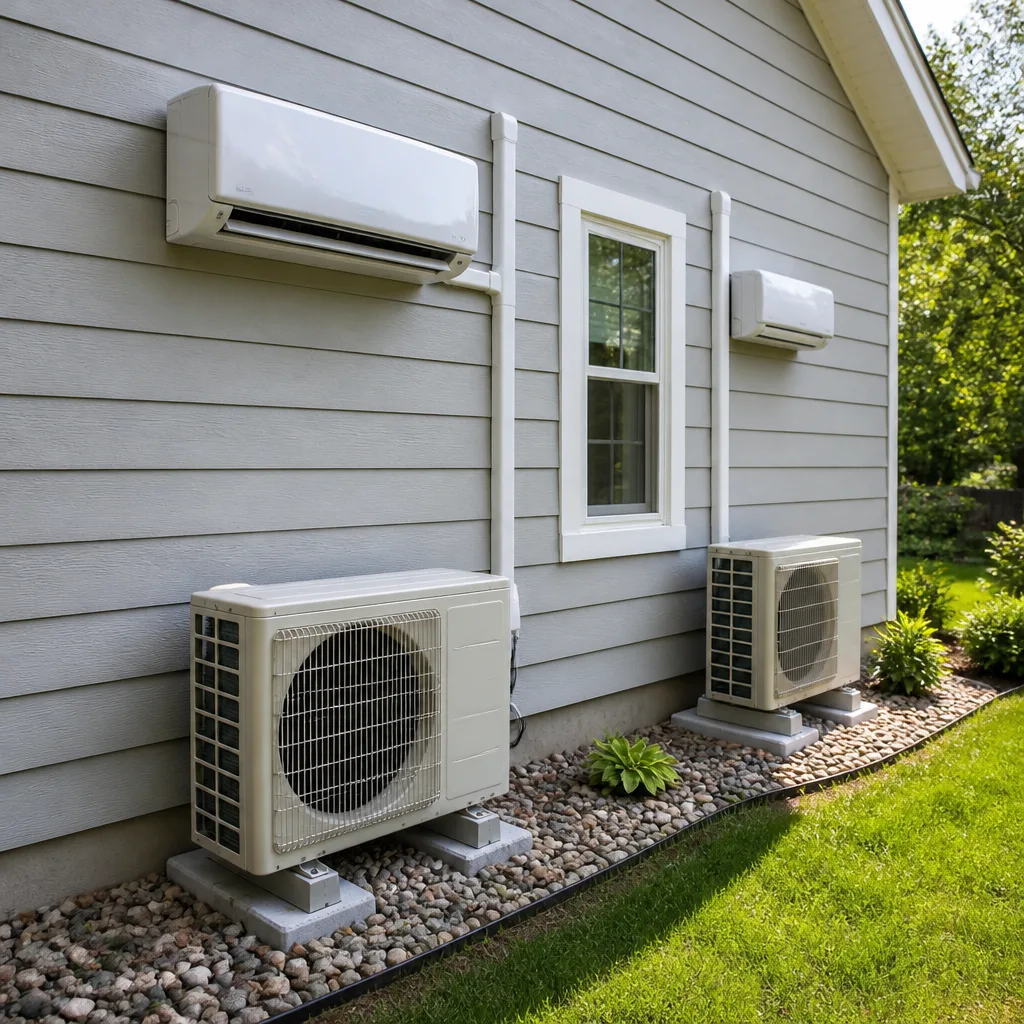 Ductless mini splits
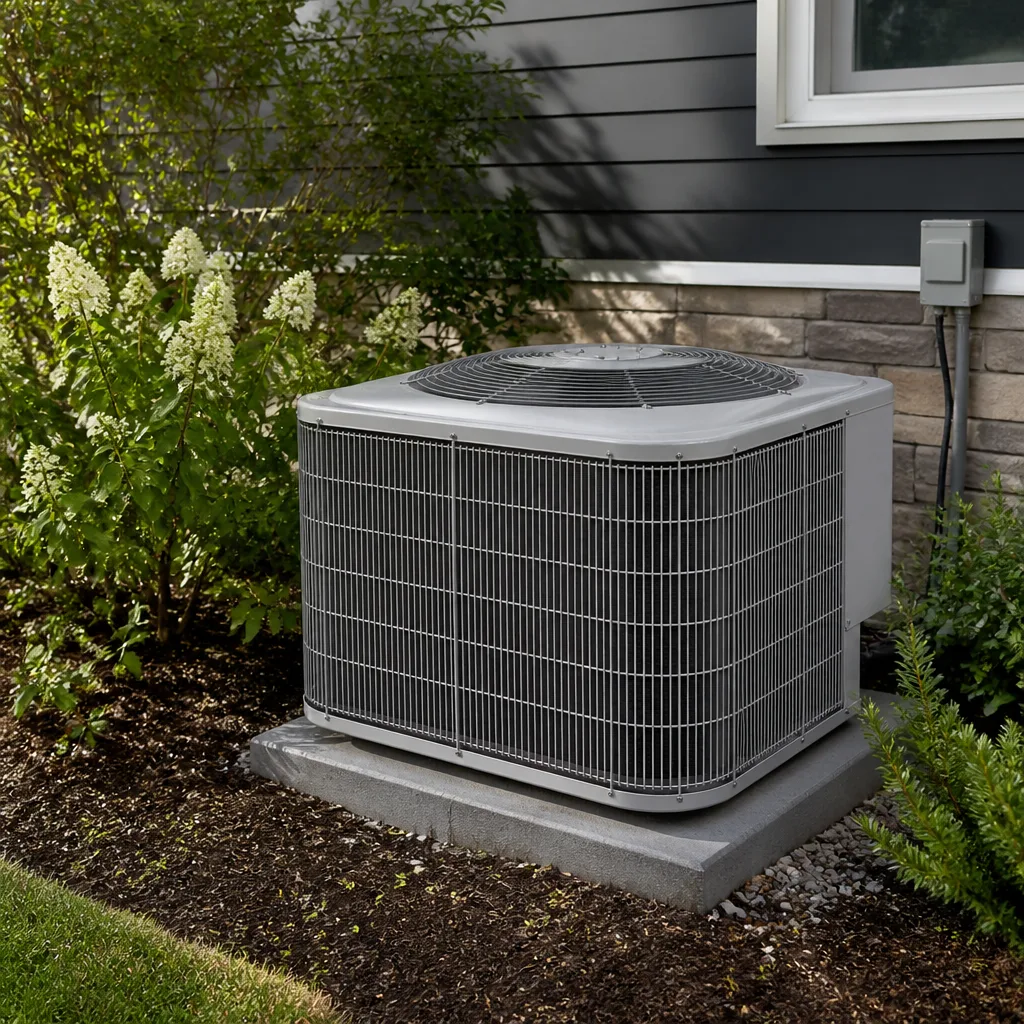 Carrier
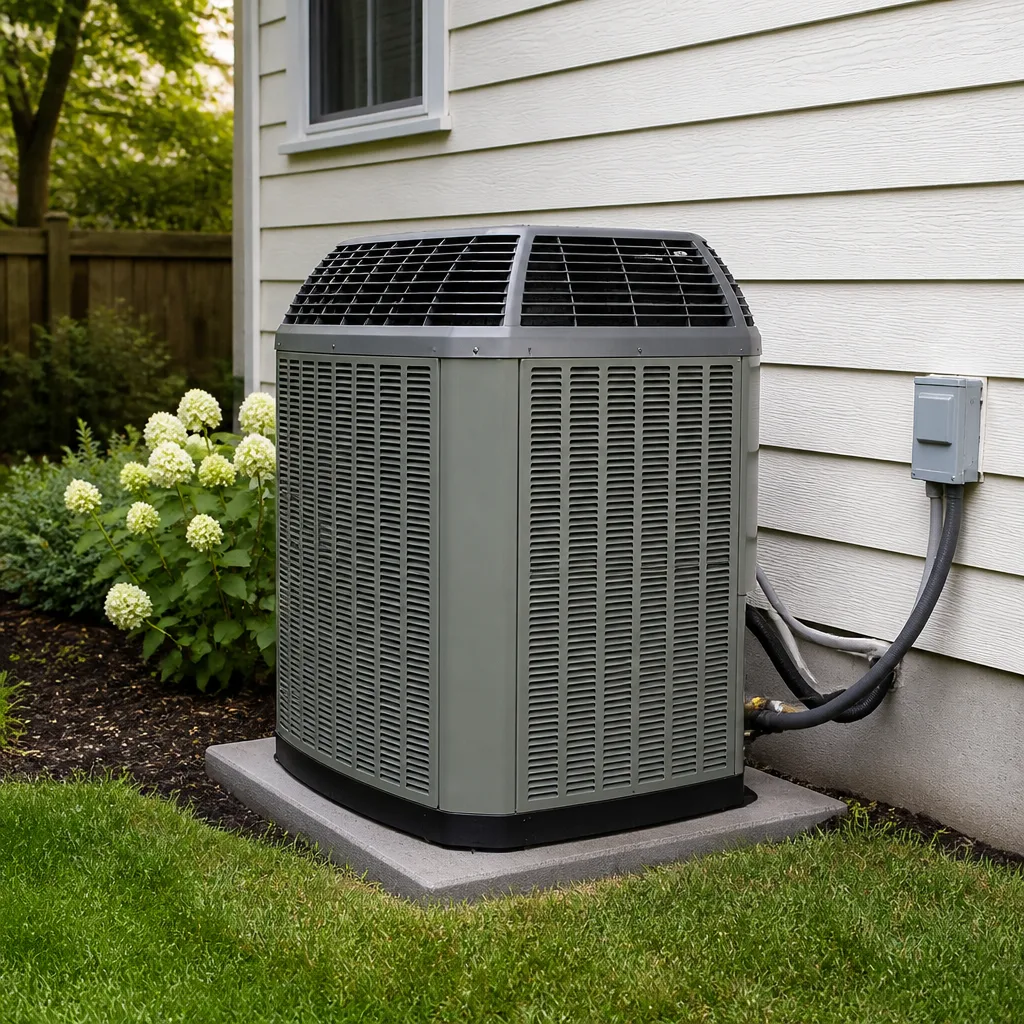 Trane
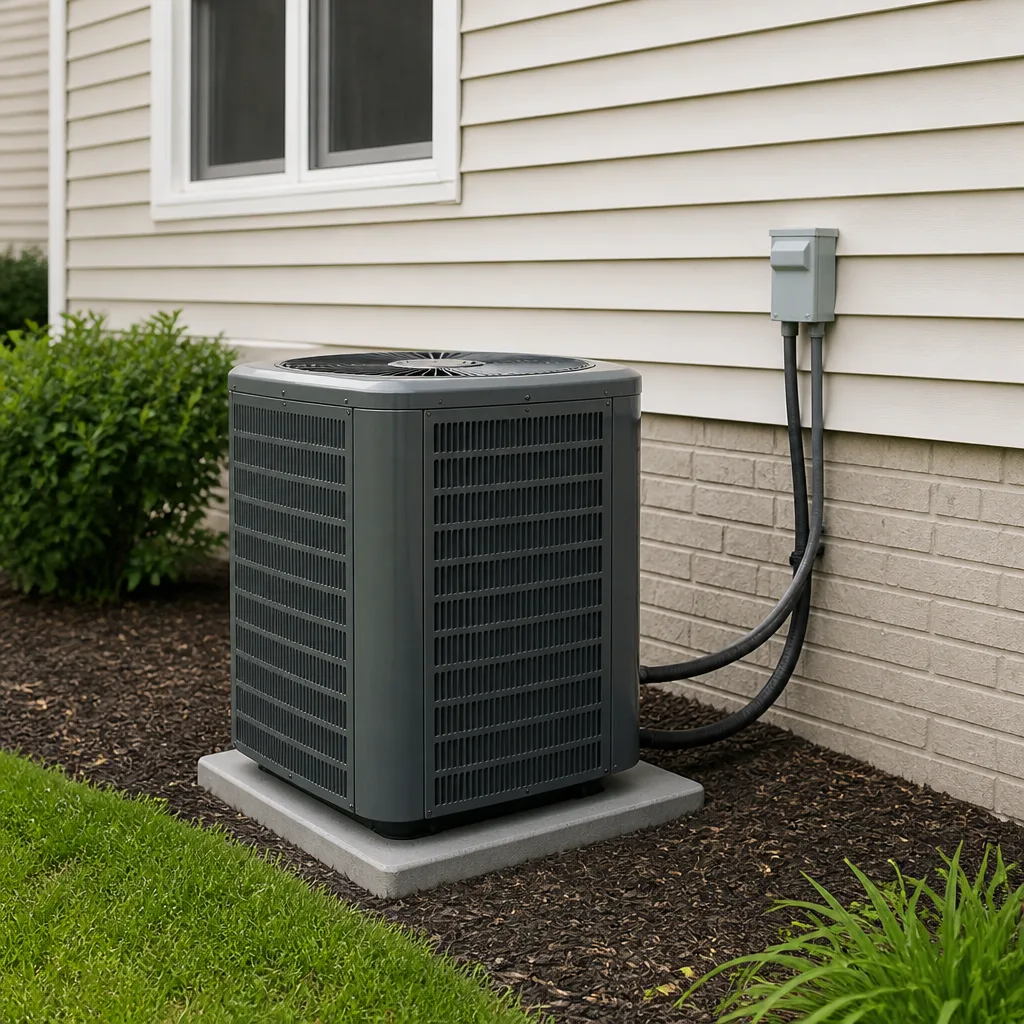 Goodman
Seasonal tune-up and full diagnostic on your Carrier, Trane, or Goodman system - readings shown to you before any repair is proposed
Diagnosis first, numbers second - you approve the repair price before a single part goes in.
Get your free estimateThe Complete Guide to HVAC in North Las Vegas
The average North Las Vegas tract home built between 2003 and 2008 has ductwork that was designed for a 3-ton system, and half of them are now running a 4-ton because a salesman upsized without checking the Manual J. That mismatch is why your house feels humid and your summer bill is high. North Las Vegas is not just “hot like the rest of Vegas” – the Mojave dust, the hard water, and the construction timeline of this city create their own failure patterns. This guide covers how to read those patterns, what repairs actually cost here, and how to verify anyone who touches your system before they touch it.
Quick Answer
An efficient HVAC system in North Las Vegas means the equipment was sized to your actual house, the ducts deliver the air they were designed for, and the contractor follows a verifiable process. Most homeowners here don’t have a heating and cooling problem – they have a ductwork and sizing problem that shows up as a high summer bill, a humid back bedroom, or a system that runs nonstop during a 115°F design day. Getting it right starts with load calculations, static pressure readings, and a license lookup before work begins.
Styles & brands we work with
- AC repair
- Furnace & heating
- Heat pumps
- Ductless mini splits
- Carrier
- Trane
- Goodman
Table of Contents
- Why North Las Vegas Is Its Own Climate
- Caliche Soil and Your Outdoor Unit
- The 2003-2009 Tract-Home Duct Problem
- Hard Water and Coil Scaling
- “Works” vs. “Correctly Sized and Charged”
- How to Read a Manual J and Why It Matters
- How to Verify a Contractor in Nevada
- A North Las Vegas Maintenance Calendar
Why North Las Vegas Is Its Own Climate
Ask around a Henderson neighborhood about dust and you’ll get a shrug. Ask anyone in the Aliante or Eldorado communities and they’ll tell you their condenser coil packs with fine Mojave silt faster than their cousins’ systems across the valley. Summer daytime temps read the same, but the wind patterns, the amount of landscaping dust, and the construction cycles across this part of the valley are different. That’s a real difference for your system, not a tourism brochure fact.
Here’s what changes in North Las Vegas specifically:
- Wind-blown dust off undeveloped lots. The northern edge of the valley still has raw land that dumps fine silt onto condenser coils during spring wind events. That silt, mixed with irrigation overspray, forms a crust at the fin roots where a hose rinse won’t reach it.
- Older tract construction meets new tract construction. The Bella Vista and Lone Mountain areas have systems from the 1990s next door to homes built in the last five years. The service needs are not the same, and any guide that treats North Las Vegas as one market is guessing.
- 115°F design-day reality. The Manual J design condition for this climate is around 112°F with a much higher swing than most U.S. guides account for. Equipment has to hit the design temperature with duct losses already eating 20-30% of its capacity in a bad install.
If you’re chasing a high bill or a room that never cools, start with the honest version of your AC system’s health on the AC Repair & Installation in North Las Vegas page – that’s where the diagnostic ladder begins.
Caliche Soil and Your Outdoor Unit
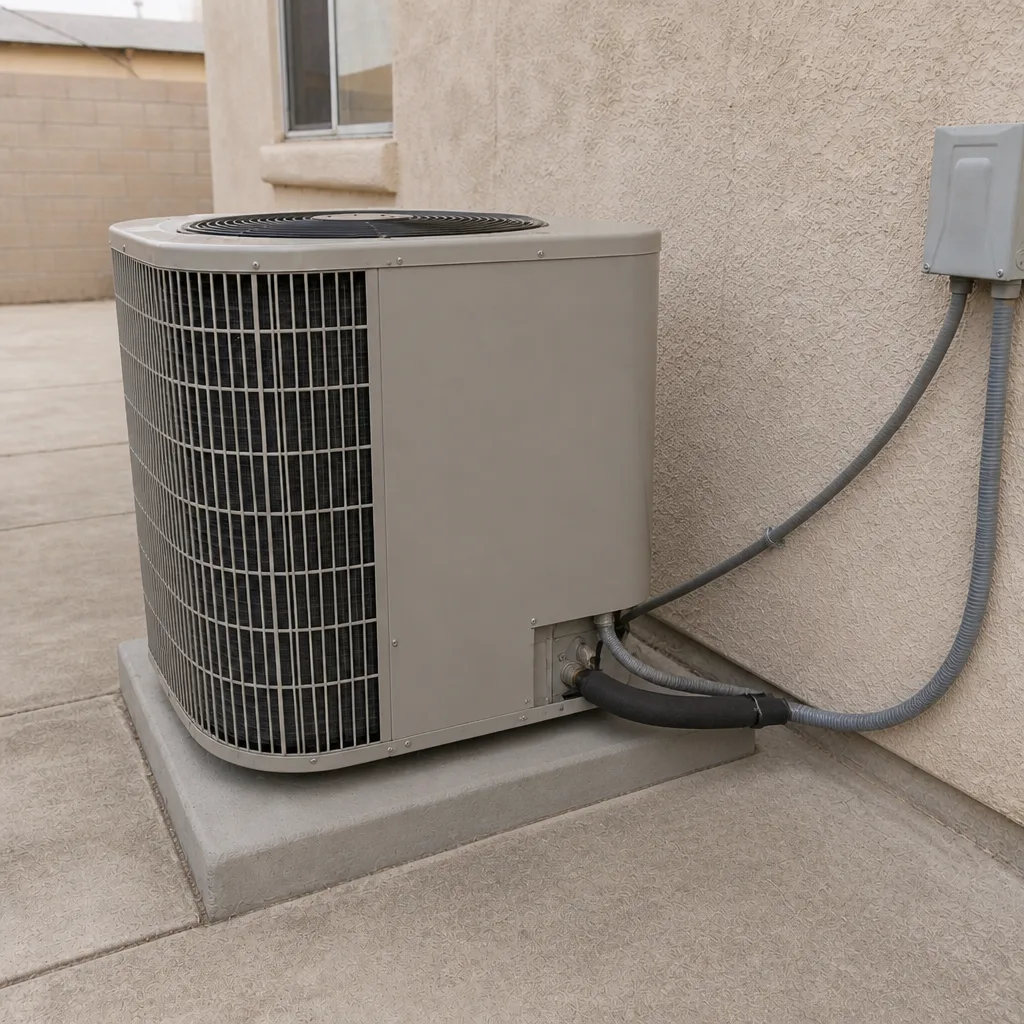
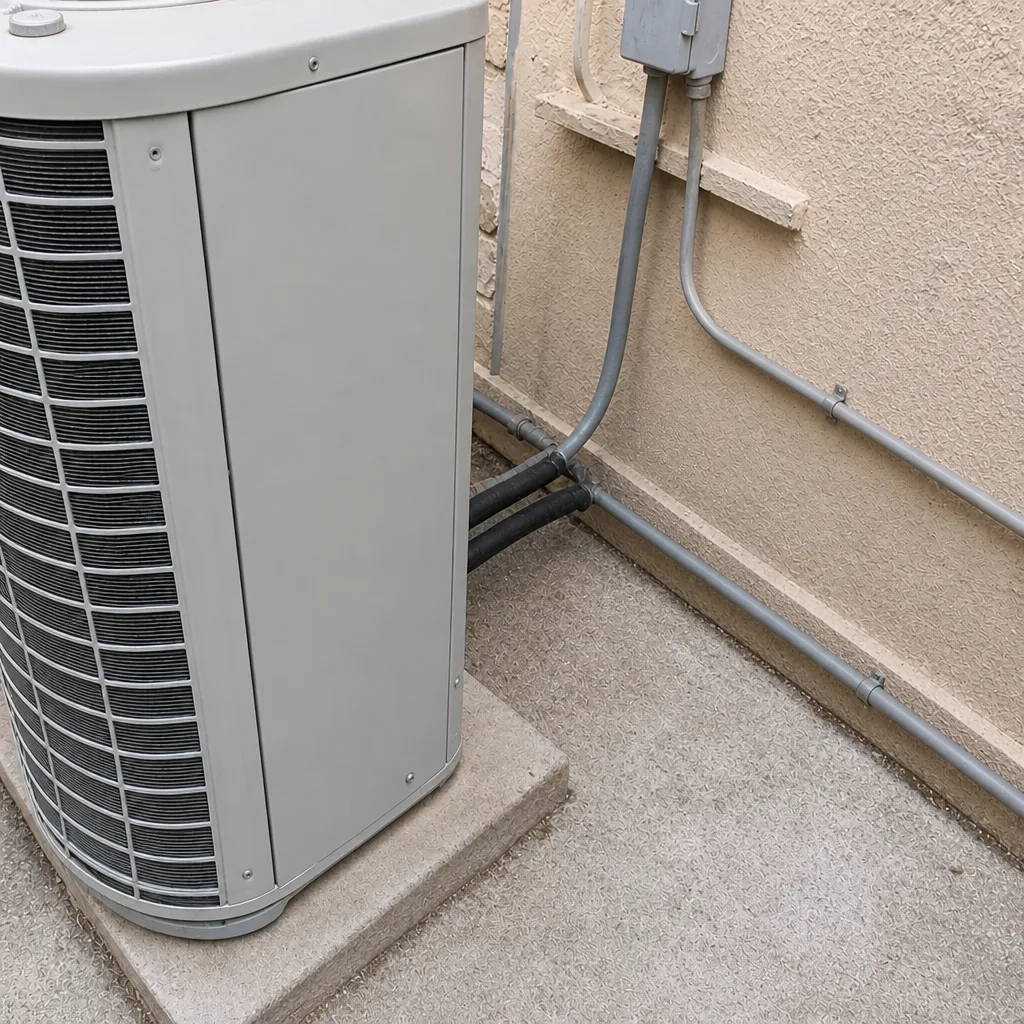
Caliche is the cemented calcium carbonate layer that sits under a lot of North Las Vegas soil. It looks like concrete and drains like it on a good day. If your outside unit pads were set on a small scraped pad rather than a properly excavated and graveled base, you’re dealing with one of the following problems within ten to fifteen years:
- A tilted condenser pad. The pad heaves unevenly because caliche doesn’t absorb water and the fill material around it does. A unit that’s off-level by even a couple of degrees puts uneven load on the compressor and can pool condensation water against the base pan.
- Rusted base pans and blocked drains. Water that can’t wick away stays at the bottom of the pan, and rust-through is common. On a heat pump in heating mode, a blocked drain line during a cold snap turns into an ice slab at the outdoor unit.
- Coil soak-in from irrigation overspray. Drip lines run close to condensers in a lot of North Las Vegas yards. Overspray plus mineral-rich water equals a hard scale ring near the bottom of the coil. That’s a coil you can’t clean from outside.
If you’re seeing water staining under your condenser or a slab that looks visibly tilted, that’s a call-worth issue, not a next-year issue. Minor pad re-leveling is usually inexpensive compared to a compressor that dies from oil starvation at 112°F. If your system is a heat pump – and a lot of newer North Las Vegas homes are – have both modes checked, not just cooling. We walk through that split-load behavior on the Heat Pump & Mini Split in North Las Vegas page.
The 2003-2009 Tract-Home Duct Problem
This is the single biggest efficiency problem in North Las Vegas homes, and almost no guide talks about it. Builders during the mid-2000s boom often installed duct systems sized for the tonnage the sales office promised rather than the tonnage the Manual J actually required. Then, when the original system failed or a homeowner got upsold, a 3-ton duct system started pushing a 4-ton air handler. The results you can feel in your house:
- Undersized returns. A 3-ton system wants roughly 1,200 CFM of return air. A return trunk sized for 3 tons fed by a 4-ton blower pulls static pressure up and starves the system, and the “humid” feeling is often a symptom of restricted airflow, not capacity.
- Flex duct sag. Flex duct hung loosely every 6 feet sags in the middle and loses 20-40% of its effective capacity at those sags. A lot of mid-2000s installs used long, lazy flex runs because they were cheap to install.
- Boot leaks at the register. When drywall installers trimmed boots without sealing them, and the HVAC contractor didn’t come back to mastic them, you end up blowing conditioned air into the attic – where it’s 140°F. That’s part of the 20-30% duct loss figure above.
What it costs to fix vs. ignore: Sealing, re-hanging, and properly sizing returns is typically a few thousand dollars for a typical North Las Vegas tract home, and it holds efficiency for the life of the system. Ignoring it costs you an extra 15-30% on every summer bill, plus earlier compressor replacement. Over five summers, the ignore path typically costs more than the fix.
Hard Water and Coil Scaling
Clark County water sits above 300 ppm calcium in most parts of the valley. This affects HVAC in two specific ways that most general guides skip.
First, indoor coil scaling. If your condensate drain is partially clogged and water sits in the drain pan, that water deposits calcium on the coil’s lower fins over time. A calcium-scaled evaporator coil loses efficiency quickly and eventually pinholes.
Second, swamp cooler and humidifier scale. North Las Vegas homes that still run a swamp cooler need their pads replaced on a faster cycle here than in most of the country – and if a whole-house humidifier was ever installed, its panel scale is accelerated.
For maintenance schedules, this pushes a coil rinse from “seasonally” to “twice a year” and a drain line flush to every spring. If your system is 8+ years old and hasn’t had a proper indoor coil cleanup in the last three summers, that’s the maintenance item most likely to fail first.
“Works” vs. “Correctly Sized and Charged”
A system can turn on and cool a house and still be wrong. “Wrong” in North Las Vegas breaks down into three measurable problems:
- Undersized equipment. It runs constantly, never quite reaches setpoint during a July heat wave, and the compressor dies early from sheer runtime.
- Oversized equipment. It short-cycles, fails to remove humidity, and creates a cold, damp feeling in the house that confuses homeowners into thinking the system is “too small.”
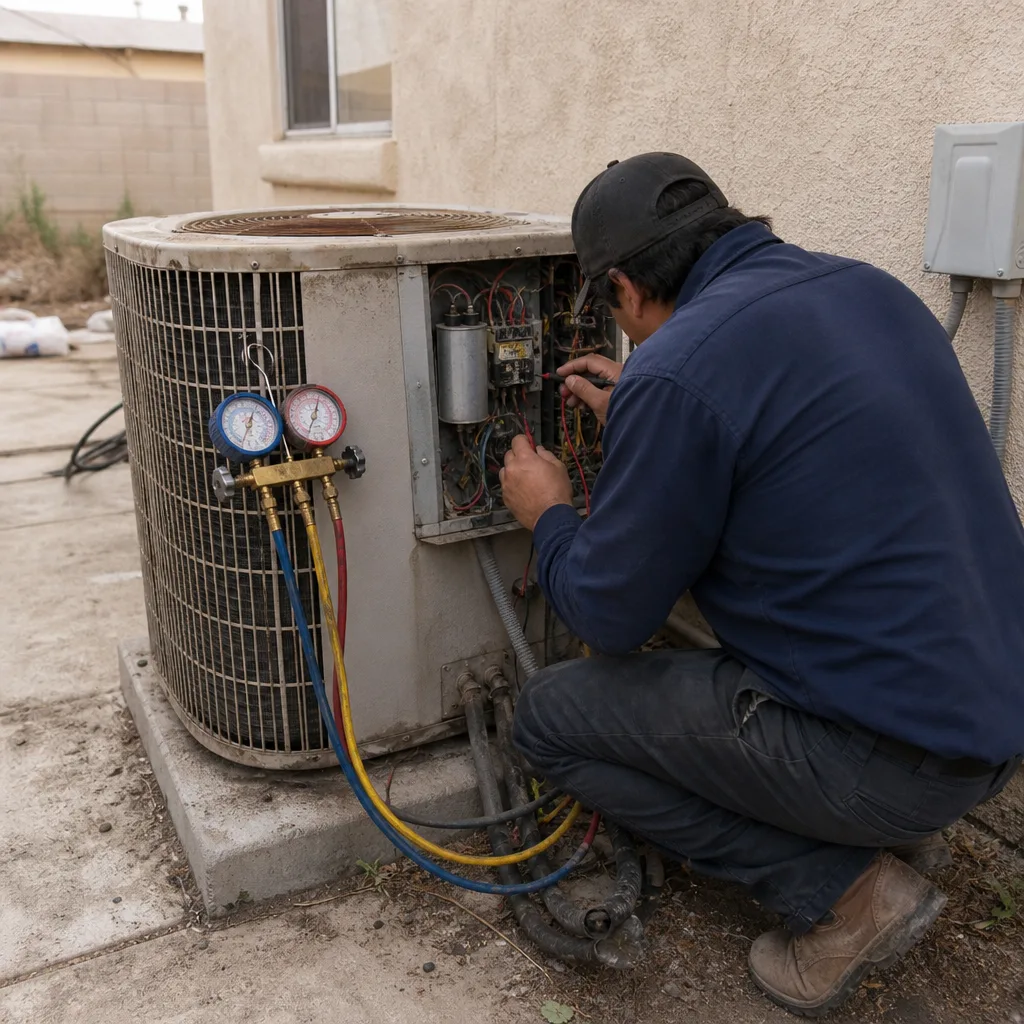
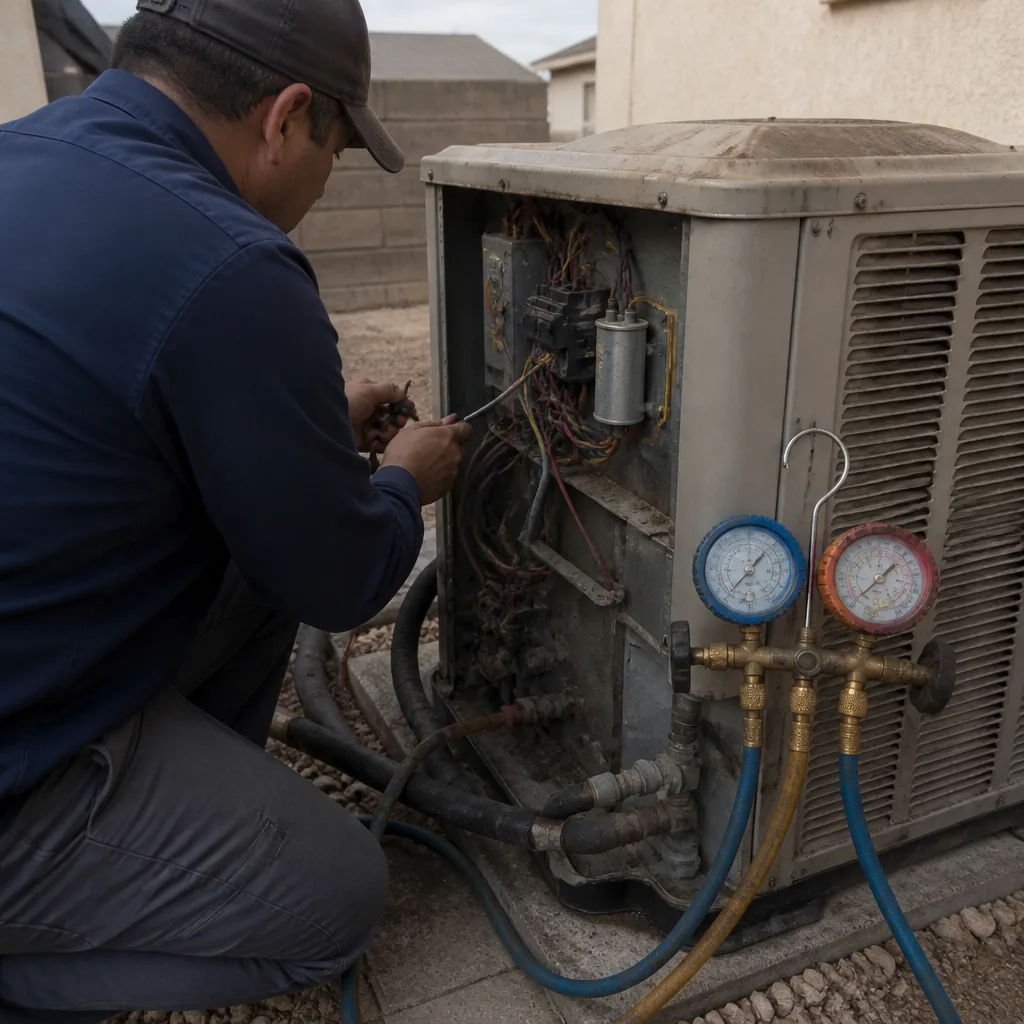
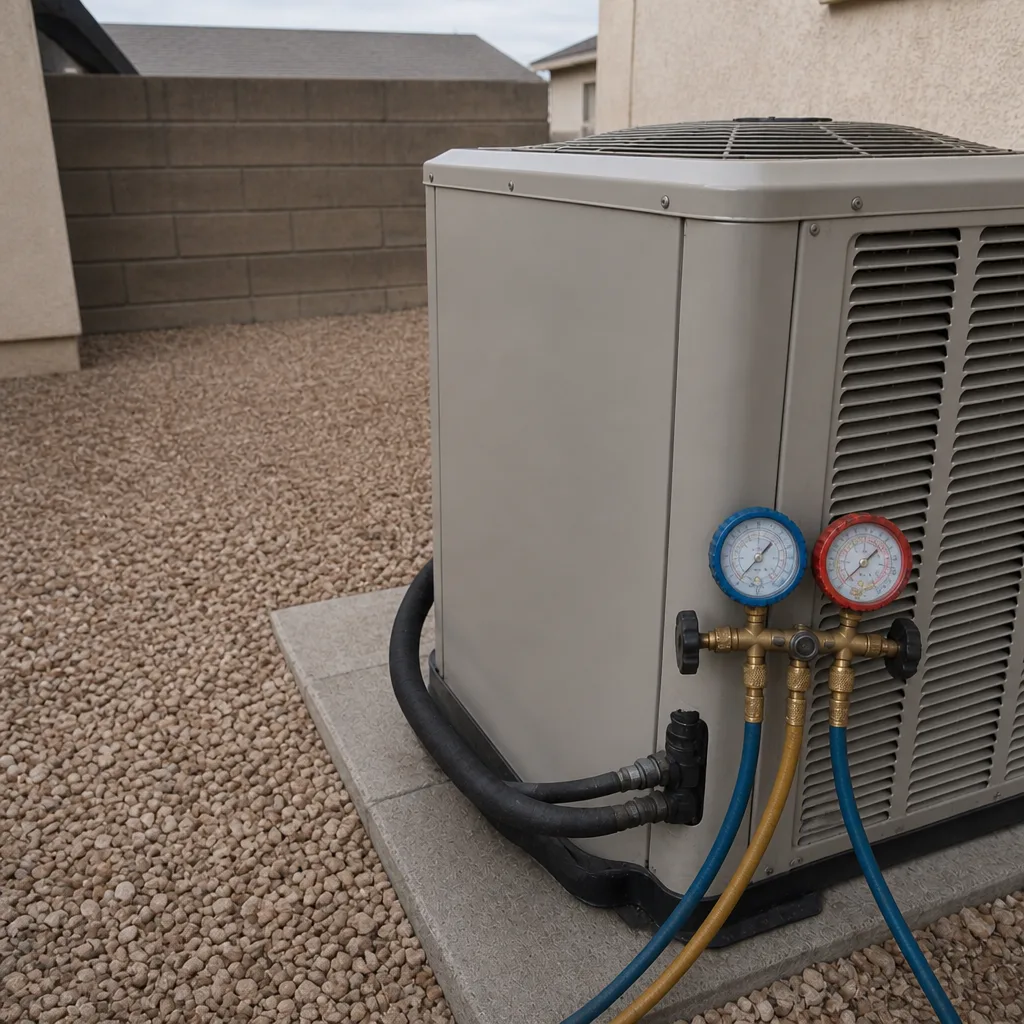
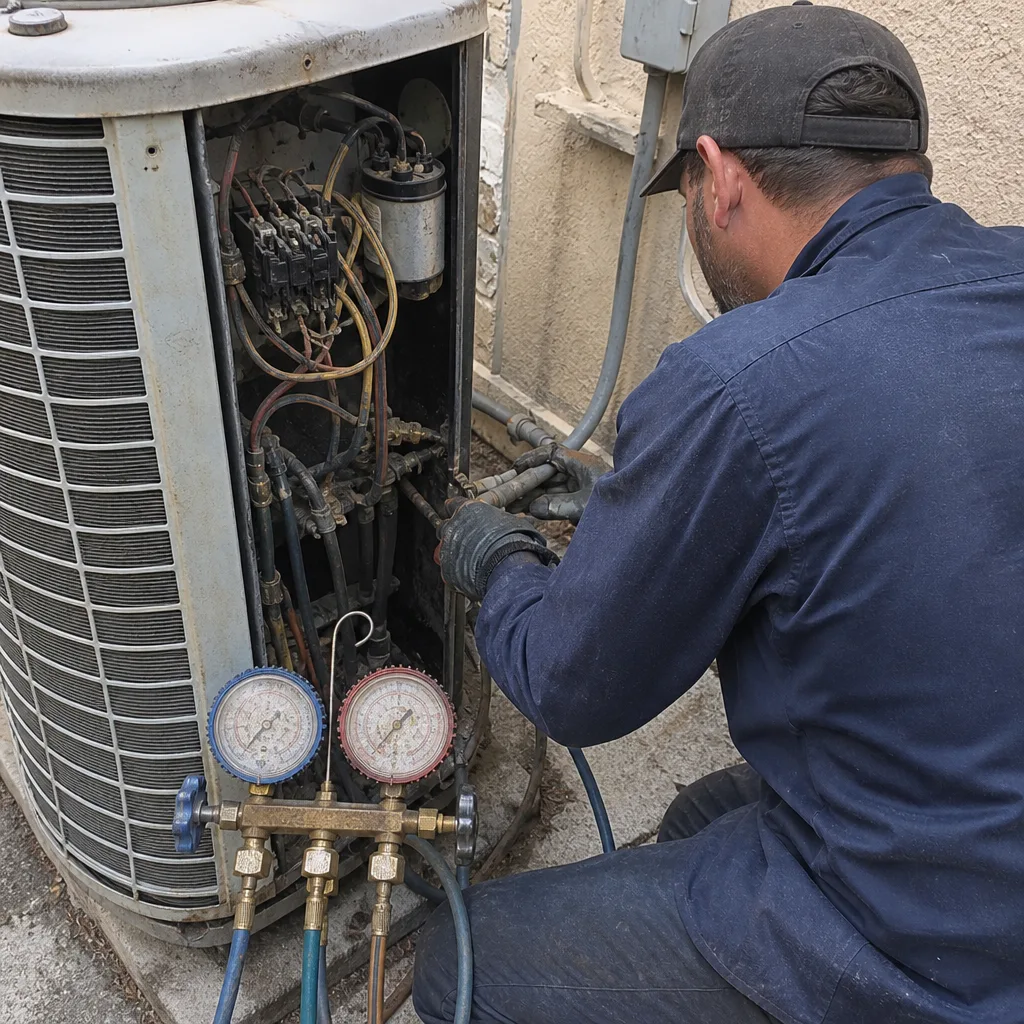
- Wrong refrigerant charge. On a 115°F design day, an undercharged system loses maybe 10-20% capacity; an overcharged system can lose more and can slug the compressor. Subcooling and superheat readings tell you which one you’re looking at, not a pressure gauge glance.
Our experience in North Las Vegas is that when a homeowner says “it just doesn’t cool like it used to,” about half the time it’s charge or airflow, and about half the time it’s equipment sizing or duct design. The order matters: readings first, numbers second. The simplest way to know which one you have is to measure static pressure and verify the charge before anyone quotes a new system.
How to Read a Manual J and Why It Matters
Manual J is the residential load calculation standard that tells you how many BTUs your house actually needs. Manual S matches equipment to that number, and Manual D matches ducts. When a contractor hands you a proposal, ask to see the Manual J output. You should see: window area by orientation, insulation values, cubic feet, and a sensible plus latent load summary at the design condition.
For a North Las Vegas home, three data points matter most:
- The summer design temperature used. A North Las Vegas Manual J should run at or near 112°F. If a bid was generated using 100°F, the equipment is undersized before it’s installed.
- The latent load number. NLV is dry, but with today’s construction and the duct losses above, latent load isn’t zero. If the bid shows zero latent load, that’s a red flag.
- Duct gain percentage. Attic duct gain in North Las Vegas on a 115°F day is significant. If the contractor didn’t account for it, the system is smaller than it needs to be – and this is exactly the mismatch the opening hook is about.
If your heating side is also a problem – and in North Las Vegas, some nights still hit the 20s – the same sizing discipline applies to the furnace. Our Heating & Furnace in North Las Vegas page covers how furnace sizing goes wrong here.
How to Verify a Contractor in Nevada
Before anyone swings a wrench on a system that cost you thousands, verify them. The Nevada State Contractors Board (NSCB) maintains a public lookup, and the process takes about two minutes:
- Go to the NSCB online license search at nscb.nv.gov – the public “License Lookup” link is on the homepage.
- Search by the contractor’s license number, business name, or the name on the truck. Cross-check all three against the estimate.
- Confirm three things: the license is Active, the classification covers HVAC (usually Class C-21 or equivalent air conditioning and refrigeration), and the expiration date hasn’t passed.
- Check for complaints or disciplinary actions on the record. A single resolved complaint is not a red flag; a pattern of unresolved ones is.
- Ask to see the license number on the proposal. If the number on the paper doesn’t match the lookup, do not sign.
Ray publishes his name, address, and license number precisely so anyone can run this check. That’s the standard. Make it the standard for anyone who knocks on your door in North Las Vegas.
A North Las Vegas Maintenance Calendar
Our climate compresses the maintenance calendar compared to the rest of the country. Here’s what fits North Las Vegas specifically:
- February: Outdoor coil rinse. This is after spring’s first wind events but before the dust settles in – literally.
- March: Drain line flush, indoor coil inspection, thermostat check. This is your core pre-summer service.
- April: Filter change and static pressure check. Have last summer’s static pressure readings beside this year’s.
- June: Subcooling/superheat verification on a hot day. This is the most reliable time to confirm charge.
- September: Post-summer inspection, especially after a long streak of 110°F-plus days.
- November: Heating-mode check for heat pumps and furnace ignition test.
A well-run maintenance visit shows you the readings – static pressure, temperature rise, subcooling or superheat. If a visit is a filter change and a signature, it wasn’t a maintenance visit. The Ray’s Heating & Air North Las Vegas home page spells out what an actual visit looks like.
Common Mistakes to Avoid
- Accepting a phone quote without readings. A North Las Vegas quote given before the tech reads static pressure, subcooling, and temperature split is a guess dressed up as a price.
- Upsizing on a duct system that can’t carry the air. This is how a home ends up with a 4-ton unit on a 3-ton duct design, which is exactly the humidity and high-bill pattern described at the top of this guide.
- Ignoring the outdoor pad. A tilted condenser pad on North Las Vegas caliche gets worse each summer, and the eventual fix includes compressor damage that didn’t have to happen.
- Skipping the return air sizing check. Nearly everything downstream of a starved return reads as a “capacity” problem when it’s really an airflow problem.
- Believing “sealed ducts” without a test. A duct system is only sealed if someone measured leakage before and after. Our drywall-and-mastic reality in North Las Vegas attics needs verification, not belief.
- Failing to check the NSCB record. A two-minute lookup before signing would prevent most of the horror stories we hear from homeowners who called a big-name outfit first.
- Running a with-iron filter and no filter change schedule during dust season. Dust storms overwhelm a filter fast, and a clogged filter turns every other reading on the system into garbage.
See the difference
 Before
 After
 Before
 After
 Before
 After
When to Call a Professional
Call for help if any of these are true: your system can’t hold setpoint through an afternoon above 110°F; your outdoor unit pad is visibly tilted or pooling water; you smell a musty or burning odor when the system starts; your bill jumped more than 20% versus the same month last year with the same usage; your system short-cycles, meaning it starts and stops more than about 3-5 times an hour; or any part of the system involves refrigerant handling, gas lines, or high-voltage electrical work. Those last three are not DIY territory, and we say that plainly. Ray’s Heating & Air North Las Vegas offers free estimates in North Las Vegas – call (844) 761-6871.
Frequently Asked Questions
For a typical North Las Vegas tract home built between 2003 and 2009, a full system replacement usually runs roughly $8,000-$14,000 for equipment, install labor, and disposal, before duct work. Duct sealing, return resizing, or full duct redesign can add a few thousand dollars when the airflow is genuinely restrictive. Call (844) 761-6871 for an exact quote – estimates are free.
If your system is over 12-14 years old and the repair costs more than about a third of a replacement, or if you’ve had the same failure twice in two summers, replacement is usually the better money – especially when the ductwork is also undersized. If the failure is a capacitor, contactor, or single failed component on a system under 10 years old, repair almost always wins. Call us and we’ll walk through the readings with you before you decide.
That feeling is usually airflow and duct loss, not ambient humidity. An oversized unit on an undersized duct system short-cycles, so it can’t remove moisture at the coil. Attic duct leakage also pulls in hot, dusty air that reads as “humid” once it’s mixed into the house. A static pressure and duct leakage test usually finds the culprit in a single visit.
Twice a year: once in early spring before the cooling season, and once in late fall before heating. The dust and hard water here push maintenance harder than in most parts of the country, and a spring visit needs to include an outdoor coil rinse and a drain line flush, not just a filter change. Call (844) 761-6871 to schedule a spring or fall visit.
Yes, replacing a split system typically requires a mechanical permit through the City of North Las Vegas, and it requires the permit pulled by the installing contractor under their license. If a bid doesn’t include the permit and inspection line item, that’s a red flag. A permit also gives you a paper trail if you ever sell the home.
Often yes, especially for no-cool calls during a heat event – we keep emergency availability. The exact same-day availability depends on how many calls are ahead of yours and whether the failure needs a part we don’t stock. Call (844) 761-6871 for the fastest answer; a live person picks up around the clock.
The Bottom Line
North Las Vegas isn’t just the hot side of Vegas – the caliche soil, the hard water, the mid-2000s tract-home duct sizing, and the 112°F design condition create a specific set of failure patterns you won’t find addressed in most guides. Verify anyone who touches your system through the NSCB lookup. Insist on a Manual J before any replacement proposal. Test static pressure and charge before accepting a diagnosis. Do spring maintenance before the first 110°F day, not after. And if you’re not sure who to call, ask a neighbor whose house has held setpoint through a hot summer – they’ll tell you. That’s the version of this guide we’d want you to have.
Written by the team at Ray’s Heating & Air North Las Vegas.
Contact
If you’re in North Las Vegas and you’re not sure whether your system needs a repair, a tune-up, or a real conversation about replacement, call (844) 761-6871 for a free estimate. We answer the phone around the clock with a live person, not a menu. Readings first, numbers second – you’ll see both before any work begins, and every job carries the 90-Day Done Right Promise in writing.