
Last updated November 17, 2026
 Heat pumps
 AC repair
 Furnace & heating
 Ductless mini splits
 Carrier
 Trane
 Goodman
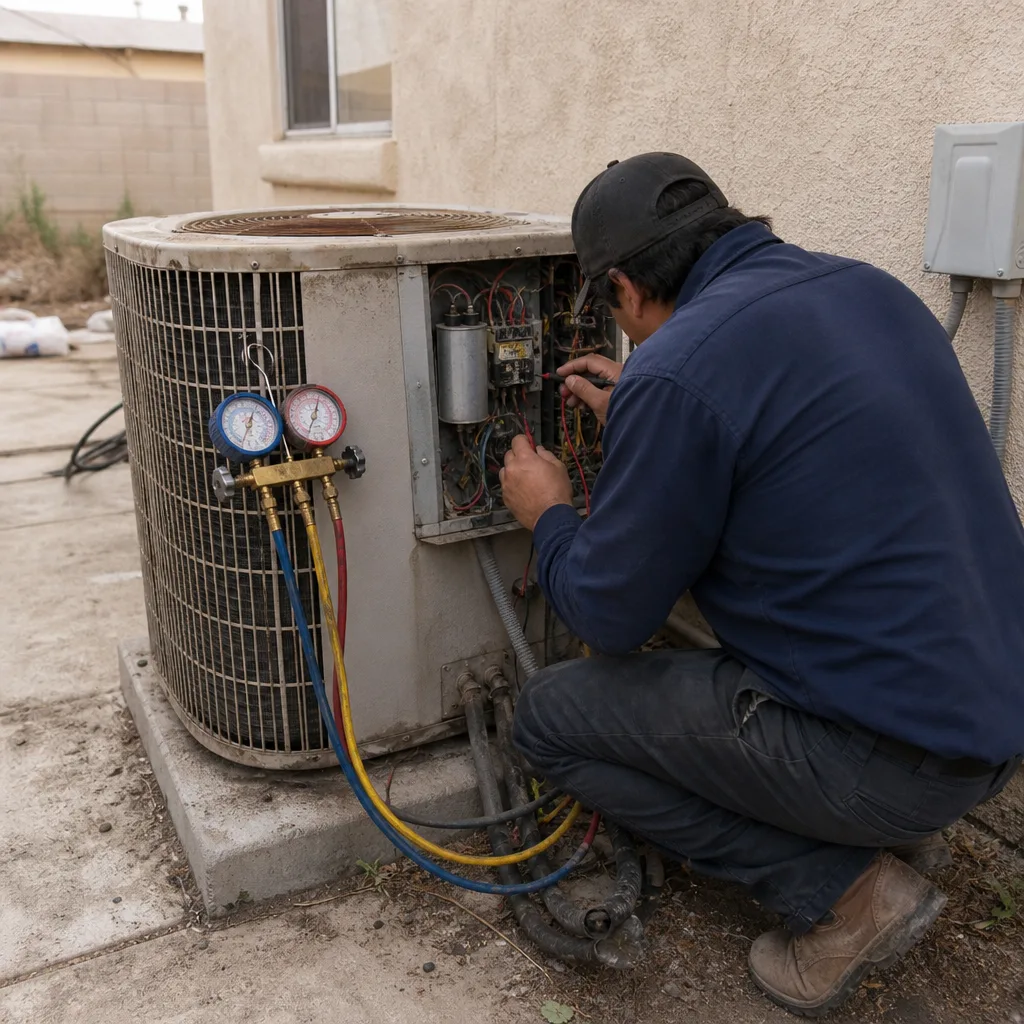
Seasonal tune-up and full diagnostic on your Carrier, Trane, or Goodman system - readings shown to you before any repair is proposed
Diagnosis first, numbers second - you approve the repair price before a single part goes in.
Get your free estimateThe Complete Heat Pump & Mini Split Guide for North Las Vegas Homeowners
That SEER2 rating on the brochure was measured at 95°F outdoor temperature. North Las Vegas spends whole summers above 110°F, and nobody selling you that mini-split is showing you the efficiency curve at the temperature your house actually lives in. A system that looks like a standout on paper in Portland can turn into an average performer on a west-facing wall off Camino Al Norte. This guide recalibrates the whole conversation for a desert that runs a heat pump 2,800 hours a year instead of 1,200. You’ll learn what specs matter here, which rooms want a mini-split, how NV Energy rebates work, where the outdoor unit should and shouldn’t go, and why the cheapest bid in North Las Vegas usually costs the most by year three.
Quick Answer
The best heat pump or mini-split for a North Las Vegas home is a variable-speed, cold-climate-rated unit with a high SEER2 and strong performance at 110°F+ outdoor temps, sized by an actual load calculation, and placed out of direct afternoon sun and radiant concrete heat. Mini-splits make the most sense for single rooms, casitas, garages, and additions; a central heat pump makes more sense when you’re conditioning the whole house. Rebates through NV Energy and federal tax credits can meaningfully cut the installed cost, but only if the equipment and the install qualify.
Styles & brands we work with
- AC repair
- Furnace & heating
- Heat pumps
- Ductless mini splits
- Carrier
- Trane
- Goodman
Table of Contents
- Why SEER2 Numbers Don’t Tell the Whole Desert Story
- What Specs Actually Matter When Shopping in the Las Vegas Valley
- Which Rooms and Home Types Make Sense for Mini-Splits
- NV Energy and Clark County Rebates for North Las Vegas
- Outdoor Unit Placement: The Desert Problem Nobody Warns You About
- Honest Cost Comparison: Install Included
- Why the Cheapest Bid Costs More by Year Three
Why SEER2 Numbers Don’t Tell the Whole Desert Story
SEER2 is a seasonal efficiency rating, and the “seasonal” part is where the trouble hides. It’s tested under a specific set of conditions meant to represent a typical U.S. climate, with an outdoor temperature around 95°F. North Las Vegas doesn’t have a typical climate. From June through September you’re looking at 105°F to 115°F on the regular, and the system is running hard the entire time. That’s the gap nobody at the big-box store mentions.
Here’s what that means in practice. A unit rated at, say, 18 SEER2 might deliver most of that efficiency on a mild spring day. Push it to 112°F and the efficiency curve sags. The compressor works harder, the refrigerant pressures climb, and the actual delivered capacity drops. In a mild Pacific Northwest market, that dip is a footnote. In North Las Vegas, that dip happens every afternoon for four months straight. Over a 2,800-hour cooling season, the difference between paper efficiency and real efficiency shows up on your NV Energy bill.
The takeaway isn’t to ignore SEER2. It’s to look at what the system does at the top of its temperature range, which the manufacturer publishes in expanded performance data. A great SEER2 number paired with weak high-ambient performance is a bad fit for this valley.
What Specs Actually Matter When Shopping in the Las Vegas Valley
If you’re comparing heat pumps or mini-splits in the Las Vegas Valley, here’s what to put at the top of your list. Ignore the glossy brochure and ask for the expanded ratings.
- High-ambient capacity. Ask what the unit actually delivers at 110°F and 115°F outdoor temps. A good contractor will pull the manufacturer’s expanded data. If they can’t, that tells you something.
- Variable-speed inverter compressor. This matters more in a desert than anywhere. A variable-speed system can throttle down and hold a steady temperature instead of cycling hard on and off all afternoon. Steady running means less wear and better humidity control during monsoon season.
- HSPF2 for winter. North Las Vegas winters are mild but you do get cold snaps into the 30s. A cold-climate heat pump keeps working efficiently when the temperature drops without leaning on expensive backup strips.
- Coil and finish quality. Dust, sun, and hard water are a fact of life here. Look for a unit with a coated coil and a finish that survives UV exposure, because an uncoated coil on a sun-baked wall ages fast.
- Right-sized, not oversized. Oversizing is the most common desert mistake. A too-big system short-cycles, never quite dehumidifies, and wears out sooner. Insist on a real Manual J load calculation.
Goodman and Daikin both make solid cold-climate heat pumps and mini-splits that hold up in this market, and we service all the major brands, so the recommendation should come from your house, not from what a salesperson wants to move.
Which Rooms and Home Types Make Sense for Mini-Splits
Mini-splits are the right answer for some North Las Vegas homes and the wrong answer for others. It depends on the house and the room. Here’s how it breaks down.
- Older tract homes with one central system. For a typical 1990s tract home off Lone Mountain or Ann Road with ductwork throughout, a central heat pump is usually the better move. Retrofitting mini-splits into every room of a ducted house is expensive and redundant. The exception is a room that never gets comfortable because of a duct problem or a hot west wall. One mini-split there fixes a problem the central system can’t reach.
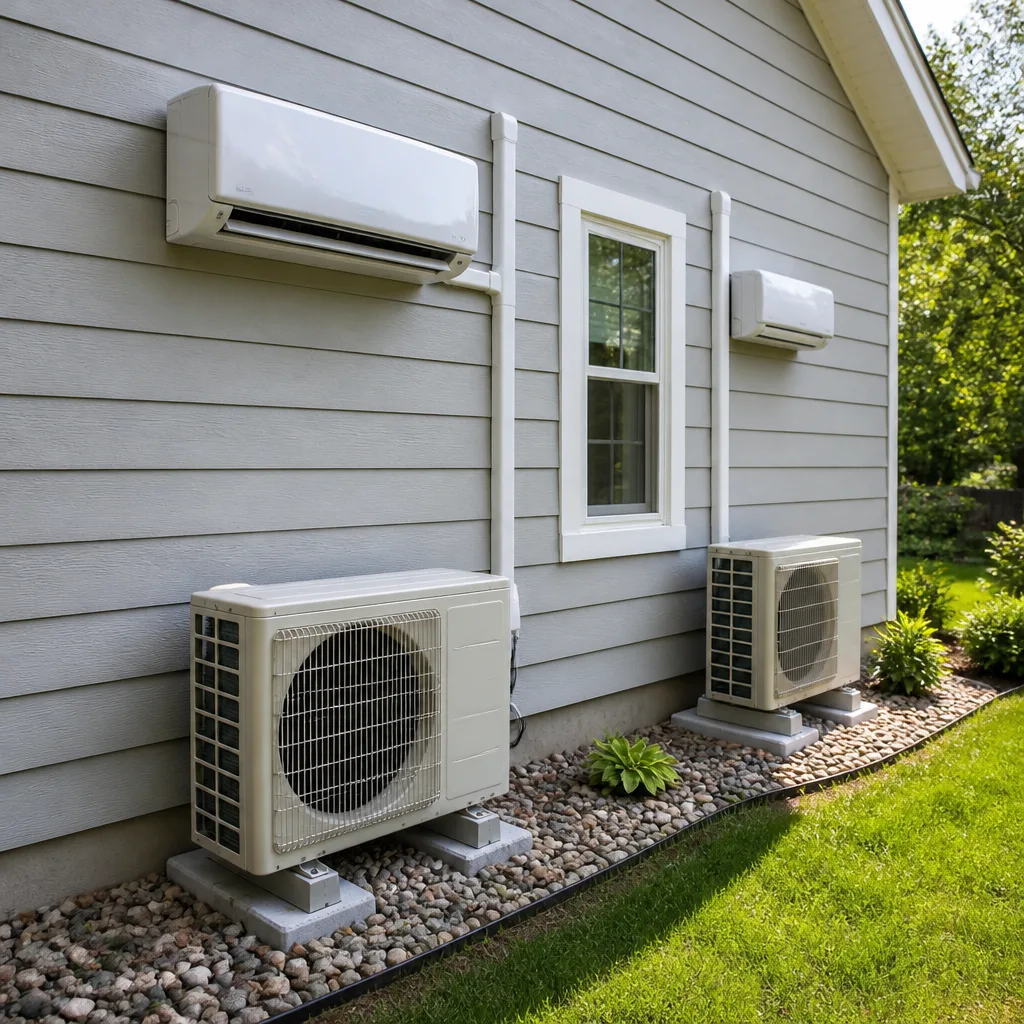
- Casitas and converted garages. This is a classic North Las Vegas situation. A detached casita, an in-law suite, or a garage somebody finished into a bonus room usually has no ductwork and no good way to extend the central system. A single-zone mini-split is close to perfect here. One indoor head, one outdoor unit, done.
- Additions and sunrooms. When you add a room, extending the existing ductwork often throws off the balance of the whole system. A dedicated mini-split keeps the addition comfortable without giving the original rooms a face full of cold air.
- Garages used as workshops. A working garage in July can hit 120°F inside. If you actually spend time out there, a mini-split with a properly rated indoor unit turns it into usable space.
- Whole-house replacement or new construction. If you’re replacing everything or building fresh, a ducted central heat pump is usually the more efficient choice for the whole house, especially with today’s variable-speed equipment.
If you’re weighing a single-room mini-split against a full heat pump and mini split install in North Las Vegas, the deciding factor is how many rooms you’re trying to condition. Our team runs the numbers on both before anyone recommends one.
NV Energy and Clark County Rebates for North Las Vegas
Rebates change, and the only number that matters is the one on your application. Still, here’s the lay of the land, and the important point: North Las Vegas residents are NV Energy customers, so the same utility programs that apply across the valley apply here. What changes is which equipment qualifies.
NV Energy has historically run residential rebates for high-efficiency heat pumps and duct sealing, and federal tax credits under the Inflation Reduction Act have been available for qualifying high-efficiency heat pump equipment. Combined, those two can meaningfully reduce what you pay, but each program has minimum efficiency thresholds and paperwork requirements. The unit has to qualify, the install has to be done to standard, and the documentation has to be right or the rebate doesn’t come through.
- Check current NV Energy programs directly. Utility rebate amounts and qualifying tier requirements update regularly. Confirm the current offer before you buy.
- Federal tax credit eligibility. High-efficiency heat pumps and heat pump water heaters have had federal credits available. Your tax situation governs what you can actually claim, so check with a tax professional.
- Clark County and municipal programs. Local incentive programs come and go. There’s no standing city-specific heat pump rebate we’d point you to as a lock, so treat any “guaranteed” local rebate you hear from a salesperson with caution.
The mistake people make is buying equipment first and checking rebate eligibility second. Do it the other way around. A system that misses a qualifying threshold by a hair is money left on the table, and it’s the kind of thing an experienced installer catches before the order goes in.
Outdoor Unit Placement: The Desert Problem Nobody Warns You About
In a mild climate, you can set the outdoor unit almost anywhere with decent clearance. In North Las Vegas, placement is half the battle. Get it wrong and you’ve kneecapped a good system before it ever runs.
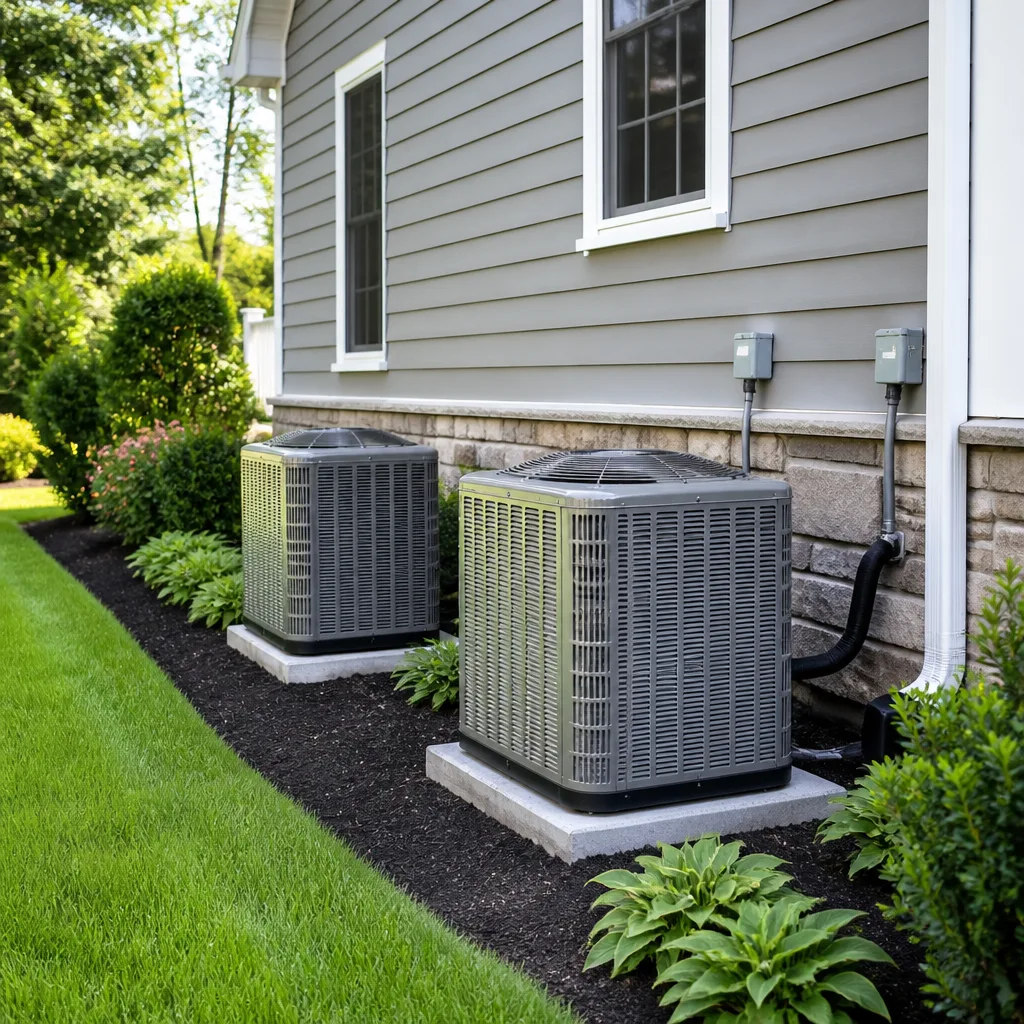
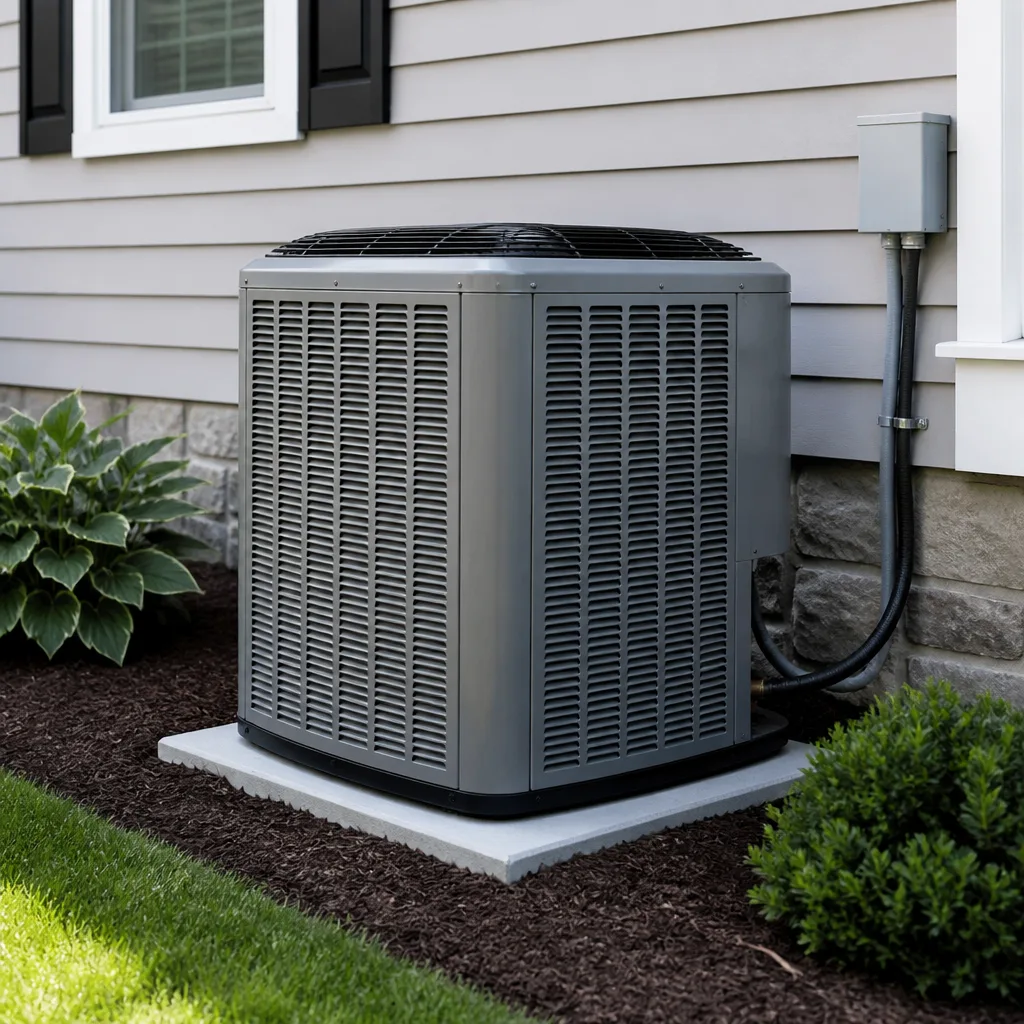
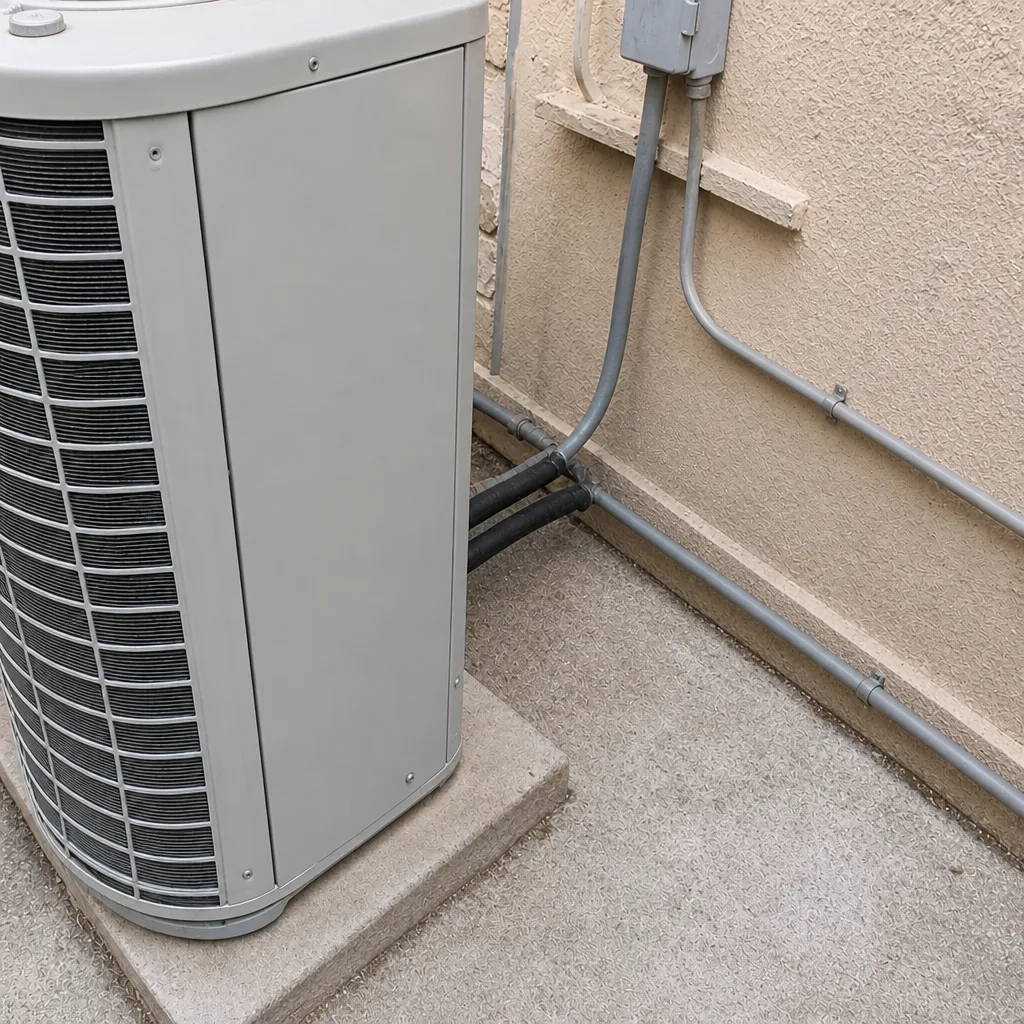
Three forces work against you. First, direct sun. A unit sitting on a west- or south-facing wall bakes all afternoon. The compressor has to work against ambient heat plus the sun load plus the hot air it’s trying to reject. Second, radiant heat off concrete. A pad poured against a sun-baked patio or block wall turns into a radiator, and the unit sitting on it pulls in hotter air than the thermometer down the street reads. Third, airflow restriction. Desert yards love block walls, and a unit crammed into a corner between a wall and a fence recirculates its own hot exhaust. It never gets a clean breath.
What good placement looks like:
- Shade the unit from the afternoon sun, either with north or east wall placement or with a shade structure that doesn’t block airflow.
- Keep real clearance on all sides. Manufacturers publish minimum clearances, and block walls and fences should never crowd them.
- Get it up off hot concrete or set it where the pad isn’t cooking in direct sun all day.
- Keep it away from dryer vents, kitchen exhaust, and anywhere hot air pools.
We’ve seen a perfectly good system lose meaningful efficiency because it was tucked against a west block wall in a North Las Vegas backyard. Placement is free to get right at install and expensive to fix later.
Honest Cost Comparison: Install Included
Equipment price is the number everyone quotes and the number that matters least. What matters is the installed cost, because a heat pump or mini-split is only as good as the install behind it. Here’s a realistic ballpark for North Las Vegas, keeping in mind that exact pricing depends on your house, your electrical service, and the equipment you choose.
- Single-zone mini-split, installed: typically a few thousand dollars, more if a new dedicated circuit or a long line set is needed.
- Multi-zone mini-split, installed: scales up with each zone. Two to four heads lands meaningfully higher than single-zone.
- Central heat pump replacement, installed: several thousand dollars for the equipment, labor, and any ductwork work, more for a full system with a new air handler.
- Electrical upgrades: older North Las Vegas homes sometimes need a panel or circuit upgrade to support new equipment. That’s a real cost and it should be in the bid, not discovered later.
- Ductwork and load calc: a proper Manual J and any duct sealing or repair belong in the quote. Cheap bids often skip both.
We write the price down and show you the readings behind it, so you can compare bids on the same footing. A free second opinion on any written estimate is standing policy, which is the fastest way to find out what the first bid left out.
Why the Cheapest Bid Costs More by Year Three
The lowest bid in a 115-degree market is almost always the one that skipped the load calculation, oversized the unit, and crammed the outdoor unit against a west wall to save a few feet of line set. None of that shows up on day one. It shows up later.
An oversized system short-cycles. It blasts cold then shuts off, over and over, all summer. That wears the compressor, spikes your energy use, and leaves the house feeling clammy during monsoon humidity because it never runs long enough to pull moisture out. A poorly placed unit runs hot and inefficient, so you pay more every month for less comfort. Skipped duct work means you’re cooling the attic. Equipment that misses a rebate threshold means you paid full price for something that could have been discounted.
Add it up over three summers in North Las Vegas and the “cheap” bid is the expensive one. The bid that included the load calc, the right size, the right placement, and the rebate paperwork is the one that pays for itself. For the broader repair and replacement picture, our AC repair and installation in North Las Vegas page covers how we approach both sides of that decision.
Common Mistakes to Avoid
- Buying on SEER2 alone. A high SEER2 with weak high-ambient performance is a bad desert fit. Ask for the expanded data at 110°F+ before you commit.
- Skipping the load calculation. Salespeople who size by square footage alone are guessing. A real Manual J is the difference between a comfortable house and a system that short-cycles forever.
- Letting the outdoor unit bake on a west wall. Sun, radiant concrete, and block walls kill efficiency. Placement is free to get right and expensive to fix.
- Forgetting the electrical. Older North Las Vegas homes sometimes can’t support new equipment without a panel or circuit upgrade. Get it in the bid.
- Buying before checking rebates. Qualifying thresholds are strict. Pick equipment that clears them, not equipment you hope will.
- Extending the central system into an addition. It usually throws off the whole house. A dedicated mini-split keeps the addition comfortable without wrecking the rest.
- Chasing the lowest bid. In this heat, the cheapest install is usually the one you pay for twice.
See the difference
 Before
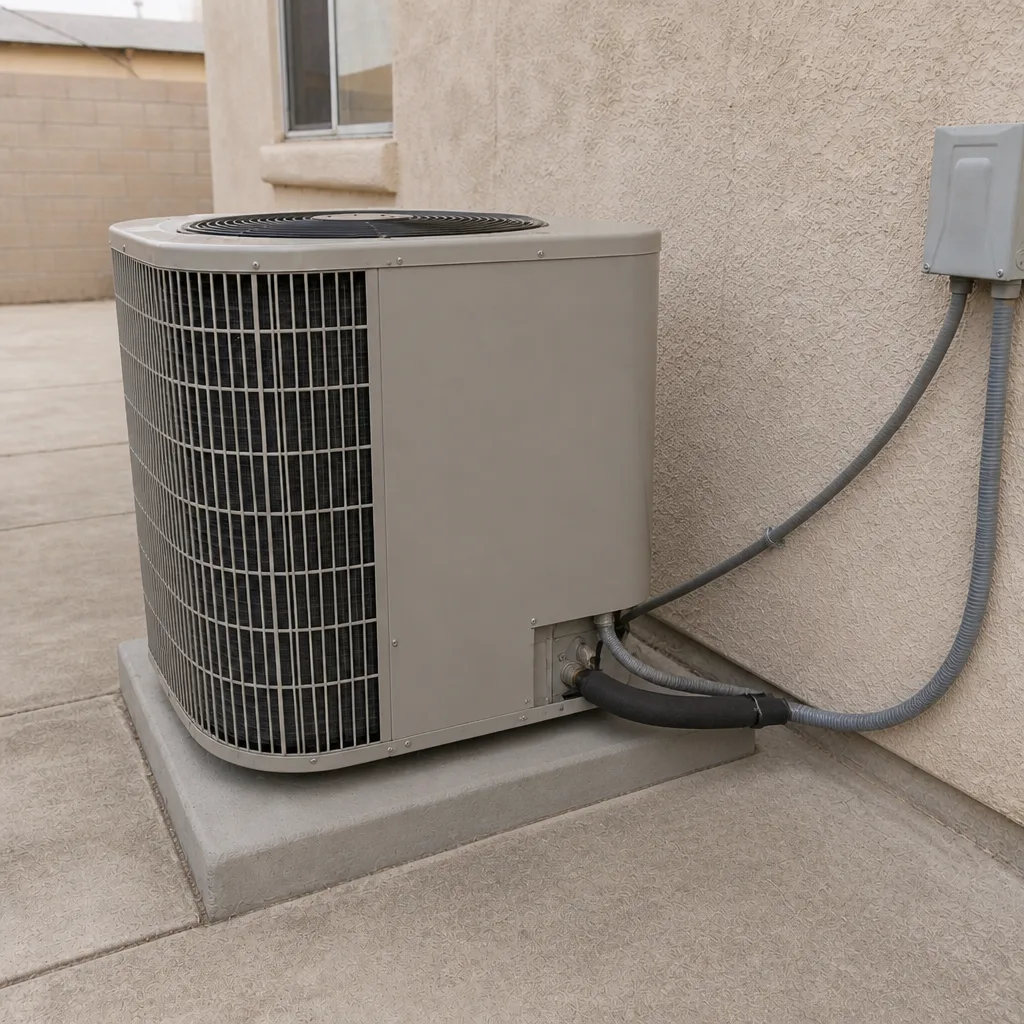 After
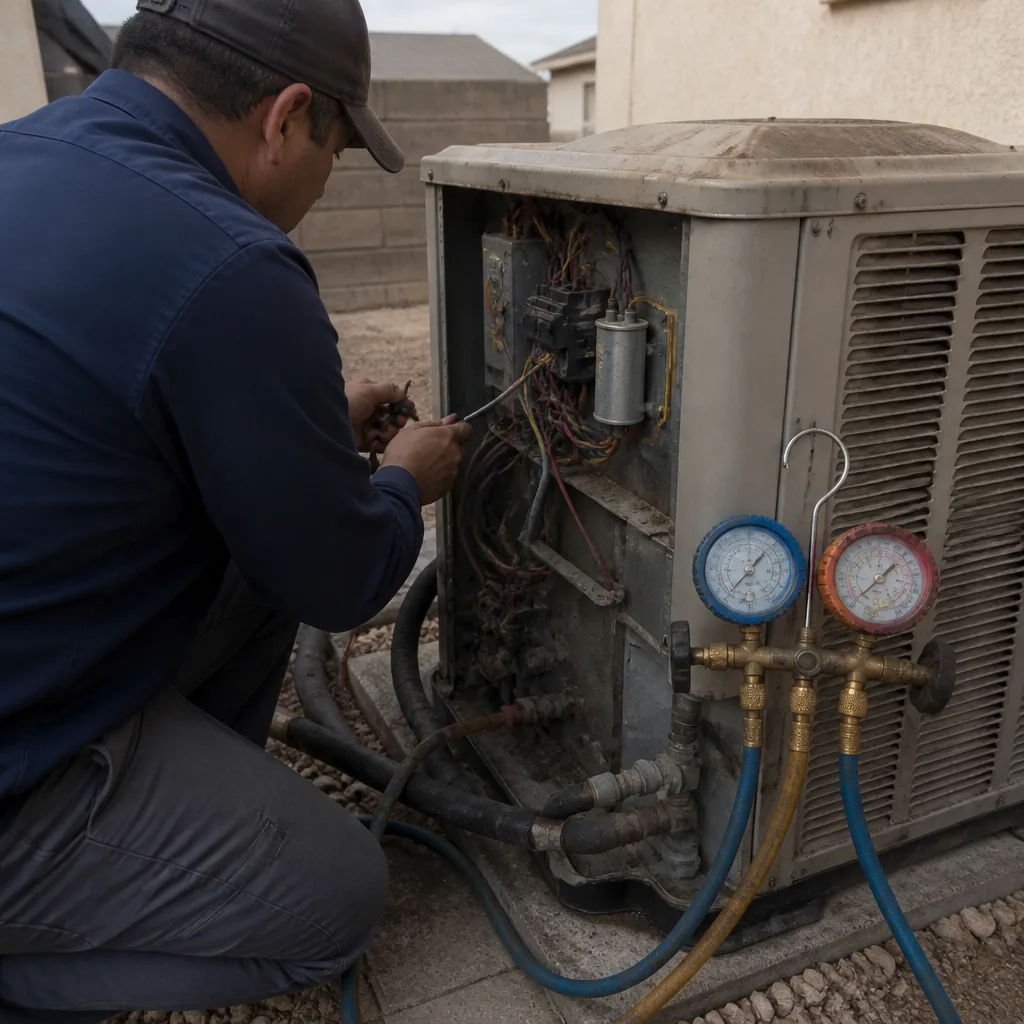 Before
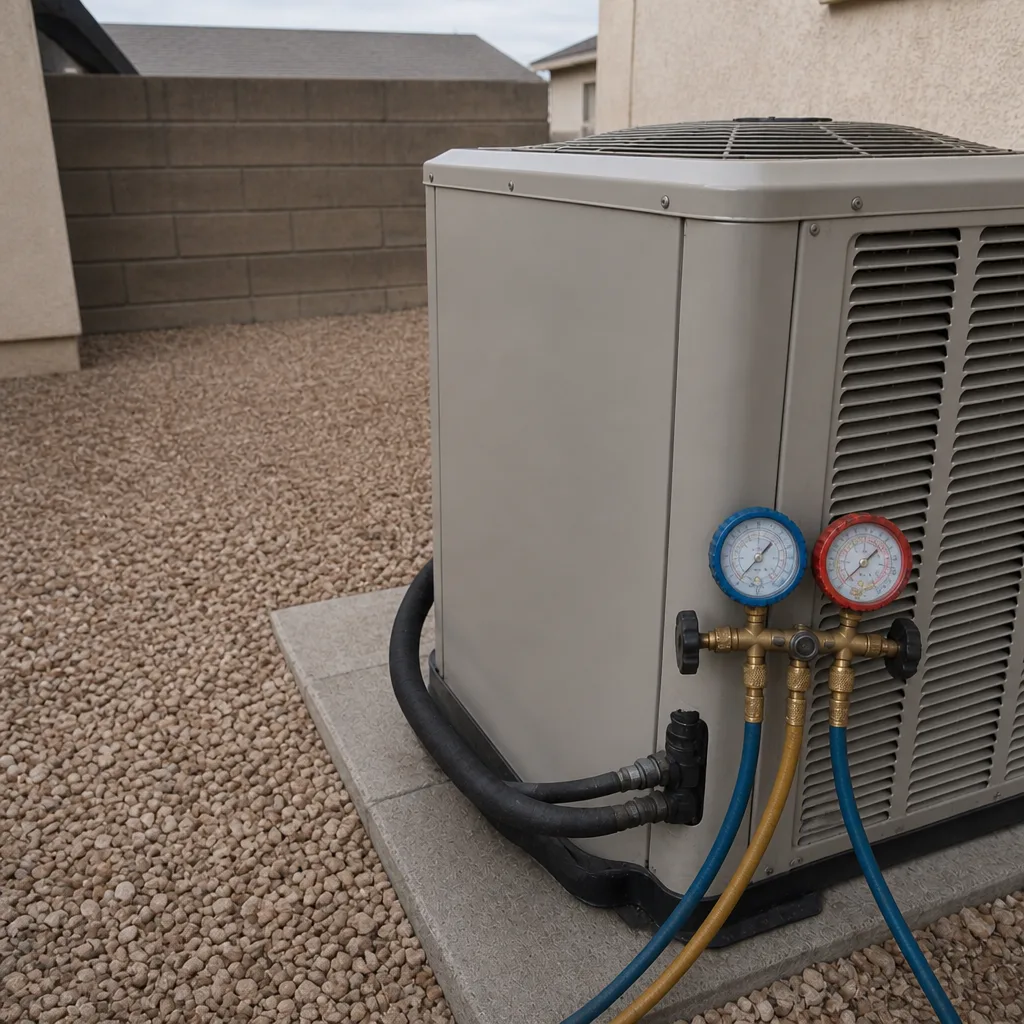 After
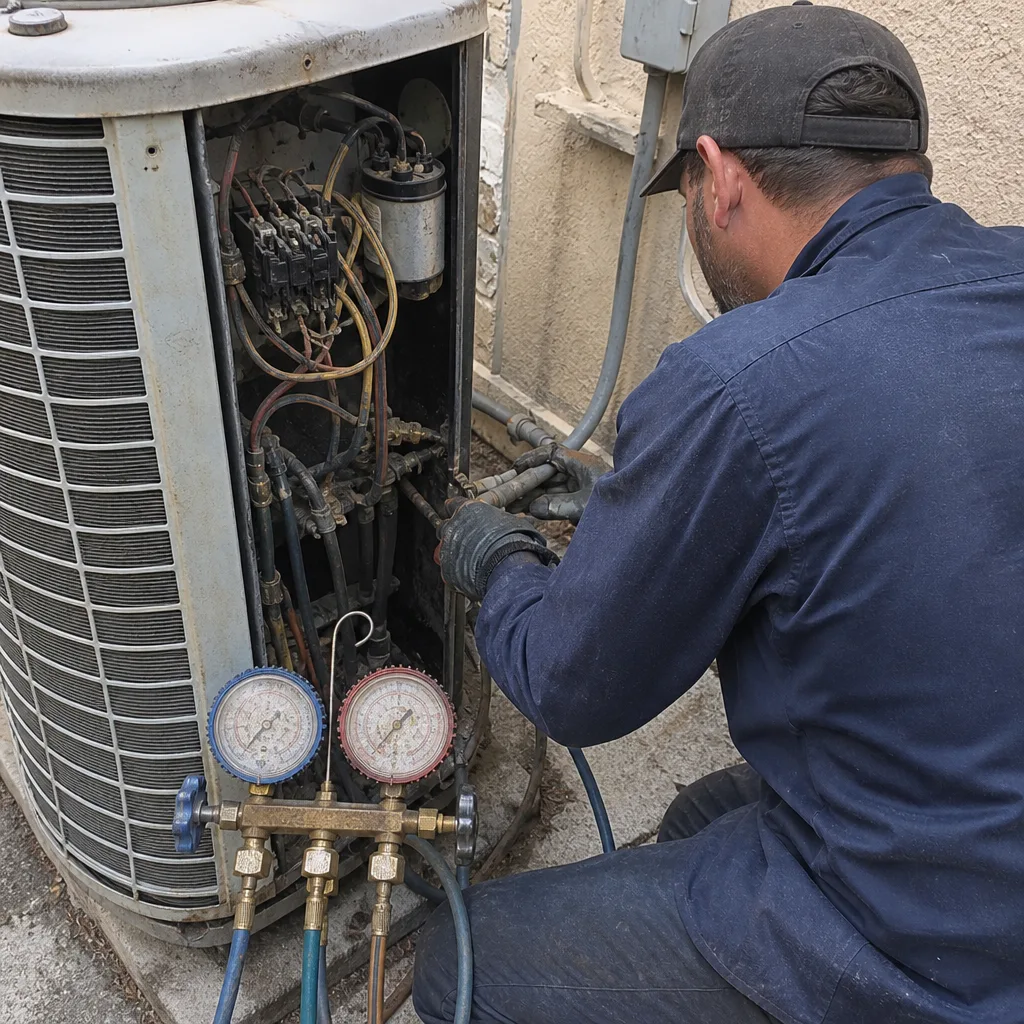 Before
 After
When to Call a Professional
Heat pumps and mini-splits involve refrigerant, high-voltage electrical, and brazed line sets. This is not a weekend DIY project, and a bad install is dangerous and wasteful. Call a professional when you’re sizing a new system, when an existing system is short-cycling or not keeping up in the afternoon heat, when you’re adding a zone or a room, when you need rebate paperwork done right, or when you’re deciding between repair and replacement on a system that’s aging out. Ray’s Heating & Air North Las Vegas offers free estimates in North Las Vegas, and our technicians have up to 24 years of experience. Call (844) 761-6871 for an exact quote.
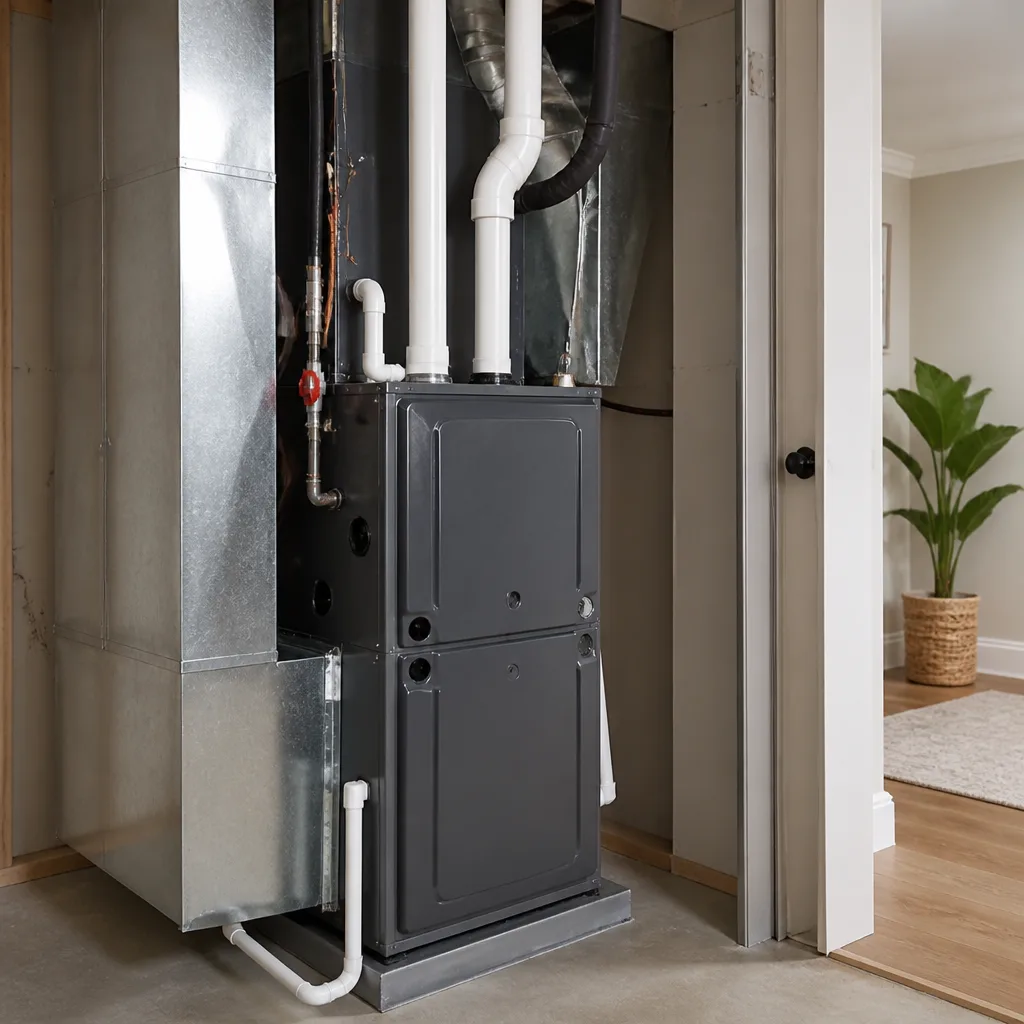
For heating-side questions and furnace work, see our heating and furnace service in North Las Vegas page. And if you want the whole picture of what we do, start at the Ray’s Heating & Air North Las Vegas home page.
Frequently Asked Questions
Yes, if it’s sized and placed correctly for this climate. A modern variable-speed heat pump handles both cooling and heating efficiently, and a properly placed unit holds up to the desert heat. The key is choosing equipment with strong high-ambient performance and having it installed to standard, not just picking whatever has the biggest SEER2 number on the box.
Aim for high SEER2 and, just as important, strong performance at 110°F and above. SEER2 alone doesn’t tell you how a unit behaves at the top of its range, and that’s where North Las Vegas lives all summer. Ask for the manufacturer’s expanded performance data before you buy.
Absolutely, and that’s one of the best uses for one here. Casitas, converted garages, and additions almost never have ductwork that makes sense to extend, so a single-zone mini-split is close to ideal. One indoor head, one outdoor unit, and you have a comfortable room without touching the rest of the house.
NV Energy has historically offered rebates for qualifying high-efficiency heat pumps, and federal tax credits have been available too. Amounts and qualifying thresholds change, so confirm current programs before you buy. The equipment has to clear the threshold and the paperwork has to be right, which is where an experienced installer earns their keep.
Out of the afternoon sun, with real clearance on all sides, and off hot concrete that radiates heat into it. West-facing walls and block-wall corners are the classic North Las Vegas mistakes because they let the unit recirculate its own hot exhaust. Get the placement right at install and you’ll avoid years of lost efficiency.
A single-zone mini-split typically runs a few thousand dollars installed, a multi-zone more, and a central heat pump replacement lands higher once equipment, labor, and any duct or electrical work are included. Get a written quote that itemizes each of those. Call (844) 761-6871 for an exact quote, and estimates are free.
The Bottom Line
Heat pumps and mini-splits work in North Las Vegas, but only when they’re chosen and installed for this climate rather than for a mild one. Look past the brochure SEER2, insist on high-ambient performance data, get a real load calculation, place the outdoor unit out of the sun and away from block walls, and pick equipment that clears the rebate thresholds. Mini-splits fit casitas, garages, additions, and problem rooms; central heat pumps fit the whole-house case. Skip those steps and the cheapest bid is the expensive one. Get them right and a well-installed system runs efficiently through the worst of a 115-degree summer and pays you back every month.
Ready to sort out the right system for your house? Call Ray’s Heating & Air North Las Vegas at (844) 761-6871 for a free estimate. We’ll bring the readings, the numbers, and a straight answer.
Written by the team at Ray’s Heating & Air North Las Vegas.