
Last updated November 17, 2026
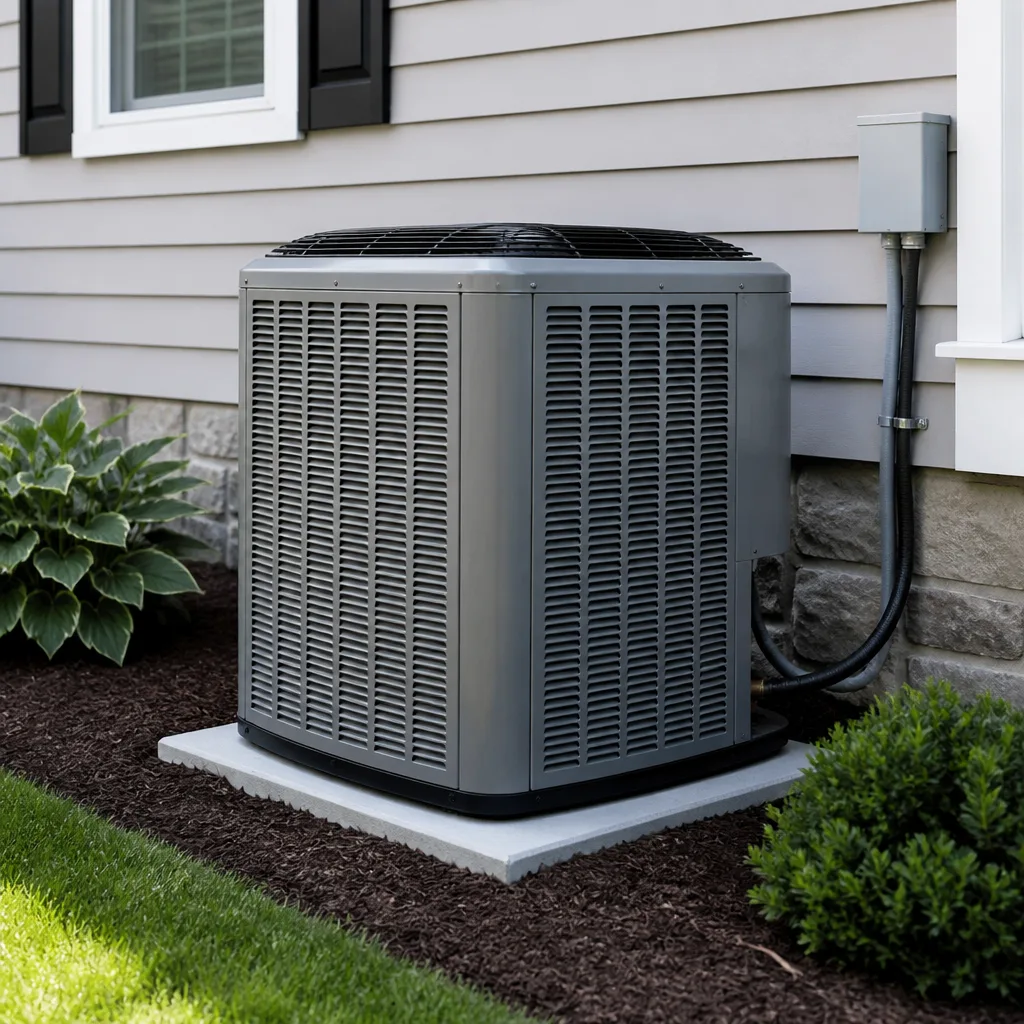 AC repair
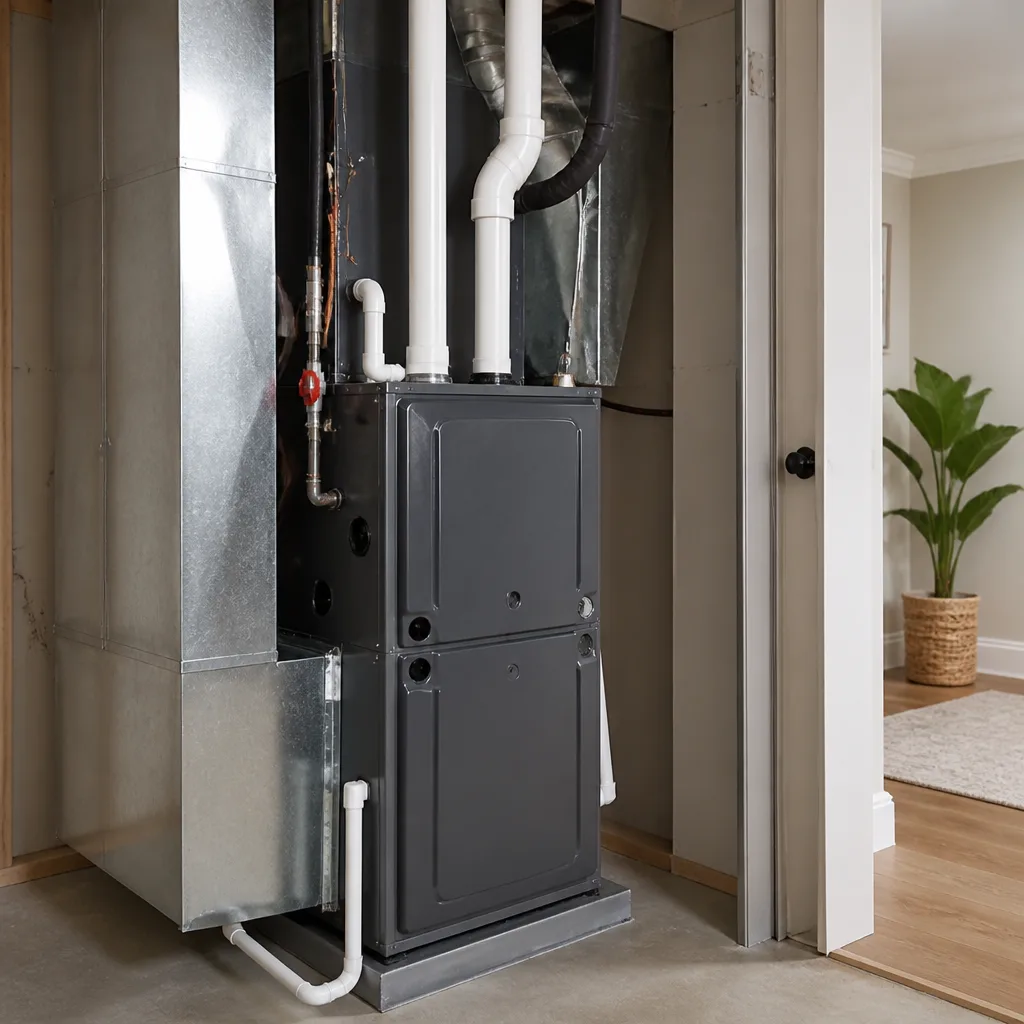 Furnace & heating
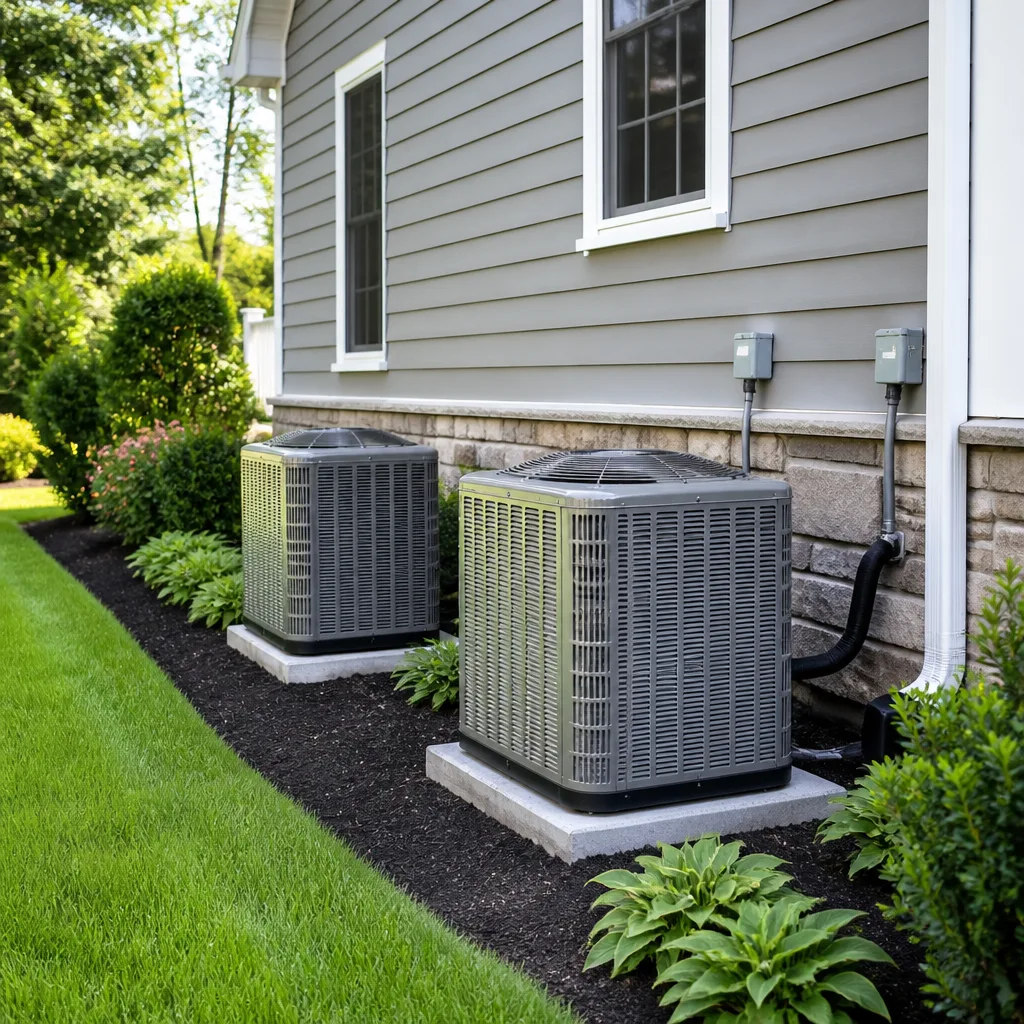 Heat pumps
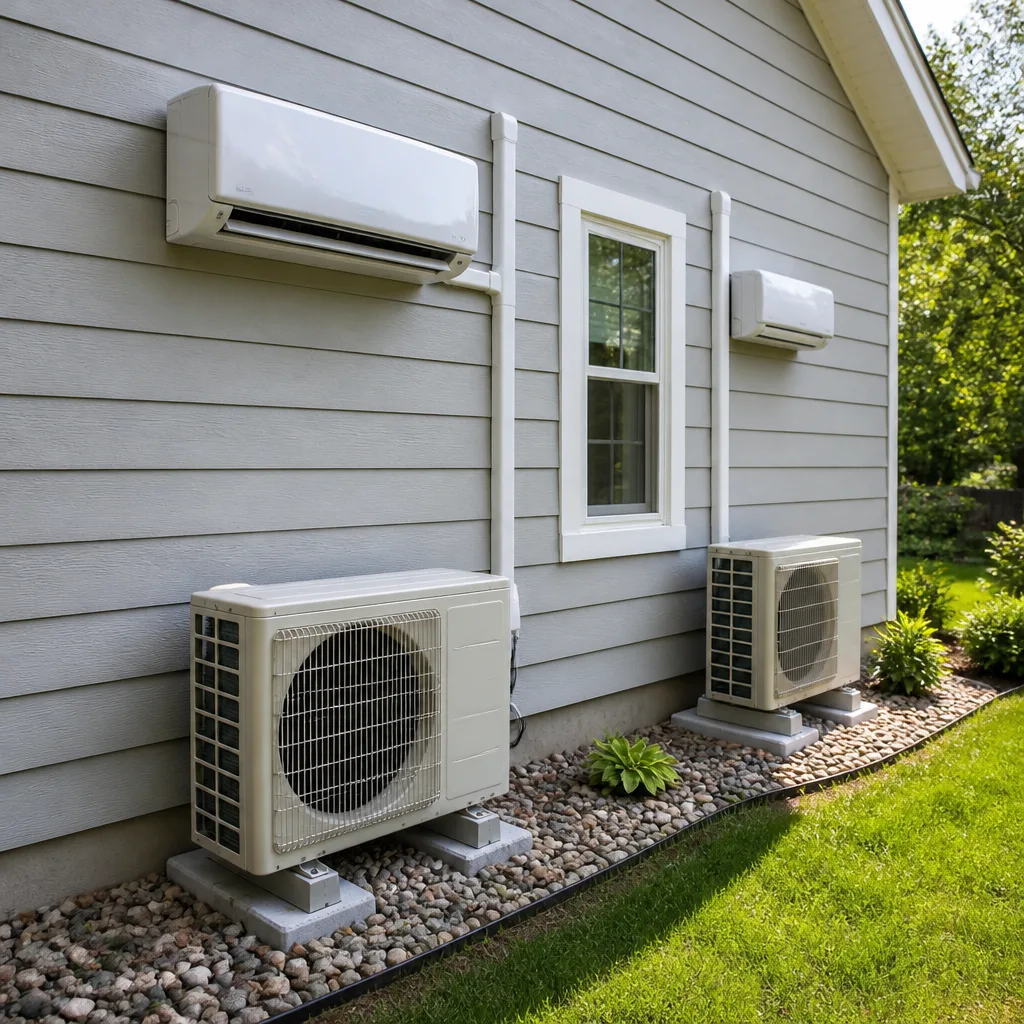 Ductless mini splits
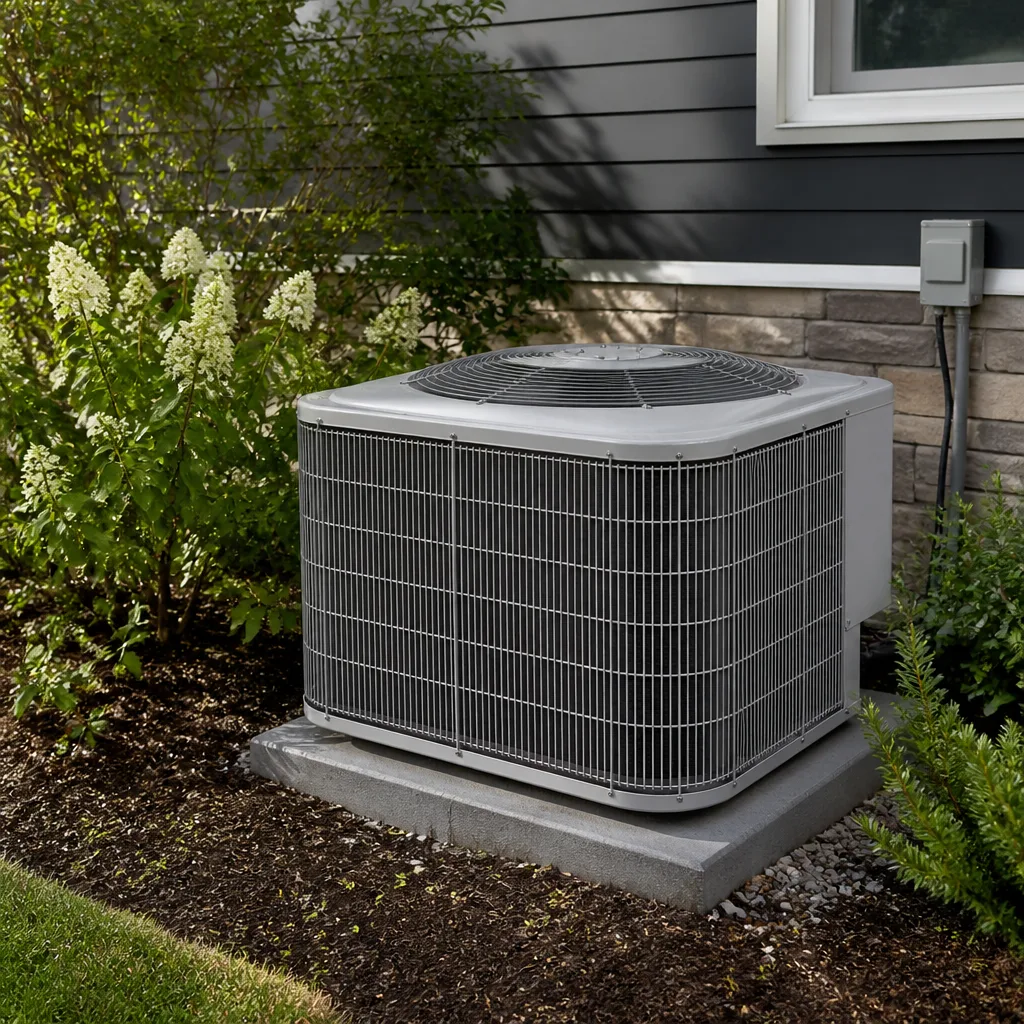 Carrier
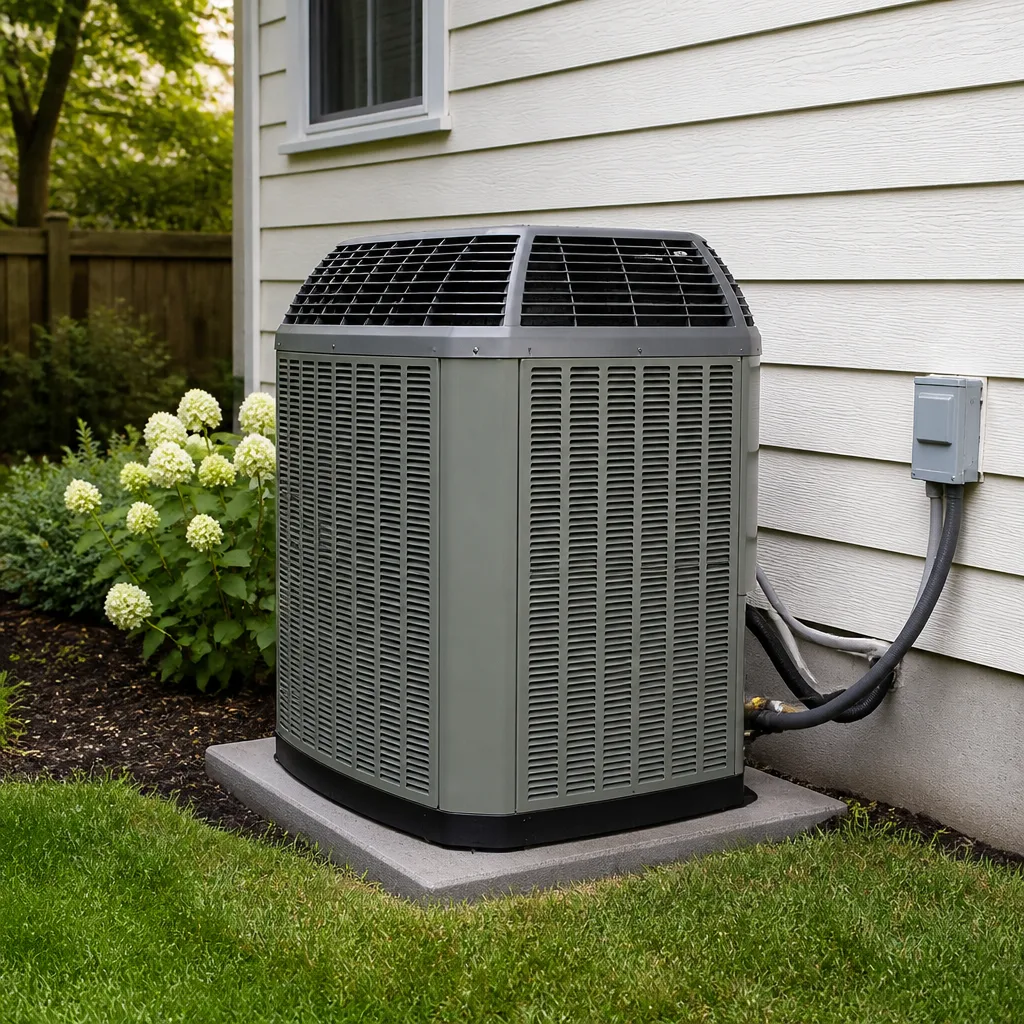 Trane
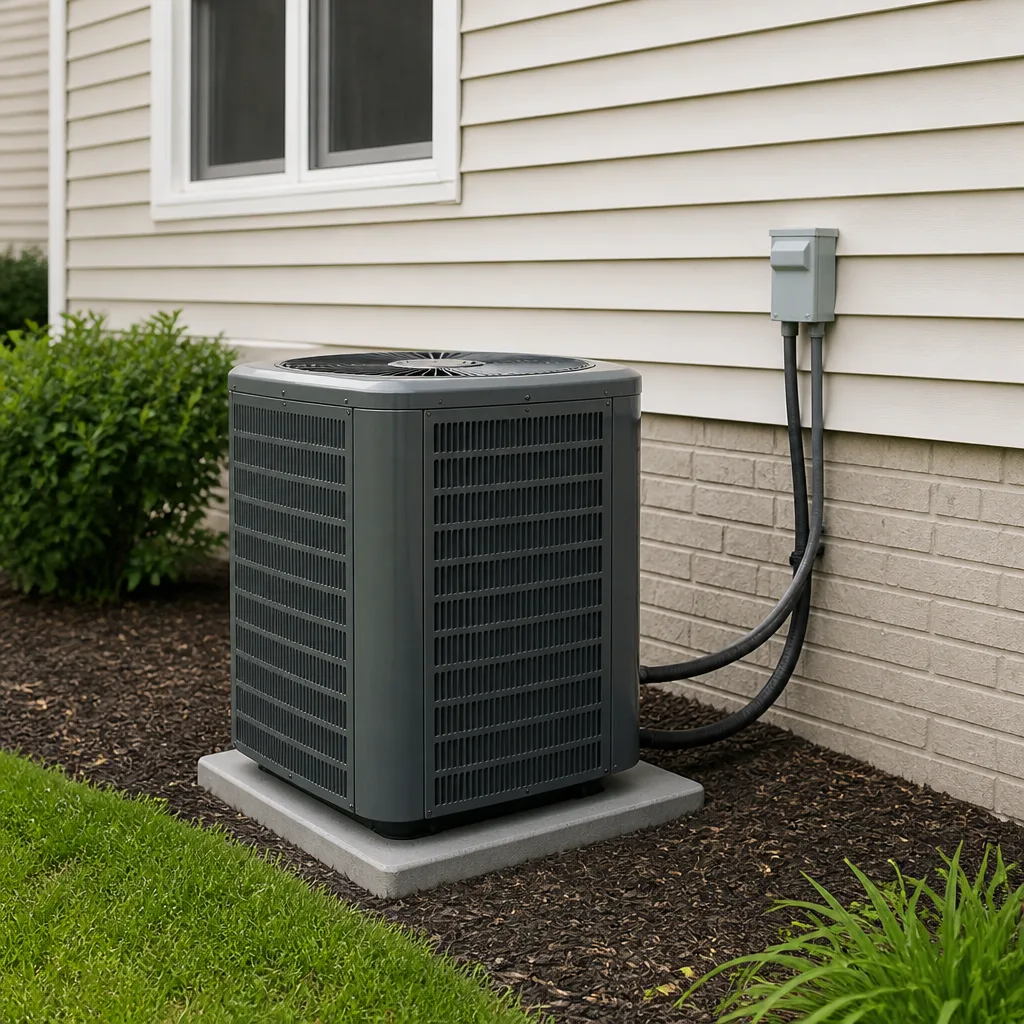 Goodman
Seasonal tune-up and full diagnostic on your Carrier, Trane, or Goodman system - readings shown to you before any repair is proposed
Diagnosis first, numbers second - you approve the repair price before a single part goes in.
Get your free estimateAC Repair & Installation Maintenance Checklist for North Las Vegas Homeowners
Of every ten capacitor failures we’ve replaced in North Las Vegas, nine happened between June 15th and August 10th. Eight of those homeowners had skipped one specific $12 task in April that would have caught the problem before the 107°F Saturday it actually failed. That task was not “call a professional.” It was simpler: pull the disconnect, check the contacts, and look at the run capacitor for swelling. This guide is built around the failure sequence we actually see on North Las Vegas service calls, ordered by what kills systems earliest and costs homeowners the most, month by month, from May through October.
Quick Answer
Your North Las Vegas AC needs a filter check monthly (more often in June through September), an April pre-season inspection before the first 100°F day, condenser coil cleaning two to three times a year because of local dust, and a documented baseline of refrigerant pressures and delta-T at every service visit. Skip any of these and you’re far more likely to lose the system on a weekend in July, when the capacitor issue that costs about $12 to catch becomes a $400 emergency.
Styles & brands we work with
- AC repair
- Furnace & heating
- Heat pumps
- Ductless mini splits
- Carrier
- Trane
- Goodman
Table of Contents
- Your Month-by-Month Checklist for the North Las Vegas Heat
- Filter Swap vs. Real April Pre-Season Check
- Why Condenser Coil Cleaning Is Not a “Once a Year” Job Here
- What to Document After Every Service Visit
- Three Installation Red Flags on New North Las Vegas Construction
- What You Can Safely Inspect Yourself vs. What Needs Gauges
- Common Mistakes to Avoid
- When to Call a Professional
Your Month-by-Month Checklist for the North Las Vegas Heat
Most checklists split the year into “spring” and “fall.” That split makes no sense in North Las Vegas. Here, the AC runs hard from May through the end of September, and the real danger window is the first sustained run of 105°F+ days in late June and July. The checklist below is tied to what actually happens to equipment in North Las Vegas, not to a calendar written somewhere humid.
The Schedule
- March: Swap the filter. Vacuum the return grille. Walk the condensing unit outside and clear any debris or landscaping blocking airflow. This is the cheap one that sets the stage.
- April: Full pre-season check. This is the critical month. See the next section for exactly what it covers.
- May: First filter change of the cooling season. Rinse the outdoor coil if it’s dusty. Watch for unusual start-up noises on the first hot afternoons.
- June: Filter change (every 30 days now). Check the condensate drain line for clogs. Coil cleaning window opens here for most homes.
- July: Filter change. Second coil rinse if you’re in a dusty pocket of North Las Vegas, like anything near the open desert edges or new construction on the north side. This is peak failure month for capacitors and contactors.
- August: Filter change. Listen for short cycling. Watch your electric bill against last August – a jump usually means a failing component, not the heat.
- September: Last hard push. Filter change. Prep for the shoulder season by noting readings so next spring has a baseline.
- October: Post-season inspection. Filter change. Coil cleaning so the unit sits clean through the mild months.
If you want the full picture of what a proper repair looks like, our AC Repair & Installation in North Las Vegas page walks through the diagnostic sequence we run on every call. And once the calendar flips to November, the same logic applies to the other side of the system – see our Heating & Furnace in North Las Vegas guide for the heating checklist.
Filter Swap vs. Real April Pre-Season Check
These get treated as the same thing, and they are not. A filter swap is a homeowner task you do in about five minutes. An April pre-season check is a diagnostic visit that requires a meter, gauges, and a trained eye. One is $12. The other is what catches the capacitor that has been drifting for three months before it fails on the hottest Saturday of the year.
What a Filter Swap Actually Does
Replacing the filter keeps airflow up. Restricted airflow causes the evaporator coil to ice over, raises head pressure, and makes the whole system work harder. In North Las Vegas, with the dust in the air, a 1-inch filter can load up in three weeks during July. That’s not neglect on your part; that’s the environment. Change it more often than the box says.
What a Real April Pre-Season Check Covers
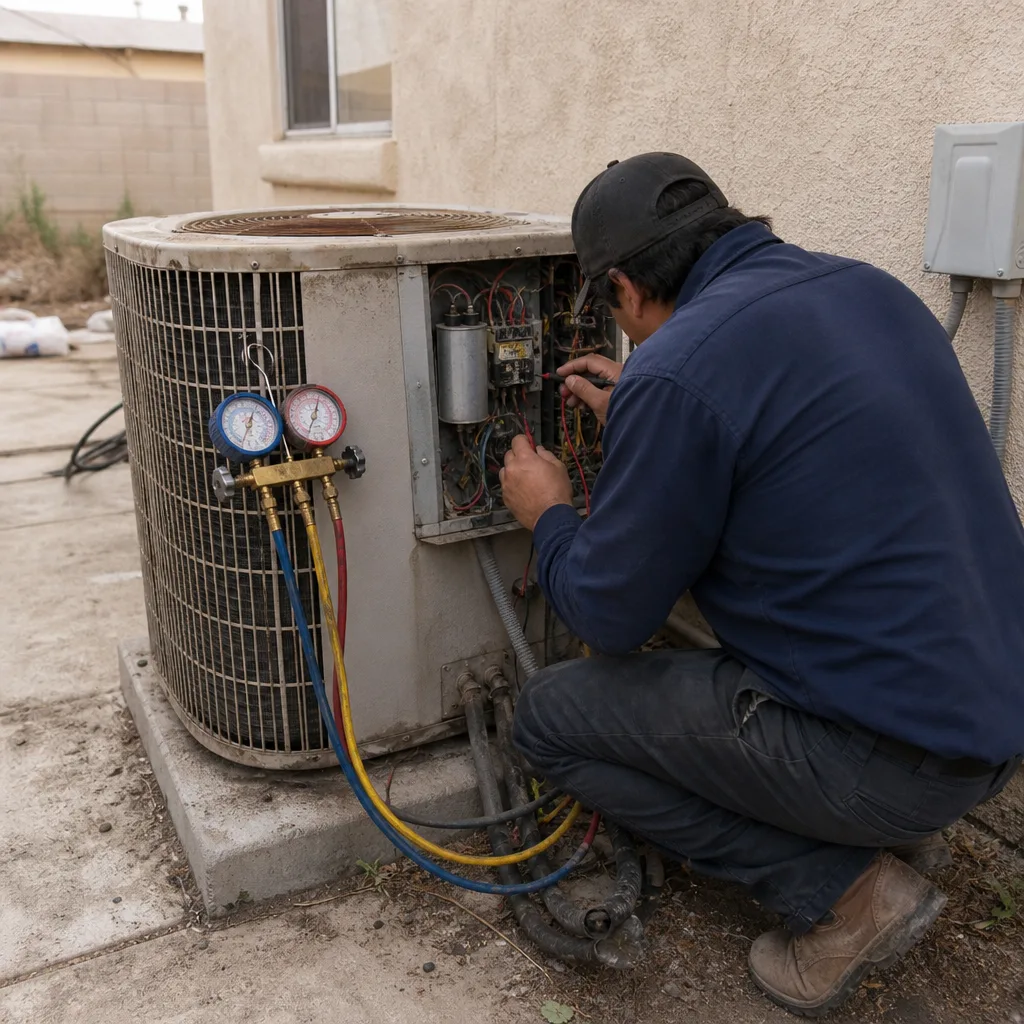
- Run capacitor and start capacitor testing with a meter – capacitance value compared to spec
- Contactor pitting inspection
- Refrigerant pressures (suction and liquid line) recorded
- Superheat and subcooling calculated
- Delta-T (temperature split between return and supply) measured
- Condensate drain clearing and float switch test
- Condenser coil visual and rinse
- Amp draw on the compressor and blower motor compared to nameplate
If you’ve got a Trane, Lennox, Goodman, or Rheem unit, the spec sheet is on the panel. What matters is whether the readings match, not which badge is on the cabinet. We test the capacitor before anyone says the word compressor – and that order matters, because a bad capacitor can mimic a dead compressor to an untrained ear, and one costs $12 while the other costs four figures. For the broader picture on when repair is the smarter call than replacement, our Ray’s Heating & Air North Las Vegas home page covers the questions we hear most.
Why Condenser Coil Cleaning Is Not a “Once a Year” Job Here
Every generic checklist says “clean the condenser coil once a year.” That advice assumes a climate where the coil sits relatively clean between seasons. North Las Vegas does not work that way. Between the wind-blown desert dust, the construction traffic along the north corridors, and the sheer number of days above 100°F, that outdoor coil can pack up in a matter of weeks during the dry season.
How to Tell When Yours Needs Attention
- You can see a visible gray-brown mat of dust on the coil fins when you shine a light down through the top
- The unit runs longer to reach the same setpoint than it did a month ago
- The top of the unit feels noticeably hot but the air coming out of your vents is only mildly cool
- Your electric bill jumped more than 15% over the same month last year
- You recently had landscaping work, a new roof, or construction next door – the debris finds the coil
For most homes in North Las Vegas, we recommend a professional coil cleaning at the April pre-season visit and again around July. Homes on the dusty edges of the valley or near active construction may need a third rinse in early September. A dirty coil raises head pressure, pushes the compressor harder, and shortens the whole unit’s life. In our experience, this is one of the cheapest maintenance items and one of the most neglected.
What to Document After Every Service Visit
Here’s the thing almost no homeowner does. After every service call, write down the readings your technician took. Not for us – for you. When something goes wrong in two years, the first thing a good tech wants to know is what the system looked like when it was healthy. Without a baseline, everyone is guessing.
What to Write Down
- Date and outdoor temperature at the time of service
- Suction line pressure and temperature
- Liquid line pressure and temperature
- Superheat and subcooling values
- Delta-T (return air temp vs. supply air temp)
- Compressor amp draw
- Filter size and type (so you don’t forget the oddball size)
- Any component replaced and why
Any written estimate should include these numbers. If a company won’t show you readings, ask why. We publish our readings on every visit – readings first, numbers second, you see both. That’s the whole point of the AC Repair & Installation in North Las Vegas approach we take. And if you’ve got a heat pump, the principles are similar but the readings and the failure points differ – our Heat Pump & Mini Split in North Las Vegas page covers that system specifically.
Why this matters for North Las Vegas specifically: our temperature swing between the shoulder season and the peak is large, and a system that reads healthy in April may start showing its first signs of strain by July. Baseline readings let you catch the drift.
Three Installation Red Flags on New North Las Vegas Construction
New construction has its own set of problems, and homeowners often don’t realize what they’re looking at until the first summer. The installs in newer North Las Vegas subdivisions – especially on the north and northwest edges – occasionally get rushed to meet closing dates. Three things come up again and again.
1. Undersized Line Set or Improper Insulation
If the refrigerant line coming out of the outdoor unit into the house isn’t insulated properly, or the wrong diameter was used for the length of the run, the system loses capacity and raises pressures. That voids manufacturer warranties on some brands because it’s outside the install spec. Ask the builder for the line set spec sheet and the length of the run.
2. Incorrect Refrigerant Charge at Startup
New installs should be commissioned with a full charge calculation based on line length, followed by a verified superheat and subcooling reading. Many aren’t. The system runs “okay” in mild weather and struggles in July. If your first summer bill is much higher than your neighbor’s with the same floor plan, this is a strong suspect.
3. Missing or Bypassed Float Switch and Drain Loops
In North Las Vegas, condensate handling is a big deal because the AC runs so many hours a day in the peak season. A float switch that’s wired out or a drain without the proper trap will eventually cause water damage. It also may fail inspection later. Check the drain line and the electrical shutoff on the unit before you close.
When you buy new construction, request the commissioning report from the builder. If they don’t have one, get a third-party inspection before your first summer. This is one of the best reasons to know your system before something fails.
What You Can Safely Inspect Yourself vs. What Needs Gauges
Some tasks are genuinely homeowner-safe. Some involve 240-volt power, refrigerant under pressure, and refrigerant handling that federal law restricts to certified techs. Here’s the honest split.
Safe for You
- Filter changes (all sizes and types)
- Visual inspection of the outdoor unit for debris, blocked airflow, or damage
- Listening for weird noises on start-up
- Cleaning the area around the condenser
- Checking the drain line for visible leaks
- Reading your electric bill month to month
Belongs to a Trained Technician
- Capacitor testing (involves stored voltage, can shock even with power off)
- Contactor inspection and replacement
- Any refrigerant gauging, charge adjustment, or recovery (legally restricted)
- Compressor or blower motor amp draw checks
- Electrical panel or breaker work feeding the AC
- Ductwork pressure testing
A word on safety: the capacitor on an AC can hold a lethal charge long after the disconnect is pulled. We’ve heard of homeowners being badly hurt trying this with a screwdriver and a YouTube video. If the system isn’t running and you’ve checked the breaker and filter, call someone. That’s not a hard sell – it’s the responsible answer.
Common Mistakes to Avoid
- Treating July like April. If you wait until the first 110°F day to have the system checked, you’re already behind the failure curve. The April pre-season check is what catches the drifting capacitor before it strands you.
- Changing the filter once a year. In North Las Vegas, that filter is a monthly item from May through September, not an annual one. The dust here is relentless.
- Washing the condenser coil with a pressure washer. This bends the fins and makes the coil worse than before. A garden hose with a gentle nozzle, or a professional cleaning, is the right move.
- Ignoring the installer’s commissioning report. On a new build, that paperwork is your warranty protection. If it’s missing, get an independent inspection.
- Accepting a verbal quote. If a technician won’t show you the readings and write the numbers on an estimate, walk away. You should see the capacitor value and the compressor amps – not just a diagnosis.
- Letting the condensate drain go unchecked all summer. In a North Las Vegas summer, a clogged drain can cause water damage and trigger the safety switch that shuts the system off on the hottest day.
- Paying overtime rates for a routine visit. Many companies charge overtime on weekends and holidays. Confirm before booking; a live person answering at 2 a.m. should be able to tell you plainly.
When to Call a Professional
Call a professional when you’ve done the safe checks and the system still isn’t keeping up. Specific situations worth a call: the AC trips the breaker repeatedly, ice forms on the indoor coil or the suction line, the outdoor unit runs but the air coming out of the vents is warm, you smell burning insulation, the electric bill jumped 20%+ without a change in habits, or the system short-cycles on and off every few minutes. Also call if your home is over ten years old and has never had a documented baseline of refrigerant pressures and delta-T – getting that baseline now saves money later.
We’d rather answer a question on a Tuesday than have you face a dead system on a Saturday. Ray’s Heating & Air North Las Vegas offers free estimates in North Las Vegas – call (844) 761-6871.
Frequently Asked Questions
Every 30 days from May through September, and every 60 to 90 days the rest of the year. The dust and prolonged runtime here load a filter faster than in most climates, and a 1-inch filter in July can be fully loaded in three weeks. If you have pets or lots of foot traffic, shorten the interval.
The run capacitor is the single most common component failure we see, and it clusters between mid-June and mid-August because that’s when the system runs the longest and hottest. A bad capacitor costs a fraction of a compressor, which is why we test it first. Call (844) 761-6871 if your system is short-cycling or won’t start.
A gentle garden hose rinse from the inside out is safe as a between-visit step. A pressure washer is not – it flattens the fins. In North Las Vegas, plan on a professional cleaning twice a year for most homes, and a third in September if you’re near construction or open desert.
Ask for suction and liquid line pressures, superheat, subcooling, delta-T, and compressor amp draw. Any reputable technician will have those numbers. If they won’t share them, that’s a sign to get a second opinion. Our written estimates include the readings so you can keep them for next season.
Ask the builder for the commissioning report, which should include line set length, refrigerant charge calculation, and verified superheat/subcooling readings. If they don’t have one, get an independent inspection before your first summer. Three red flags to check: improper line set insulation, incorrect factory charge, and a float switch that’s been wired out.
Yes, if it includes real diagnostic readings and not just a filter swap. A pre-season check catches a $12 capacitor before it becomes a $400 mid-July emergency and protects the compressor. We publish our pricing up front, and we don’t invent services you don’t need. Call (844) 761-6871 for a free estimate on a seasonal check.
The Bottom Line
North Las Vegas weather doesn’t treat all maintenance tasks equally. The filter is a monthly errand, not an annual one. Coil cleaning is a two- or three-times-a-year job here, not once. The April pre-season check is the single highest-value visit of the year, because that’s when a drifting capacitor gets caught before it fails on the worst day. Document your readings after every visit so you have a baseline when something goes wrong. And on new construction, insist on the commissioning report – three red flags there can void your manufacturer warranty without your ever knowing.
Start with the simple items. When it’s time for a reading-based diagnosis, call Ray’s Heating & Air North Las Vegas at (844) 761-6871 for a free estimate. We’ll answer live, walk through what we find, and put the numbers in writing.
Written by the team at Ray’s Heating & Air North Las Vegas.
See the difference
 Before
 After
 Before
 After
 Before
 After