

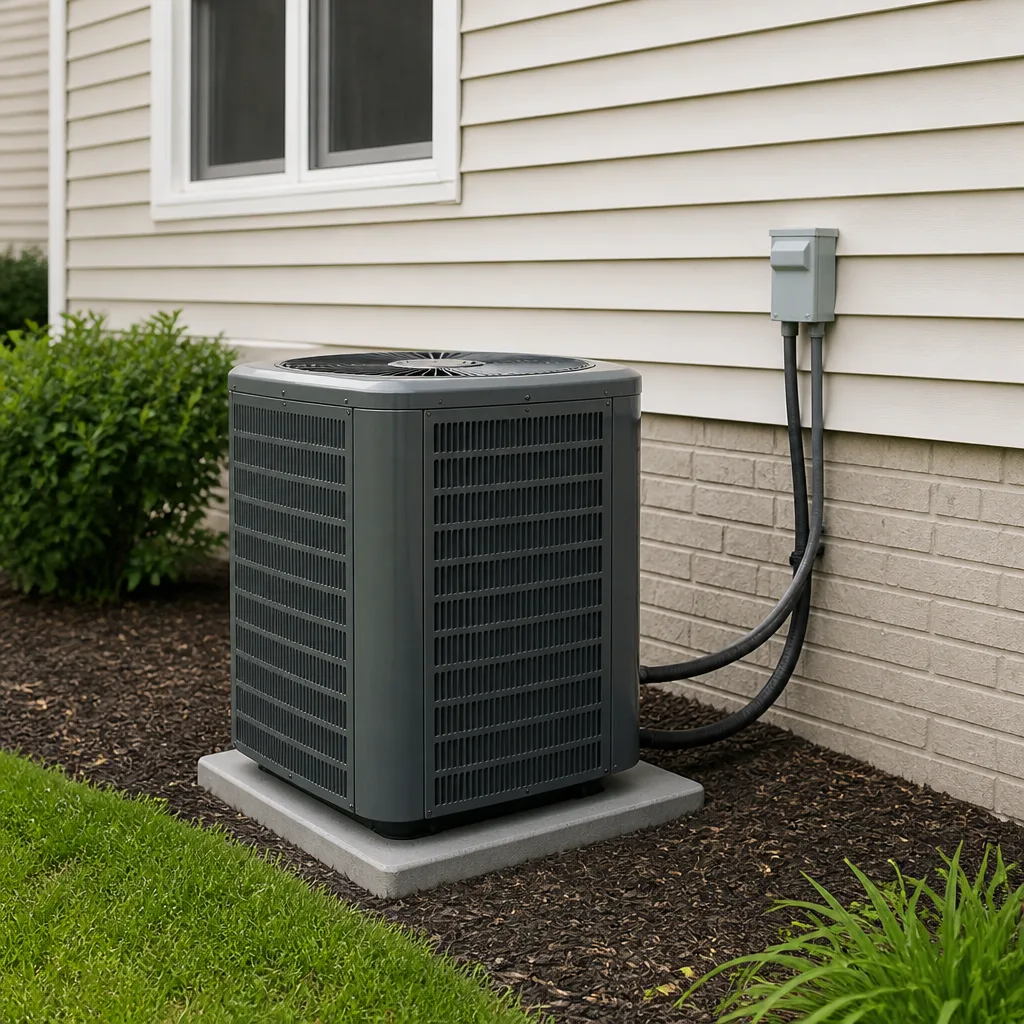
 Goodman
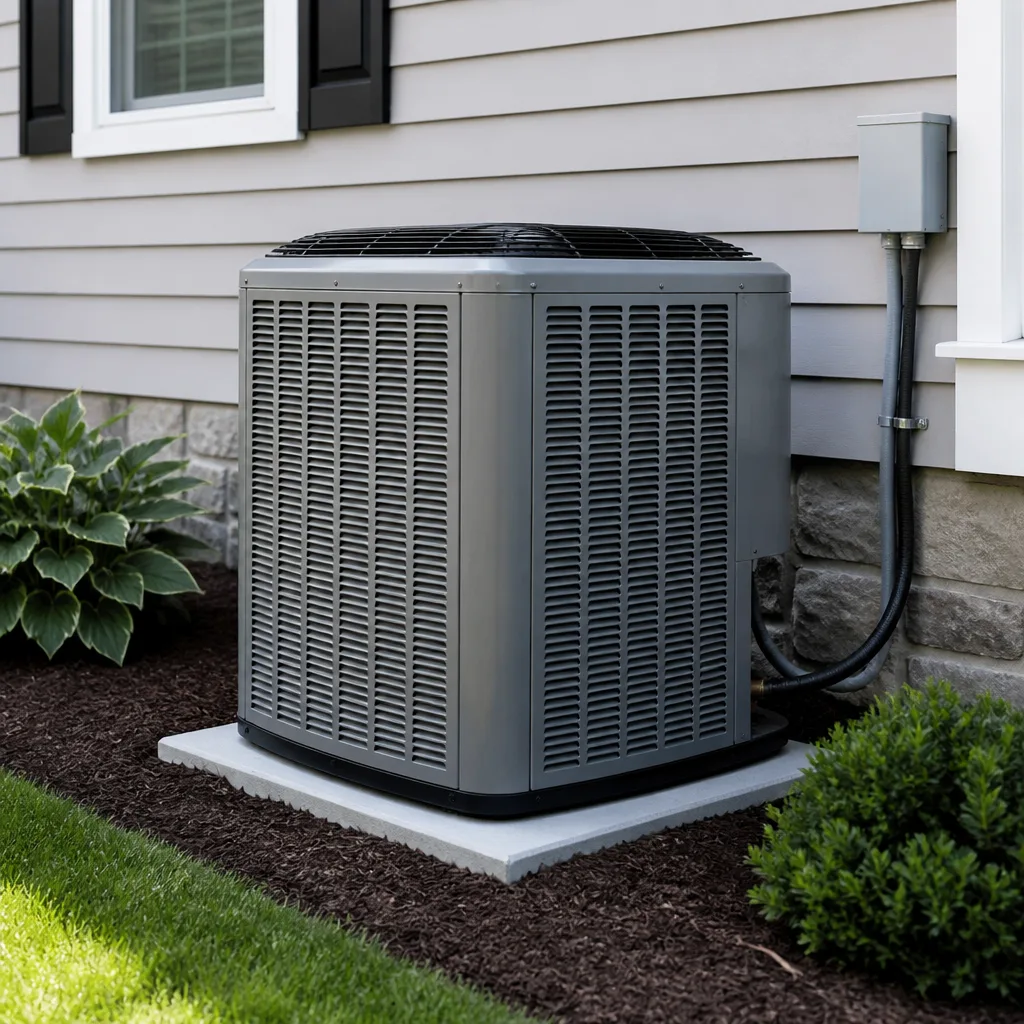 AC repair
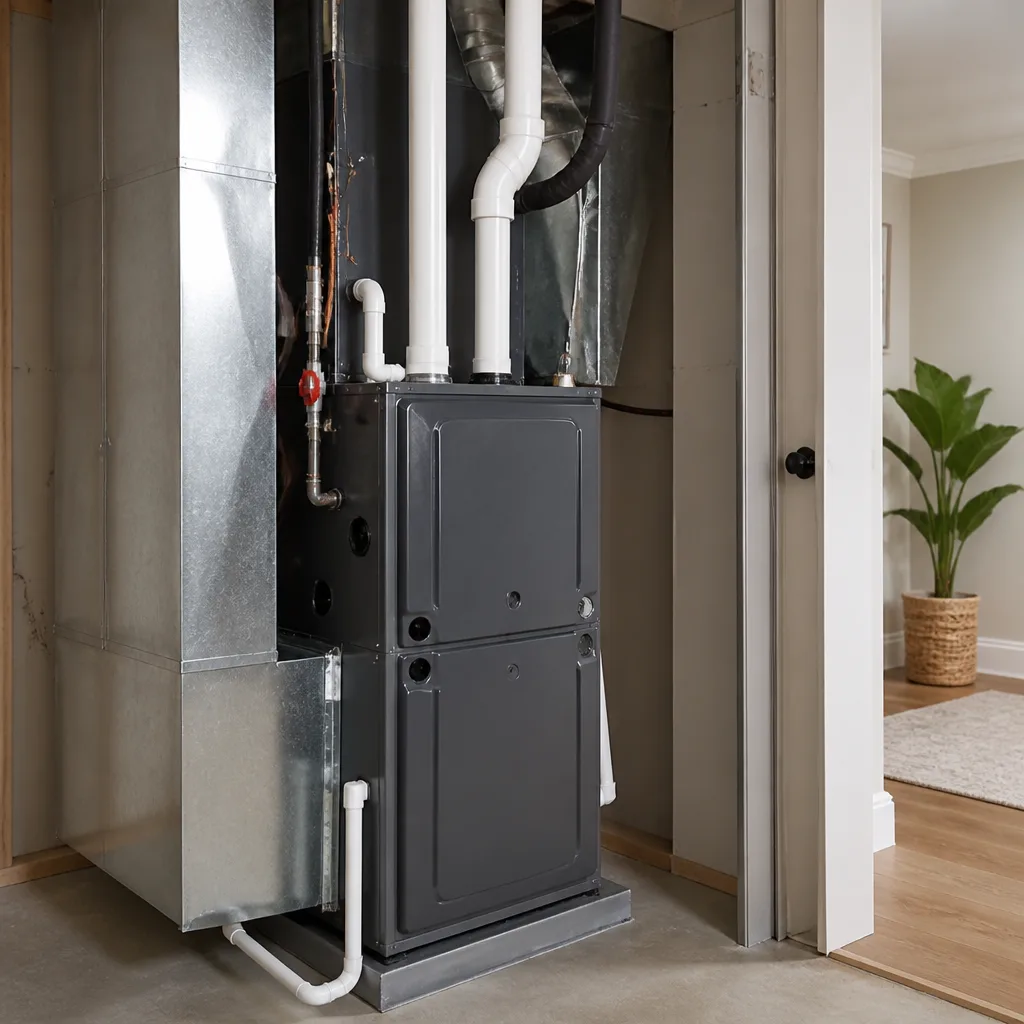 Furnace & heating
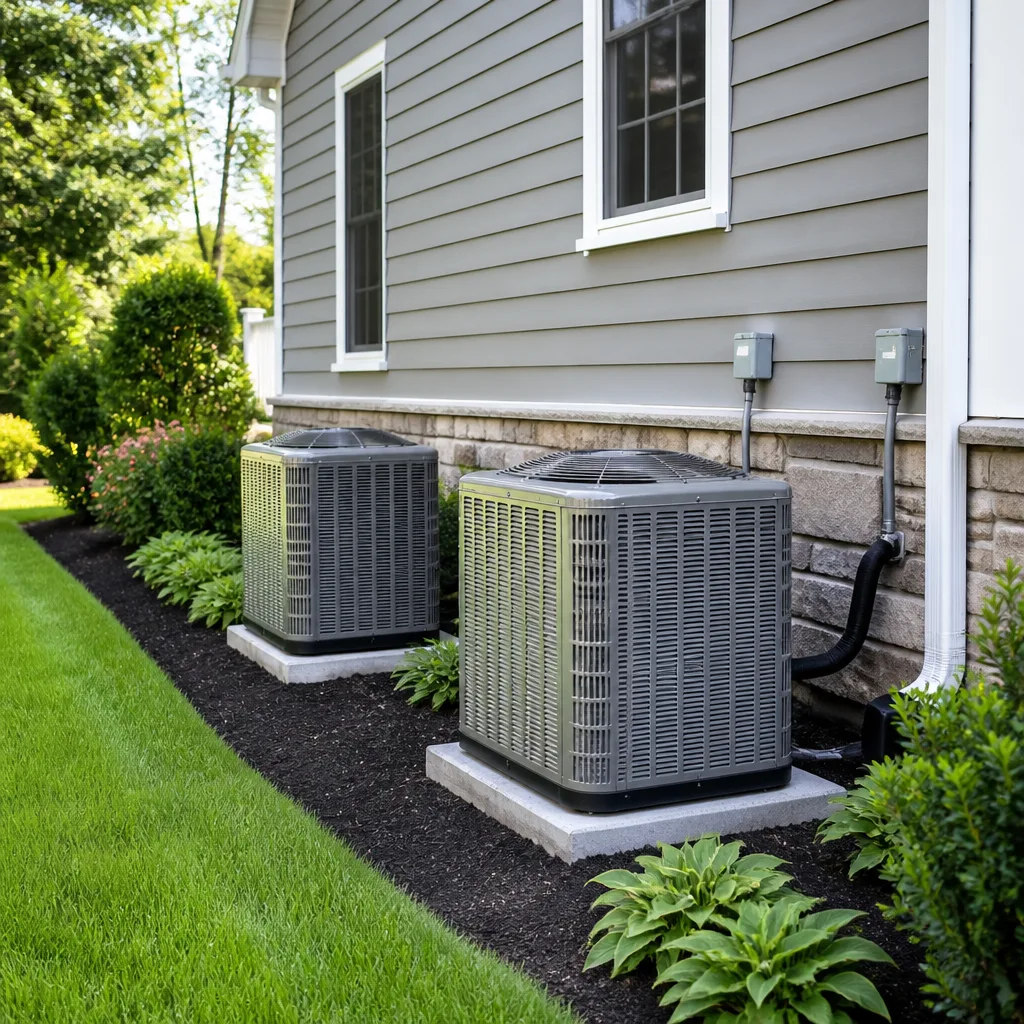 Heat pumps
 Ductless mini splits
 Carrier
 Trane
Seasonal tune-up and full diagnostic on your Carrier, Trane, or Goodman system - readings shown to you before any repair is proposed
Diagnosis first, numbers second - you approve the repair price before a single part goes in.
Get your free estimateGoodman Capacitor Replacement: The North Las Vegas Owner’s Guide
We install Goodman-compatible capacitor replacements in North Las Vegas for $185 to $340 installed, and in most cases we can get to you the same day you call. If your Goodman condenser is humming but the fan won’t spin, or the AC kicks on and trips right back off, a spent capacitor is the most common cause we find. We test it before anyone says the word compressor. You’ll see the readings and the numbers before we touch a screwdriver. Call (844) 761-6871 and a live person picks up, day or night.
Most North Las Vegas owners discover this part the hard way: the house is climbing past 88 degrees by mid-afternoon in July, the outdoor unit is buzzing, and the fan blade is stone still. The system didn’t die. A $25 part did. We hear that story on repeat across North Las Vegas between June and September, and it’s almost always the same diagnosis.
Key Takeaways
- Goodman-compatible capacitor replacement in North Las Vegas runs $185 to $340 installed.
- Same-day service is usually available; call early in the day.
- A failed capacitor mimics a dead compressor. We test the capacitor first, every time.
- Never handle a capacitor without discharging it. The stored charge can hurt you.
Which Goodman Models This Applies To
Goodman has built split-system condensers and air handlers under a lot of model families over the years, and the good news is the capacitor story is similar across most of them. You’ll find run capacitors in the GSX and GSZ condenser lines, the older GSC series, and the ARUF and AEPF air handlers that pair with them. Whether your outdoor unit is a single-stage GSX14 or a two-stage GSZ16, there’s a round or oval run capacitor sitting right next to the compressor contactor doing the same job: giving the motor a phase shift so it can start and run.
Here’s the compatibility gotcha that trips people up. The capacitor in your unit has a printed spec, usually something like 35/5 µF ±6% 370VAC or 440VAC. Those first two numbers are what matter: the larger value is the compressor (herm) side, the smaller is the fan side. A prior repair may have swapped in a universal 440V capacitor to substitute for the original 370V rating. That’s actually fine (higher voltage rating is safe), but the microfarad values must match your original spec within tolerance. Reading “45/5” where the label calls for “35/5” means someone put the wrong part in, and the compressor runs hotter for it. We check the nameplate and the capacitor label together before we hand you a part.
On the OEM-versus-aftermarket question, Goodman-branded capacitors are made for Goodman by major capacitor manufacturers anyway. A quality aftermarket match (AmRad, Titan Pro, or equivalent US-made) at the same specs performs identically and often lasts longer in our heat. We’re an independent service provider, not affiliated with Goodman, so we’ll give you the honest answer: match the specs, buy quality, skip the bargain-bin part that fails in two summers.
Styles & brands we work with
- AC repair
- Furnace & heating
- Heat pumps
- Ductless mini splits
- Carrier
- Trane
- Goodman
Signs Your Goodman Capacitor Replacement Is Failing
Capacitors rarely fail cleanly. They bulge, leak, or just drift out of spec, and their symptoms overlap with a half dozen other problems. Here’s what we actually see on North Las Vegas calls:
- The condenser fan won’t start but the compressor runs. The system hums, gets hot, and the compressor overheats within minutes because the fan-side value on the capacitor has dropped. This is the classic weak fan-start symptom, and it’s the one that most often turns into a compressor replacement if left alone.
- The whole outdoor unit hums and trips the breaker. Here the compressor-side value has failed. The motor can’t get its starting torque, draws locked-rotor current, and the breaker protects the circuit. Don’t keep resetting it. Every trip stresses the compressor winding.
- The top of the capacitor is domed or leaking brown goo. A bulging top or oily residue around the terminals means the dielectric inside has failed. This part is done, no testing needed. The physical evidence is enough.
- The AC runs but cools weakly, or the fan spins slowly. Partial capacitance loss lets the motor run but at reduced speed and higher current. In our 110-degree North Las Vegas afternoons, the system never quite catches up and the bill creeps up with it.
- The unit short-cycles, restarting every few minutes. A marginal capacitor can’t deliver reliable starting torque once the unit has been running and heat-soaked, so the internal overload trips and resets in a loop. If your Goodman is doing this in August, the capacitor is where we look first.
See the difference
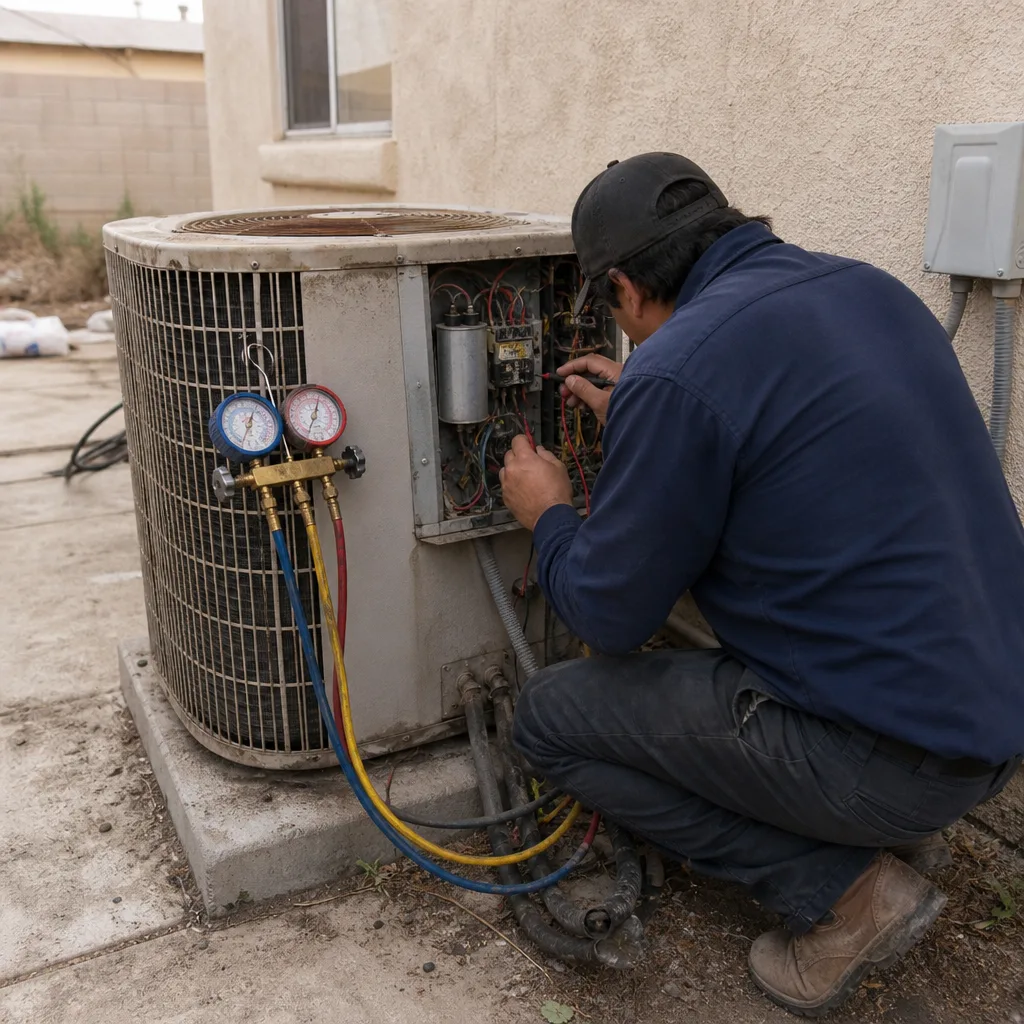 Before
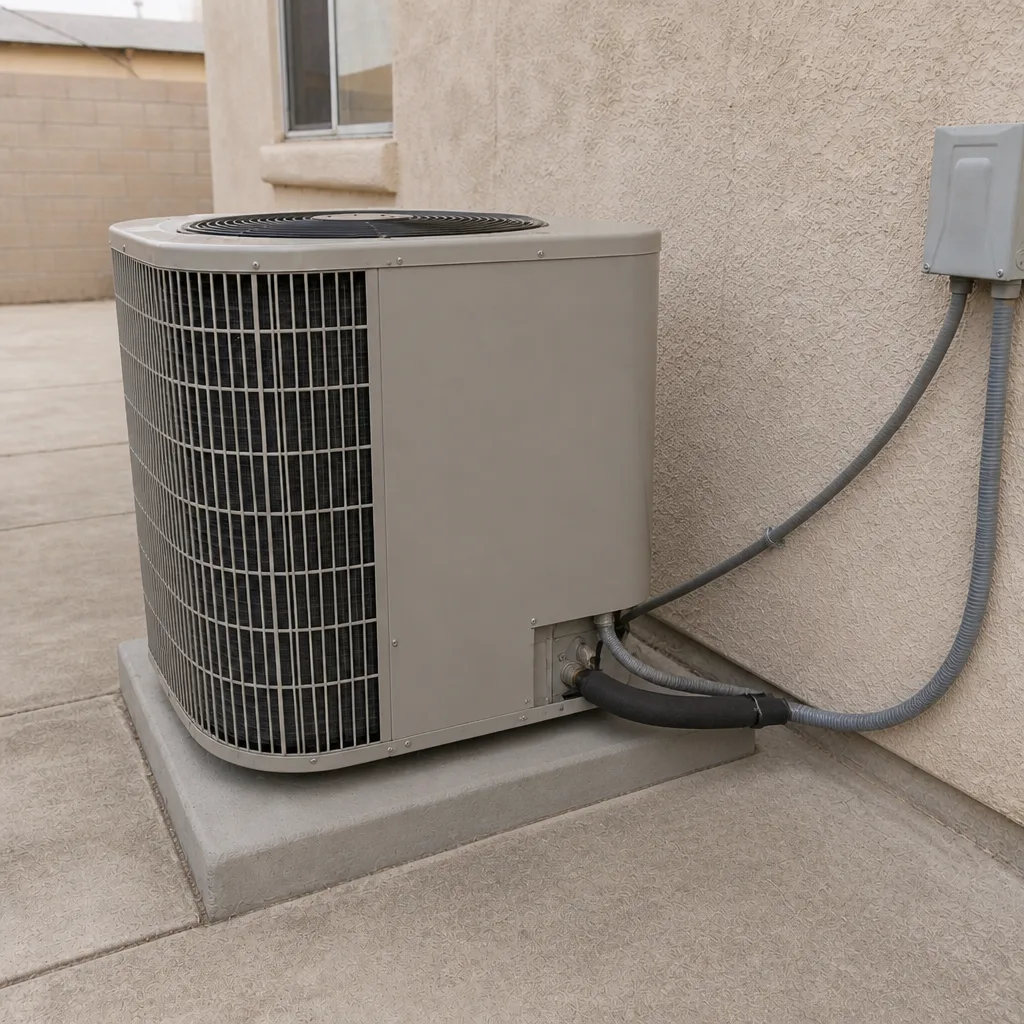 After
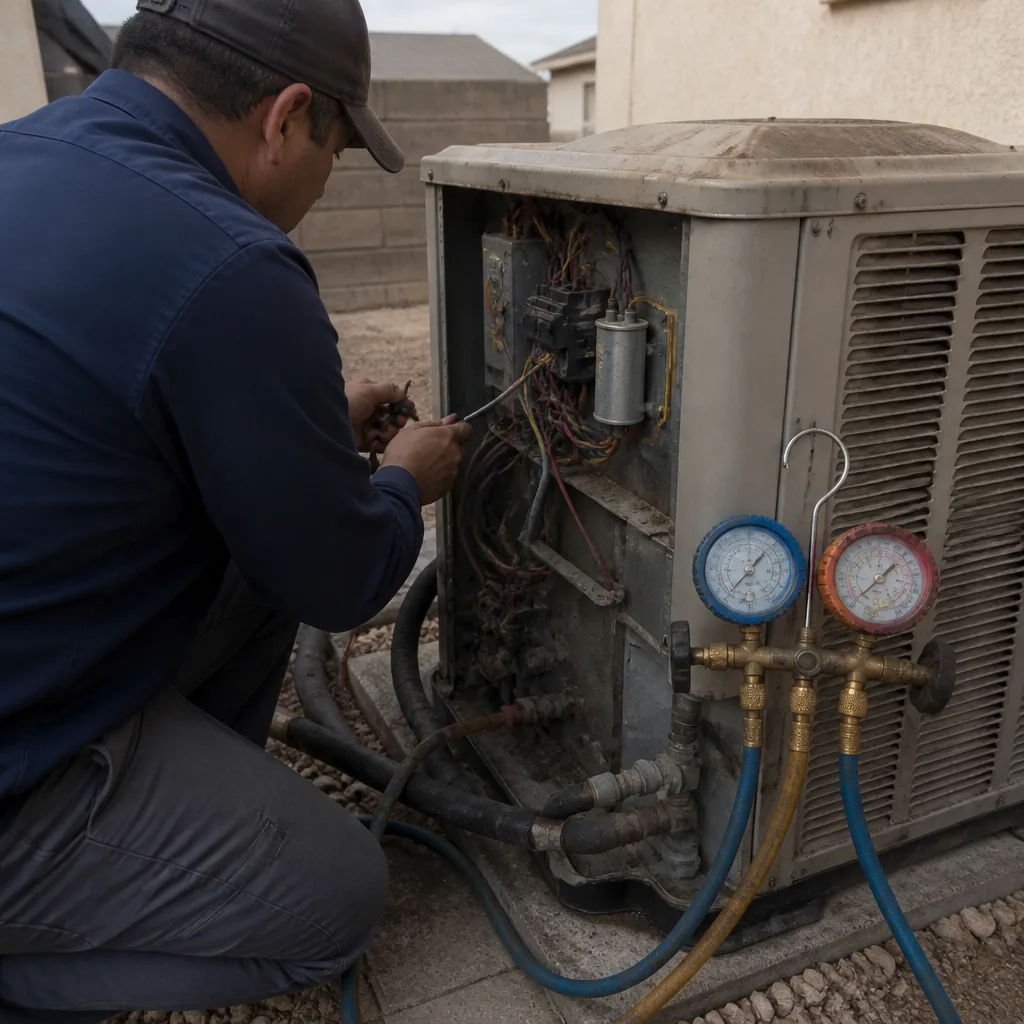 Before
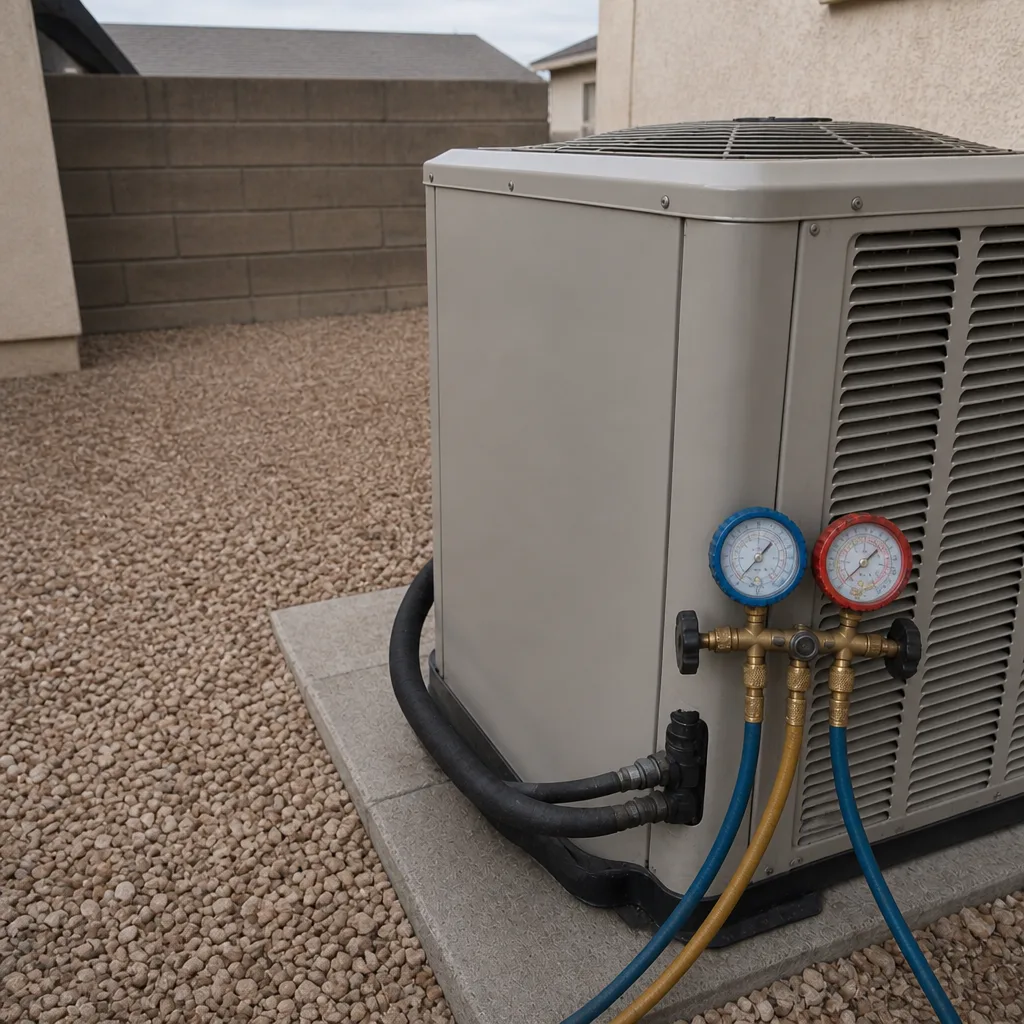 After
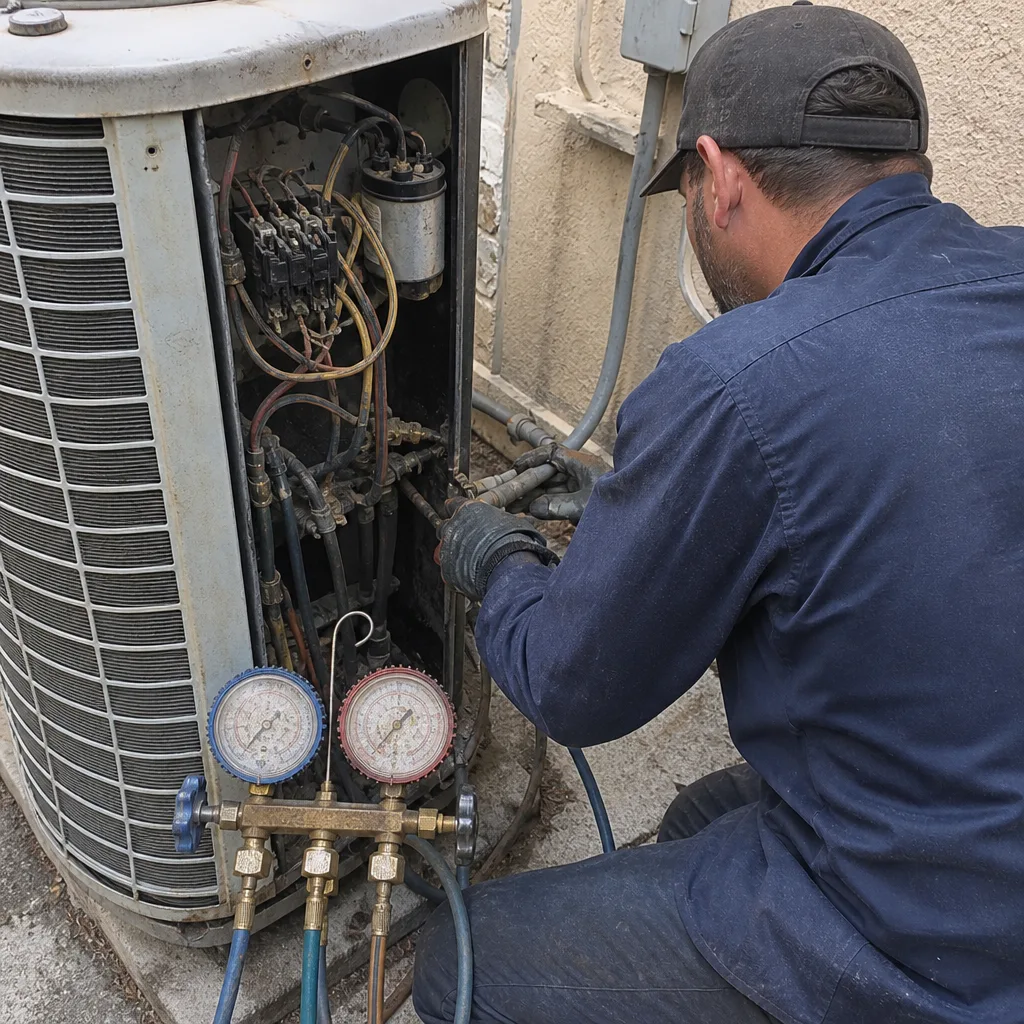 Before
 After
Replacement Cost & What’s Included
In North Las Vegas, Goodman-compatible capacitor replacement typically costs $185 to $340 installed. The lower end is a single round or oval run capacitor on an accessible condenser. The upper end covers dual-run-capacitor swaps on units where the panel is tight, the cap is buried behind the compressor, or we find a second weak component (a start-assist, a contactor) that needs attention.
Here’s what drives the range, so there are no surprises at the door:
- Part type and rating: A single-run 35/5 µF costs less than a dual-run 45/5 with a separate start capacitor paired to it.
- Access: Some Goodman air handlers put the capacitor where the panel has to come off and the wiring has to be disconnected. That’s labor.
- Testing and inspection: We always meter the capacitor and check the fan motor and contactor while we’re in there. A part swap alone can run $185.
- Warranty: Every replacement carries our 90-Day Done Right Promise. If the part fails or the work isn’t right, one call brings us back.
That $185 to $340 installed figure includes the part, the labor, the testing, and the promise. It doesn’t include a second bad part we find during the inspection – and we’ll show you the readings before we add anything.
DIY or Call Us?
We’ll be straight with you. A confident homeowner with a multimeter can test a capacitor and confirm it’s dead – pull the disconnect, verify no power, and check across the terminals after discharging it. Replacing it is where people get hurt. A run capacitor holds a charge after the power is off, and it can deliver a jolt that stops your heart. It sits on live 240-volt wiring when the unit is energized, and the likelihood of mis-reading the microfarad spec, reversing the herm and fan terminals, or bumping the compressor contactor while you’re in there is real. We’ve been called out to a few “I tried it myself” jobs where the new part was wired wrong and the compressor took the damage. That turns a $200 job into a $1,600 job.
If you’re not certain of your own hands on 240-volt live parts, close the panel and call (844) 761-6871. We test the capacitor before anyone says the word compressor, show you the reading, and quote the number while we’re still standing there. No trip charge inside the county. No hassle.
FAQs
In our climate, expect 5 to 10 years from a good-quality run capacitor, often at the low end. Ambient heat above 110°F degrades the electrolyte faster, so North Las Vegas units run through more capacitors than the same model would in a cooler part of the country. If yours is past the 7-year mark, keep it on your radar.
No. A failed capacitor is a sealed component and can’t be rebuilt. Once it’s domed, leaking, or off-spec, it gets replaced, period. That’s actually good news: it’s the cheapest fix in the whole system. Call (844) 761-6871 and we’ll confirm the diagnosis before you pay for any part.
Most single-capacitor replacements are a 20 to 45 minute job once we’re on site. We meter the old part, pull it, install the match, energize the unit, and verify both the fan and compressor start cleanly. You watch the readings before we put the panel back on.
We match to your unit’s nameplate spec and source a quality capacitor from a supplier, not a bargain-bin part. If your exact original rating needs a universal equivalent, we use a higher-voltage-rated match at the same microfarad spec, which is a safe, common practice. Ask anyone on your street who’s had us out. Call (844) 761-6871 for a free estimate, and a live person will answer.
Written by the team at Ray’s Heating & Air North Las Vegas, serving North Las Vegas and nearby areas.