
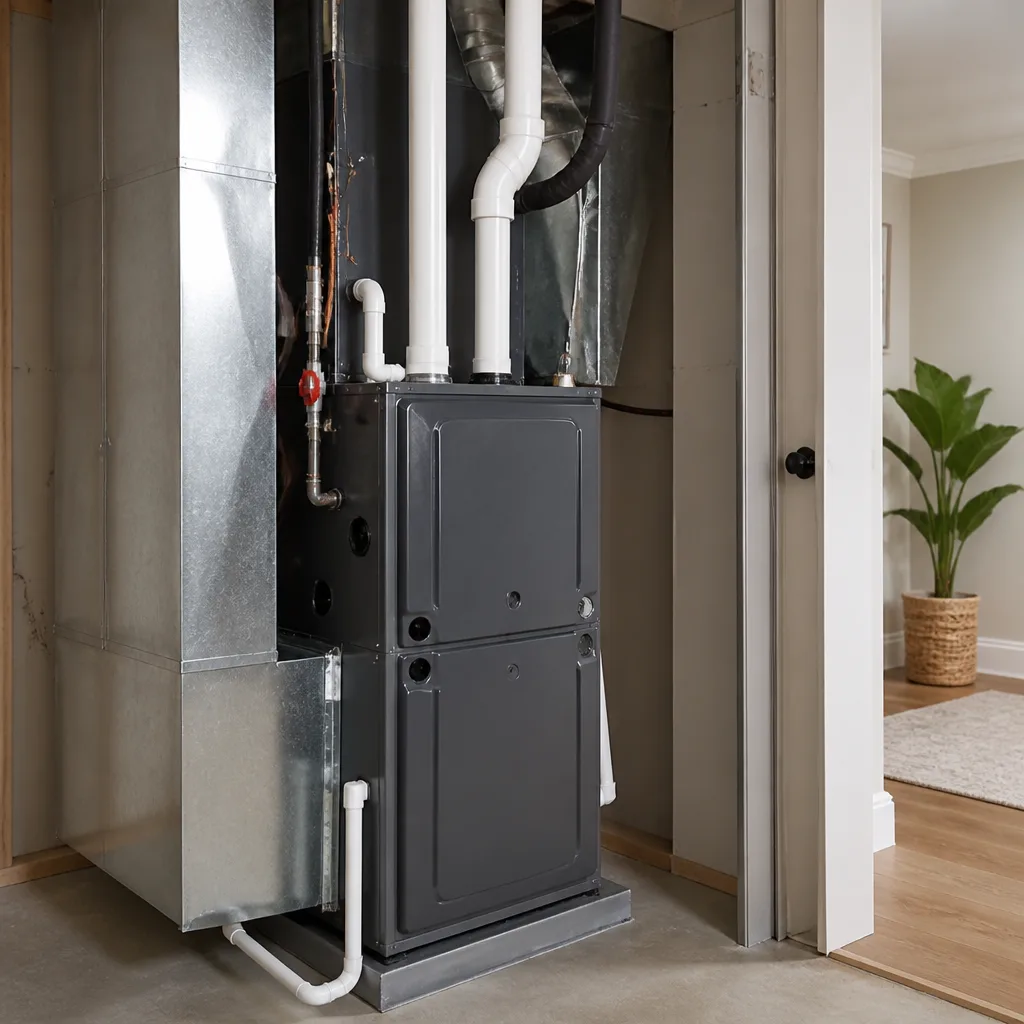
 Furnace & heating
 AC repair
 Heat pumps
 Ductless mini splits
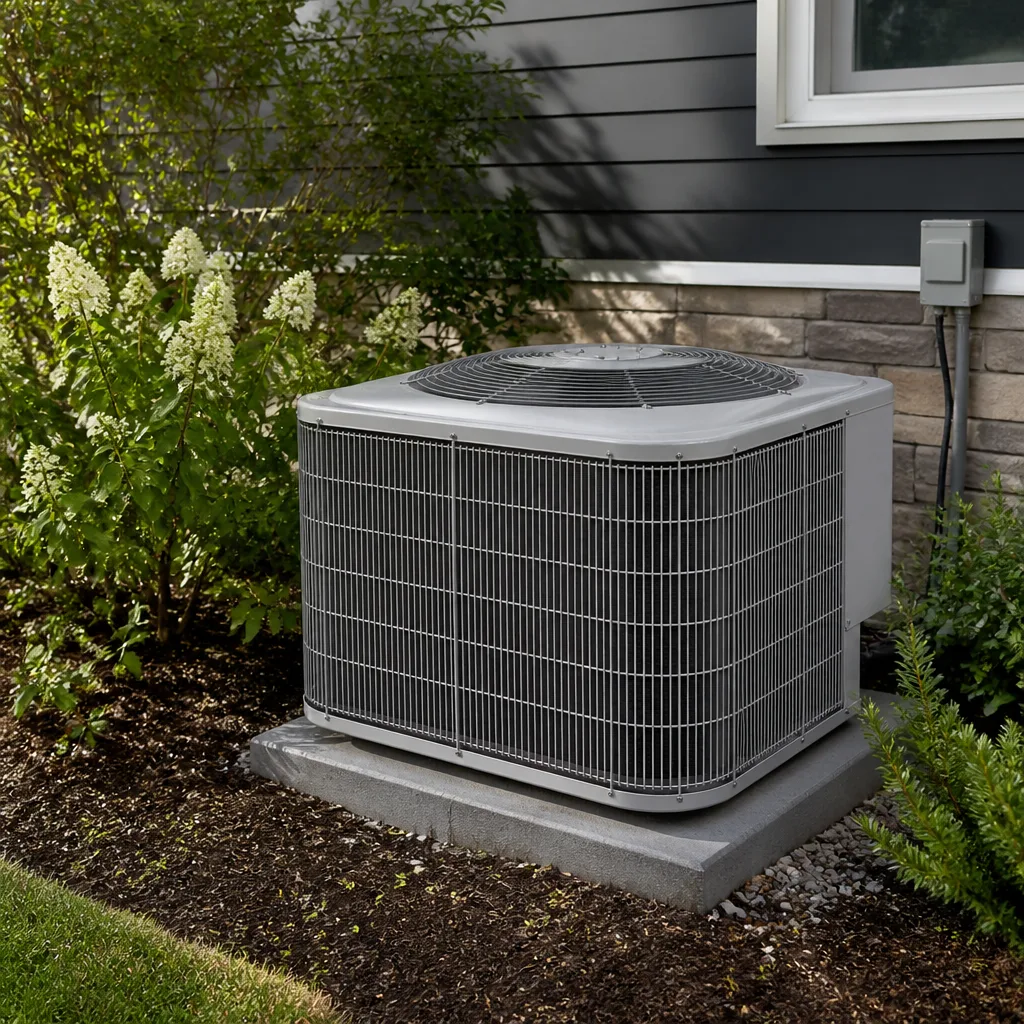 Carrier
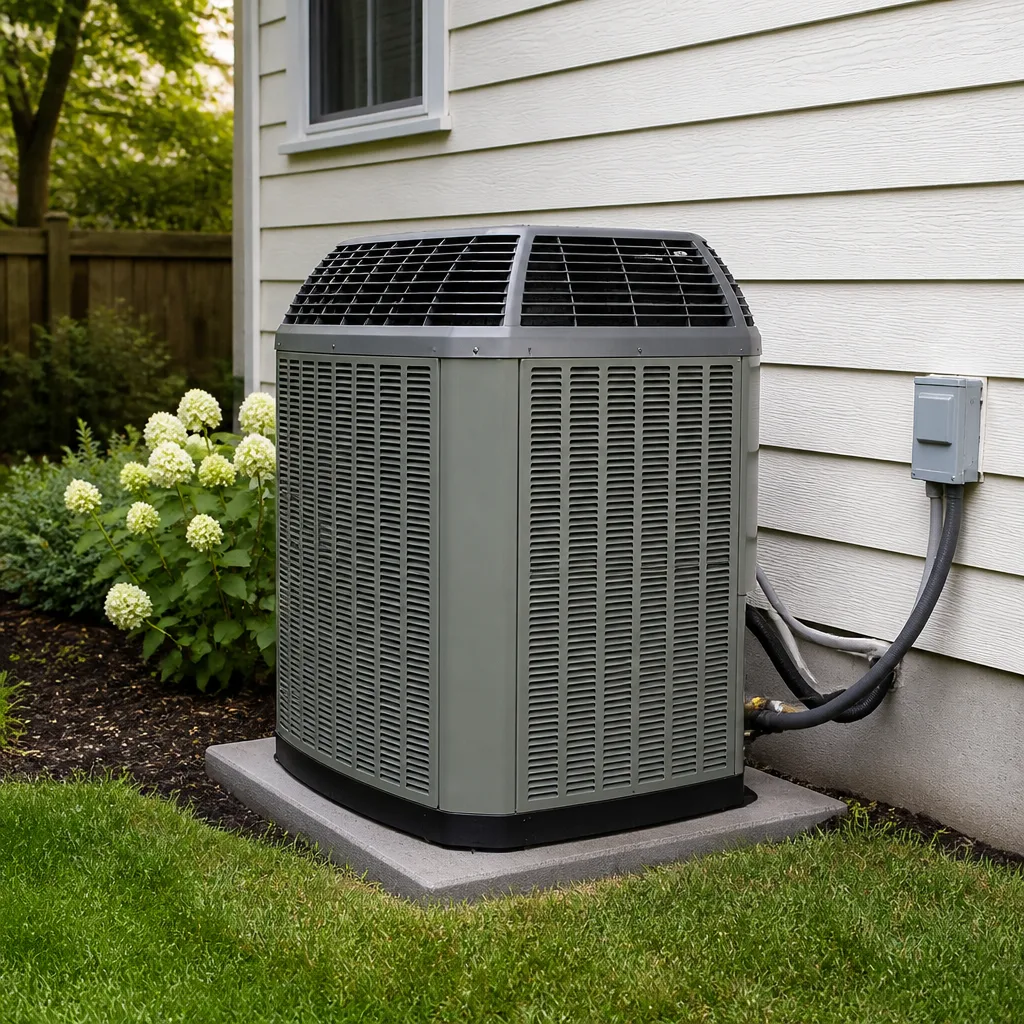 Trane
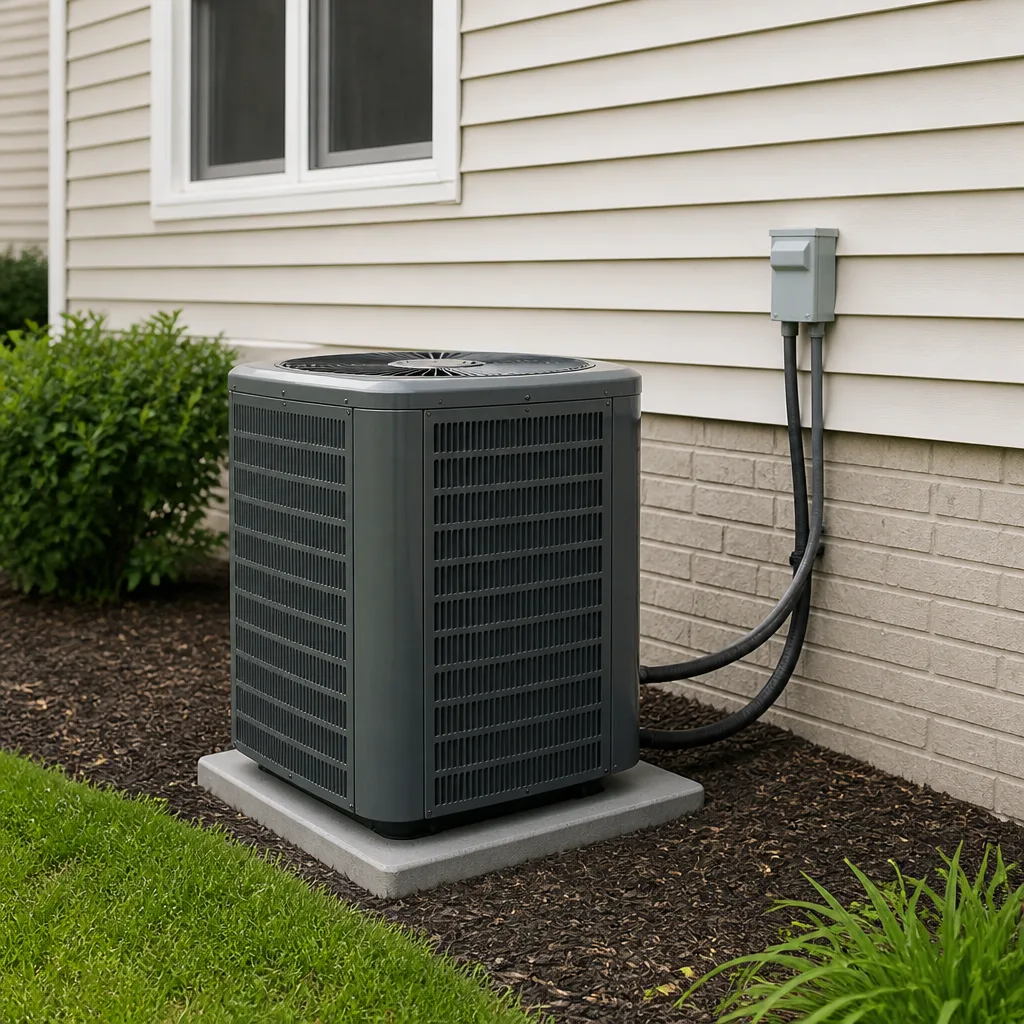 Goodman
Seasonal tune-up and full diagnostic on your Carrier, Trane, or Goodman system - readings shown to you before any repair is proposed
Diagnosis first, numbers second - you approve the repair price before a single part goes in.
Get your free estimateStyles & brands we work with
- AC repair
- Furnace & heating
- Heat pumps
- Ductless mini splits
- Carrier
- Trane
- Goodman
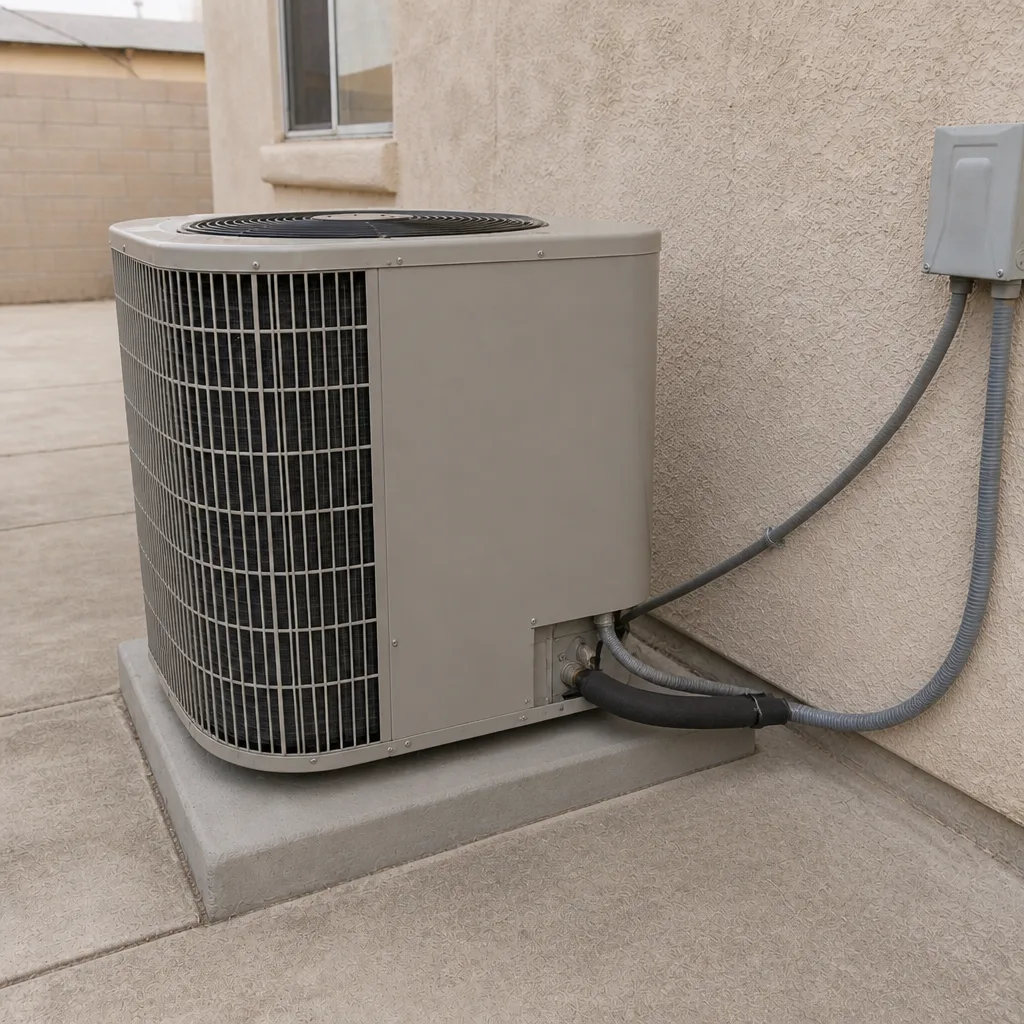
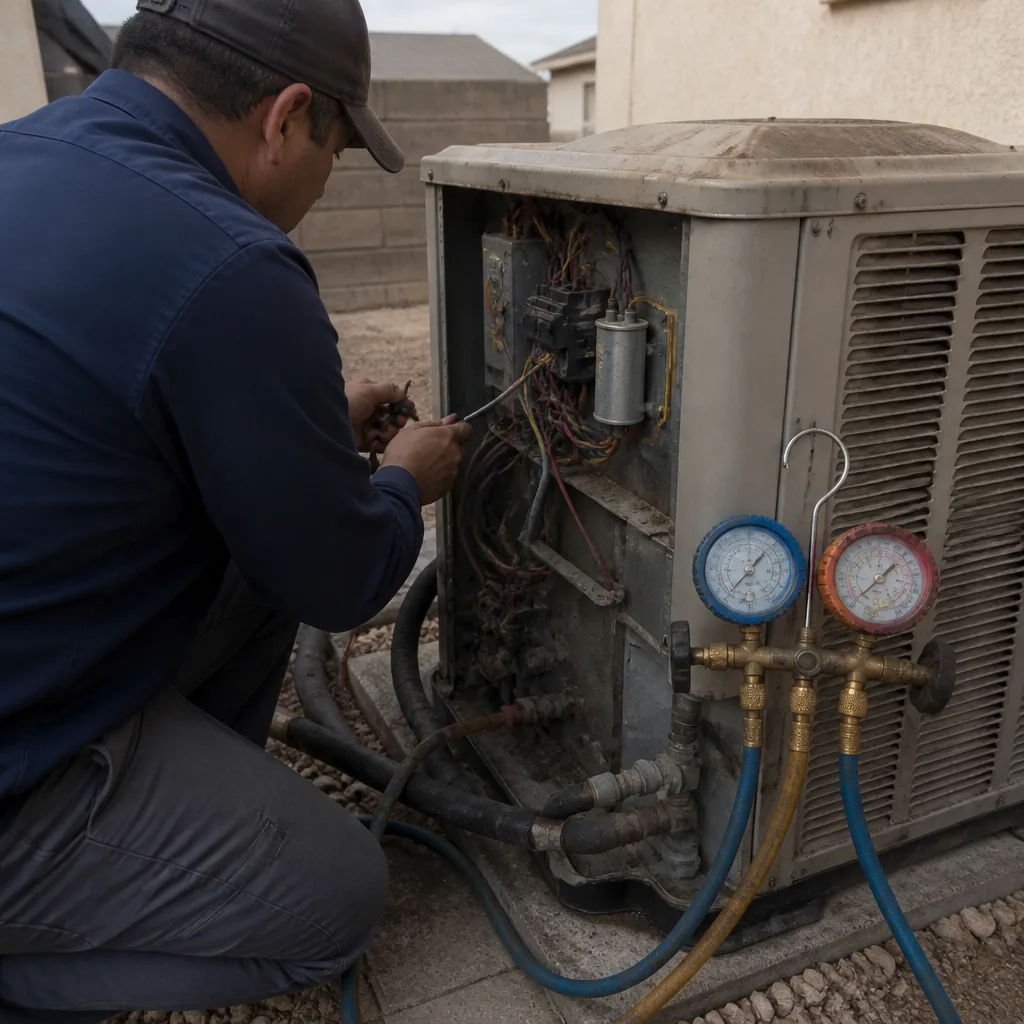
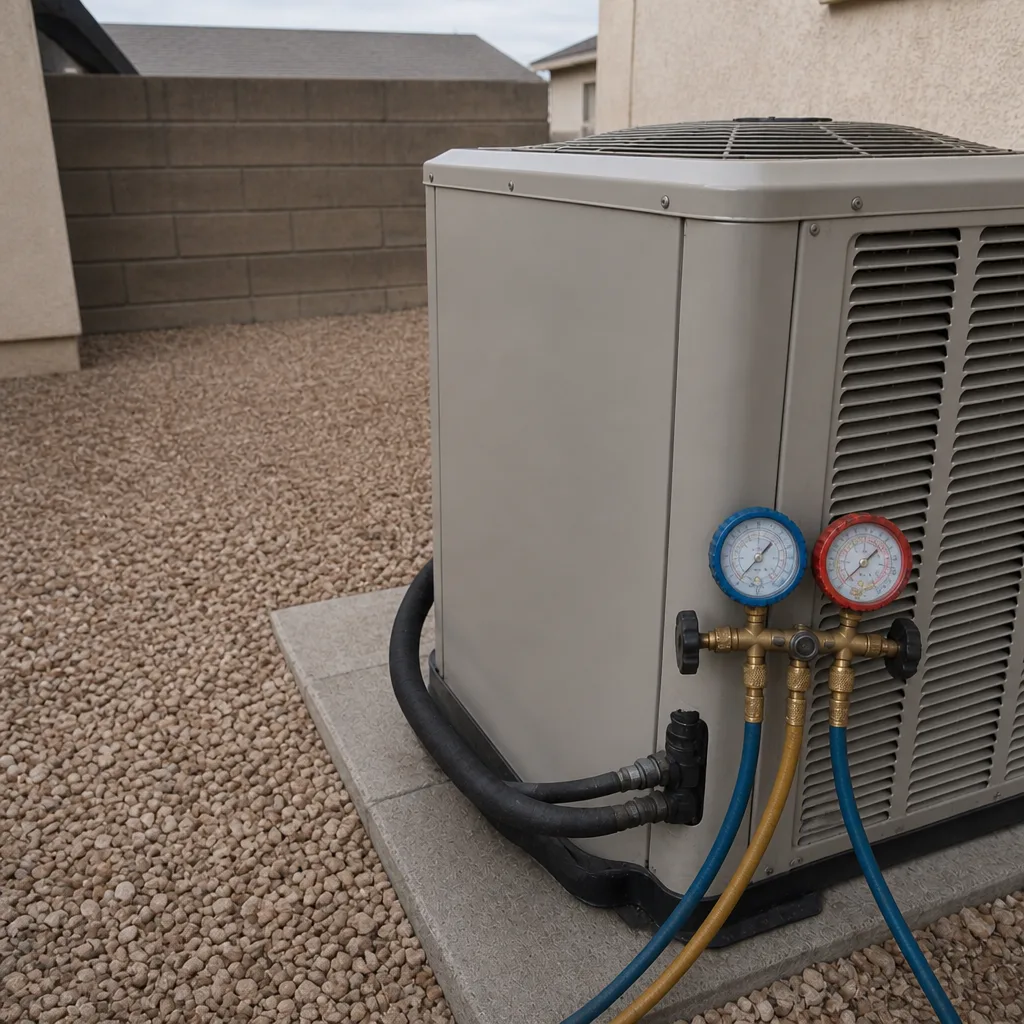
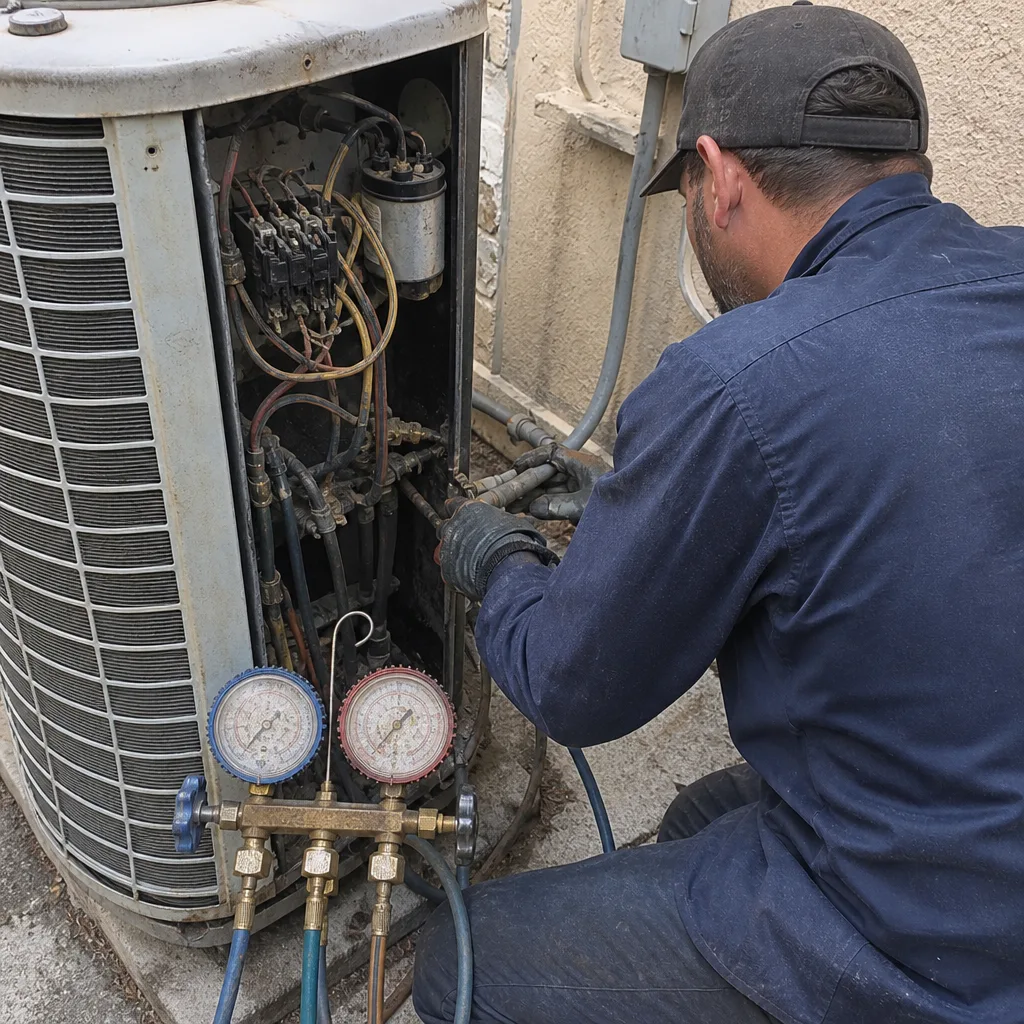
See the difference
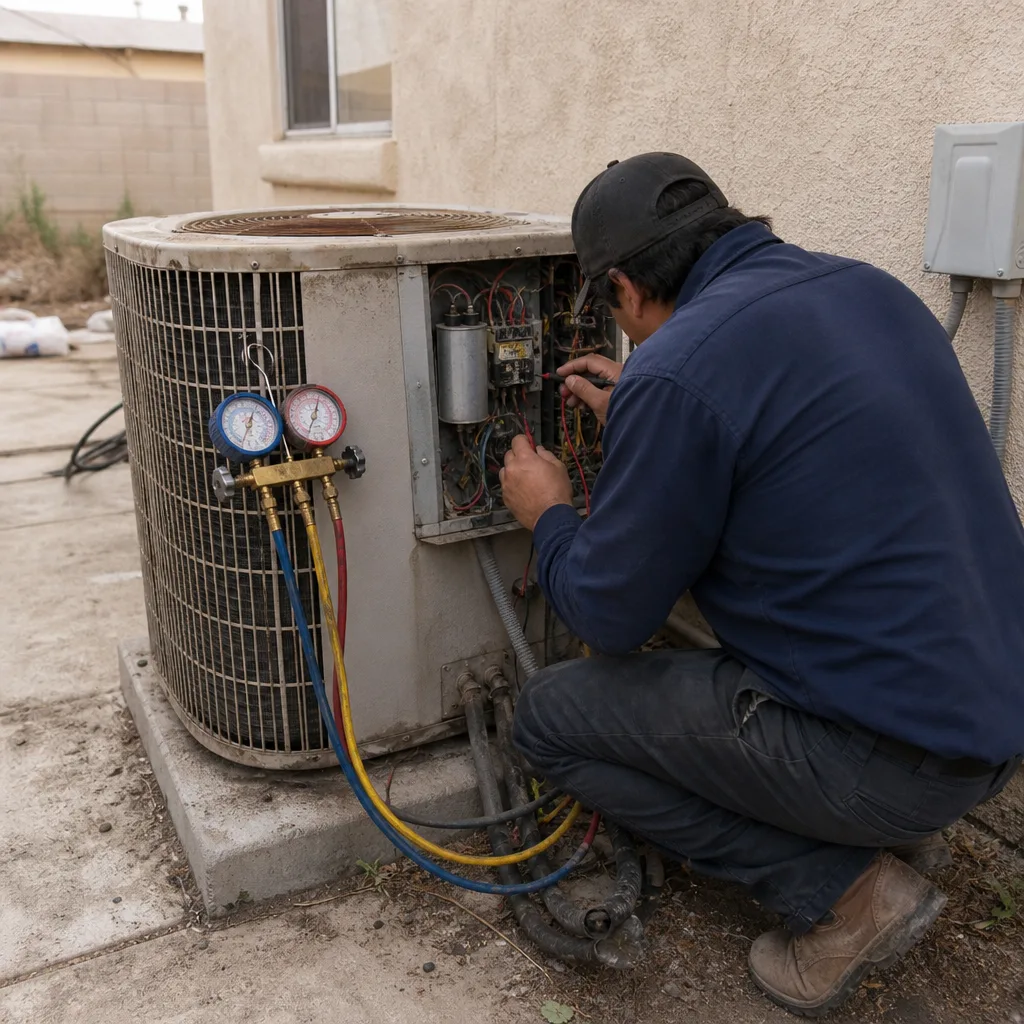 Before
 After
 Before
 After
 Before
 After
Furnace Blowing Cold Air in North Las Vegas, NV? Your Flame Sensor Is the Usual Suspect
In North Las Vegas, a furnace blowing cold air in winter is almost always a flame sensor coated in combustion residue, not a cracked heat exchanger. That’s the short answer, and it surprises people because the scary answer is the one they’ve already read online. Your furnace lights, the sensor doesn’t get a clean signal back, the control board shuts the burner off as a safety step, and the blower keeps pushing air through a cold plenum. Fixing it is a cleaning job, usually a furnace repair that runs $150-$700. Call (844) 761-6871 if you’d rather skip the guesswork.
Key Takeaways
- A dirty flame sensor is the most common cause of cold air from an NLV furnace. It is a cleaning fix, not a parts swap.
- A clogged filter trips the limit switch and shuts the burner off mid-cycle. Change it before you call anyone.
- A cracked heat exchanger is the least common cause locally. If you smell gas or see soot, shut the furnace off.
- Furnaces in 2000-2007 tract homes now run 17-24 years old, so first-generation control boards fail regularly in North Las Vegas.
Why Desert Winters Are Weirdly Hard on Furnaces
Most of North Las Vegas barely touches the furnace between April and October. Then December rolls in and that same furnace might fire twenty or thirty short cycles a day for three or four weeks of real chill. Short cycles are the problem. Each ignition leaves a thin oxide film on the flame sensor rod, and a sensor that never runs long enough to burn it off keeps building film until the signal gets too weak for the board to trust.
That’s why an NLV furnace that sat untouched all summer can start blowing cold air the first week you need it. The unit didn’t fail because it’s under some unusual winter load. It failed because mild desert winters train short-cycle habits into the equipment.
The climate outside adds its own wrinkle. Spring wind off the open desert north of the city packs fine silt into outdoor equipment and venting, and the same grit finds its way into burners and sensor rods over time. A furnace filter that looks gray by February is doing its job – but when it clogs past that point, the limit switch trips and the burner shuts down mid-cycle. Same symptom, different cause, and a five-dollar filter may be the whole story.
What to Check Before You Call Anybody
Three things, in this order. None of them involves opening the gas valve or pulling a burner assembly, and you should not do either yourself – the gas train and heat exchanger need trained hands and a combustion analyzer.
- Check the filter. Pull it and hold it up to a flashlight. If light won’t come through, replace it and reset the furnace. A clogged filter is a genuine cold-air cause, and it’s the one thing every homeowner can rule out in sixty seconds.
- Look for the flash code. Yours is a control board that flashes a code, or a small LED in a sight glass on the blower door. Count the flashes and write the pattern down before calling. Most post-2000 boards in NLV tract homes use these codes to tell a technician exactly which safety circuit opened. That’s information in your hand, and it shortens the diagnostic.
- Notice the behavior. Does the burner light and then shut off within a few seconds? That points at the flame sensor. Does the burner run a few minutes, then quit with the blower still going? That points at the limit switch and airflow. Either way, you now know what kind of call this is.
Separating “Schedule It” From “Shut It Off”
Cold air alone is not an emergency. Here’s how Ray sorts it when the phone rings in January.
| What You Notice | Likely Cause | Urgency |
|---|---|---|
| Burner lights, dies in seconds, blower keeps running | Dirty flame sensor | Schedule a cleaning |
| Burner runs a few minutes, then quits, filter is black | Tripped limit switch from airflow | Change filter, reset, watch it |
| Clean sensor, burner still won’t stay lit, code points at the board | Failing control board | Schedule a diagnostic |
| Gas smell, soot, or a yellow lazy flame | Heat exchanger or combustion fault | Shut the furnace off, call now |
The bottom row is the one to respect. A cracked heat exchanger can let combustion byproducts into the airstream, and no amount of resetting makes that safe. Ray finds them, but honestly, they’re the rarest thing on this list in North Las Vegas. Generic furnace advice leads with cracks because it’s the most expensive and frightening answer. In this city, the odds run the other way.
The 17-to-24-Year-Old Furnace Problem
Here’s something the national outfits won’t tell you. A huge share of North Las Vegas housing went up during the 2000s boom, and production builders installed the same builder-grade furnaces up and down each street. Those units are now 17 to 24 years old. The first generation of control boards inside them is reaching the end of its service life, often within a year or two of the neighbors’ boards failing, because they were all built around the same time.
So if a technician cleans the flame sensor and the error code still comes back as a board fault, the conversation changes. That’s when repair versus replacement becomes real math. You can learn more about how Ray handles that on the Heating & Furnace in North Las Vegas page, but the short version is this: a board swap on an otherwise healthy furnace in its teens is worth doing. A board swap on a 22-year-old unit with a rusting heat exchanger is money spent on borrowed time, and Ray will say so instead of selling the board.
Same reasoning applies across brands. Carrier, Trane, Lennox and Goodman units all show up in these subdivisions, and the age of the equipment matters far more than the name on the door when you’re weighing repair against replacement.
Where Ray’s Heating & Air North Las Vegas Comes In
The 90-Day Done Right Promise matters most in exactly this situation. A flame sensor cleaning is cheap and quick, but if the real issue was something deeper, a sensor that fails again inside 90 days brings Ray back at no extra hassle. That promise is in writing on every heating and cooling job, not just the big ones. It’s why a cleaning call is worth making properly instead of as a quick wipe-and-go.
Readings come before numbers. That means a technician tests the capacitor and meters the flame signal before any part gets named, and you see the actual readings before you approve the work. A free second opinion is available on any written estimate, and there’s no trip charge inside the county. If someone else has already quoted a compressor or a new furnace off a cold-air complaint, get the second look. That’s how the rotating-crew outfits lose business – they quote the worst-case part on the phone before anyone has tested anything. Ray’s Heating & Air North Las Vegas answers live, around the clock, and the person who shows up is the one who comes back.
For deeper coverage of the whole system – tune-ups, heat pumps, and what to expect across the seasons – the Heating & Furnace section lays out the full picture. A tune-up on a furnace this age runs $80-$200, and it’s the cheapest way to catch a failing sensor or a weak board before January does.
FAQs
Furnace repair in North Las Vegas typically runs $150-$700, and a flame sensor cleaning usually lands at the low end of that range. A control board replacement pushes toward the top, especially on a 17-to-24-year-old unit. Call (844) 761-6871 for an exact quote after a real diagnostic – estimates are free.
You can reach the flame sensor on many furnaces, but we don’t recommend it. The sensor sits inside the burner compartment near the gas valve, and the wrong abrasive or a bent rod can cost you a part that was working. Worse, opening the combustion area without resealing it can create a carbon monoxide path. Have a trained technician pull and clean it. If you’re the hands-on type, spend that ambition on your filter instead.
The blower runs when the control board tells it to, and the board keeps the fan going after the burner shuts off to clear residual heat. When the burner quits early – from a dirty flame sensor, a tripped limit switch, or a board fault – the fan delivers cold air because there’s no heat to move. It’s a safety feature working as designed, not a separate failure.
It depends on the part and the condition of the heat exchanger. A control board on a firm furnace in its teens is worth replacing. A board on a 22-year-old unit with a rusty exchanger isn’t. Get the readings first and decide from numbers, not fear. Call (844) 761-6871 and we’ll walk you through what the meter says.
If you’d rather have it looked at, Ray’s Heating & Air North Las Vegas offers a no-pressure assessment in North Las Vegas – call (844) 761-6871 for a free estimate.
Written by the team at Ray’s Heating & Air North Las Vegas, serving North Las Vegas, NV.