
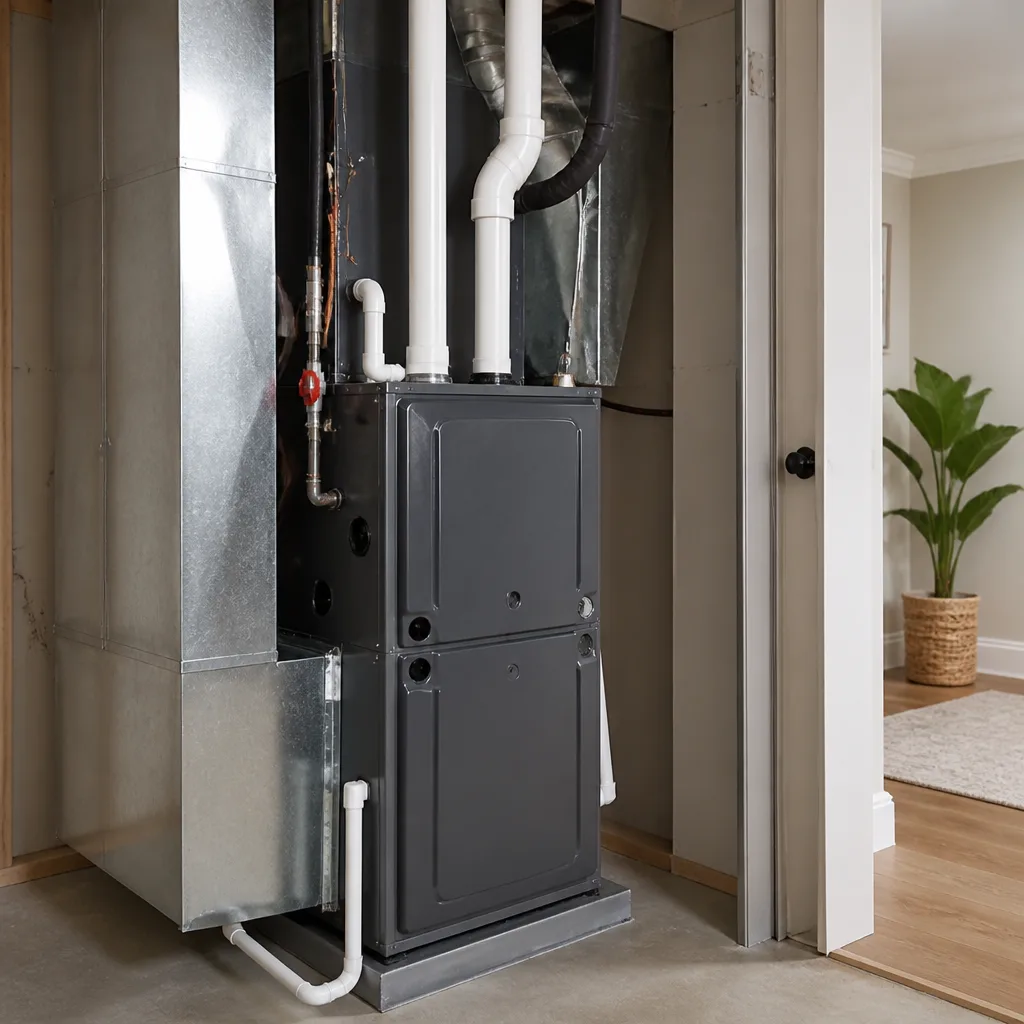
 Furnace & heating
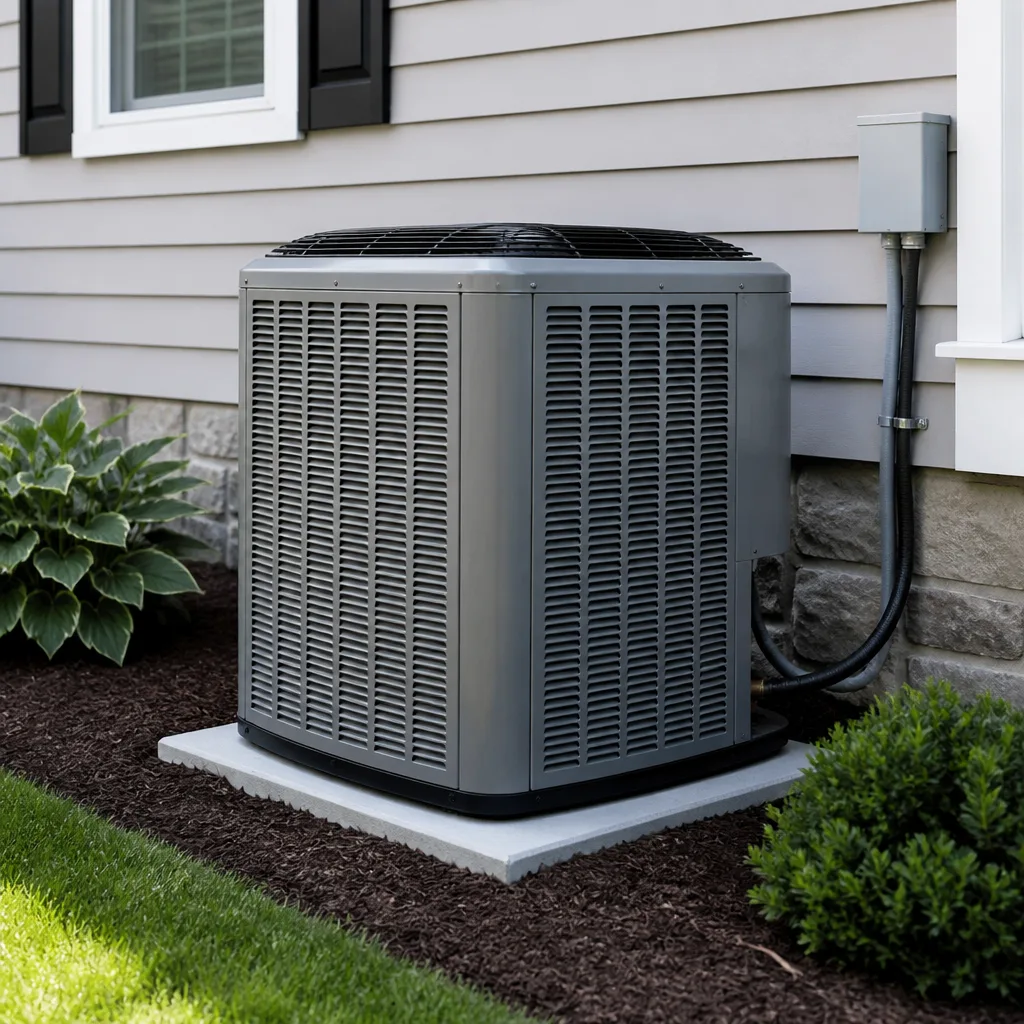 AC repair
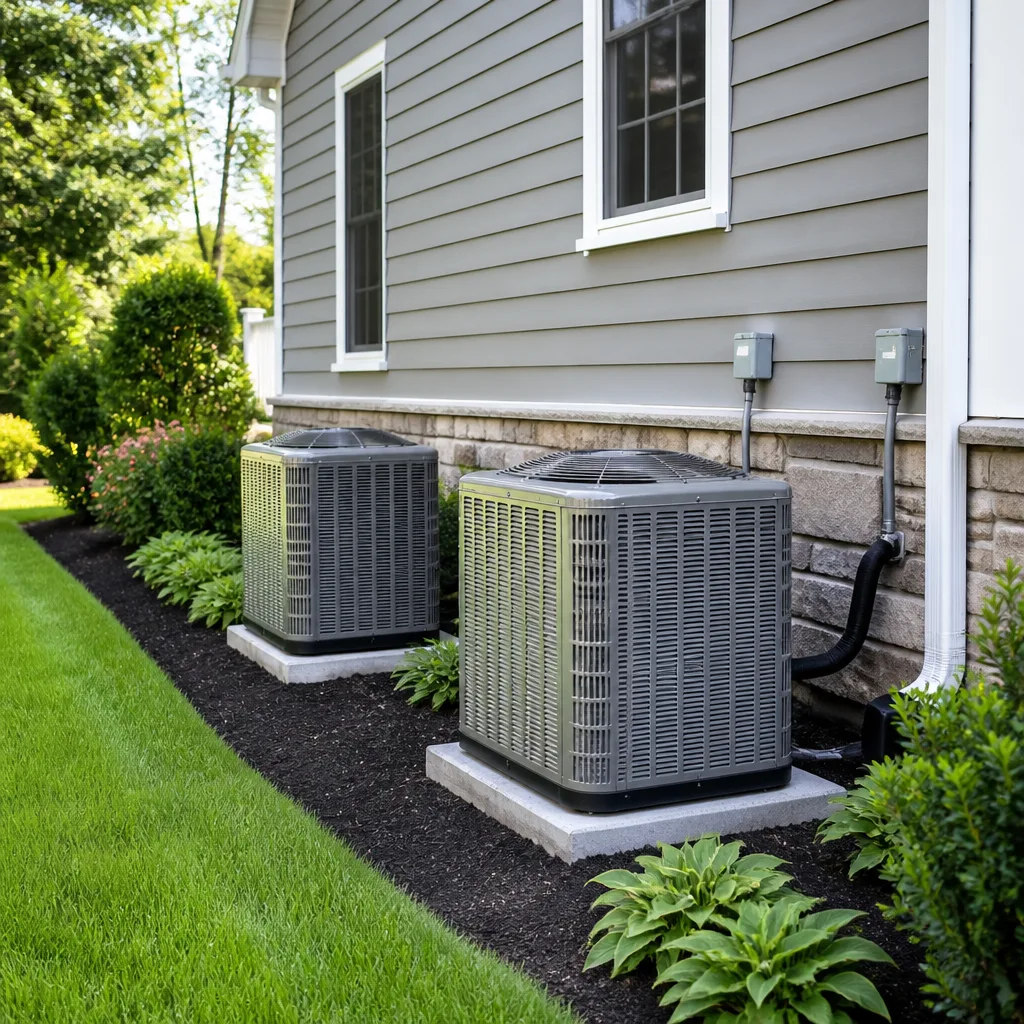 Heat pumps
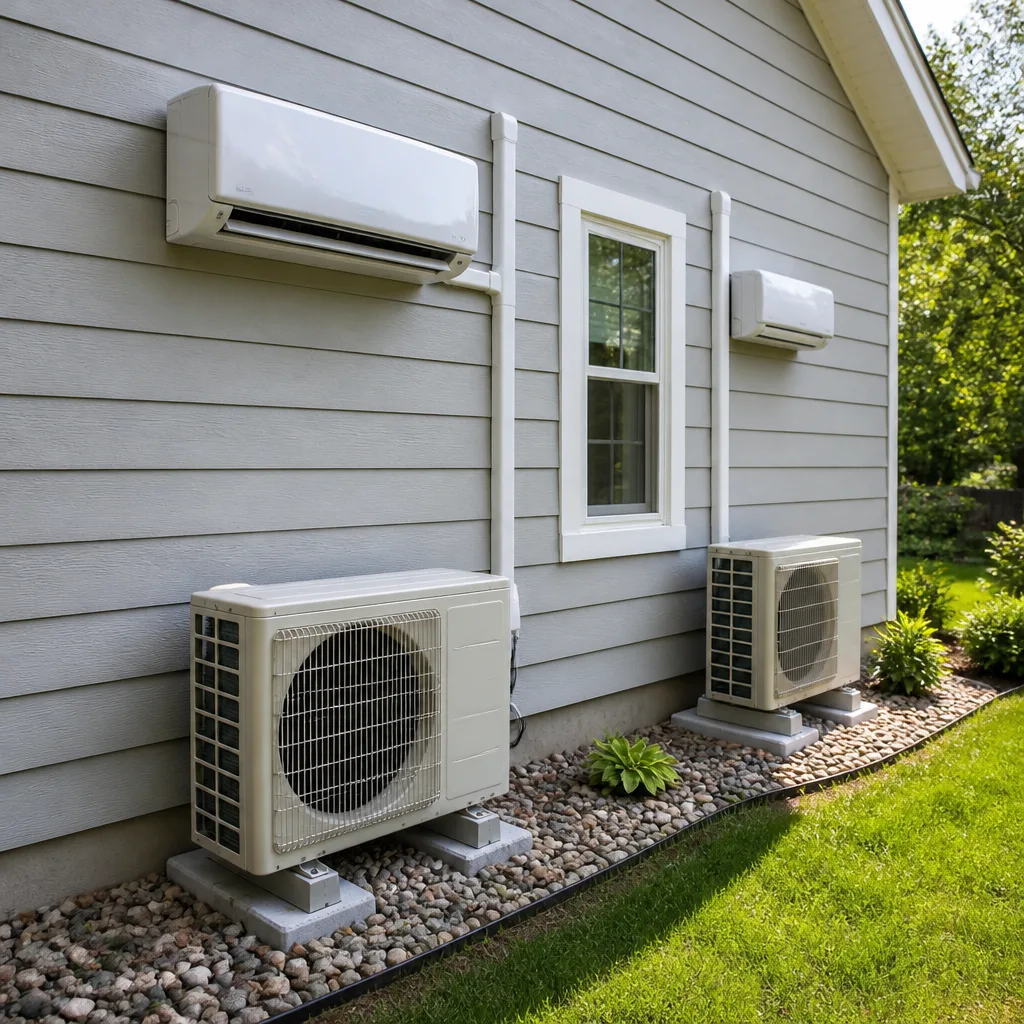 Ductless mini splits
 Carrier
 Trane
 Goodman
Seasonal tune-up and full diagnostic on your Carrier, Trane, or Goodman system - readings shown to you before any repair is proposed
Diagnosis first, numbers second - you approve the repair price before a single part goes in.
Get your free estimateStyles & brands we work with
- AC repair
- Furnace & heating
- Heat pumps
- Ductless mini splits
- Carrier
- Trane
- Goodman
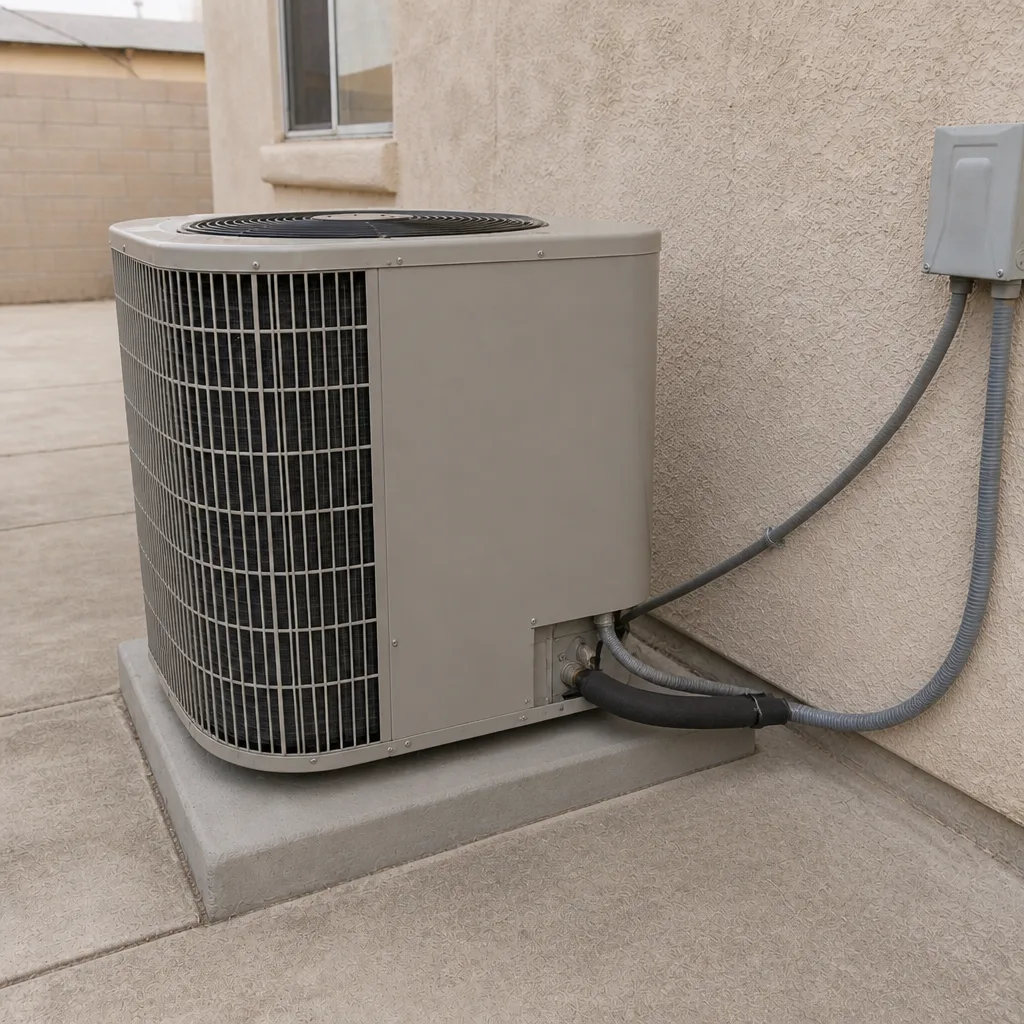
See the difference
 Before
 After
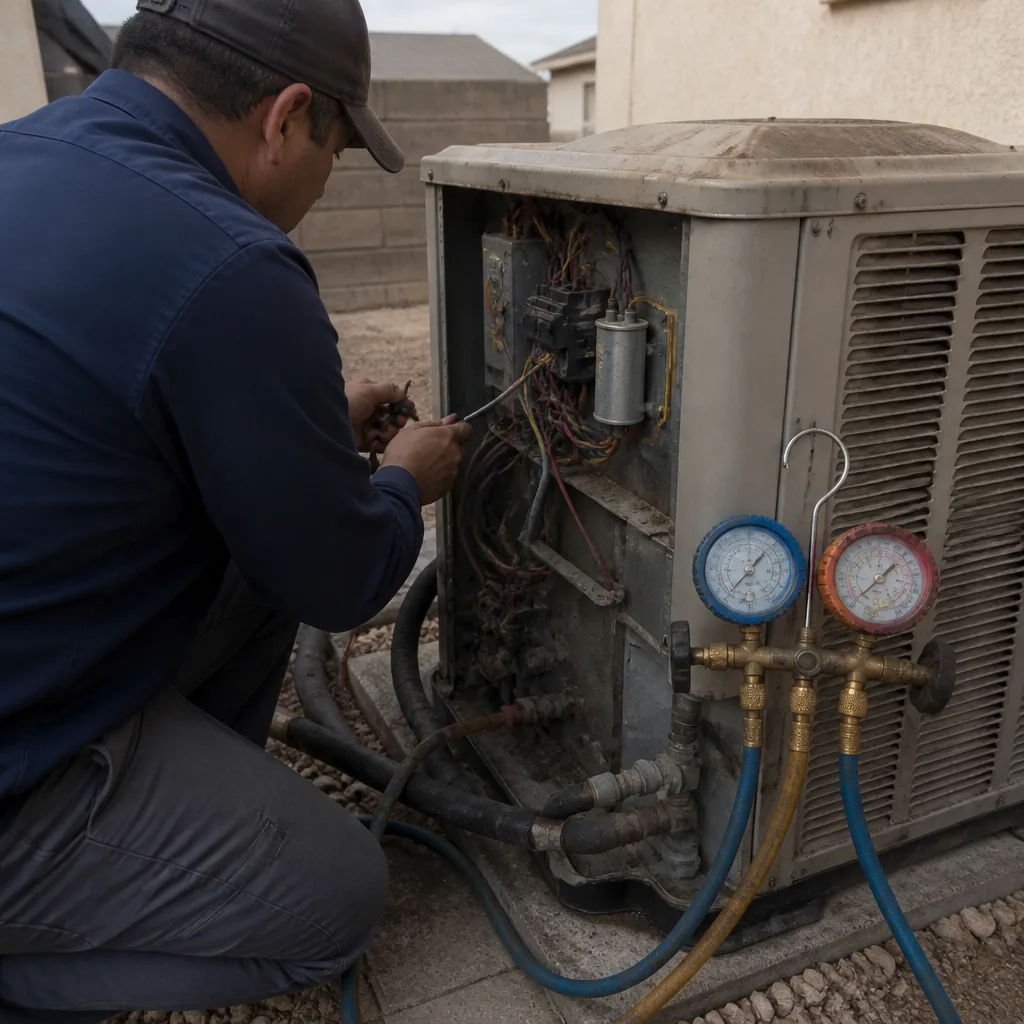 Before
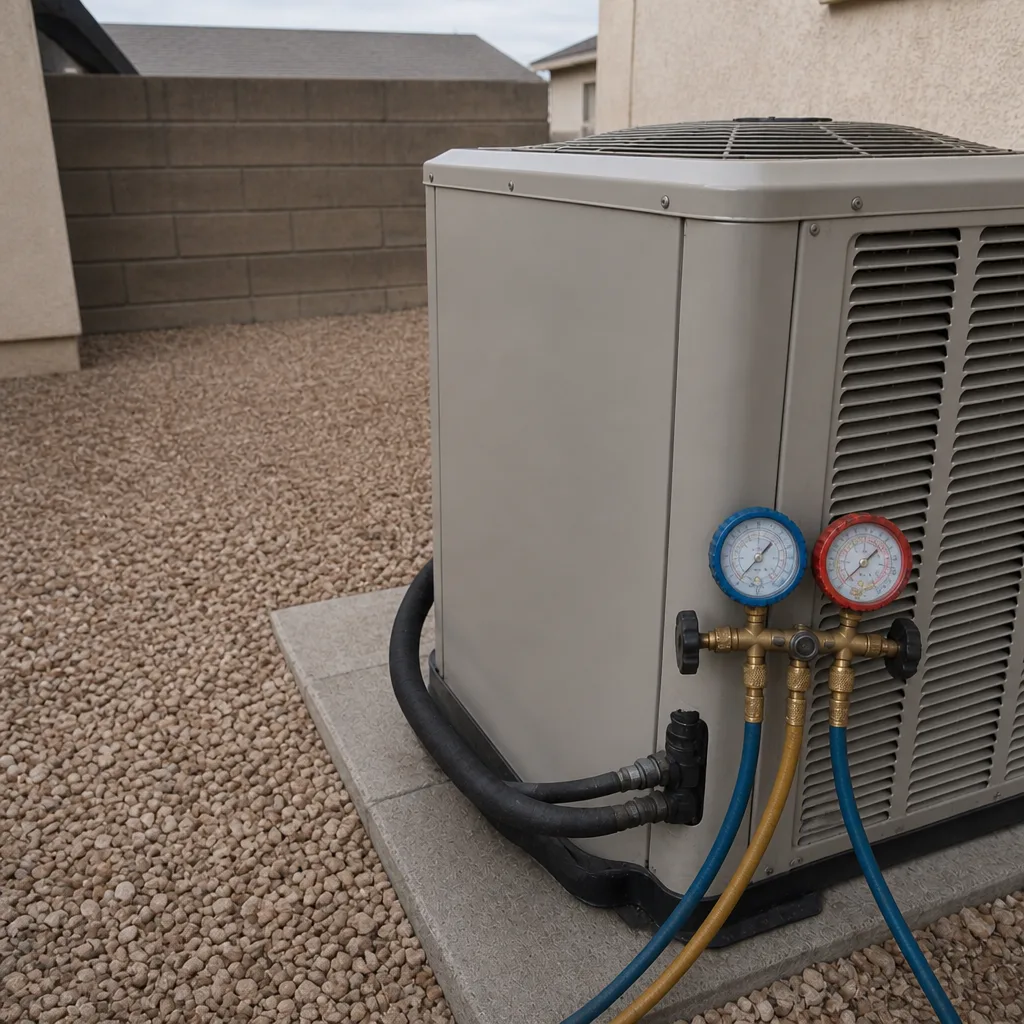 After
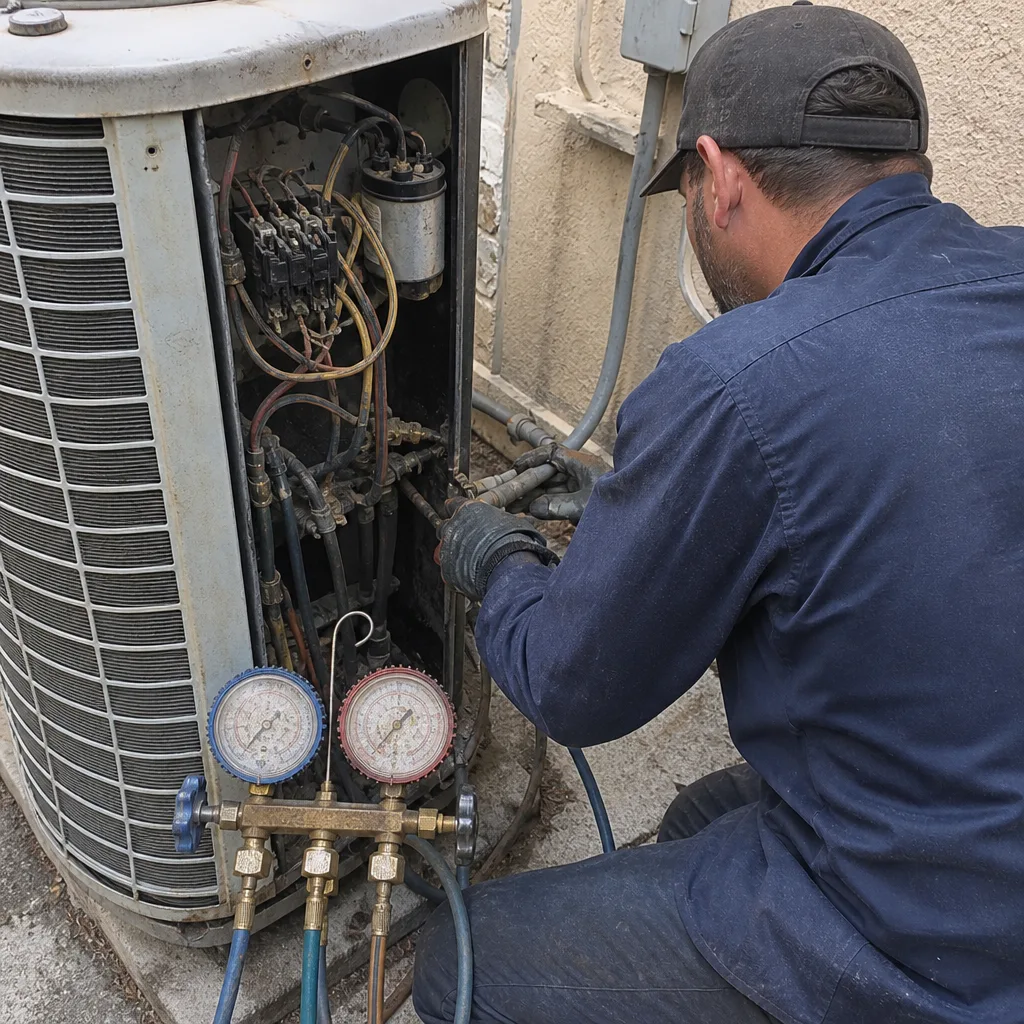 Before
 After
Why Is My AC Not Turning On in North Las Vegas? Most Likely a Failed Run Capacitor
The single most likely reason your AC won’t turn on in North Las Vegas is a failed run capacitor – a small $20 to $50 part that gives the compressor and fan motors the kick they need to start. When it dies, the thermostat still calls for cooling, the outdoor unit may hum or sit completely silent, and the system looks “off” even though nothing else is broken. Before you call anyone, the honest order of checks is thermostat, breaker, disconnect box, then drain float switch. If all four look right and your home is more than 10 years old, the capacitor is the top suspect. If you want a pro to confirm it, call Ray’s Heating & Air North Las Vegas at (844) 761-6871 – estimates are free.
Here’s the thing nobody tells you: in a neighborhood of 2003-built Goodman split systems hitting 115°F ambient temps every July, run capacitors fail so often it’s the number-one part we replace all summer. So that’s where this page focuses.
Why North Las Vegas Kills Capacitors Faster
North Las Vegas sits in a high-desert wind corridor where summer design temps run well above the Strip’s, and most of the city’s housing went up fast during the 2000s boom. Production builders used low-grade original equipment, so entire subdivisions are now hitting the same 15-to-20-year failure window at once. Add wind-driven dust that coats coils and pushes head pressure, and you get the pattern we see every June: a block of homes with original builder-grade condensers all quitting the same season.
A run capacitor is rated for a specific voltage and a specific operating temperature. North Las Vegas combines two things that burn through that rating. Peak summer demand sends electrical surges through the neighborhood grid, and ambient heat pushes the outdoor unit enclosure past 130°F on the hottest afternoons. Heat plus surge degrades capacitors roughly 30 to 40% faster than the national average lifespan suggests. That’s why a capacitor in a brand-new Phoenix build and one in a 2004 tract home here can look identical and behave nothing alike.
We stock a full range of capacitors on the truck every day, all summer. If it’s the cap, we can usually swap it the same visit.
What to Check First (and Where to Stop)
You can safely handle the first four checks yourself. The fifth is the line – past it, stop and call someone trained.
- Thermostat setting and batteries. Make sure it’s set to COOL, the fan is on AUTO, and the target temp is below room temp. Dead batteries in a digital thermostat will leave the system dead silent even though the display looks fine.
- The breaker. This is where a lot of folks go wrong. A tripped breaker doesn’t always flip fully to OFF; it can sit in an intermediate middle position that looks “on” until you push it. Flip it fully off, then fully back on.
- The disconnect box at the outdoor unit. Some have a pull-out fuse block, some have a switch. Confirm it’s seated and in the ON position. If the fuse block is pulled or the switch is off, the outdoor unit has no power at all.
- The drain float switch. A clogged condensate line trips the float, which shuts the whole system down as a safety. If you find standing water in the pan, that’s your culprit.
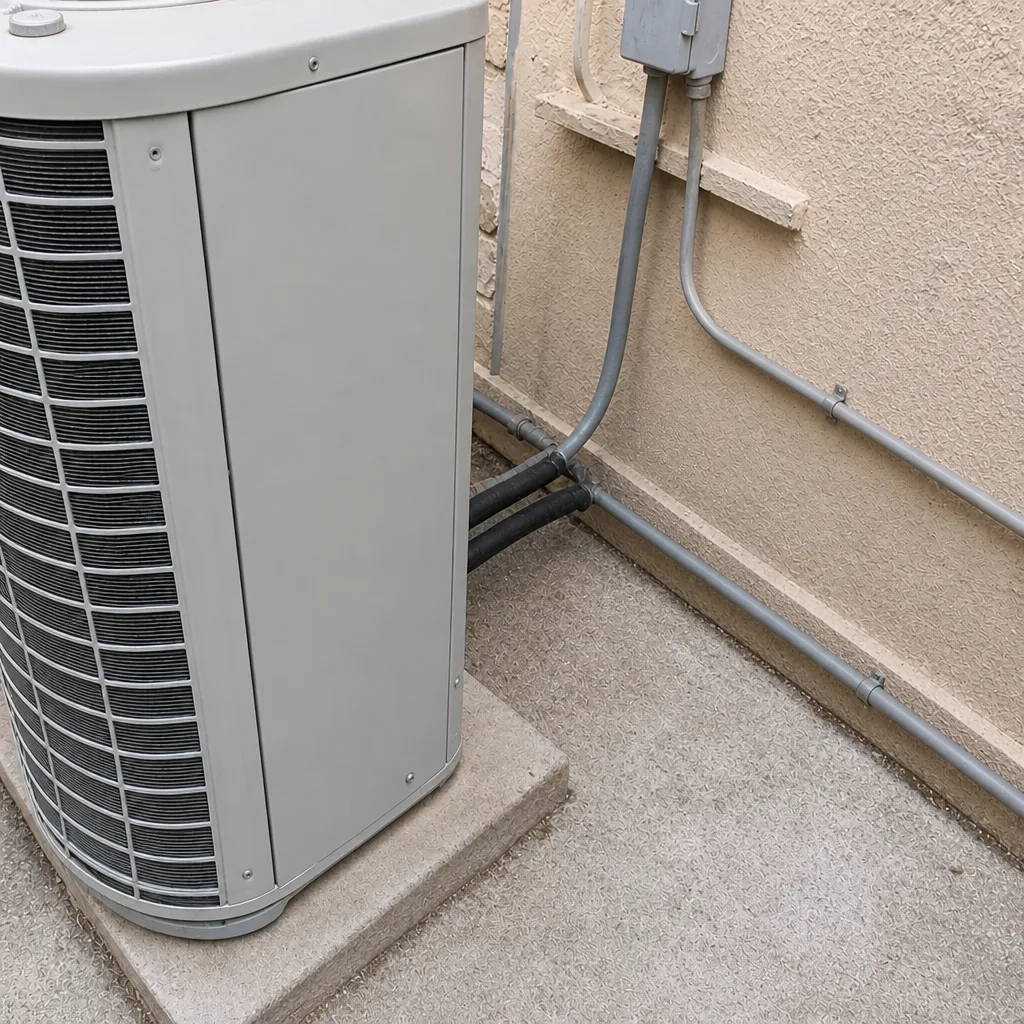
If all four check out and your system is silent or humming, that’s the point to call. A capacitor holds a real charge even after the power is off. Touching the terminals without discharging it first is a genuine electrocution risk, and the panel has to come apart to reach it. That work belongs to someone with a meter and a discharge tool, not a homeowner with a screwdriver and YouTube. We’re serious about this one.
What a Failed Run Capacitor Actually Does
Think of the capacitor as the shove that gets a heavy motor spinning. The compressor motor and the condenser fan motor both need that jolt to start turning. When the cap runs weak or dead, the motors either hum without turning or do nothing at all. The indoor blower might still run – so you feel air, but it’s not cold – or the whole thing sits quiet.
Because a hum sounds like nothing from inside the house, most people assume the thermostat or the breaker. Every generic article says check those first. They’re not wrong, but they’re not where the actual failure lives most of the time in North Las Vegas.
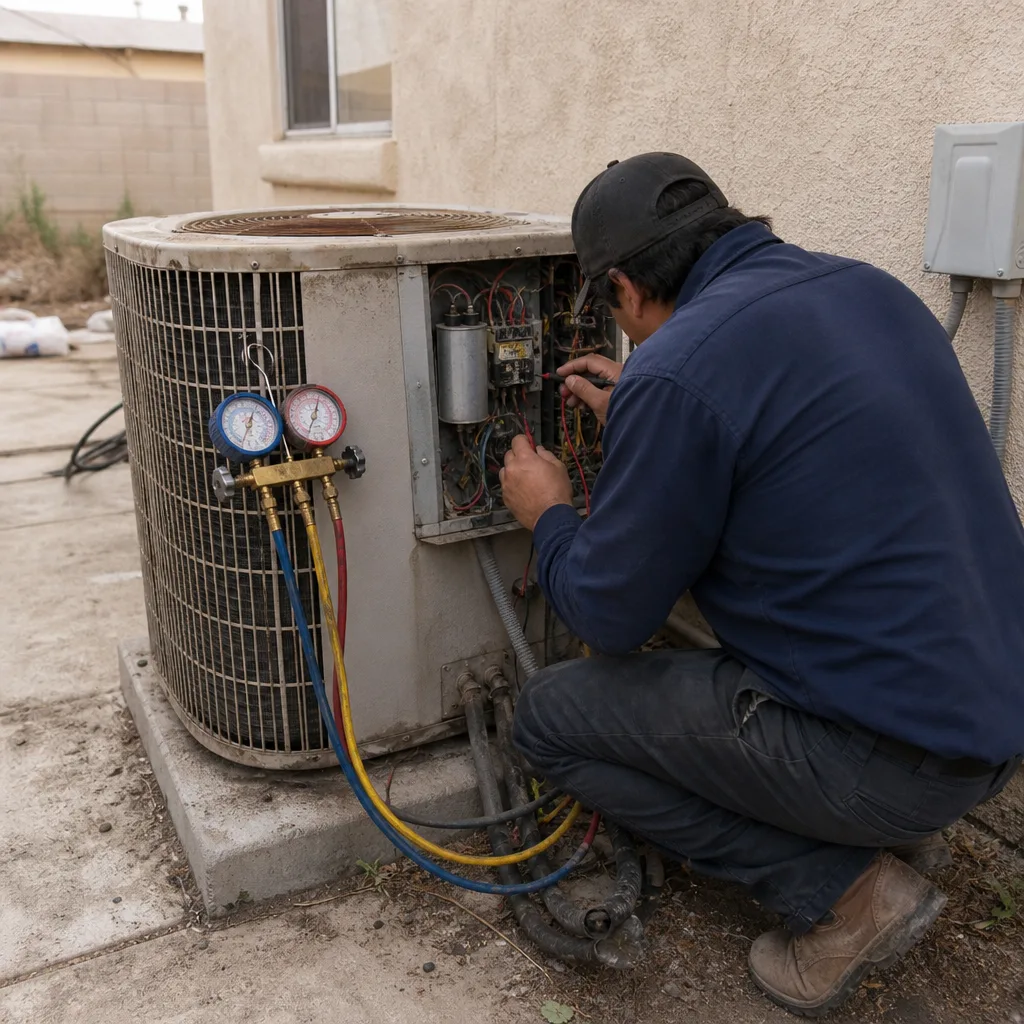
Here’s how we confirm it. We take a microfarad reading with a meter and compare it to the rating stamped on the cap. A cap rated at 45/5 µF that reads 30/2 is weak and on its way out even if it looks perfectly clean. We don’t call it from a “looks burnt” guess or a visual inspection. We test it, show you the reading, then give you the number. That’s the difference you’re paying for.
What It Costs in North Las Vegas
Readings first, numbers second – you’ll see both before any work begins. Here’s where things land in this market:
| Job | Typical Range |
|---|---|
| Run capacitor replacement (part + labor) | $150-$350 |
| Full AC repair (diagnostic + repair) | $150-$650 |
| Seasonal tune-up | $80-$200 |
| Full AC installation | $3500-$7500 |
A capacitor job is the best-case version of “AC won’t turn on.” It’s quick, it’s cheap, and if that’s all it is, you’re back to cold air the same day. The larger repair range covers the cases where a weak cap has been stressing the compressor or fan motor – running a motor on a bad cap is exactly how a $30 part turns into a $900 repair. That’s also why we don’t wait until the motor seizes to test the cap.
Every job we do carries the 90-Day Done Right Promise in writing: if it isn’t done right, one call brings us back. If you’ve already got a written estimate elsewhere, we’ll give you a free second opinion on it. And there’s no trip charge inside the county. We’re also happy to apply our senior and veteran 10% discount where it fits.
Repair or Replace?
For a system over 15 years old that’s had two or more repairs in the last three years, replacement is often the better money. For a 10-year-old unit with a failed capacitor and clean coils, repairing is almost always right. We’ll tell you which side of that line you’re on honestly, even when the replacement is the bigger ticket. We service all the major brands – if your system is a York, Daikin, Bryant, or American Standard, we know the parts and the quirks.
When it is time to replace, you can read more about that decision on our AC Repair & Installation page, and see the broader AC Repair & Installation in North Las Vegas page for what’s involved in a full swap-out. If you just bought into one of the newer master-planned subdivisions on the north or west side, your system is probably newer and covered under a builder warranty – check that before you spring for a new unit.
FAQs
If the thermostat is lit and calling for cooling but nothing happens at the outdoor unit, the most likely cause is a failed run capacitor, a tripped breaker in the intermediate position, or a tripped drain float switch. Check the breaker first (flip it fully off and on), then look for standing water in the drain pan. If both are fine and your home is over 10 years old, the capacitor is the top suspect – call (844) 761-6871 and we’ll test it.
Most “AC won’t turn on” repairs in North Las Vegas run $150 to $650, depending on what’s actually failed. A simple capacitor replacement usually lands at the low end. We test the capacitor with a meter and show you the reading before we quote, so the price matches the diagnosis – estimates are free. Call (844) 761-6871 for an exact number.
Usually yes. During summer, “unit won’t turn on” calls get priority, and we do our best to reach you the same day. Our phones are answered by a live person around the clock, so you’re never stuck in a voicemail maze. Call (844) 761-6871 and we’ll give you the soonest window.
No. A capacitor holds a dangerous charge even after the power is off, and touching the terminals without discharging it can seriously injure or kill you. You can safely check the thermostat, breaker, and disconnect – but leave anything past the panel to a trained technician.
Get It Diagnosed Right the First Time
If you’d rather have it looked at, Ray’s Heating & Air North Las Vegas offers a no-pressure assessment in North Las Vegas. We test before we quote, we show you the readings, and the 90-Day Done Right Promise is in writing. Call (844) 761-6871 for a free estimate – and if you’re the DIY type, start with our home page for more guides.
Written by the team at Ray’s Heating & Air North Las Vegas, serving North Las Vegas, NV.