
Last updated November 17, 2026
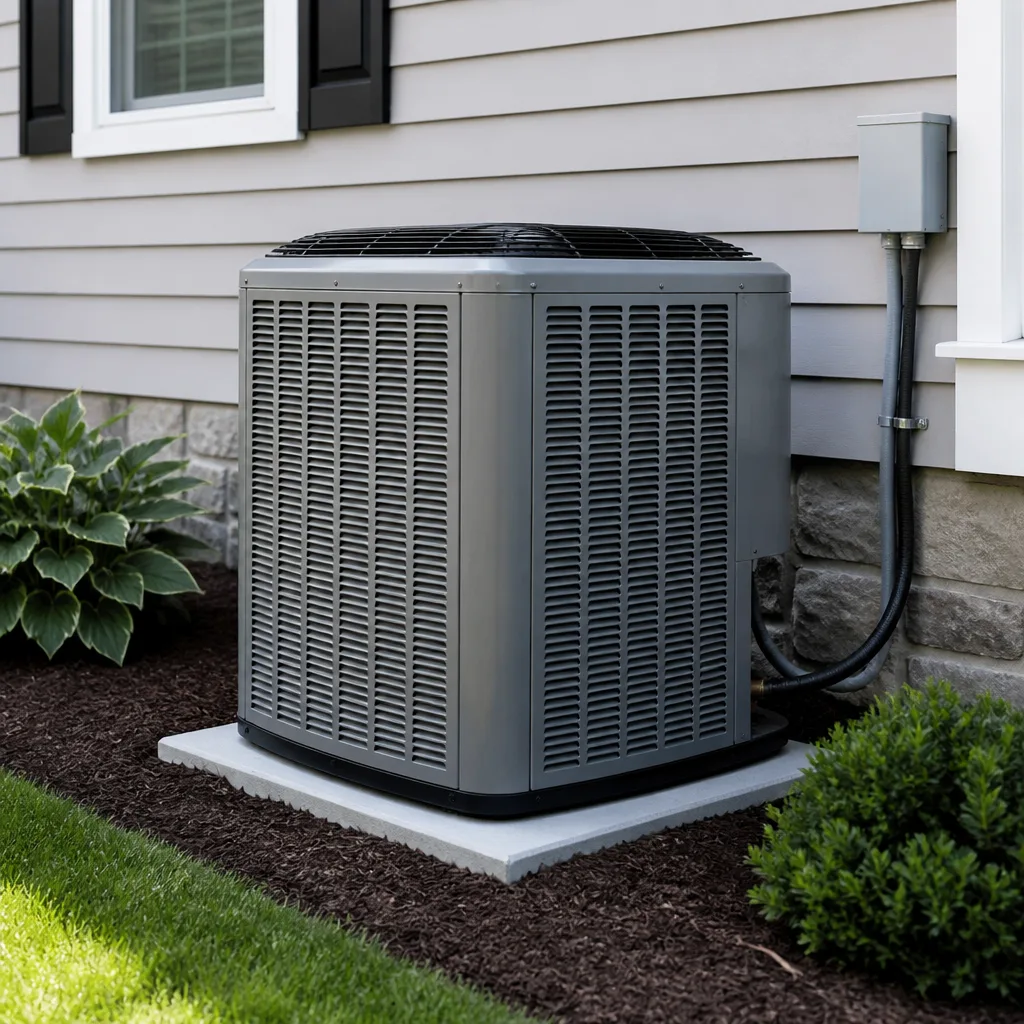 AC repair
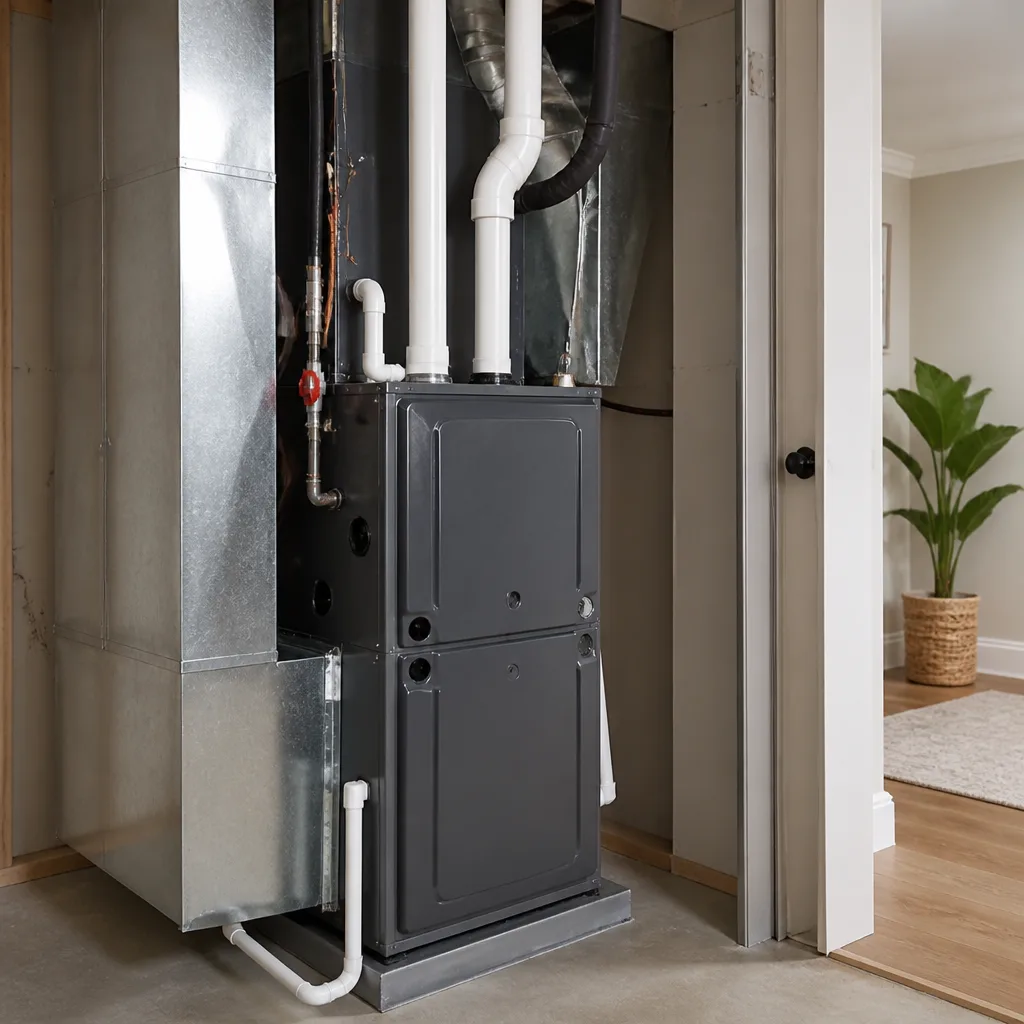 Furnace & heating
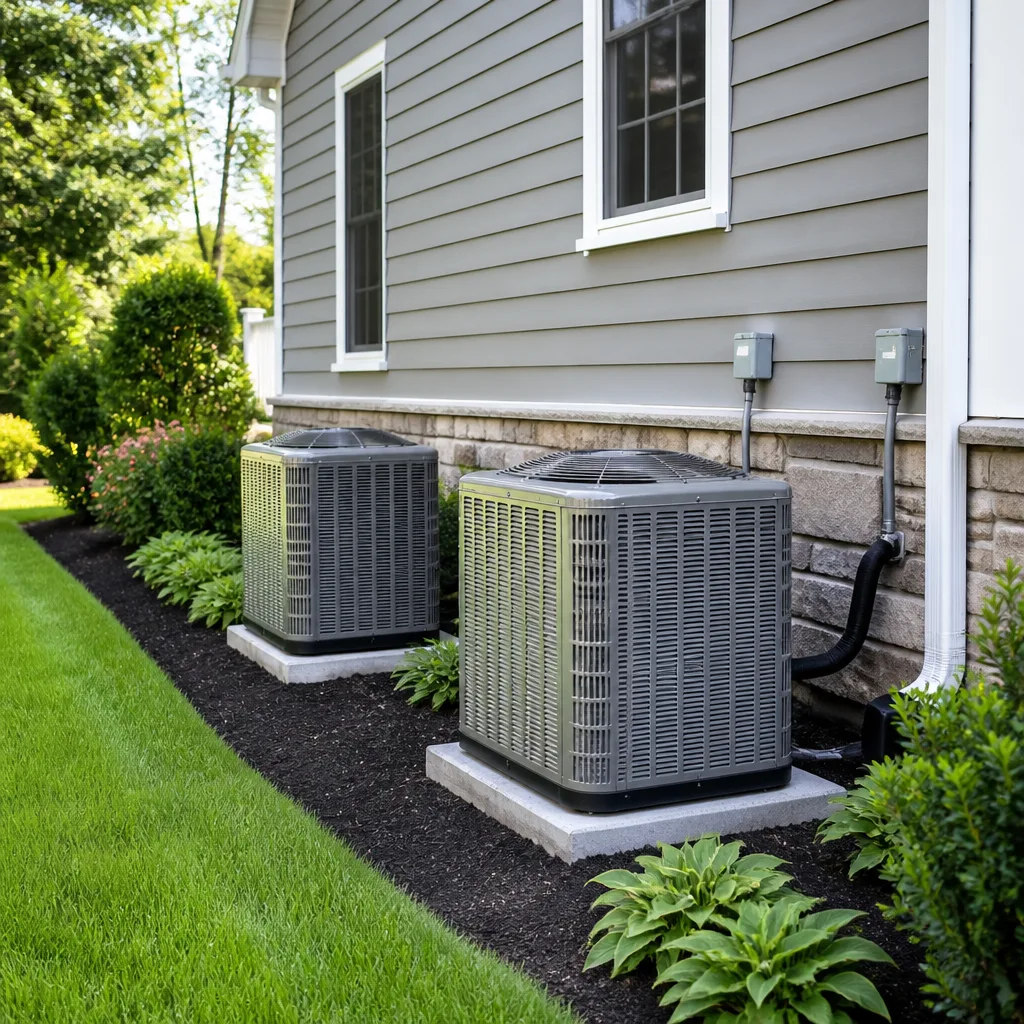 Heat pumps
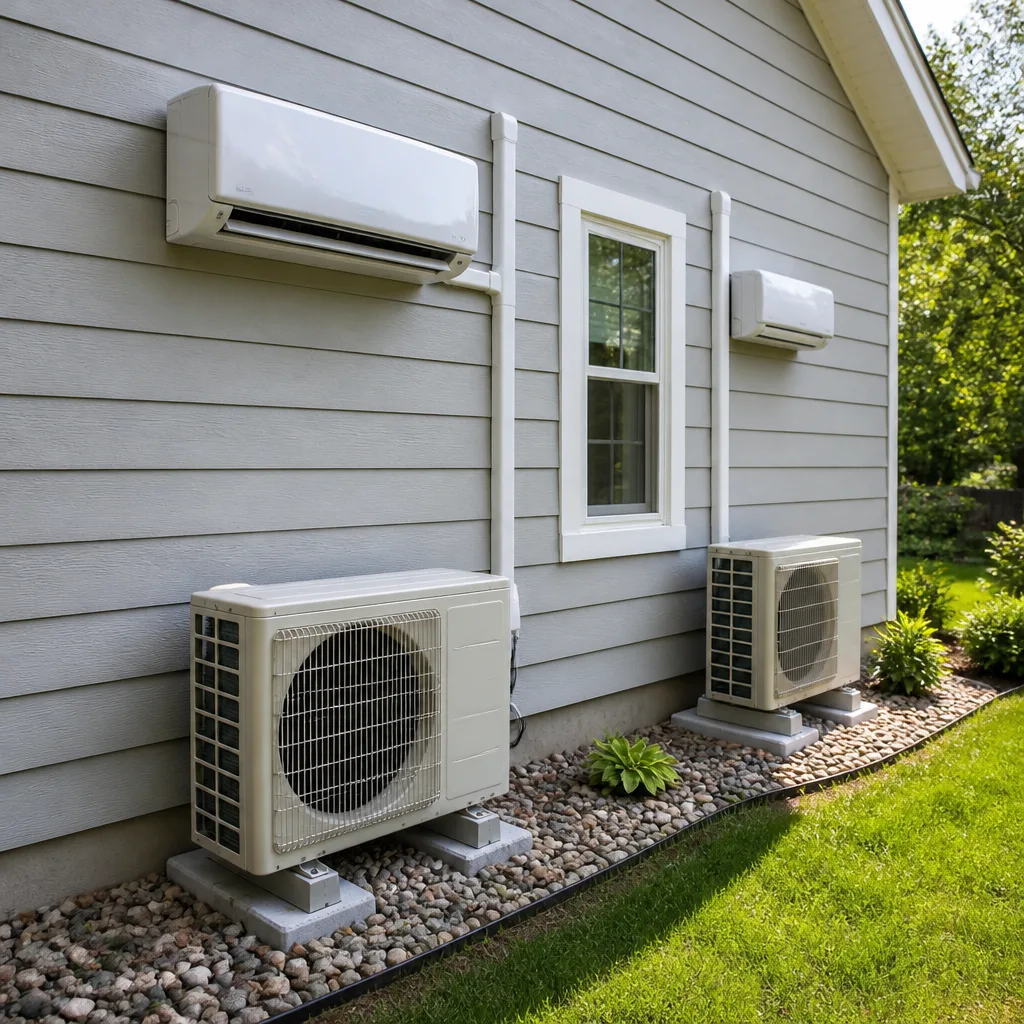 Ductless mini splits
 Carrier
 Trane
 Goodman
Seasonal tune-up and full diagnostic on your Carrier, Trane, or Goodman system - readings shown to you before any repair is proposed
Diagnosis first, numbers second - you approve the repair price before a single part goes in.
Get your free estimateThe Complete AC Repair & Installation Guide for North Las Vegas Homeowners
Here’s a number that surprises most people: an air conditioner in North Las Vegas runs roughly the equivalent of three Phoenix summers over its service life. Phoenix gets the reputation, but North Las Vegas sits in a shallow bowl where the concrete, stucco, and caliche hold heat long after the sun drops behind the Sheep Range. Equipment warranties were written by engineers picturing a climate that cools off at night. Ours doesn’t. This guide covers what actually happens to your system here: why it works harder, how the water and soil speed up wear, what Clark County requires before anyone touches your equipment, and how to size and install it for a North Las Vegas home instead of a template.
Quick Answer
AC repair in North Las Vegas typically runs $180 to $650 for common failures like capacitors, contactors, and refrigerant leaks, while a full system replacement for a typical 1,800-square-foot stucco home generally lands between $6,500 and $11,500 depending on tonnage, efficiency rating, and ductwork condition. Most repairs can be diagnosed and completed the same day. The bigger variable is sizing: homes here usually need more capacity than out-of-town contractors recommend, and getting that wrong costs you every summer for the next fifteen years.
Styles & brands we work with
- AC repair
- Furnace & heating
- Heat pumps
- Ductless mini splits
- Carrier
- Trane
- Goodman
Table of Contents
- Why North Las Vegas Heat Punishes Your AC Harder Than Phoenix
- Hard Water, Coil Scaling, and the Two-Season Efficiency Slide
- What Clark County Actually Requires Before You Replace a System
- Why Your Correct Size Is Bigger Than the Henderson Quote
- Repair or Replace? The Math That Actually Matters
- What a Proper Installation Looks Like, Step by Step
- What a Written 90-Day Promise Covers That a Chain’s Guarantee Doesn’t
- The Maintenance Schedule That Survives a North Las Vegas Summer
Why North Las Vegas Heat Punishes Your AC Harder Than Phoenix
The valley floor here acts like a heat sink. Caliche – that calcium-carbonate hardpan under most North Las Vegas lots – holds daytime heat and releases it slowly, and the surrounding terrain keeps the overnight air from draining away the way it does in open desert. What that means for your condenser is simple and unforgiving: it never gets a real rest period.
Our technicians have seen units in the Aliante and Centennial corridors logging 30 to 40% more compressor run-hours per season than the manufacturer’s sizing charts assume. Those charts are built around a design-day model that expects meaningful nighttime recovery. North Las Vegas gives you maybe six or eight degrees of that on a July night, sometimes less. Multiply it across June through September and you’re asking the equipment to do a season’s work in three-quarters of the time.
The practical fallout:
- Capacitors and contactors fail earlier. These are the parts that take the electrical hit every time the compressor kicks on, and yours kicks on constantly.
- Compressors wear faster. A unit that never fully cycles off runs hotter and sheds less heat per cycle.
- Undersized equipment never catches up. If a contractor sized your system for a cooler climate profile, it runs flat-out all day and still loses the battle by 4 p.m.
We test the capacitor before anyone says the word compressor. That single step catches the majority of “my AC died” calls in North Las Vegas, and it’s a fraction of what a compressor job costs. Readings first, numbers second – you’ll see both.
Hard Water, Coil Scaling, and the Two-Season Efficiency Slide
Las Vegas Valley Water District supplies some of the hardest water in the country, and that matters to your AC in ways most homeowners never hear explained. The mineral content doesn’t damage the refrigerant loop directly, but it accelerates scale buildup anywhere water and condensate interact with the system – drain pans, condensate lines, and the areas around the evaporator coil where moisture collects.
Here’s the sequence we see over and over in North Las Vegas:
- Season one: Everything runs fine. Condensate drains normally, coil stays clean, efficiency is at spec.
- Season two: Mineral deposits begin narrowing the condensate path and forming a light film on coil surfaces. Drainage slows. You might notice a little water near the air handler and think nothing of it.
- Season three: The film thickens into genuine scale. Airflow across the coil drops, the system works harder to move the same amount of cooling, and your electric bill creeps up 8 to 15% with no obvious cause.
By the time a homeowner calls us about “the AC not cooling like it used to,” the coil is often heavily scaled and the drain line is partially blocked. A coil cleaning and condensate flush early in season two would have prevented most of it. This is why we push a spring tune-up in North Las Vegas specifically – the water chemistry here makes it less optional than it is in softer-water parts of the country.
What Clark County Actually Requires Before You Replace a System
This is the section out-of-state online guides skip entirely, and it’s the one that can cost you real money if a contractor waves it off. Replacing or installing an air conditioning system in North Las Vegas requires a permit through Clark County’s building department, and the work has to be performed by a licensed contractor holding the proper classification. The permit isn’t paperwork theater – the inspection that follows is where you find out whether the install was done to code or just done fast.
What the process looks like on a legitimate replacement:
- Contractor pulls the permit before any equipment arrives. If someone suggests skipping it “to save time,” that’s your signal to find someone else.
- Old equipment is recovered and removed to regulation. Refrigerant recovery is required, not optional.
- New equipment is installed and the electrical and refrigerant connections are made to code.
- A county inspection is scheduled and passed. This covers the disconnect, the line set, the platform or pad, and the general workmanship.
We’ve seen failed inspections from North Las Vegas installs done by crews who never pulled a permit at all – and the homeowner found out years later when they tried to sell. Pulling the permit protects your investment and your resale. It’s not something we treat as a formality, and it shouldn’t be something anyone talks you out of.
If you’re weighing repair against full replacement, our guide to AC repair and installation in North Las Vegas walks through the decision in more detail.
Why Your Correct Size Is Bigger Than the Henderson Quote
Henderson sits at a slightly different elevation and gets marginally better overnight relief. Contractors working mostly in Henderson and the southern valley sometimes carry a sizing assumption north with them that leaves North Las Vegas homes short on capacity. The difference is real, and it shows up every July afternoon.
Correct sizing for a North Las Vegas stucco home accounts for things a simplified chart misses:
- Run-time hours, not just peak temperature. The heat-sink effect means equipment here accumulates more operating hours, and the load calculation should reflect it.
- Stucco envelope and attic heat gain. Stucco over frame holds and radiates heat differently than siding, and most North Las Vegas homes have minimal attic ventilation to relieve it.
- Ductwork condition. Ducts running through a 140-degree attic lose a meaningful share of the cooling before it reaches a register.
The result: a home that a Henderson-based estimate might size at 3 tons often needs 3.5 to 4 tons here to hold temperature through the afternoon. Oversizing has its own problems – short cycling, poor humidity control, early wear – so this isn’t “bigger is always better.” It’s “calculate it for this house on this street.” A proper Manual J load calculation is the only honest way to land on the right number, and it takes an hour or two, not five minutes on a phone call.
Repair or Replace? The Math That Actually Matters
The standard advice is “replace if the repair costs more than half a new system,” but that rule was written in a milder climate. In North Las Vegas, age and run-hours both count against a unit, so a 10-year-old system here has often lived through the equivalent of 15 cooler-climate years.
A rough decision framework:
- Under 8 years old, single component failure: repair. A capacitor or contactor is a quick, inexpensive fix.
- Under 8 years old, refrigerant leak: repair if the leak is accessible and the repair is well under a third of replacement cost.
- 10 to 14 years old with a compressor or coil failure: lean replace. You’re putting major money into equipment that’s already near the end of its realistic life here.
- 14-plus years old with any major failure: replace. Cooling performance, efficiency, and reliability all drop steeply past that point in this climate.
The efficiency difference alone matters. An older 10 SEER unit running flat-out in North Las Vegas summer heat can cost 40% more to operate than a modern 16 SEER2 system – over the life of the equipment that usually tips the math toward replacement well before the repair cost crosses the halfway mark.
What a Proper Installation Looks Like, Step by Step
Installation quality matters more than brand, and in a market where a dozen contractors have moved through in the last few years, the difference between a good install and a rushed one can be five years of equipment life. Here’s what a job done right looks like in North Las Vegas:
- Load calculation completed first. Manual J to size the system, Manual D for duct design. No sizing by square footage alone.
- Permit pulled, and equipment ordered for this specific home. Set install date scheduled – not a floating “sometime next week.”
- Existing refrigerant recovered, old equipment removed. Line set inspected and replaced if it’s undersized or kinked.
- New equipment set, level, on a proper pad or platform. Clearances maintained so the condenser can actually reject heat.
- Electrical, thermostat, and ductwork connected and sealed. Duct sealing is where most quick installs cut corners – it’s also where you lose efficiency.
- Commissioning and verification. Refrigerant charge verified by superheat or subcooling, airflow measured at registers, temperature split checked.
- County inspection passed. Documentation handed to the homeowner, including warranty registration.
If you’re also considering a ductless system for a room addition or a converted garage, our heat pump and mini split guide for North Las Vegas covers how those work in homes with caliche-heavy yards and limited wall space.
What a Written 90-Day Promise Covers That a Chain’s Guarantee Doesn’t
You’ve probably read the fine print on a national chain’s “satisfaction guarantee.” In most cases, it covers the equipment through the manufacturer’s warranty and covers labor for a set number of days – but “satisfaction” is a word with no enforcement behind it, and getting a specific crew to come back to a specific house is a scheduling request, not a commitment.
The 90-Day Done Right Promise at Ray’s Heating & Air works differently: if a job isn’t done right, we make it right, and one call brings us back. It’s in writing, stamped on every heating and cooling job, and it doesn’t require a review or a phone campaign to trigger. That matters in North Las Vegas, where temperature swings are hard on new installs and a small issue caught in the first 60 days is a fifteen-minute fix instead of a mid-summer failure.
The reason we can offer that in writing is continuity. There’s no rotating cast of technicians who’ve never seen your system. The person who answers at two in the morning answers because it’s a name and address on the license, not a call center three states away. Background-checked, uniformed technicians, the same faces, and a published name and address you can look up – that’s the whole idea.
The Maintenance Schedule That Survives a North Las Vegas Summer
A tune-up schedule built for a mild climate doesn’t do enough here. Between the run-hours, the hard water, and the dust that moves through the valley in spring, North Las Vegas equipment needs more attention than the “once a year” advice you’ll read elsewhere.
- Spring (April, before the heat): Full tune-up – capacitor and contactor tested, refrigerant charge verified, coil inspected, condensate drain flushed, filter replaced. This is the one that saves you money.
- Mid-season (July): Filter check, condensate line check, quick visual on the outdoor unit. Fifteen minutes and it catches the small stuff.
- Fall (October, when cooling winds down): Coil cleaning, drain flush again, outdoor unit cleaned of dust and debris before the heating season.
- Filters: Every 30 to 60 days during cooling season in North Las Vegas. Dust load here is higher than most of the country, and a clogged filter puts strain directly on the blower and evaporator.
If you have a gas furnace or are thinking about a heat pump for year-round comfort, our heating and furnace service in North Las Vegas covers the winter side of the system with the same care. And to see everything we handle across the area, visit the Ray’s Heating & Air North Las Vegas home page.
Common Mistakes to Avoid
- Sizing by square footage instead of a load calculation. “1,800 square feet equals 3 tons” is a guess, and in North Las Vegas it’s usually a low guess. Insist on Manual J.
- Letting a contractor skip the permit. It saves a day and costs you resale leverage and inspection protection. Clark County requires it for a reason.
- Ignoring hard-water scaling until season three. By then the efficiency loss is baked in and the coil needs a proper cleaning.
- Choosing the cheapest estimate without reading the fine print. A low quote that leaves out duct sealing, permit fees, or disposal isn’t a low quote.
- Replacing a capacitor-level problem with a compressor-level bill. If nobody tested the capacitor before quoting a compressor, get a second opinion. We offer a free second opinion on any written estimate.
- Skipping the fall maintenance because “cooling season is over.” That’s exactly when dust and mineral deposits settle in and cause next spring’s problems.
- Trusting a “satisfaction guarantee” that has no name behind it. Read the actual written promise and ask who shows up if something’s wrong.
See the difference
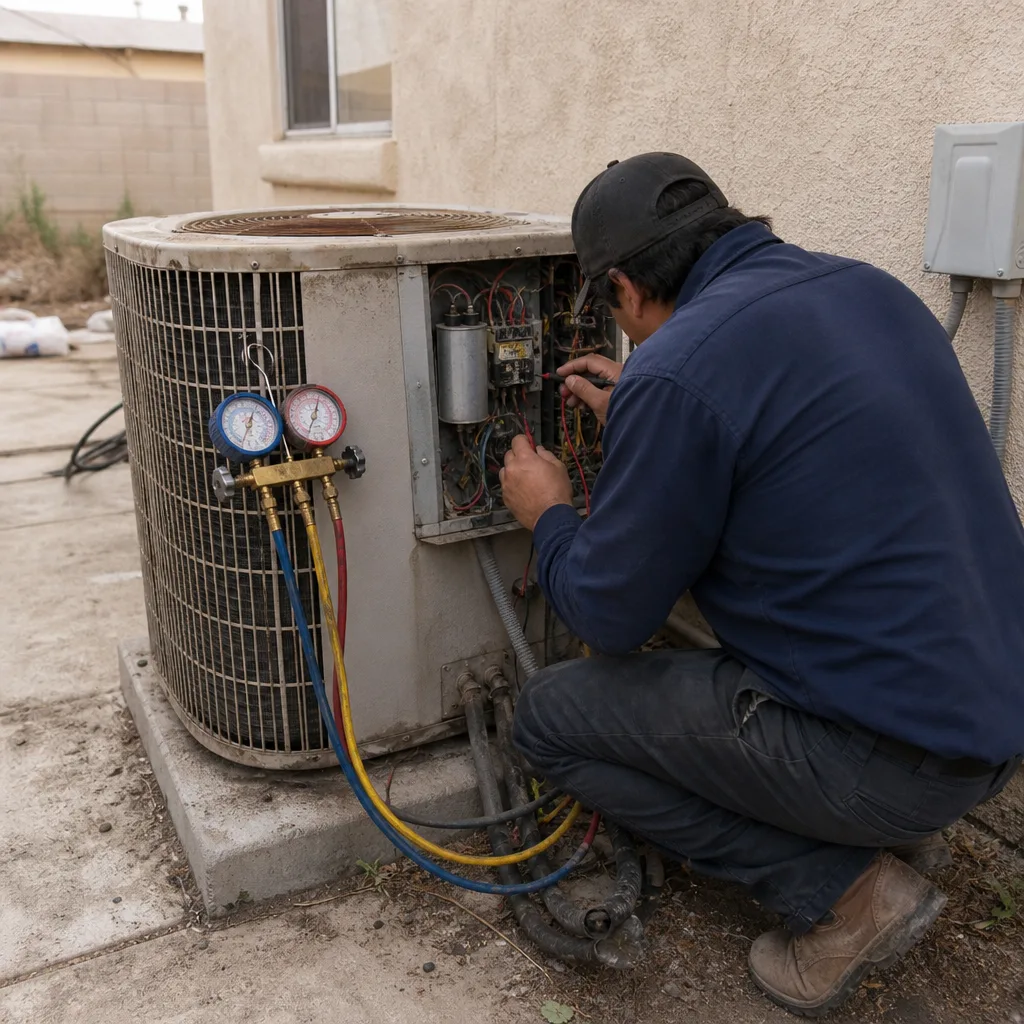 Before
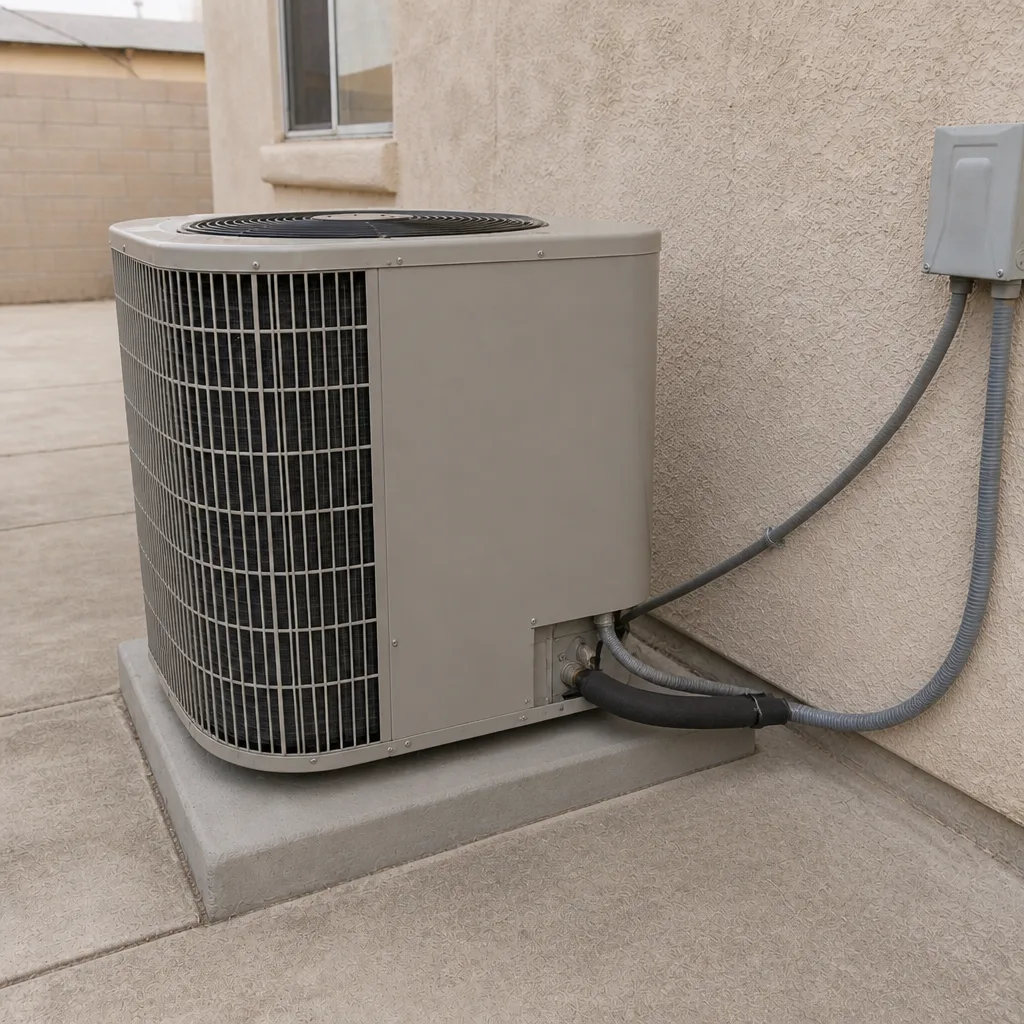 After
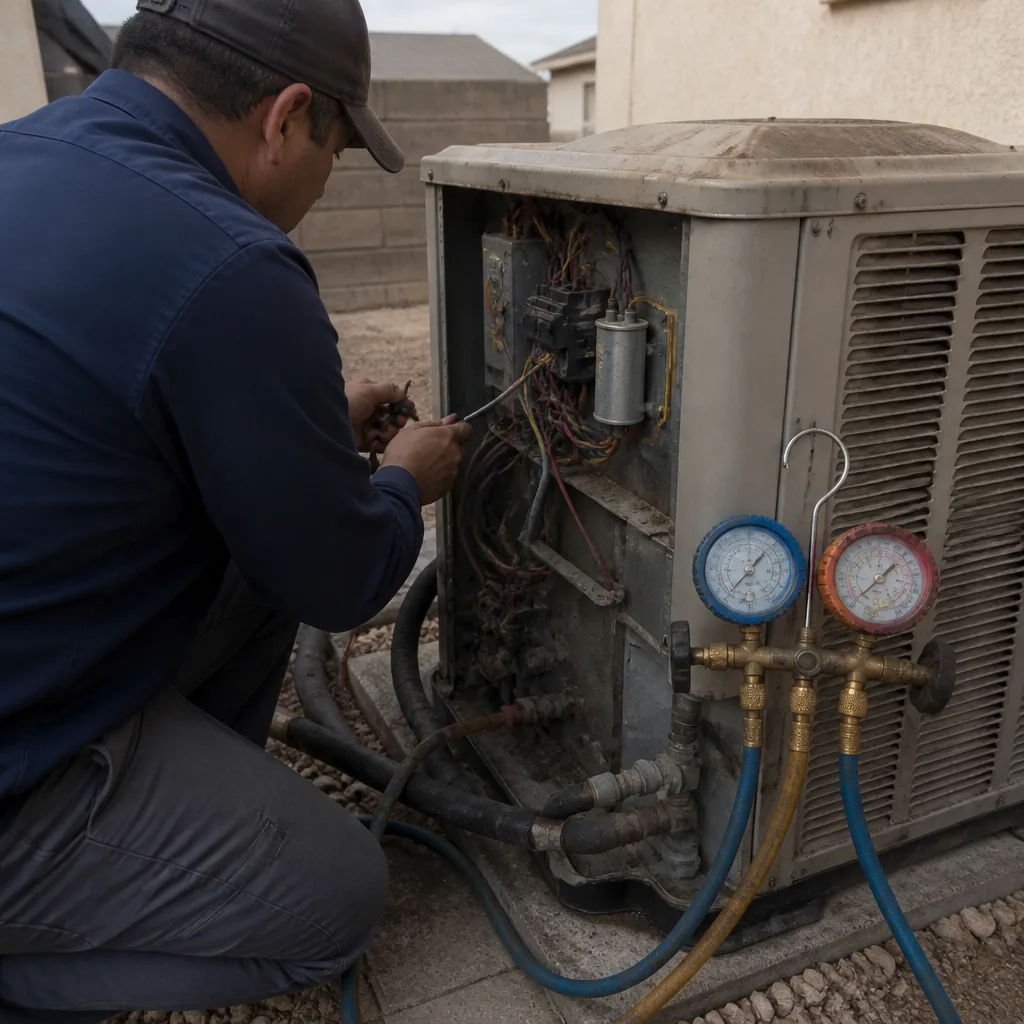 Before
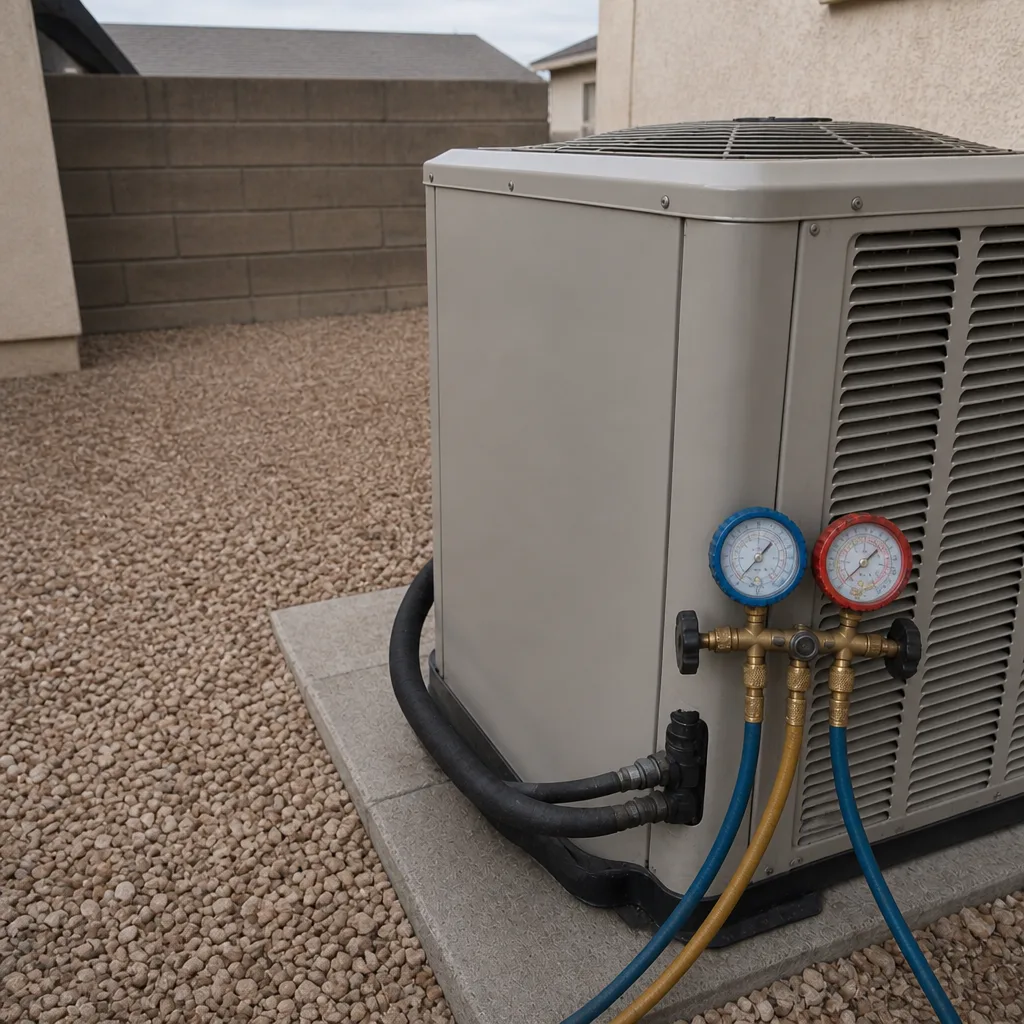 After
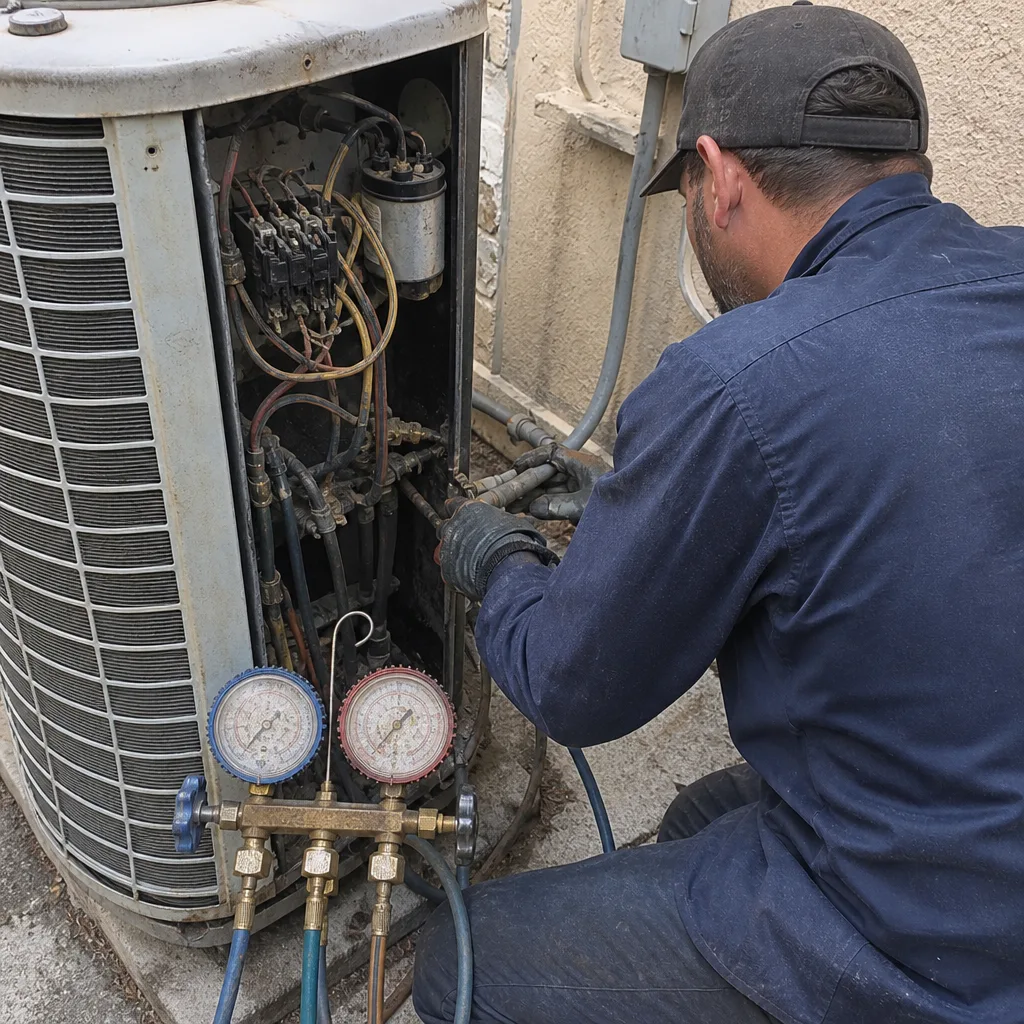 Before
 After
When to Call a Professional
Some things a homeowner can handle: filter changes, keeping the outdoor unit clear of debris, and watching for water around the air handler. Everything else on a North Las Vegas system involves refrigerant, high voltage, or a gas line, and those aren’t DIY territory – a mistake on a capacitor or contactor can damage the compressor, and refrigerant handling requires certification and equipment you don’t have in the garage.
Call a professional when you see: ice on the refrigerant lines, a system that runs but doesn’t cool, a breaker that keeps tripping, water pooling near the air handler, or a compressor that’s making noise it didn’t make last summer. Ray’s Heating & Air North Las Vegas offers free estimates in North Las Vegas – call (844) 761-6871 for an appointment. Every job carries the 90-Day Done Right Promise, and the phone is answered by a live person at any hour. We service all major brands, including York, Daikin, Bryant, and American Standard, and there’s no trip charge inside the county.
Frequently Asked Questions
Most common AC repairs in North Las Vegas run $180 to $650, with capacitors, contactors, and refrigerant top-ups at the low end and blower motor or coil work at the high end. Compressor replacement is a bigger job and usually makes replacement the smarter call on older equipment. Call (844) 761-6871 for an exact quote – estimates are free.
Yes, in most cases. North Las Vegas repair calls are typically diagnosed and often fixed the same day, and the phone is answered by a live person 24/7 for emergency situations. Call (844) 761-6871 and describe what the system is doing – that helps us bring the right parts on the first trip.
In North Las Vegas, that’s almost always one of three things: an undersized system that was sized for a milder climate, a scaled evaporator coil restricting airflow, or a refrigerant leak reducing capacity. All three are diagnosable with proper readings, and one of them costs a fraction of the other two to fix. Get a real diagnosis before authorizing a big repair.
Yes. Clark County requires a permit for AC replacement, and the work must be done by a licensed contractor. Skipping the permit exposes you to failed inspections at resale and leaves you without the county’s workmanship check. Any legitimate contractor should pull it without being asked.
Rebate availability changes and depends on the specific efficiency rating of the equipment you install, so the honest answer is to check current programs before you buy. We’ll fill you out the paperwork on qualifying equipment as part of the install. Ask about it when you call (844) 761-6871 for a free estimate.
It depends on the house – usually larger than a simplified square-footage rule suggests, because of run-hours and stucco heat gain, but not automatically bigger. A Manual J load calculation is the only way to size it correctly, and we won’t quote a replacement without one. Call (844) 761-6871 to schedule a load calculation and a written fixed price.
The Bottom Line
North Las Vegas AC is its own animal. The heat-sink effect means your equipment runs more hours than the warranty charts assumed. Hard water from the Las Vegas Valley Water District accelerates scaling that quietly costs you efficiency over two to three seasons. Clark County requires a permit for replacement, and it protects you. Correct sizing runs bigger than a Henderson contractor’s rule of thumb – but only after a real load calculation. And a written 90-Day Done Right Promise from a name and address you can look up is worth more than a satisfaction guarantee with no name attached. Call (844) 761-6871 for a free estimate.
Written by the team at Ray’s Heating & Air North Las Vegas.